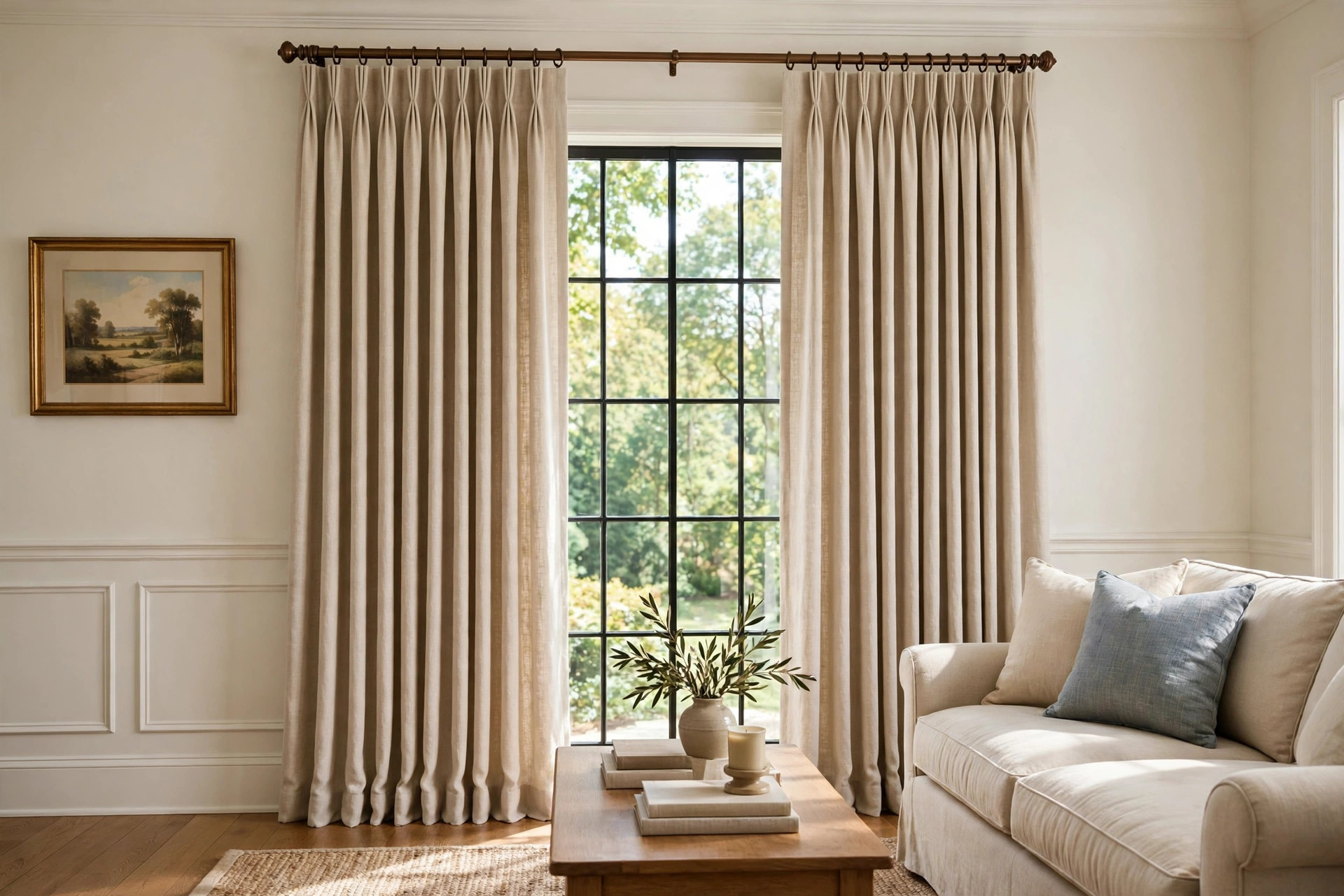

A new pair of drapes can change the whole feel of a room. Few styles look as neat and finished as the pinch pleat. When you search for the best pinch pleat drapes with free shipping, you are really asking two questions at once. Which drapes are worth your money, and where can you buy them without paying a high delivery fee. This guide answers both. It walks through fabrics, linings, sizing, and price, so you can order with care and have the box arrive at your door at no extra cost.
Why Pinch Pleat Drapes Are Worth the Look
A pinch pleat is a small fold of fabric pinched near the top of the drape. Two, three, or four folds are gathered and stitched in place. The result is a row of even waves that hang in clean, steady lines. The look dates back to fine hotels and grand homes, yet it fits plain modern rooms just as well.
There are real gains beyond looks. The pleats keep the fabric spread along the rod, so the drape stacks back neatly when open. The waves also hold their shape over time, which means less fuss with steaming and fluffing.
Free shipping matters more than most buyers think. Drapes are heavy and bulky. One pair can weigh five to eight pounds, and a set for a wide window weighs more still. Shipping costs of twenty or forty dollars add up fast when you dress four or five windows. A store that ships for free lets the price you see be the price you pay. That makes it far easier to compare brands on equal terms.
What to Look for Before You Buy: Best Pinch Pleat Drapes with Free Shipping
Start with the heading. Pinch pleat drapes hang from hooks set into the back of the pleat, and they fit a traverse rod, a curtain ring, or a back tab clip. Check that your rod and rings suit the drape width. A standard rod needs about one ring for every four to six inches of drape top. If you buy a traverse rod, the carriers must match the hook count. Many sellers list a hook count per panel. Read that line before you click.
Next, read the fabric content. Polyester drapes are cheap, hold their pleats well, and resist wrinkles. Cotton and linen look richer and more natural, though they cost more and may need pressing. For a deeper look at fabric choices, see our navy blue velvet curtains reviews and buying guide.
The lining decides much of how a drape works. An unlined drape lets soft light through and suits rooms where privacy is not a concern. A privacy lining keeps the room closed to view while letting some daylight in. A blackout lining blocks most light and helps a bedroom stay dark. A thermal lining, usually a thin foam or felt back, slows heat loss in winter and heat gain in summer. Retail guides at The Spruce explain these lining types in plain terms for new buyers.
Measure twice before you order. Pinch pleat drapes are sold by width and length. The listed width is the flat, ungathered width. For a full look, the combined flat width of the panels should be about twice the rod width. A sixty-inch rod needs about one hundred twenty inches of flat panel width, which is usually two sixty-inch panels. Length is measured from the top of the pleat to the hem. Most rooms look best with drapes that just kiss the floor or pool one or two inches below it. If you need a full primer on sizing and hanging heights, HGTV offers clear room-by-room guidance.
Look at the hem and stitch work. A blind stitch hem lies flat and does not show on the face. Weighted corners at the bottom help the pleats hang straight. Corner weights are small chains or discs sewn into the hem. Cheap drapes skip them, and the panels swing and curl. A few minutes spent reading buyer reviews can tell you whether the stitch work holds up.
Check the care label. Many pinch pleat drapes are machine washable, which is a blessing for busy homes. Lined drapes with thermal or blackout backings often need dry cleaning. Make sure the label matches what you are willing to do. Also check the return window. Color on a screen can shift from the real fabric, so a store that allows free returns on drapes is worth its weight.
Types and Options to Consider
Not all pinch pleats are the same. A two-finger pleat gives a soft, relaxed wave and uses less fabric, which lowers the price. A three-finger pleat is the classic look and gives steady, even folds. A four or five finger pleat, sometimes called a goblet or French pleat, stands taller and looks more formal. Goblet pleats are stuffed with tissue to hold their round shape when new. For most living rooms and bedrooms, the three-finger style is the safe middle ground.
Fabric choice sets the mood. Linen and linen blends bring a light, airy feel to dining rooms and sitting rooms. Cotton duck and canvas give a firm, tailored drape that suits offices and studies. Velvet in deep tones brings weight and warmth to master bedrooms and formal living rooms. Sheer pinch pleat panels exist too, though they are rare; they layer well over blackout panels for a day-and-night system. If you want a quieter room, our noise reducing pinch pleat drapes buying guide covers lined and weighted options.
Heading hardware is the next choice. Pin hooks slide into the back of each pleat and clip to rings or traverse carriers. Ring clips grip the drape top and suit a cafe or country look, though they can leave small marks on light fabric. Traverse rods pull the drapes open and closed with a cord, which keeps hands off the fabric and is kind to silk or light cotton. Decide the hardware first, then buy the drapes to match. A quick browse of Blinds.com shows the full range of heading and track parts in one place.
Color and pattern deserve slow thought. Solid drapes in a shade close to the wall color make a room feel calm and large. A shade darker than the wall adds depth and frames the window. Bold prints, such as damask, stripes, or botanical patterns, turn the window into the room’s center. If the rest of the room is busy, keep the drapes plain. If the room is plain, the drapes can carry the pattern. Buyers shopping for light-filled rooms may also like the care tips in our best pinch pleat drapes for humid climates guide, since damp air can mark certain fabrics.
Cost and Price
Pinch pleat drapes with free shipping come in a wide price band. Budget panels in plain polyester run about twenty to forty dollars per pair. Mid-range cotton or linen panels with a privacy lining run about fifty to one hundred twenty dollars per pair. Velvet, thermal-lined, and blackout-lined pairs run about ninety to two hundred dollars. Custom-made panels start around two hundred dollars per panel and climb with fabric and size.
Free shipping policies differ by store. Large home retailers such as IKEA, Wayfair, Home Depot, and Lowe’s often ship orders over a set dollar amount free, and some run no-minimum offers during sale weeks. Compare the full order total, not the shipping line alone. A pair priced at sixty dollars with a fifteen dollar shipping fee costs the same as a pair priced at seventy five dollars with free shipping. Big catalog sites like Houzz let you sort by price and read long review threads before you buy.
Sale timing can save real money. Late January, July, and the weeks after major holidays bring deep cuts on window treatments. Stores clear stock before new spring and fall lines arrive. If you need five or six pairs, buying during one sale can save a hundred dollars or more. Sign up for a store newsletter if you plan to wait; the first coupon alone often takes ten percent off.
Custom drapes are a different world. A workroom will sew pinch pleat panels to your exact width, length, lining, and fabric. Expect four to eight weeks of lead time and a price three to six times the ready-made cost. Custom work makes sense for odd window sizes, arched tops, or rooms where the fabric must match bedding or seating. For standard windows, ready-made panels with free shipping win on price nearly every time.
Care and Upkeep
Good drapes last a decade or more with simple care. Vacuum the panels once a month with a soft brush tool to lift dust. Rotate the panels once a year if one window gets much more sun, so both sides age alike.
Washing depends on the label. Machine washable drapes do best in cold water on a gentle cycle, with mild soap and no bleach. Hang them back on the rod while still damp; the weight pulls wrinkles out as they dry. Lined and thermal drapes usually need dry cleaning once a year. Never put a foam-backed thermal drape in a hot dryer, since heat can crack the backing.
Steam is the best friend of pinch pleats. A hand steamer lifts wrinkles and freshens the fabric without pressing the pleats flat. Work from the top down, and let each panel cool before you touch it. For velvet, steam only on the back side and never press with an iron on the face.
Watch the sun side. Even the best lining wears over time. If the back of the drape starts to feel stiff or shows hairline cracks, the lining is breaking down. Replace the lining or the panel before the damage reaches the face fabric.
Safety
Drapes share safety rules with all window coverings. If you use a traverse rod with a cord, keep cords high and out of reach of small children and pets. Cord cleats, which wrap the cord tight against the wall, cost only a few dollars. The U.S. Consumer Product Safety Commission offers guidance on cord safety and on keeping window coverings out of reach of cribs and play areas.
Heavy drapes need strong rods. A pair of lined velvet panels can weigh fifteen pounds. Use a center support bracket on any rod longer than forty eight inches, and drive screws into studs or use proper wall anchors. A falling rod can break glass and injure a child below.
Fire safety counts too. Keep drapes at least twelve inches from a fireplace, stove, or space heater. Never let a panel rest on a radiator or touch a lamp shade. In kitchens, keep long drapes well clear of the range, since a draft can blow a panel toward a flame. Apartment Therapy’s Apartment Therapy design guides remind renters to check lease rules on rods and hardware before drilling.
FAQ
How wide should pinch pleat drapes be for a standard window? For a standard window with a rod that extends past the trim, order panels whose combined flat width is about twice the rod width. Two fifty-inch panels suit a forty-eight-inch rod, and two one-hundred-inch panels suit a ninety-inch rod. Fuller pleats need fuller width, so measure first.
Can I wash pinch pleat drapes at home? Many polyester and cotton panels are machine washable in cold water on gentle. Lined, thermal, and blackout drapes often need dry cleaning. Read the care label on the back of one panel and follow it. Hang damp drapes to keep the pleats crisp.
Do pinch pleat drapes work on a regular curtain rod? Yes, with pin hooks and rings. Slide a pin hook into the back of each pleat, then hook the pins to rings on a plain rod. Count the rings to match the hooks. You can also hang them on a traverse rod or with back tab clips, depending on the rod you own.
Are drapes with free shipping really cheaper? Not always, but they make price comparison honest. A store may build the shipping cost into the price. Compare the full order total for the same fabric, lining, and size across stores. Free shipping still saves money when the item price matches the competition.
How long do pinch pleat drapes last? With monthly dusting and proper washing, a well-made pair lasts eight to twelve years. The lining usually wears first. Sun-side rooms shorten lining life, while north-facing rooms stretch it. Replacing worn lining can add years to good face fabric.
Can I use pinch pleat drapes in a bathroom or kitchen? It is not the best place for them. Steam, grease, and splashes mark fabric fast, and damp air can grow musty smells. If you want the look, pick a washable synthetic and keep the panels short and well clear of water. Most buyers choose shades or cafe curtains for those rooms instead.
A Short Final Word
The best pinch pleat drapes with free shipping are not hard to find once you know what to measure and what to read on the label. Pick the right pleat count, choose a fabric that suits the room, match the lining to your need for light and quiet, and check the care rules before you buy. Compare the full order total across a few honest sellers, and let the free shipping be the tie breaker, not the reason to buy.
References
Apartment Therapy. (n.d.). Home design ideas and inspiration. https://www.apartmenttherapy.com Blinds.com. (n.d.). Window blinds, shades, and shutters. https://www.blinds.com HGTV. (n.d.). Home and garden ideas. https://www.hgtv.com Houzz. (n.d.). Home design and remodeling. https://www.houzz.com IKEA. (n.d.). Home furnishings. https://www.ikea.com Lowe’s. (n.d.). Home improvement products. https://www.lowes.com The Home Depot. (n.d.). Home improvement products. https://www.homedepot.com The Spruce. (n.d.). Home and garden advice. https://www.thespruce.com U.S. Consumer Product Safety Commission. (n.d.). Product safety information. https://www.cpsc.gov Wayfair. (n.d.). Furniture and home goods. https://www.wayfair.com
Was this guide helpful?

About Michael Thompson
The My Garden US editorial team writes practical, in-depth home and garden guides for American homeowners — tested advice, no fluff.
You May Also Like

Where to Buy Machine Washable Curtains in Texas
June 18, 2026 0 views
Energy Efficient Decorative Window Film Buying Guide
August 26, 2026 0 views
Affordable Stained Glass Window Film With Free Shipping: A Plain Buyer’s Guide
March 17, 2026 0 views