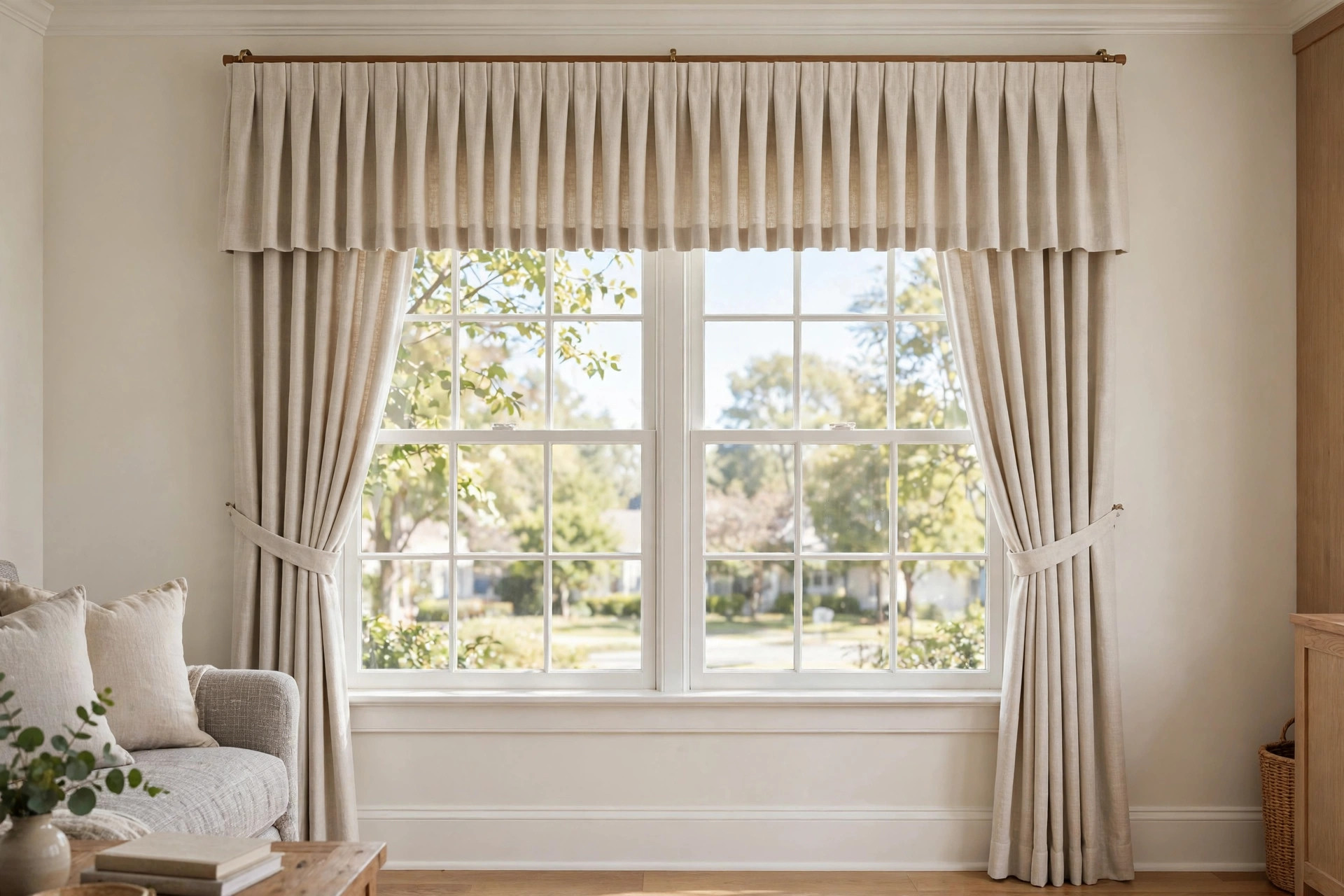

A valances for windows price comparison usa shoppers can trust starts with one plain fact. A valance is the least costly form of window covering. It is a short curtain that hangs at the top of a window. It hides rods and hardware. It softens the look of bare glass. And it costs far less than full drapes or shades. Yet prices swing wide from one store to the next. This guide lays out the real price ranges, the factors that move prices up or down, and how to shop so you pay a fair price.
Why Valance Prices Matter More Than They Look
A window can be finished for very little money. A single valance often sells for less than a family spends on lunch. But most homes have many windows. A living room may have three. A bedroom may have two. A kitchen may have one wide window over the sink. When you dress six or eight windows, small price gaps turn into real money.
Careful price comparison does three things for you. First, it keeps the total project cost under control. Second, it shows you where the fair price band sits, so you can spot an overpriced item. Third, it tells you when a low price is too low. A valance that costs almost nothing may be thin, poorly sewn, or likely to fade in months.
Valances also serve a practical role. They hide an ugly rod. They cover the gap between a blind and the wall. They give a room a finished feel without blocking light. For these reasons they remain one of the most popular window treatments in American homes. Learning the price landscape takes only a little effort and pays off on every window.
What to Look for When You Compare Valance Prices: Valances for Windows Price Comparison Usa
A price tag means nothing without context. Two valances may both sell for twenty dollars and differ greatly in quality. Compare like with like. Here are the details that matter most.
Fabric and Material
Cotton valances cost less than silk ones. Polyester blends are cheap, hold their shape, and resist wrinkles. Linen looks rich but creases fast. Velvet and brocade sit at the top of the price ladder. The fabric drives the price more than any other single factor.
Size and Fit
Valances are sold by width. A standard valance fits a 36 to 48 inch window. Wide windows need a wider piece or two valances side by side. Larger valances use more fabric and cost more. Always measure the window before you shop. A cheap valance that does not cover the rod is no bargain.
Style of Top
Rod pocket valances are the simplest and cheapest. Tab top and grommet styles cost a little more because they use more fabric and more hardware. Tailored pleated valances, such as pinch pleat or box pleat, cost more still because they take more sewing time. When you compare prices, check that the styles match.
Lining and Finish
A lined valance hangs better, blocks more light, and lasts longer. Unlined valances cost less. Some valances have a foam backing that keeps them crisp. Check the seams and the hem. A clean hem and even stitching mark a well made piece.
Ready Made or Custom
Ready made valances come in fixed sizes and colors. Custom valances are cut for your exact window. Custom work costs two to five times the ready made price. For most rooms, ready made is enough.
Common Types of Window Valances and Their Price Bands
Knowing the types helps you read any valances for windows price comparison usa store or site puts in front of you. Each type has a typical price band in the American market.
Straight valances are simple flat panels, sometimes with a shaped hem. These are the cheapest option. Expect to pay between 8 and 25 dollars each.
Scalloped and shaped valances have a curved bottom edge. They look dressier than straight ones. Prices usually run from 15 to 40 dollars.
Pleated and tailored valances include pinch pleat, box pleat, and pencil pleat styles. They look formal and hang well. Typical prices range from 25 to 70 dollars each.
Swag and cascade valances drape in soft curves across the top of the window. They give a classic, formal look. Expect 30 to 80 dollars per set.
Balloon valances puff out at the bottom for a soft country look. Prices run from 20 to 50 dollars.
Cornice and pelmet style valances are firm, upholstered boards covered in fabric. They look custom and hide hardware fully. These cost the most, often 60 to 150 dollars each, and many are made to order.
For a fuller picture of bedroom window options, many shoppers also compare the top rated blackout curtains for bedrooms for sale before they settle on a simple valance. Kitchens are a different case, and the guide to buy cafe curtains for kitchens online in arizona shows how a small cafe curtain can pair well with a valance. If you like the simple pocket style, the article on where to buy rod pocket curtains in florida covers rod pocket choices in detail.
Cost and Price: A Full Breakdown
Budget Range: 5 to 15 Dollars
At this level you find basic polyester valances, often in solid colors. They come from discount stores and big online sellers. They do the job. They hide a rod. They add a little color. Do not expect fine fabric or deep hems. These valances suit laundry rooms, guest rooms, and rental units.
Mid Range: 15 to 40 Dollars
This is the sweet spot for most buyers. You can get good cotton or cotton blend valances with clean hems. Scalloped edges, light pleats, and simple linings appear here. Most national retailers price their best selling valances in this band. The value is strong.
Premium Range: 40 to 90 Dollars
Here you find thick linen, velvet, and brocade valances. Pleating is deep and even. Linings are standard. Many of these come from specialty curtain makers. They suit living rooms, dining rooms, and master bedrooms where the window treatment is part of the decor plan.
Custom and Designer: 90 to 200 Dollars and Up
Custom valances are cut for your window and your fabric choice. A workroom or designer makes each piece by hand. Prices climb with fabric cost and labor. This range is right for odd sized windows or a high end room.
What Drives the Price Up or Down
Fabric is the largest cost driver. A yard of cotton print costs far less than a yard of silk or velvet. Labor is next. Hand pleating costs more than machine work. Brand name adds a premium. So does country of origin, though quality varies at every price. Sales and seasons matter too. Window treatments often go on sale in January and July, when stores clear stock. Buying a full set for several windows at once can cut the per piece price.
Homeowners comparing prices at Home Depot often find the store brand valances in the budget band, while Wayfair lists a wide spread from budget to premium in one place. IKEA keeps a small set of low cost options that suit simple rooms. Blinds.com focuses more on custom work, which sits at the top of the price scale.
Where to Shop for the Best Valance Prices
Big box home stores carry ready made valances at fair prices. Their stock turns fast, so selection changes with the season. Department stores run deeper sales but start from higher list prices. Online marketplaces list hundreds of valances, which makes comparison easy, but quality is uneven. Read the reviews and check the return policy.
Specialty curtain shops offer more fabric choices and better advice. You pay more, but you get help with measuring and style. Fabric stores sell valance kits for those who sew. A kit with fabric, lining, and a pattern can cost less than a finished valance and gives a custom fit.
When you shop online, filter by width, color, and price. Open the product details. Look for fabric content, lining, care rules, and exact width. A listing that hides these facts is a warning sign. Take notes in a simple chart: store, style, width, fabric, price, shipping. Ten minutes of notes will show you the fair price at once.
Decor guides at The Spruce explain how to measure windows so the valance you buy fits the first time. HGTV shows room photos that help you pick a style before you spend. Bob Vila covers hanging hardware, which affects the total cost of the project. Apartment Therapy offers small home ideas where a cheap valance can make a big visual change. Country Living leans toward the country styles, like balloon and swag valances, that many buyers want.
Care and Upkeep
Valances are easy to care for, which is part of their appeal. Most polyester and cotton valances can be machine washed on a gentle cycle. Use cold water and a mild soap. Hang them to dry or tumble dry on low heat. Remove them while still slightly damp and hang them at once. This keeps wrinkles down.
Velvet, silk, and lined valances need more care. Many must be dry cleaned. Check the tag before you wash. Sunlight fades fabric over time. A valance on a south facing window will fade faster than one on a north facing window. Rotating valances between rooms, if the sizes match, can even out wear.
Dust valances every few weeks with a vacuum brush or a damp cloth. Kitchen valances collect grease. Wash them more often than bedroom ones. A well kept valance lasts five to ten years. A neglected one looks tired in two.
Safety Notes for Homes With Children and Pets
Window treatments can pose a risk to small children. Long cords and loops are the main danger. Most valances are short and cord free, which makes them safer than blinds with cords. Still, check the back of the valance. Some have pull cords or tie backs with long strings.
Keep cords out of reach of cribs and beds. Cut looped cords or fit them with a cord cleat. The U.S. Consumer Product Safety Commission gives clear guidance on window covering safety for families with young children. If you buy an older valance at a resale shop, check it for cords before you hang it. Safety is worth more than any price saving.
Frequently Asked Questions
How much should I expect to pay for a valance in the USA? Most ready made valances sell for 10 to 40 dollars each. Budget polyester pieces start near 8 dollars. Good cotton and lined valances run 20 to 50 dollars. Custom work starts around 90 dollars and climbs from there.
Are valances cheaper than full curtains? Yes, in nearly every case. A valance uses far less fabric and less labor than a full pair of curtains. A room dressed with valances alone can cost a quarter of what full drapes would cost.
Can I use a valance with blinds or shades? Yes. This is one of the most common uses. The valance hides the headrail of the blind and softens the top of the window. Make sure the valance is wide enough to cover the blind hardware on both sides.
What width valance do I need for my window? Measure the window, then add 4 to 8 inches so the valance covers the trim. For a gathered look, buy a valance one and a half to two times the window width. For a flat tailored look, buy close to the true width.
Do valances block light? No, not in any real sense. A valance covers only the top of the window. It may cut a little glare at the top edge. If you need darkness, pair the valance with blackout curtains or shades.
Where is the cheapest place to buy valances? Discount stores and large online sellers usually list the lowest prices. But the cheapest price is not always the best value. Compare fabric, lining, and width at each price point. A 12 dollar valance that fades in a year costs more over time than a 25 dollar valance that lasts five years.
A Short Final Word
A valances for windows price comparison usa buyers can use comes down to a few clear steps. Measure your windows. Pick a style that fits the room. Compare fabric, width, and finish at each price. Buy in the mid range for rooms you see every day. Use the budget range for rooms that matter less. Watch for sales in winter and summer. With this simple method, you will dress every window well and keep money in your pocket.
References
Apartment Therapy. (n.d.). Home design ideas and inspiration. https://www.apartmenttherapy.com Blinds.com. (n.d.). Window blinds, shades, and shutters. https://www.blinds.com Bob Vila. (n.d.). Home improvement advice. https://www.bobvila.com Country Living. (n.d.). Country home and lifestyle. https://www.countryliving.com HGTV. (n.d.). Home and garden ideas. https://www.hgtv.com IKEA. (n.d.). Home furnishings. https://www.ikea.com The Home Depot. (n.d.). Home improvement products. https://www.homedepot.com The Spruce. (n.d.). Home and garden advice. https://www.thespruce.com U.S. Consumer Product Safety Commission. (n.d.). Product safety information. https://www.cpsc.gov Wayfair. (n.d.). Furniture and home goods. https://www.wayfair.com
Was this guide helpful?

About Robert Taylor
The My Garden US editorial team writes practical, in-depth home and garden guides for American homeowners — tested advice, no fluff.
You May Also Like
Cordless Cellular Shades Price Comparison USA
September 10, 2026 0 views
Budget Friendly Window Film Privacy Tint Buying Guide
September 19, 2026 0 views
Affordable Sliding Panel Track Blinds With Free Shipping: A Complete Buying Guide
July 27, 2026 0 views