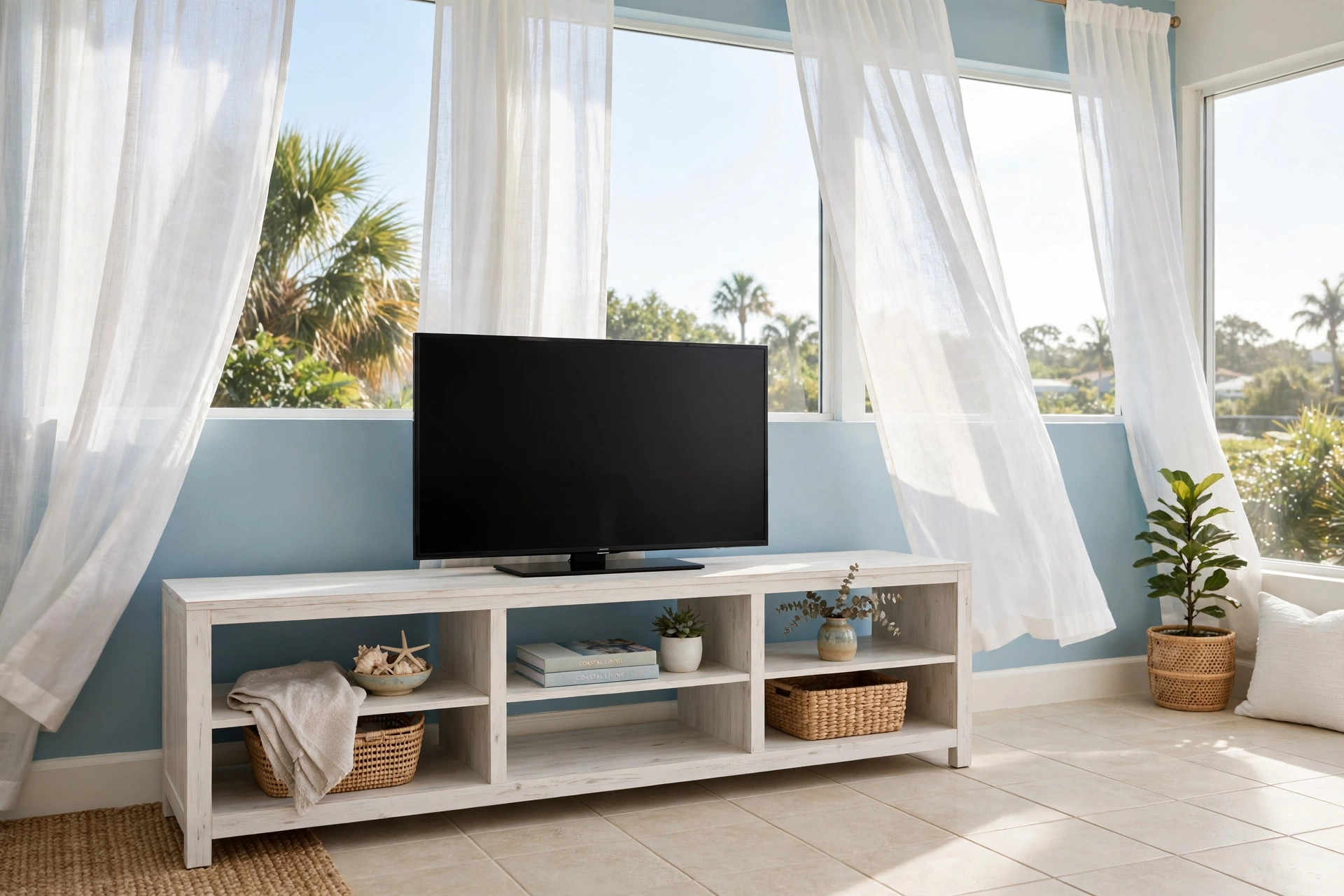
Finding the right living room tv stands florida homes usa shoppers can trust is not as simple as picking the first cabinet that looks nice. Florida homes have their own character. The rooms are bright. The air carries salt near the coast. The style leans toward airy, coastal, and relaxed. A TV stand that works in a New York apartment may feel heavy and dark in a Florida living room. This guide will help you choose well.
A TV stand does more than hold a screen. It anchors the room. It stores the cable box, the game console, and the stack of DVDs that nobody throws away. It also sets the tone for the whole wall. In Florida, where many living rooms open to lanais and wide windows, the stand must look good in full daylight. It must also stand up to humidity and warm air.
Whether you live in a Miami condo, an Orlando family home, or a beach cottage in Sarasota, this guide covers what matters. We will look at sizes, styles, materials, prices, and care. By the end, you will know exactly what to look for.
Why the Right TV Stand Matters in a Florida Home
Florida homes face conditions that most other states do not. The climate is warm and damp for much of the year. Materials expand and shrink with the air. Cheap pressed wood can swell at the joints. Metal parts can show rust sooner than they would in dry places. Choosing a stand with the right materials saves trouble later.
Light is another factor. Many Florida living rooms have large windows and sliding glass doors. Strong sunlight hits the furniture every day. Dark finishes can fade, so a stand with a light or medium finish tends to age better under Florida sun. Place the stand so that direct light does not strike the screen for hours each day.
Space matters too. Measure your wall before you shop. A stand that is too wide crowds a small room. A stand that is too small leaves a large flat screen looking lost. The general rule is simple: the stand should be at least a few inches wider than the TV on each side.
What to Look for When You Choose: Living Room Tv Stands Florida Homes Usa
Size and Fit
Start with your television. Measure the width of the screen, not the diagonal size on the box. Most listings give the diagonal. You need the full width from edge to edge. Your stand should be wider than that number by at least four inches on each side. For a 55-inch TV, that means a stand around 60 inches wide or more. For a 65-inch TV, look at 70 inches or more.
Check the height as well. When you sit on the couch, the center of the screen should sit near eye level. Most stands place the screen at the right height for a standard sofa. If your seating is low, like a daybed or floor cushions, you may want a lower stand. If you use tall bar stools, a taller unit works better.
Weight Capacity
Every TV stand lists a maximum weight. Do not guess. Look at the manual for your TV or the label on the back of the set. Older plasma screens are heavy. New flat LED screens are much lighter. Still, the stand must also hold the weight of extra gear. Add the cable box, speakers, and consoles to your count. Give yourself a margin of at least twenty percent.
Storage Needs
Think about what lives near your TV. Do you have a sound bar, a game console, a DVD player, or a stack of board games? Count the shelves and drawers you need. Open shelves are fine for boxes that need air flow. Consoles and cable boxes run hot. They need open air around them. Closed cabinets are better for remotes, manuals, and things you want out of sight.
Cable management is a small detail that makes a big difference. A stand with holes in the back lets you pass cords through in a neat way. Some stands have built-in channels that hide the cables from view. Look for this feature before you buy.
Material and Build Quality
Solid wood costs more but lasts longer. Engineered wood with a veneer is lighter and cheaper. In Florida, veneer can peel in damp air if the seal is poor. Check the edges of the shelves. They should be sealed, not raw. Metal frames with wood shelves are a popular middle ground. They are strong, light, and often stand up well to humidity.
Rattan and wicker add a coastal feel that suits many Florida rooms. They are light and airy. Make sure the weave is tight and even. Loose weave sags over time. Glass shelves look modern but show dust and fingerprints. In a bright Florida room, they also catch the light. That can be pretty or annoying, depending on your taste.
Types and Styles of TV Stands
Console Cabinets
The classic TV console is a long, low cabinet with doors and shelves. It is the most popular choice for living rooms. Console cabinets hide clutter well. Many come in coastal white, gray, or natural wood tones that suit Florida homes. If you need lots of storage, this is the best type.
Corner Stands
A corner stand fits into a corner of the room. This works well in small apartments and condos where wall space is limited. The back is angled to sit flush against two walls. Corner stands hold smaller TVs, usually up to 55 inches. They also free up the main wall for a window or a piece of art.
Open Entertainment Centers
An open entertainment center has shelves with no doors. It gives a light, modern look. Everything is on display, so it suits buyers who like to show off their audio gear. The downside is dust. Open shelves collect dust fast, and Florida dust is fine and pale. Be ready to wipe the shelves often.
Floating TV Stands
A floating stand mounts to the wall. The TV hangs above it or sits on top. There is no contact with the floor. This looks clean and modern. It also makes the room feel larger because you can see the floor underneath. In Florida, where tile floors are common, a floating stand can look very sharp. Installation takes more work. You must anchor it to wall studs.
Farmhouse and Rustic Stands
Farmhouse style remains popular across the United States. For a closer look at this style, see our guide on modern farmhouse tables buying guide usa. Farmhouse TV stands often use reclaimed-look wood, barn-door panels, and metal hardware. In Florida, a lighter take on farmhouse works best. Choose weathered white or light gray instead of dark stain. This keeps the room bright.
Mid-Century Stands
Mid-century stands have tapered legs, clean lines, and a low profile. They suit buyers who want a retro look. You can pair them with other mid-century pieces, like the ones in our mid century chairs buying guide usa. These stands are compact, so they fit smaller Florida condos well.
Cost and Price Ranges
TV stands for Florida homes come in a wide range of prices. What you pay depends on size, material, and brand.
Budget Stands: 80 to 200 Dollars
Budget stands use engineered wood or particle board with a printed finish. They work for light TVs and simple needs. At this price, check the weight limit with care. Some units wobble once loaded. Assembly can take an hour or two. In Florida humidity, budget stands have a shorter life. Expect three to five years of good use.
Mid-Range Stands: 200 to 600 Dollars
This is the sweet spot for most buyers. Mid-range stands offer solid frames, real veneer, better hardware, and cleaner finishes. Many coastal-style stands sit in this range. Brands like IKEA and Wayfair sell well-built options here. You can find stands with soft-close doors, cable channels, and solid weight ratings.
Premium Stands: 600 to 2,000 Dollars and Up
Premium stands use solid wood, hand finishing, and custom details. Brands like Article, West Elm, and Crate & Barrel operate in this space. These pieces are built to last ten years or more. The joints are stronger. The finishes resist fading. If you want a stand that becomes part of the room for a long time, this range is worth it.
Where to Shop
Large retailers carry the widest selection. IKEA offers clean, affordable designs with good cable management. Wayfair lists thousands of options with buyer photos that show the stand in real rooms. Article and West Elm focus on modern styles with strong build quality. CB2 carries bold contemporary pieces. Houzz connects buyers with local stores and designers. For ideas on styling the rest of the wall, browse HGTV for living room layouts and Apartment Therapy for small-space tips.
Prices also shift with the season. Always measure your space before you buy on impulse.
Care and Upkeep for Florida Conditions
Florida air is the main enemy of wooden furniture. Humidity moves in and out with the seasons. During the wet summer, wood absorbs moisture and swells. During the dry months, it shrinks. This movement loosens joints over time. Keep your home near forty to fifty percent humidity if you can. Air conditioning does most of this work for you.
Salt air near the coast adds another risk. Metal hardware and screws can corrode. Wipe metal parts with a dry cloth now and then. Stands with stainless or coated hardware hold up best near the beach.
Sunlight fades finishes. Use blinds or sheer curtains to cut the harsh midday sun. A coat of furniture wax once a year helps protect wood from light and moisture. For painted stands, touch up chips with matching paint before moisture gets under the finish.
Dust and sand get everywhere in Florida. Sand from the beach or the yard can scratch shelves. Use coasters and felt pads under objects that sit on the stand. Wipe shelves with a soft damp cloth. Avoid harsh cleaners that strip the finish. For glass doors, use a standard glass cleaner and a lint-free cloth.
Check the level of the stand twice a year. Tile floors in Florida homes can settle. A stand that tilts puts stress on the joints and can make doors swing open. Small felt shims under the feet fix most tilts in minutes.
Safety Tips
Safety is often skipped in buying guides, but it matters. A large TV on a weak stand can tip. Children climb. Pets bump into things. Florida has storms that shake the house. A few simple steps make the stand safe.
Anchor the stand to the wall. Most stands include anti-tip straps or brackets in the box. Use them. Drive the anchor into a wall stud, not just drywall. This is the single most important safety step.
Place heavy items low. Put the TV and heavy gear on the lowest stable shelf or the top if the stand is designed for it. Never place a heavy TV on a stand rated for less weight. If the stand wobbles, tighten the bolts. If it still wobbles, replace it.
Keep cords tidy. Loose cords are a trip hazard. They also tempt small children and pets. Use the cable channels in the stand. Tie loose cords with velcro ties. Keep power strips off the floor where water from a spill or a storm leak could reach them.
Think about storm season. Florida buyers know that heavy weather can knock out power and shake windows. If you live in a storm zone, secure the stand well before the season starts. Unplug gear during strong storms. A surge protector on the TV and boxes is a wise buy.
For more on making a home safe for families, the U.S. Consumer Product Safety Commission publishes free guides. The Spruce also keeps plain-language safety checklists for living rooms.
Frequently Asked Questions
What size TV stand do I need for a 55-inch TV?
Measure the full width of the TV from edge to edge. A 55-inch TV is usually about 48 to 50 inches wide. Choose a stand that is at least 56 to 60 inches wide. This gives a few inches on each side. It looks balanced and gives room for speakers or decor.
Do TV stands hold up in Florida humidity?
Good ones do. Choose stands with sealed edges, solid joints, and moisture-resistant finishes. Keep the home air-conditioned and near forty to fifty percent humidity. Avoid raw particle board in rooms with poor air flow. Solid wood, sealed veneer, and metal frames all handle Florida air well.
Should I choose open shelves or closed cabinets?
It depends on your gear. Open shelves suit hot-running devices like game consoles and cable boxes. They need air. Closed cabinets hide clutter and keep out dust. Many Florida buyers pick a mix: open center shelves for gear and closed side cabinets for storage.
What style suits a Florida living room best?
Light and airy styles work best. Coastal white, driftwood gray, and natural light wood all suit bright Florida rooms. Rattan and woven details add a beach feel. Keep the finish light to resist fading and match tile floors. Pair the stand with pieces from our living room floor lamps buying guide usa to complete the room.
How much should I spend on a TV stand?
For most Florida homes, two hundred to six hundred dollars buys a solid stand with good storage and a strong build. Spend less if the TV is small and light. Spend more for solid wood, custom sizes, or a stand that must match high-end decor. Always check the weight rating before you judge a price.
Can I mount my TV above the stand instead?
Yes. Wall mounting frees the top of the stand for decor. It also removes the risk of the TV tipping. You will need a mount rated for your TV size and weight. Attach the mount to wall studs. Hide the cords with a cable channel or run them through the wall. The stand below still holds the boxes and consoles.
A Short Final Word
Choosing among living room tv stands florida homes usa buyers can rely on comes down to a few basics. Measure your TV and your wall. Pick materials that stand up to humidity and sun. Choose a style that fits the bright, relaxed feel of a Florida home. Spend enough to get solid joints and a real weight rating. Then take care of the piece with simple upkeep.
A good TV stand serves you for years. It holds the screen where the family gathers. It stores the gear. It sets the look of the room. Take your time, compare a few options, and read buyer photos before you decide. Your living room is the heart of the home. It deserves a stand that fits it well.
References
Apartment Therapy. (n.d.). Home design ideas and inspiration. https://www.apartmenttherapy.com Article. (n.d.). Modern furniture. https://www.article.com HGTV. (n.d.). Home and garden ideas. https://www.hgtv.com Houzz. (n.d.). Home design and remodeling. https://www.houzz.com IKEA. (n.d.). Home furnishings. https://www.ikea.com The Spruce. (n.d.). Home and garden advice. https://www.thespruce.com Wayfair. (n.d.). Furniture and home goods. https://www.wayfair.com West Elm. (n.d.). Modern furniture and home decor. https://www.westelm.com
Was this guide helpful?

About Sarah Mitchell
The My Garden US editorial team writes practical, in-depth home and garden guides for American homeowners — tested advice, no fluff.