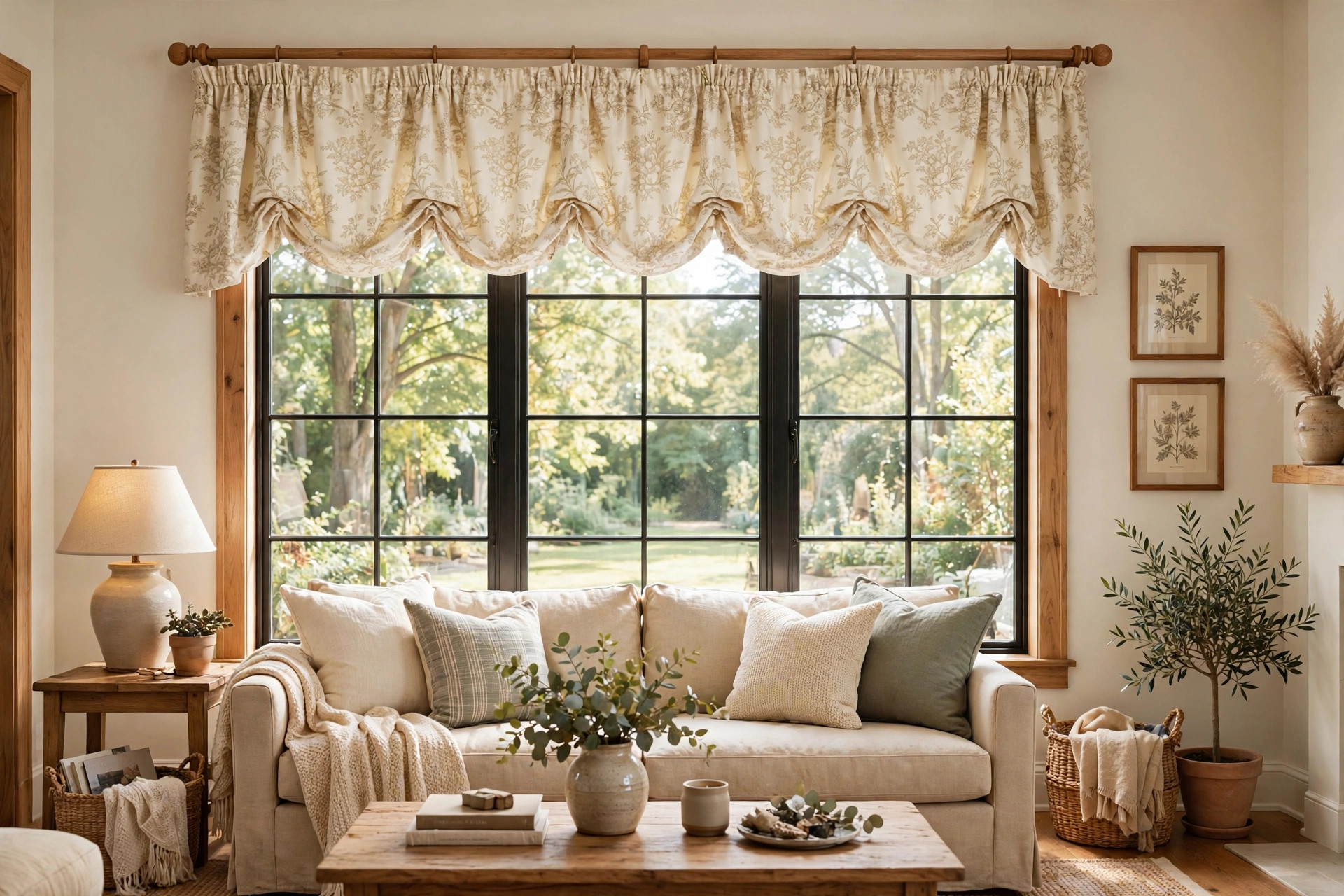

If you are shopping for custom valances for windows for sale, you already know the appeal. A valance is a short curtain that covers only the top of a window. It hides the rod or hardware. It adds color and shape. It does not block the light. And when you choose a custom valance instead of a ready-made one, it fits your window exactly.
This guide explains what to look for, how to measure, what fabrics work best, and what you should expect to pay. It also covers safety and care, so your valance stays crisp for years.
Why Custom Valances Are Worth the Money
Ready-made valances come in set sizes. They often leave gaps at the sides or hang too short. A custom valance is cut for your exact window width and height. That matters most on wide windows, sliding doors, and windows that sit off center.
A custom piece also lets you pick the fabric. You can match a chair, a rug, or a paint color. Wayfair and Blinds.com both carry broad fabric libraries, and many sellers let you order free swatches before you buy. Swatches are worth the wait. Colors look different in your light than on a screen.
Custom valances work well in rooms where you want softness without full drapes. Kitchens and baths are the most common spots. The valance adds a finished look but stays clear of counters, sinks, and steam.
Types of Valances You Will Find for Sale: Custom Valances for Windows for Sale
Sellers offer many styles. The names vary, but most fall into a few groups.
Rod Pocket Valances
A rod pocket valance has a sewn channel at the top. The curtain rod slides through it. The fabric gathers softly along the rod. This is the most common type and often the least costly.
Scalloped and Swag Valances
Scalloped valances dip in the middle in a series of curves. Swags are made of long pieces of fabric that drape in soft loops. Both styles look formal. They suit dining rooms and front rooms.
Flat Valances
A flat valance hangs straight from the top with little or no gathering. Some have a board mount at the back so the face stays smooth. Flat styles read as modern. They pair well with top rated sheer linen curtains for USA homes when you want layers without bulk.
Pleated Valances
Pleated valances use pinch or pencil pleats at the top. They hold their shape well. They look tailored and dressy. They are a good match for bedrooms that already use pleated drapes.
Cornice Boards
A cornice board is a hard panel covered in fabric. It mounts above the window and gives a crisp, structured edge. Cornices are pricier, but they never sag. You will see them in high-end living rooms and hotels.
How to Measure for a Custom Valance
Good measurements make a custom order work. Take your time here.
First, measure the window width. Use a steel tape, not a cloth one. Measure the frame edge to edge. For inside mounts, measure the opening in three places and use the narrowest number.
Next, decide how far past the window you want the valance to reach. Most designers add four to six inches on each side. This makes the window look wider. If the valance will sit over a shade or blind, add extra room so the two do not crowd.
Then measure the drop. The drop is the length from the top of the rod to where you want the fabric to end. Most valances run between 12 and 18 inches. On tall windows, go a little longer so the valance does not look skimpy.
Write down all three numbers: width, side extension, and drop. When you order, give the seller the finished width, not the width of the window alone. If you want full gathers, ask the seller what fullness the fabric gives. A common rule is one and a half to two times the finished width in flat fabric.
If your window is an odd shape, note that too. Arches and bays need special notes. For very wide spans, you can buy arched window shades online in the USA for the glass below and top them with a custom valance for a clean look.
Fabrics and Styles to Choose From
Fabric choice decides the mood of the room. It also decides how the valance holds up.
Cotton and linen blends are the most popular. They breathe well and work in kitchens. They wrinkle, so expect to press them after washing. A cotton canvas gives a relaxed country look. A linen blend feels more refined.
Polyester and microfiber fabrics resist wrinkles and hold color in sunlight. They are a smart pick for sunny rooms and for homes where cleaning must be easy. Many budget valances sold at Walmart and Target use these blends.
Velvet and heavy damask suit formal rooms. They hold pleats well. They fade less in direct sun than light cottons, though they still need care. Pair a velvet valance with best custom drapery services near me if you want full-length panels in the same fabric.
Sheer fabrics, like voile or organza, give a light, airy top to the window. They do little to block light, but they soften the frame nicely. They work over privacy glass and in baths.
Pattern choices run from plain solids to florals, stripes, and plaids. A bold pattern can carry a plain room. A solid can calm a busy one. Match the pattern scale to the room. Large prints suit large rooms. Small prints suit small windows.
Where Valances Work Best, Room by Room
Different rooms ask different things of a valance.
In the kitchen, a valance sits over the sink window or above a breakfast nook. Choose washable fabric. Grease and steam settle on kitchen textiles, so pick a cotton or polyester blend that can go in the machine. Keep the drop short near the stove.
In the living room, the valance sets the tone for the whole space. A tailored pleated valance suits a formal room. A flat valance suits a modern one. This is the room where a bold pattern earns its keep. If the couch is plain, a patterned valance can be the accent the room needs.
In the bedroom, pair the valance with blackout panels for sleep. The valance covers the top of the panels and hides the rod. Choose soft fabrics and calm colors. A valance alone does not darken a room, so plan the lower layer with that in mind.
In the bath, keep the drop above the splash zone. Small windows take small valances. A simple rod pocket style in a mildew-resistant fabric works well. Avoid long swags here, as steam will weigh them down.
In the dining room, you can be more formal. Scalloped edges, trim, and fringe all suit this space. Match the trim to the chair cushions or the rug for a pulled-together look.
What Custom Valances Cost
Prices vary with size, fabric, and labor. A simple rod pocket valance in a stock fabric may run 25 to 60 dollars for a standard window. Custom work in a mid-range fabric usually runs 75 to 150 dollars per window. Premium fabrics, pleats, and cornice boards can push the price to 200 dollars or more.
Order size matters. Many sellers cut a discount for four or more matching valances. If you are dressing a whole house, ask about package pricing before you place the order.
Watch the extras. Shipping for wide pieces can add up. Some sellers charge for lining, which adds body and keeps sun from fading the back. Lining is worth the cost in sunny rooms. Rush fees apply if you need the piece fast. Plan for a two-to-four-week lead time on most custom orders.
Compare a few sellers before you commit. The Home Depot and Lowe’s offer made-to-measure programs in stores and online. IKEA keeps costs low with a smaller range of set sizes. For design ideas before you buy, The Spruce and HGTV both run window treatment guides with photos.
Care and Upkeep
Most valances collect dust at the top. Vacuum them monthly with an upholstery brush. This keeps them fresh between washes.
Check the care label before you wash. Cotton valances can usually go in the machine on a gentle cycle. Use cold water to cut shrinkage. Hang them damp and smooth the seams by hand. Iron on low while they are still slightly damp.
Polyester valances wash easily and dry fast. Avoid high heat, which can melt or set wrinkles. Sheers need a mesh bag in the washer to stop snags.
Sun will fade any fabric over time. If the window faces south or west, use a lined valance or add a UV window film. Rotate valances between rooms if one side of the house gets much more sun.
Inspect the rod and brackets once a year. Fabric weight, steam, and time can loosen hardware. Tighten screws and replace worn brackets before the valance sags.
Safety Notes for Window Treatments
Safety matters in homes with small children and pets. Old corded shades and blinds have caused injuries. The U.S. Consumer Product Safety Commission advises against corded window coverings where young children are present.
Most valances hang on a plain rod with no cords, which makes them one of the safest choices. Still, keep these rules in mind. Mount hardware firmly so nothing can fall. Keep any tiebacks or pulls out of a child’s reach. If you layer the valance over blinds with cords, use cordless blinds or add a cord cleat high on the frame.
In the kitchen, keep valances clear of the stove and oven. Fabric near an open flame is a hazard. Choose a short drop in cooking zones and never hang a long swag over a range.
Frequently Asked Questions
What is the standard length of a valance?
There is no single standard. Most valances run 12 to 18 inches long. Short windows take shorter valances. Tall windows take longer ones. A good rule is that the valance should cover about one sixth of the window height.
Can I use a valance with blinds?
Yes. A valance sits above the blinds and hides the headrail. Leave enough room between the two so the blinds move freely. This is a common pairing in bedrooms and home offices.
Do valances make a room look dated?
Not by default. A dated look comes from old fabrics, not from the valance itself. A clean flat valance in a modern fabric looks current. Update the fabric and the style reads as new.
Should the valance match the curtains?
It does not have to match exactly. Many rooms pair a solid valance with patterned curtains, or the reverse. Keep the colors in the same family so the window looks planned rather than random.
How wide should a custom valance be?
The finished valance should be at least as wide as the window plus four to six inches on each side. For a gathered look, the flat fabric width should be about one and a half to two times that finished width.
Can I hang a valance without a rod?
Yes. Some valances mount on a flat board, called a cornice, that screws to the wall. Others use tension rods inside the frame or clip rings on a decorative rod. Board-mounted cornices give the cleanest edge.
A Final Word
A custom valance is a small piece with a big effect. It frames the window. It hides hardware. It adds color and texture without taking light from the room. Measure with care, pick a fabric that fits the room and the sun it gets, and order from a seller whose reviews you trust. Done well, a custom valance can stay in place for a decade and still look fresh.
References
Blinds.com. (n.d.). Window blinds, shades, and shutters. https://www.blinds.com HGTV. (n.d.). Home and garden ideas. https://www.hgtv.com IKEA. (n.d.). Home furnishings. https://www.ikea.com Lowe’s. (n.d.). Home improvement products. https://www.lowes.com Target. (n.d.). Retail store. https://www.target.com The Home Depot. (n.d.). Home improvement products. https://www.homedepot.com The Spruce. (n.d.). Home and garden advice. https://www.thespruce.com U.S. Consumer Product Safety Commission. (n.d.). Product safety information. https://www.cpsc.gov Walmart. (n.d.). Everyday low prices. https://www.walmart.com Wayfair. (n.d.). Furniture and home goods. https://www.wayfair.com
Was this guide helpful?

About David Wilson
The My Garden US editorial team writes practical, in-depth home and garden guides for American homeowners — tested advice, no fluff.
You May Also Like

Best Outdoor Patio Curtains for Sale: A Plain Buyer’s Guide
January 2, 2026 0 views
The Best Sheer Linen Curtains for American Homes
June 21, 2026 0 views
Reliable Blinds Installation Companies in the USA
May 22, 2026 0 views