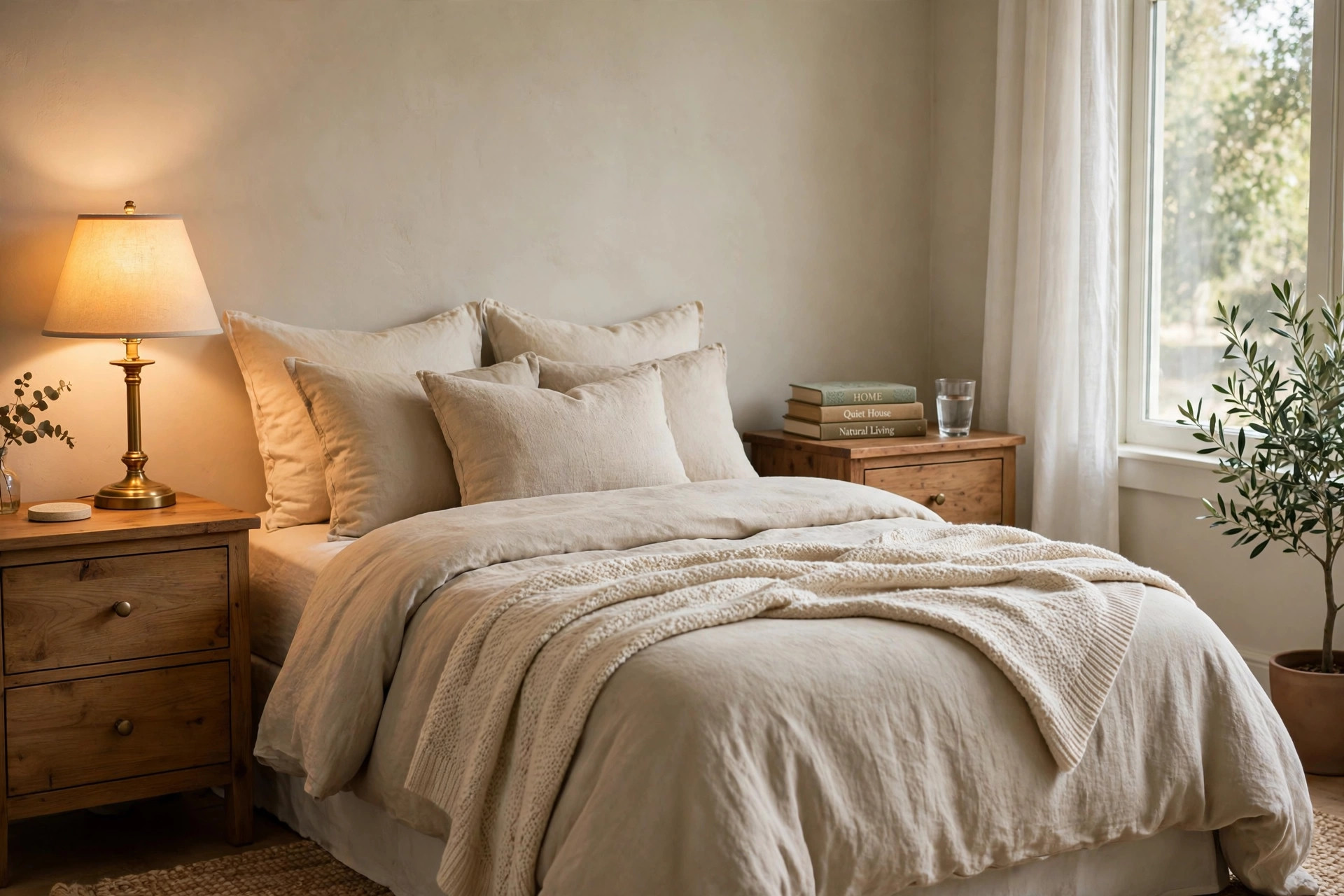

This bedroom side tables American homes guide starts with a simple fact. The small table next to the bed gets more use than almost any other piece of furniture in the house. A lamp sits on it. A clock. A book. A glass of water. Glasses, keys, a phone charger, and a box of tissues may join them. When the table is the right size and height, the whole bedroom works better. When it is too tall, too low, too small, or wobbly, every small chore at night feels harder. This guide will walk you through the choices so you can buy with confidence and keep the table in good shape for years.
Why the Side Table Matters More Than It Looks
A bedroom side table is also called a nightstand or bedside table. Whatever the name, it serves as the landing spot for the last hour of the day and the first minutes of the morning. Doctors and sleep writers have long said that a calm bedroom helps people rest. Part of that calm is order. When small things have a place, the room stays tidy, and the mind can let go of the day.
A side table also protects your larger furniture. Without a proper spot, a bedside lamp may end up balanced on a stack of books or a chair. Water glasses leave rings on floors or dressers. A sturdy table with a safe spot for the lamp removes these small risks. For older adults, a side table at the right height means a phone, a light switch, and medicine are within reach without standing up in the dark.
American homes come in many bedroom sizes, from small city apartments to large farmhouses. The side table must fit the room, the bed, and the habits of the person who sleeps there. The sections below cover how to measure, what styles exist, what to pay, and how to care for the piece once it is home.
How to Choose: Size, Height, and Fit: Bedroom Side Tables American Homes Guide
Match the Height to the Mattress
The most common mistake is buying a table that is too tall or too low. A good rule is simple. Measure from the floor to the top of your mattress, not the bed frame. The top of the side table should sit within two to three inches of that height, level with the mattress or slightly above it.
Why does this matter? If the table is much lower than the mattress, you must reach down and back to find the lamp or the glass of water. If it is much taller, the lamp throws light over your eyes instead of across the bed, and reaching up feels awkward. A 24-inch table works well with most standard beds. Deep pillow-top mattresses may call for a 26-inch or 28-inch table.
Measure the Width
Side tables for American beds usually run 16 to 28 inches wide. A twin or full bed in a small room often takes a 16-to-20-inch table. A queen bed takes 20 to 24 inches. A king bed can carry a 24-to-28-inch table, which balances the wide headboard. Leave at least two inches of space between the table and the bed frame so bedding can tuck in and the table can move for cleaning.
Think About Depth and Storage
Depth usually runs 14 to 20 inches. A deeper table holds a lamp and a book side by side. Shallower tables suit narrow rooms and hallways turned into sleeping spaces. If you keep many small items by the bed, choose a table with a drawer. A drawer hides clutter and keeps dust off medicine and reading glasses. If the room is small, a table with an open shelf below can hold extra books without a drawer that needs room to pull out.
Many shoppers compare side tables with bedroom dressers when planning storage, since both pieces serve the bedroom. A dresser holds clothes. A side table holds the small tools of daily life. Together they keep the room in order.
Types and Styles of Bedroom Side Tables
The Classic One-Drawer Nightstand
This is the most common type in American homes. A small wood cabinet with one drawer and one open shelf, often 24 inches tall and 20 inches wide. It suits almost any bedroom. Wood tones range from light oak to dark walnut. Painted white and gray finishes are popular in modern farmhouse rooms.
The Open Table
Some side tables are simple open frames with a top and a lower shelf, no drawers. These look light and airy, which helps in small bedrooms. They are easy to clean and easy to move. The trade is dust. Items on an open shelf gather dust faster than items in a drawer.
The Tall Chest Nightstand
A taller, narrower table with two or three drawers works like a small chest. It suits tall beds and small rooms where floor space is short but vertical space is free. People who keep books, notebooks, and many small items by the bed often prefer this style.
The Drum or Round Table
Round drum tables bring soft curves to a bedroom full of straight lines. They work well in corners and next to beds with rounded headboards. Round tops offer less flat space than square tops, so they suit people who keep only a lamp and a clock by the bed.
The Modern Floating Shelf
Some homes use a wall-mounted shelf as a side table. This saves floor space and makes cleaning easy. The shelf must be fixed to a wall stud to hold a lamp safely. Floating shelves suit modern rooms and small apartments.
Matching or Mixing
Old advice said the two side tables must match. Today many designers mix. A pair of matching tables gives a calm, formal look. Mixed tables, one wood and one painted, or one tall and one short, can add interest. If you mix, keep one thing the same, such as the finish color or the height, so the pair still looks planned.
Shoppers who like the modern farmhouse look often pair side tables with modern farmhouse tables elsewhere in the home, carrying the same wood tone from room to room. A rug under the bed can tie the pieces together, and readers of luxury area rugs guides know that the right rug makes wood furniture look warmer.
Materials: Wood, Metal, and More
Solid wood side tables last the longest. Oak, maple, cherry, and walnut are the classic American hardwoods. Solid wood can be sanded and refinished when it shows wear. Veneer over plywood or particle board costs less and can look fine, but it does not take repair as well. If you choose veneer, look for thick veneer on the top, where wear shows first.
Metal frames with wood tops are common in industrial and modern styles. They are strong and often cost less than all-wood tables. Glass tops look light but show every fingerprint and dust speck. They need weekly wiping to stay clean.
Check the joinery. Dovetail or mortise-and-tenon joints on drawers signal a well-made piece. Drawer glides should move smooth and quiet. A table that wobbles in the store will wobble worse at home, so test it with a firm push before you buy.
Many buyers browse the collections at IKEA and Wayfair for budget-friendly options, while Article and West Elm are known for modern mid-century styles. For a wider range of classic and contemporary looks, Crate & Barrel and CB2 offer many bedroom collections. Design ideas and room photos appear on Houzz and Apartment Therapy, and buying guides with lab-tested picks are published by The Spruce.
Cost and Price: What to Expect
Bedroom side tables in the United States cover a wide price range. Simple particle-board tables start around 30 to 60 dollars. Mid-range veneer and solid-pine tables run 80 to 200 dollars. Solid hardwood tables from established furniture makers run 200 to 600 dollars each. Designer pieces can pass 800 dollars.
Buying a pair often costs less per table than buying one. Many stores sell nightstands in sets of two. Watch for sales around major holidays. Furniture stores often cut prices on bedroom furniture in January and July, when new lines arrive.
Price is not the only cost. A cheap table that wobbles, loses its finish in a year, or has drawers that stick will need replacement. A well-made solid wood table can serve for twenty years. Over time, the better table is the cheaper one. Check the warranty. A one-year warranty is standard. Some makers offer longer coverage on frames and drawer glides.
Shipping matters for online orders. Large tables may carry high delivery fees, and returns can be costly. Measure your doorways and stairwells before you order. Read the return policy before you click buy.
Care and Upkeep
Wood side tables need simple, steady care. Dust them weekly with a soft dry cloth. Wipe spills at once, since water can raise the grain and leave white rings. Coasters under glasses and felt pads under lamps protect the top. Keep the table out of direct sun, which fades finish and dries wood. In dry winter months, a room humidifier helps wood furniture as much as it helps people.
Polish is not needed often. A light furniture polish once or twice a year is enough for most finishes. Too much polish builds a sticky film that traps dust. For painted tables, a damp cloth with mild soap cleans most marks. Touch-up paint pens can hide small chips.
Tighten screws and bolts once a year. Tables loosen with daily use, and a quick turn of a screwdriver stops the wobble before it grows. Check drawer glides for dust and wipe them clean so drawers keep sliding smooth.
If the finish wears through after years of use, solid wood tables can be sanded and refinished. This is a weekend project for a simple table. Veneer tables cannot take heavy sanding, so protect the top from the start.
Safety in the Bedroom
A side table is small, but safety still counts. Anchor tall or top-heavy tables to the wall if small children live in the home. Children climb, and a falling table with a lamp can cause real harm. The Consumer Product Safety Commission offers guidance on anchoring bedroom furniture, and HGTV publishes room safety tips for families.
Place lamps so the cord runs behind the table, not across the floor where feet catch it. Use LED bulbs, which run cooler than old incandescent bulbs. Keep the lamp shade at least a few inches from bedding and curtains. If the table holds medicine, keep it in a closed drawer or a child-proof container, out of reach of children.
Check that the table is stable on your floor. On carpet, wide feet or a solid base resist tipping better than thin legs. On hard floors, felt pads under the legs stop sliding and protect the floor finish.
Frequently Asked Questions
How tall should a bedroom side table be?
Measure from the floor to the top of your mattress. The table top should sit within two to three inches of that height. For most standard beds, a 24-inch table is right. Deep pillow-top mattresses often need a 26-inch or 28-inch table.
Should both side tables match?
They do not have to match. Matching tables give a calm, formal look. Mixed tables can add interest if they share one trait, such as height or finish color. Either choice works when the pair looks planned.
What is the best material for a side table?
Solid hardwood lasts longest and can be refinished. Oak, maple, cherry, and walnut are strong choices. Veneer over plywood costs less and looks fine when cared for. Metal frames with wood tops suit modern and industrial rooms.
How much should I spend on a nightstand?
Expect 30 to 60 dollars for basic tables, 80 to 200 for mid-range, and 200 to 600 for solid hardwood. Designer pieces run higher. A well-made table that lasts twenty years often costs less over time than a cheap one replaced every few years.
Can I use a floating shelf as a side table?
Yes, if it is fixed to a wall stud. Floating shelves save floor space and suit small rooms. They must be strong enough to hold a lamp safely. Test the mount with firm pressure before placing anything breakable on it.
How do I keep the table top looking new?
Use coasters under glasses, felt pads under lamps, and wipe spills at once. Dust weekly with a soft dry cloth. Keep the table out of direct sun. Tighten the hardware once a year.
A Short Final Word
The bedroom side table is a small piece with a large job. Measure your bed, choose a height that matches the mattress, pick a style that fits the room, and buy the best build your budget allows. Care for it with simple dusting and quick spill cleanup, and it will serve you well for years. A calm, ordered bedside makes for a calmer night and an easier morning, and that is worth the small effort of choosing well.
References
Apartment Therapy. (n.d.). Home design ideas and inspiration. https://www.apartmenttherapy.com Article. (n.d.). Modern furniture. https://www.article.com CB2. (n.d.). Modern furniture and decor. https://www.cb2.com Crate and Barrel. (n.d.). Furniture and home decor. https://www.crateandbarrel.com HGTV. (n.d.). Home and garden ideas. https://www.hgtv.com Houzz. (n.d.). Home design and remodeling. https://www.houzz.com IKEA. (n.d.). Home furnishings. https://www.ikea.com The Spruce. (n.d.). Home and garden advice. https://www.thespruce.com U.S. Consumer Product Safety Commission. (n.d.). Product safety information. https://www.cpsc.gov Wayfair. (n.d.). Furniture and home goods. https://www.wayfair.com West Elm. (n.d.). Modern furniture and home decor. https://www.westelm.com
Was this guide helpful?

About Sarah Mitchell
The My Garden US editorial team writes practical, in-depth home and garden guides for American homeowners — tested advice, no fluff.
You May Also Like

Mid Century Chairs: An American Homes Guide
February 8, 2026 0 views
Luxury Area Rugs for Texas Homes: A Complete Guide
June 11, 2026 0 views
Living Room Wall Art USA Online Deals: How to Buy Art for Your Home
May 30, 2026 0 views