
Introduction
Carpet buyers in the USA face a common choice. Should you pick berber or frieze? This berber vs frieze carpet comparison usa guide answers that question in plain terms.
Both are wall-to-wall carpet styles sold in almost every flooring store in the country. Yet they look different, feel different, and wear different. One has tight loops. The other has long, twisted yarns. The right pick depends on your rooms, your family, your pets, and your budget.
This guide walks through each point: how each carpet is made, how each holds up to feet, pets, and stains, what each costs, and how to care for it. By the end, you will know which style suits your home.
Why This Comparison Matters: Berber vs Frieze Carpet Comparison Usa
Carpet is a big purchase. A whole house of carpet can cost thousands of dollars. It stays in your home for ten years or more. A wrong choice is costly and hard to fix.
Berber and frieze sit at opposite ends of the carpet world. Berber is flat, firm, and patterned. Frieze is soft, loose, and casual. Many shoppers stand in a showroom and feel torn between the two. They like the look of one and the feel of the other.
When you know the trade-offs, you can match the carpet to the room. A busy hallway needs a different carpet than a quiet bedroom. A house with dogs needs a different carpet than a house with none. The sections below lay out each difference step by step.
What Berber Carpet Is
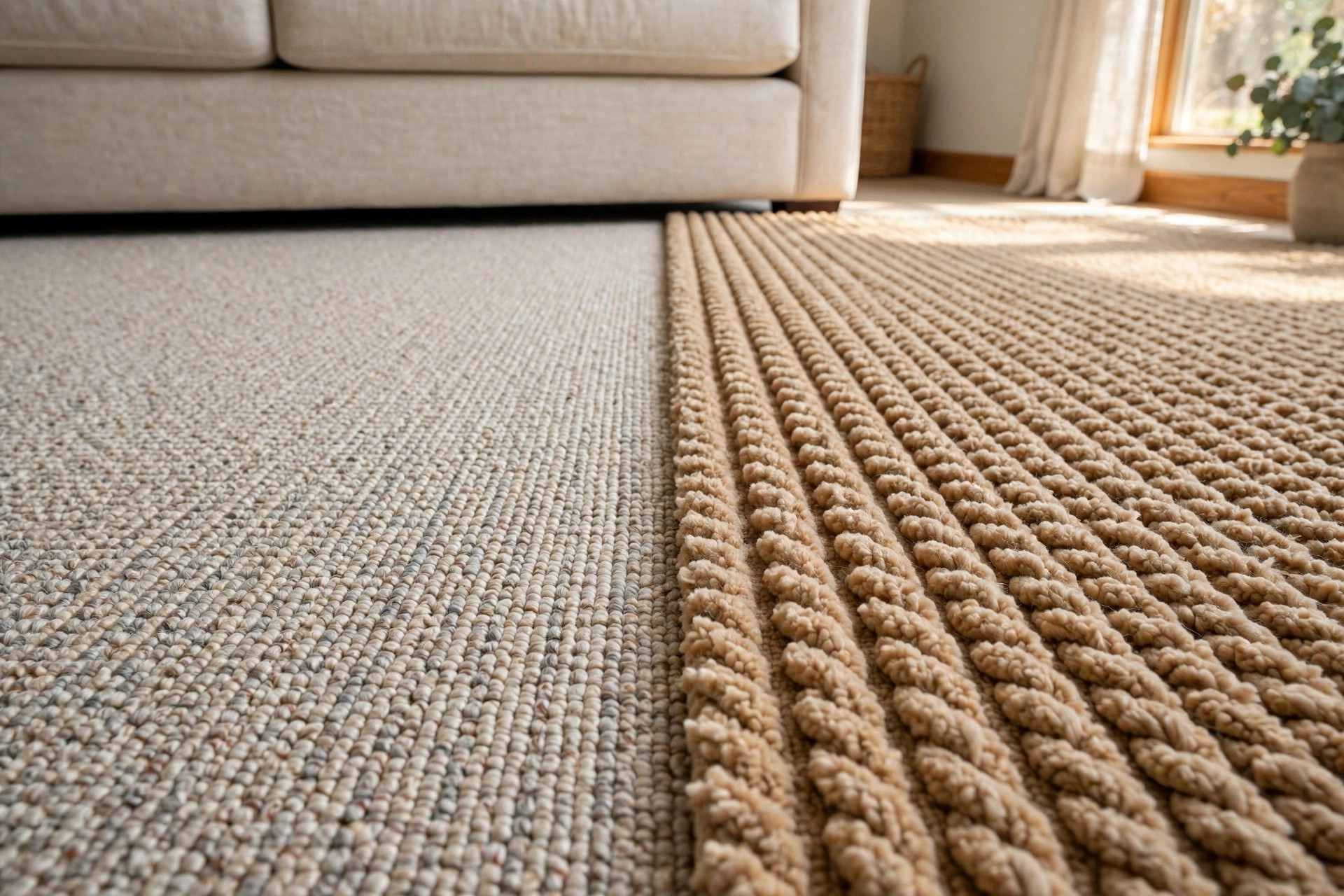
Berber carpet is made with yarn loops. The yarn is pushed through the backing and left in loops. The loops are not cut. This makes a low, dense surface with a natural texture.
The style takes its name from the Berber people of North Africa. Their hand-woven rugs had a similar looped look. Modern berber is made by machine, but the name stayed.
Most berber sold in the USA today is made of olefin, also called polypropylene. Some is made of nylon. Wool berber exists too, and it costs more. The classic berber look is a light base color with darker flecks. The flecks hide dirt and small marks. That is one reason it became popular in offices and family rooms.
Berber is known for its strength. The tight loops do not crush easily. Feet walk over them, and the loops spring back. The surface is thin and flat, so doors swing clear over it. It is a practical carpet for hard-working rooms.
What Frieze Carpet Is
Frieze carpet is made with cut pile. The yarn loops are cut open at the top. Each yarn is twisted very tight, much tighter than in a normal cut-pile carpet. The twisted yarns curl and bend in different directions. This gives a shaggy, casual look.
Frieze is sometimes called twist carpet. The high twist is its main trait. The yarns are long compared with berber. When you run your hand over frieze, it feels full and soft. Light falls on the twisted yarns in many ways, so the color looks rich and varied.
Most frieze is made of nylon or polyester. Nylon frieze is the tougher of the two. Polyester frieze is softer and often cheaper, but it mats down faster in busy areas. Frieze works well in living rooms, family rooms, and bedrooms. It invites bare feet and gives a room a warm, relaxed mood.
Berber vs Frieze: How They Look
Look is the first difference most buyers notice. Berber looks neat and tailored. The loops form a flat, even surface. Many berbers have a flecked pattern in two or three tones. The pattern hides soil. It also hides seams between carpet rolls, which matters in large rooms.
Berber fits rooms with a clean, modern style. It suits home offices, hallways, and basements.
Frieze looks casual and textured. The twisted yarns point in all directions. This hides footprints and vacuum marks better than almost any other carpet. It suits cozy, relaxed rooms. Frieze can look messy to some eyes, since the twisted look is not formal.
Frieze comes in a wider range of solid and tone-on-tone colors. The twist gives even a single color more life.
How They Feel Underfoot
Feel is where the two styles differ most. Berber feels firm and flat under the feet. The dense loops do not sink. Some people like this firm feel. Others call it hard. Berber is not the carpet you lie on to read a book.
Good padding helps. A quality pad under berber adds some give. But even with a thick pad, berber stays firmer than frieze. Buyers who want softness often pass on berber after one walk across a sample.
Frieze feels soft and deep. The long twisted yarns cushion each step. It is one of the most comfortable carpet styles for bare feet. Children like to play on it. It works well in bedrooms, where the first step in the morning should feel kind.
For shoppers comparing the best flooring for kitchens with dogs usa, comfort is only part of the story. Pets add wear and stains to the mix. That point comes up again in the sections below.
Durability and Foot Traffic
Both styles are known as durable carpets. But they wear in different ways.
Berber handles heavy traffic very well. The loop structure resists crushing. Hallways, stairs, and family rooms with constant foot traffic are berber’s strong ground. The carpet keeps its shape for years. High-quality nylon berber can last fifteen years or more in a busy home.
Berber has one weak point. A snag can pull a whole row of loops. A pet claw can catch a loop. So can a rough furniture leg dragged across the floor. Once a loop pulls, it leaves a visible line. Repair is possible, but it takes a skilled hand. Homes with large dogs or cats with sharp claws should weigh this risk.
Frieze handles traffic in a different way. The twisted yarns bend and recover. Footprints vanish because the yarns already point in many directions. This makes frieze a good pick for rooms where looks matter between cleanings.
Frieze can mat in the heaviest traffic lanes. Over years, the twists relax in the main walk path. A cheaper polyester frieze mats faster. A dense nylon frieze holds up much better. When you shop, bend a sample back and look at the backing. If you can see the backing through the yarn, the carpet is too thin for heavy traffic.
For a true high-traffic carpet for living rooms and stairs, berber has the edge in raw toughness. Frieze has the edge in hiding daily wear. The best choice depends on what kind of wear your home produces.
Stains, Pets, and Cleaning
Stains worry every carpet buyer. The two styles behave quite differently.
Olefin berber resists stains well. Olefin fiber does not absorb water-based spills. Many spills sit on the surface and can be blotted up. The flecked pattern hides small spots that remain. This is a real plus in homes with children.
But berber’s tight weave can trap fine dirt deep in the loops. Regular vacuuming is a must. Once dirt works deep into the loops, it is hard to remove. A vacuum with strong suction, and no beater bar, works best. The beater bar can snag loops.
Frieze hides dirt between cleanings, but it can be harder to clean well. The long yarns give spills more places to hide. Pet hair wraps around the twisted fibers. A vacuum with a rotating brush helps lift the yarns and pull out hair.
Pet owners face a trade-off. Berber resists pet claws pulling loops, which is a minus. Frieze can trap pet hair, which is also a minus. Neither is perfect for pets. Many pet owners in the USA end up comparing carpet styles and then choosing hard floors for the pet zones instead. Our guide to the best flooring for kitchens with dogs usa covers those choices in more detail.
Cost and Price in the USA
Price is a key part of any berber vs frieze carpet comparison usa shoppers make. Both styles sit in the mid-range of carpet prices. Exact prices vary by fiber, brand, and region.
Berber material often costs between four and eight dollars per square foot in many USA stores. Wool berber costs more. Frieze material often costs between three and nine dollars per square foot. Nylon frieze sits at the higher end. Polyester frieze sits at the lower end. Installed prices for either style often land between five and twelve dollars per square foot with pad.
In short, neither style wins on price alone. A cheap berber costs less than a fine frieze. Compare like with like. Look at the fiber type, the face weight, and the density, not just the style name.
To keep costs down, measure rooms with care. Buy ten percent extra for waste. Big-box retailers such as Home Depot and Lowe’s often run carpet sales with low-cost installation. Specialty stores such as LL Flooring also carry wide carpet lines worth comparing.
Care and Upkeep
Both carpets need regular care to look their best. The routines differ a little.
For berber, vacuum often. Use suction only, with the beater bar off. Move furniture now and then so the same spots do not wear. Blot spills at once with a clean white cloth. Never rub, since rubbing can fuzz the loops.
For frieze, vacuum often as well. Use the beater bar on the right height setting. The brush lifts the twisted yarns and keeps them from matting. Blot spills at once. Deep clean once a year to pull out trapped dirt.
Both carpets benefit from a good pad. A dense pad extends carpet life by years. It also makes the floor feel better. Do not skip the pad to save money. It is one of the best values in a flooring job.
Rotate area rugs over carpet in the heaviest lanes. This spreads the wear. Keep shoes at the door if you can. Grit from shoes is the main enemy of all carpet.
Safety Notes
Safety matters in a home with children, older adults, or anyone with weak balance. Berber’s low, firm surface is easier to walk on. Wheelchairs and walkers roll over it with less effort. It is the safer pick for ramps and for homes where falls are a worry.
Frieze is thicker and softer. Most people find it safe, but very thick frieze can catch a toe or make a walker harder to push. If mobility is a concern, choose a shorter frieze and a firm, low pad.
Both carpets should meet USA fire safety rules for the room where they go. Ask the store about the carpet’s fire rating. Keep space heaters away from all carpet. Make sure the carpet is installed tight, with no ripples or loose edges. Ripples cause trips.
Professional installation matters for both styles. Berber seams need care to hide the loop pattern. Frieze needs the right stretch so it does not buckle. A poor install shortens the life of any carpet. Guides from This Old House and The Spruce explain what good installation looks like.
Frequently Asked Questions
Which lasts longer, berber or frieze? In heavy traffic, berber often lasts longer. Its loops resist crushing. A good nylon berber can serve fifteen years or more. Frieze lasts well in light to medium traffic. In a busy hallway, frieze may mat before berber wears out.
Is berber or frieze better for pets? Neither is perfect. Berber loops can snag on claws. Frieze traps pet hair in its twists. For homes with pets, many buyers pick a dense, low frieze in a mid-tone color, or they choose hard floors for pet areas. Regular vacuuming matters more than the style name.
Which carpet is easier to clean? Berber is easier for surface spills, since olefin resists many stains. Frieze needs more vacuum work to lift hair and deep dirt. Both need prompt blotting of spills and yearly deep cleaning.
Does berber show seams? Berber hides seams well if the pattern is flecked. The busy pattern breaks up the eye’s view. Solid-color berber shows seams more. A skilled installer matches the pattern at each seam.
Is frieze good for stairs? Frieze works on stairs, but berber is the safer and tougher pick. The thick twist of frieze can wear fast on stair noses. If you love the frieze look, choose a dense, low-profile frieze for the stairs.
What does berber vs frieze carpet cost per square foot in the USA? Material often runs three to ten dollars per square foot for both styles. Installed prices often run five to twelve dollars per square foot with pad. Fiber type and quality move the price more than the style name.
A Final Word
The berber vs frieze carpet comparison usa buyers ask for has no single winner. Berber brings toughness, a tailored look, and strong stain resistance. Frieze brings softness and warmth that hides daily life.
Match the carpet to the room and to your household. Busy zones favor berber. Restful rooms favor frieze. Homes with pets or mobility needs should weigh the snag risk of loops against the softness of twists.
Take samples home. Read the labels. Get three quotes. A little homework now buys you a floor you will enjoy for a decade or more.
Some shoppers finish this comparison and decide carpet is not for them at all. If you lean that way, our piece on reclaimed wood flooring for sale near me is a good next read. And for the garage, which needs a tougher surface still, see our guide to the best garage floor mats for winter usa.
For more background, see Shaw Floors, Mohawk Flooring, and Daltile.
References
Daltile. (n.d.). Ceramic and porcelain tile. https://www.daltile.com LL Flooring. (n.d.). Hardwood, vinyl, and tile flooring. https://www.llflooring.com Lowe’s. (n.d.). Home improvement products. https://www.lowes.com Mohawk Flooring. (n.d.). Flooring products. https://www.mohawkflooring.com Shaw Floors. (n.d.). Flooring products. https://www.shawfloors.com The Home Depot. (n.d.). Home improvement products. https://www.homedepot.com The Spruce. (n.d.). Home and garden advice. https://www.thespruce.com This Old House. (n.d.). Home renovation guidance. https://www.thisoldhouse.com
Was this guide helpful?

About Lisa Anderson
The My Garden US editorial team writes practical, in-depth home and garden guides for American homeowners — tested advice, no fluff.
You May Also Like
What to Ask About a Flooring Installation Warranty
March 8, 2026 0 views
Mexican Tile for Bathroom Floor for Sale: A Plain Buyer’s Guide
June 21, 2026 0 views
Steam Cleaner for Tile Grout Reviews USA: A Plain and Honest Guide
March 22, 2026 0 views