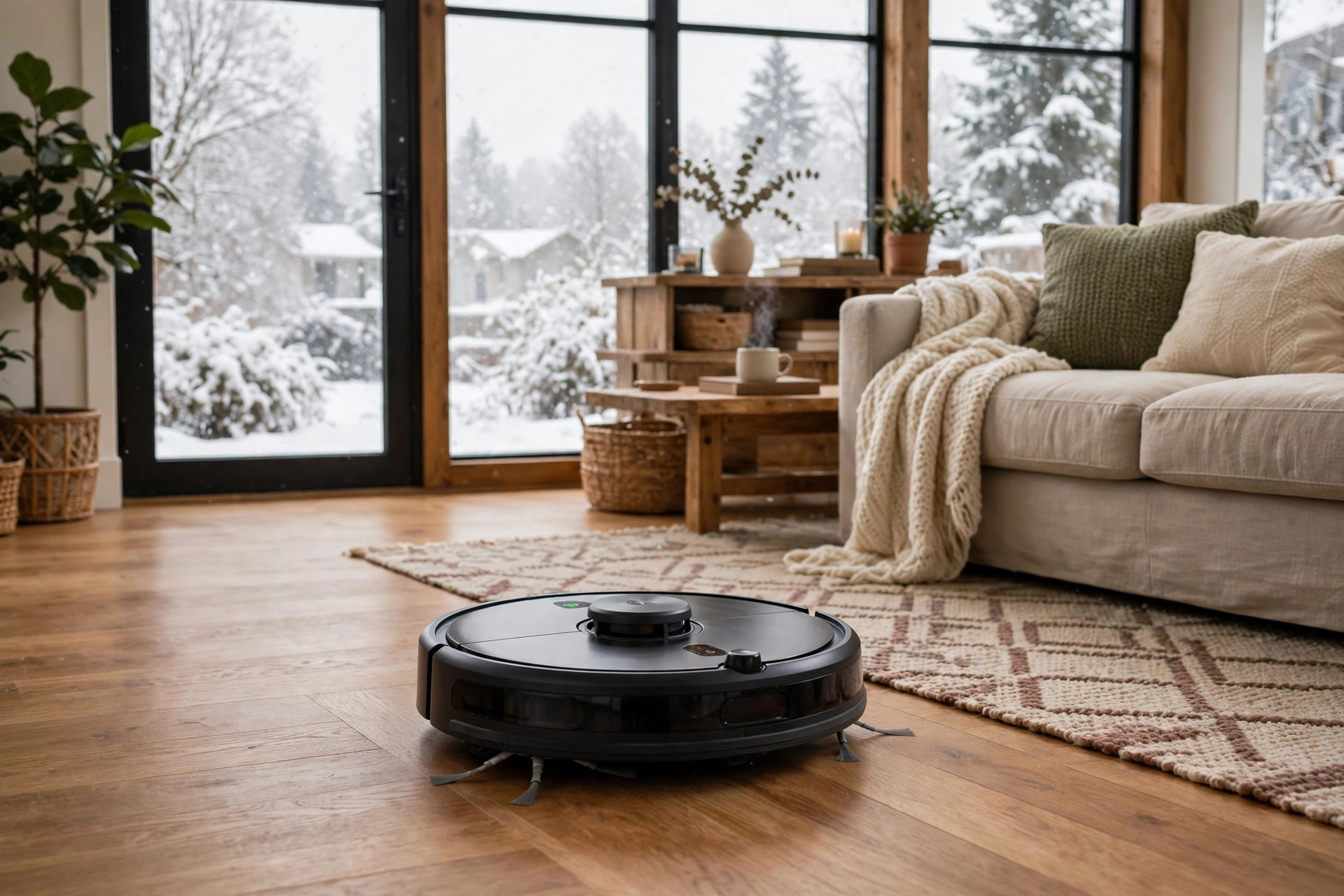

Winter in the northern states brings snow, salt, and sand into every home. Boots track slush across the entry floor. Dogs shake off wet snow in the hall. Dry heat from the furnace stirs fine dust in every room. Keeping floors clean becomes a daily job, and many households turn to cordless robot vacuum cleaners for cold climates to keep up.
A robot vacuum runs on a schedule. It works while you are at work. It cleans under beds and sofas where a broom cannot reach. A cordless model moves freely from room to room with no cord to limit its path. But cold regions place special demands on these machines. Batteries drain faster in cold rooms. Salt and grit wear down brushes. This guide explains what to look for, what you should expect to pay, and how to keep your machine running well through the long cold months.
Why Cold Weather Makes Floors Harder to Keep Clean
In warm months, a home stays fairly clean between weekly vacuum sessions. Winter changes that. Each trip outside ends with boots carrying slush, road salt, and fine sand back inside, and foot traffic carries it deep into the house within hours.
Road salt is the worst offender. It leaves white marks on hard floors and grinds into carpet fibers. It can stain wood if left to sit. Sand from treated roads acts like sandpaper on floor finishes. In rural areas, mud season adds another layer of dirt that dries into fine dust.
Pets make the problem worse. Many dogs grow thicker coats in winter and shed heavily when the heat kicks on. Pet owners often need daily cleaning to keep hair under control.
Dry winter air adds a problem you cannot see. Furnaces and space heaters move air through the house all day. That air carries dust, and sealed winter windows mean the dust stays inside. People with allergies often feel worse in January than in July.
Short days matter too. In December, many workers leave and return in darkness. Dirt tracked in during the week piles up unseen until the weekend. A robot vacuum that runs on a schedule solves this. It cleans every day, whether you are watching or not.
How Cold Affects the Machine Itself: Cordless Robot Vacuum Cleaners for Cold Climates
Robot vacuums live indoors, so they never face true freezing weather during normal use. But cold still reaches them in ways owners often miss.
Batteries are the first concern. Most cordless robot vacuum cleaners use lithium-ion batteries, which hold less charge in cold air. If you store the dock in an unheated garage or porch, the battery will drain faster and wear out sooner. Keep the dock in a heated room, ideally between 50 and 85 degrees Fahrenheit.
Grit is the second concern. Salt crystals and sand wear down bristle brushes over a winter season. Rubber brush rollers hold up better, which is why many winter buyers choose them.
Light is the third concern. Camera-based navigation needs light to see. In a dark house on a short winter day, these models can get lost. Laser-based models do not have this problem, because they map rooms with light beams of their own.
Moisture is the fourth concern. Melting snow creates puddles near doors. A robot vacuum that rolls through a puddle can damage its electronics and spread dirty water across the floor. Smart mapping lets you mark entry zones as off-limits, which keeps the machine on dry ground.
What to Look For When You Buy
Start with battery size and run time. Look for at least 90 minutes on one charge; larger homes need 120 minutes or more. A model that returns to its dock, recharges, and resumes cleaning will finish the job without your help.
Suction power comes next. Makers rate suction in pascals. For winter homes with entry rugs and pet hair, look for at least 2000 pascals. Higher numbers help pull grit out of carpet fibers.
Brush design deserves close attention. Rubber extractors resist tangles and stand up to grit better than bristle brushes. If you have long-haired pets, a tangle-free brush saves you from cutting hair off the roller every week. Independent tests of robot vacuum pet hair performance show how much difference the right brush design can make.
Dustbin size matters when the machine runs daily. A small bin fills fast with winter debris and pet hair. Self-emptying models move dirt into a larger bag in the dock, so you empty the bag once a month instead of the bin every day. These cost more, but winter owners often call them worth it.
Navigation type shapes how well the machine copes with dark winter days. Laser mapping works in any light and builds an accurate floor map. Camera mapping works well in daylight but struggles in the dark. Random bump navigation is cheapest but misses spots and takes longer.
A mopping function helps with salt film. The vacuum pass picks up grit, and the mop pass wipes the white salt haze off hard floors. This does not replace a real mopping, but it keeps floors looking clean between deep cleans. Floor cleaning guides explain how regular light mopping protects finishes.
Filtration keeps winter air cleaner. A true HEPA filter traps the fine dust that furnaces stir up. In a sealed winter home, this makes a real difference for allergy sufferers. The indoor air quality guidance from federal health agencies notes that regular cleaning is one of the simplest ways to cut indoor dust.
App features add control. Room mapping, scheduled runs, and no-go zones let you keep the machine away from wet entry areas and delicate rugs.
Finally, check the warranty and the care manual. Look for clear guidance on storage temperature and winter use.
Readers who split the year between a northern home and a warmer one may also want to compare robot vacuum cleaners made for southern states before they buy.
Types of Cordless Robot Vacuums
Basic bump models are the simplest type. They change direction when they hit a wall or chair leg. They cost the least and suit small apartments. But they clean slowly and miss spots, so they are a poor fit for large winter homes.
Laser-mapping models are the most popular mid-range choice. They scan each room, build a map, and clean in neat rows. They work in the dark, which suits short winter days. Most support no-go zones and room-by-room schedules.
Camera-based models read the room with an onboard camera. They navigate well in daylight and often recognize objects like shoes and pet bowls. But they can struggle in dark rooms.
Self-emptying models pair a robot with a dock that sucks dirt into a sealed bag. You touch the dirt once every month or two. For winter homes where the bin would fill daily, this feature saves real effort. It adds cost and the dock is larger, so measure your space first.
Vacuum-and-mop combos add a water tank and mop pad. They vacuum first and mop after, which handles salt film in one run. The mop is light duty, so treat it as a maintenance tool between real moppings. Major robot vacuum makers publish care notes that help owners get the most from these combo machines.
For context on how these compare with larger commercial machines, a commercial grade robot vacuum cleaners buying guide covers the heavy-duty end of the market.
Cost and Price
Prices for cordless robot vacuum cleaners for cold climates fall into three bands. Basic bump models cost between 150 and 300 dollars. They suit small homes and light use. Mid-range laser-mapping models cost between 300 and 600 dollars. This band holds the best value for most winter homes. High-end models with self-emptying docks and mopping cost between 600 and 1200 dollars, and the top units pass 1200.
A detailed robot vacuum cleaners price comparison across American retailers shows that prices dip during holiday sales. Late November and January bring the deepest discounts, which suits buyers planning for the rest of winter.
Running costs add up. Filters need replacement every two to three months in winter, at 10 to 25 dollars each. Brushes wear faster on salt grit and need yearly replacement. Budget 60 to 100 dollars per year for parts on a machine that runs daily.
Energy use is small. A robot vacuum uses far less power than a full-size upright. The home energy use data from federal sources shows that small appliances add only a few dollars per year to the electric bill, even with daily runs.
Care and Upkeep Through the Winter Season
Daily winter runs put more wear on a robot vacuum than summer use. A simple weekly routine keeps it running well.
Empty the dustbin after every run during the salty months, unless you own a self-emptying model. A full bin cuts suction and strains the motor.
Clean the brushes once a week. Pull hair and thread off the rollers. Check for salt crystals packed around the brush ends.
Wipe the sensors with a dry cloth. Salt dust films over cliff sensors and wall sensors, which causes false drop alerts and poor navigation.
Check the wheels for packed grit. Small stones can jam a wheel. Turn the machine over, spin each wheel by hand, and pick out any debris.
Keep the dock area dry and clear. Do not place the dock on a wet entry mat. Give it two feet of clear space on each side so the machine can line up. If your entry stays damp all winter, move the dock to a hallway closet instead.
Store the machine indoors. Never leave it in an unheated garage or car trunk overnight. Cold soaks into the battery and shortens its life. If you travel for the holidays, leave the machine on its dock in a heated room.
Update the app and the machine software. Makers release updates that improve mapping and battery management. For owners who prefer to do their own maintenance, repair guides from DIY home repair resources and home improvement experts cover common fixes like brush replacement and sensor cleaning.
Safety Notes
A robot vacuum is a safe appliance when used with common sense, but winter conditions add a few risks.
Water is the main risk. Do not let the machine run near melting snow puddles. Use no-go zones around entry areas on wet days, or run the machine only after the floor dries.
Give the dock a safe spot. Plug it into a wall outlet, not a long extension cord across a walkway. Keep it away from radiators and heating vents, which can overheat the battery.
Lithium batteries demand respect. Use only the charger that came with the machine. If the battery swells or the machine smells hot, unplug the dock and stop using it. Product safety guidance covers battery safety for home appliances in plain language.
Supervise the first few runs. Watch how the machine handles rugs and thresholds, and adjust no-go zones before you trust it to run while you are away.
Keep small children and pets calm around the dock. Toddlers may try to ride the machine. Most pets adjust within a week, but the first days need watching.
Frequently Asked Questions
Can a robot vacuum really clean up road salt? Yes, with limits. Strong suction and rubber brushes pick up dry salt and sand well. But wet slush needs a mop or towel first. Run the vacuum after the floor dries.
Will cold weather hurt the battery? Cold storage hurts the battery, not cold rooms. A machine running in a heated house is fine. Keep the dock in a heated room and the battery will last its normal span of two to four years.
Do these machines work on thick winter rugs? Most mid-range and high-end models climb rugs up to three-quarters of an inch thick. Very thick shag rugs can trap smaller machines. Test the machine on your thickest rug during the return window.
Can I run it while I am at work? Yes. Set a schedule in the app, mark no-go zones around wet entries, and let it run. Check the bin and the map after the first week, then trust the routine.
Is a mopping model worth it for slush marks? A mopping model handles light salt film well but will not remove heavy dried slush lines. Think of it as a daily touch-up that stretches the time between real moppings.
How often should the vacuum run in winter? Daily runs work best in the salty months. A short daily run picks up grit before it grinds into floors. In spring and fall, drop back to three or four runs per week.
For more seasonal cleaning advice, the winter home care articles at a trusted home magazine cover everything from entry mats to floor finishes.
A Short Final Word
Cordless robot vacuum cleaners for cold climates are not magic. They will not shovel your walk or dry your boots. But they handle the daily grind of winter dirt with quiet skill. They run while you live your life, reach the dust under the bed, and keep salt from settling into your floors.
Choose a model with a strong battery, rubber brushes, laser mapping, and a good filter. Keep the dock warm and dry. Clean the brushes each week. Do these simple things, and your machine will carry you through to spring with clean floors underfoot.
References
Bob Vila. (n.d.). Home improvement advice. https://www.bobvila.com Family Handyman. (n.d.). DIY home repair and maintenance. https://www.familyhandyman.com Good Housekeeping. (n.d.). Product reviews and home advice. https://www.goodhousekeeping.com iRobot. (n.d.). Robot vacuums and mops. https://www.irobot.com The Spruce. (n.d.). Home and garden advice. https://www.thespruce.com This Old House. (n.d.). Home renovation guidance. https://www.thisoldhouse.com U.S. Consumer Product Safety Commission. (n.d.). Product safety information. https://www.cpsc.gov U.S. Department of Energy. (n.d.). Energy efficiency and renewable energy. https://www.energy.gov U.S. Environmental Protection Agency. (n.d.). Protecting human health and the environment. https://www.epa.gov
Was this guide helpful?

About David Wilson
The My Garden US editorial team writes practical, in-depth home and garden guides for American homeowners — tested advice, no fluff.
You May Also Like
Best Hardwood Floor Buffers for American Homes
April 5, 2026 0 views
Dryer Vent Cleaning Services Cost Guide USA
February 1, 2026 0 views
Steam Mops for Tile Floors: A Price Comparison Guide for American Homes
January 21, 2026 0 views