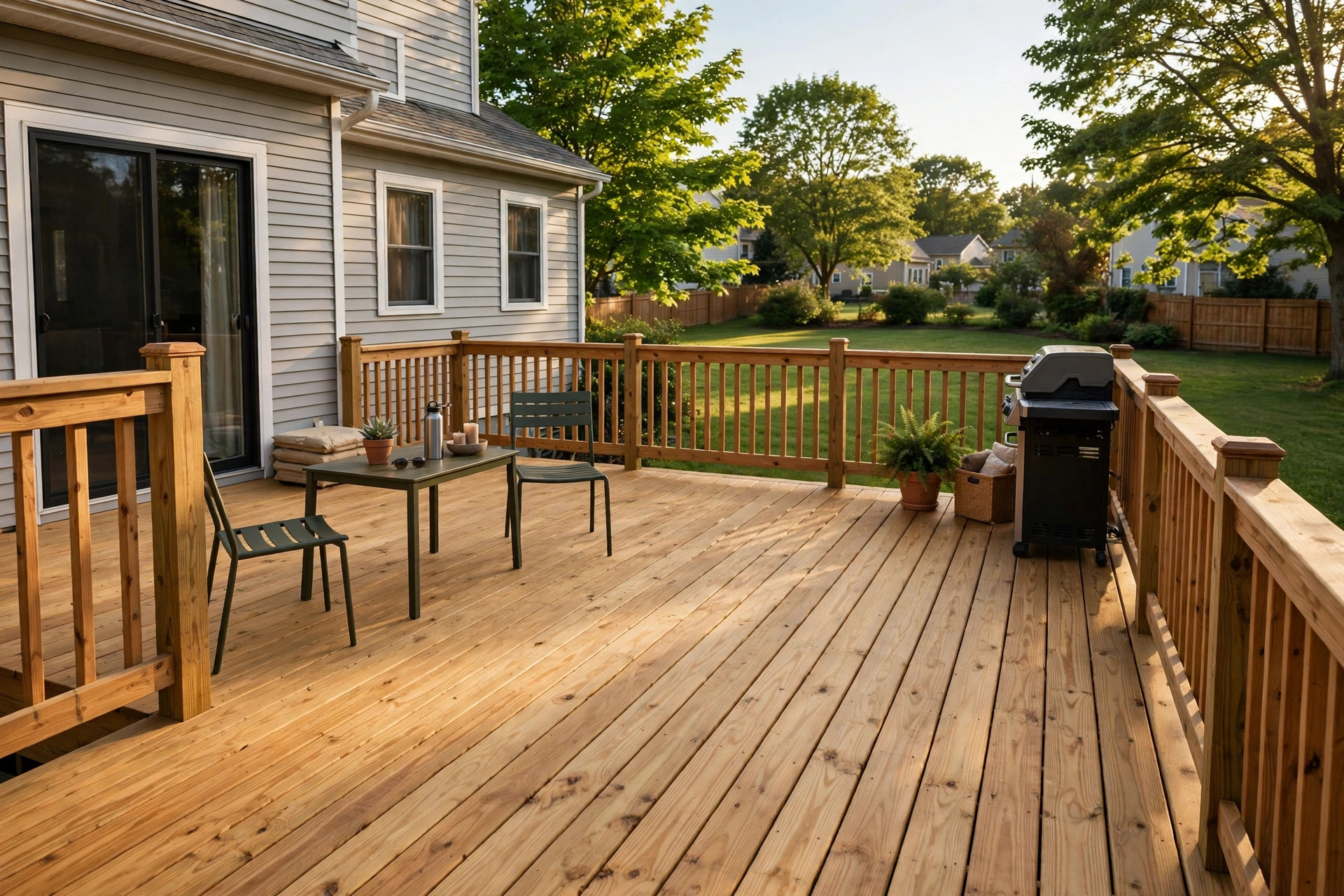

This affordable pressure treated lumber decking buying guide will help you plan a new deck without wasting money. A deck built from pressure treated lumber costs far less than one built from cedar or composite boards. It also lasts for many years when you buy the right boards and care for them well. Many homeowners build their first deck from this wood. It is easy to cut, easy to screw down, and sold at nearly every lumber yard in the country. This guide explains what pressure treated lumber is, how to pick good boards, what you should expect to pay, and how to keep your deck safe and strong for years to come.
Why Pressure Treated Lumber Is the Budget Choice
Pressure treated lumber starts as ordinary pine or fir. The wood is placed in a large tank. The tank is filled with a liquid preservative. Pressure forces the liquid deep into the wood fibers. This keeps rot, fungus, and hungry insects out of the boards. Without this step, plain pine boards would rot within a few years of rain and damp soil. With it, the same boards can last 15 to 25 years outside.
The main reason people choose it is price. A pressure treated deck often costs one half to one third of a composite deck of the same size. Labor costs less too, because carpenters know this wood well. There is no special cutting or hidden fastener system. A standard saw and screws do the job. For a family that wants a safe place to sit outside without spending a fortune, pressure treated lumber is the honest answer.
Another reason is strength. Pressure treated wood holds screws and nails very well. It takes the weight of a full grill, a table, and a crowd of guests. It can be stained in many colors. It can also be painted if you like a fresh look. Some owners leave it natural and let it turn a soft silver gray over time.
What to Look for When You Buy: Affordable Pressure Treated Lumber Decking Buying Guide
Not every board in the stack is the same. A little care at the lumber yard saves you trouble later. Keep these points in mind when you shop.
Check the Treatment Level
Boards are marked for where they should be used. “Above ground” boards are made for deck surfaces and railings. “Ground contact” boards are treated with more preservative and can touch soil or sit close to the ground. Posts that go into the earth need the strongest rating of all. Buying the right rating matters. An above ground board buried in dirt will rot sooner, no matter how much you save.
Look at the Grade
Common grades are No. 1, No. 2, and standard. No. 1 boards have fewer knots and a cleaner face. They cost more. No. 2 boards are the usual choice for deck floors. They may have small knots, but they are sound and strong. Sight down the length of each board before you buy. Reject boards that twist or bend badly. A warped board makes a wavy deck.
Measure Moisture
Fresh treated lumber is often wet. This is normal. The treatment leaves water inside the wood. Wet boards are heavy. They shrink as they dry, and gaps between boards will grow. Let new lumber dry in your yard for a few days to a few weeks before you build. Stack the boards with small sticks between them so air can move around each piece. Keep them off the ground and out of the rain if you can.
Count What You Need
Measure your deck plan twice. A simple rule is to add ten percent to your board count for cuts and mistakes. It is cheaper to buy a few extra boards now than to make a second trip later. Long boards cost more per foot, but they leave fewer joints on the deck floor. Many buyers save money by using 16 foot boards on a deck that is 16 feet wide.
Types and Options
Pressure treated lumber comes in a few forms. Each has a place in a deck project.
Decking boards. These are the boards you walk on. Most are 5/4 inch thick and six inches wide. They are sold in lengths from eight to twenty feet. Choose boards with rounded edges for comfort under bare feet.
Structural lumber. Posts, beams, and joists carry the weight of the deck. These are usually 2×6, 2×8, 2×10, or 4×4 pieces. Never use smaller sizes to save money. The frame must be strong enough to hold people safely. Building codes in most towns set the minimum sizes.
Railings and balusters. Treated wood makes fine railings and posts. Some owners mix wood posts with metal balusters for a cleaner look. Check your local code for railing height. Most towns want a rail 36 inches high on a deck that sits 30 inches or more above the ground.
Stairs and steps. Stringers are cut from treated 2×12 boards. Treads are often two decking boards laid side by side. Stairs take a beating, so buy clean straight stock for them.
If you are weighing other siding and trim materials for the rest of the house, a top rated fiber cement siding panels buying guide can help you compare costs before you decide.
Cost and Price: Keeping the Budget Under Control
Prices change by region and by season. As a rough rule, pressure treated decking boards cost less per foot than cedar and far less than composite. A small 12 by 16 foot deck may need about 400 to 500 dollars of decking boards alone. The full frame, screws, and hardware can double that figure. If you hire a builder, labor often costs more than all the wood together.
Here are honest ways to hold costs down:
– Build in the off season. Lumber prices often dip in late fall and winter. Yards want to clear stock. – Buy a full lift. Some yards discount a whole unit of lumber. Split the extra with a neighbor if you do not need it all. – Keep the shape simple. A square deck needs fewer angled cuts and less waste than one with curves or many corners. – Do the work yourself. A simple low deck is a fine project for a careful homeowner. Read a good guide first, such as the deck building advice on This Old House or Family Handyman. – Get three quotes. If you hire out the work, price three best deck building contractors near me before you sign anything.
Avoid the cheapest screws and brackets. Stainless steel or coated deck screws cost more but will not rust and stain your boards. A rusted fastener can fail in a few years. The small saving is not worth the risk.
Retailers like Home Depot and Lowes list current board prices online, which makes it easy to compare with your local lumber yard. For an independent look at decking value, Consumer Reports publishes test results on outdoor materials.
Care and Upkeep
A pressure treated deck asks for little, but it does ask for something. Water is the enemy. Sun is the second enemy. A simple routine keeps the wood sound.
Wash the deck each spring. A garden hose and a stiff brush will do. For deep dirt, use a deck cleaner sold at the hardware store. Do not use a pressure washer on high settings. A strong stream can tear the soft fibers of the wood and leave fuzzy patches.
Let the deck dry for two or three days after washing. Then apply a water repellent sealer or a deck stain. New treated lumber should dry for at least 30 days before you stain it, and some builders wait a full season. The sealer fills the pores and slows how fast water enters the wood. Reapply every one to three years, or when water no longer beads on the surface.
Check screws and nails once a year. Tighten any that have worked loose. Look for boards that are soft at the ends. A soft spot means rot has started. Cut it out or replace the board before it spreads. Keep leaves and dirt from piling against the boards. Wet debris holds moisture and feeds mold.
Safety on a Treated Wood Deck
Pressure treated lumber is safe to walk on and touch once it is installed and dry. The preservative stays locked inside the wood. Still, follow a few simple rules when you build and when you clean.
Wear gloves and a dust mask when you cut treated boards. Sawdust from any wood can harm your lungs. Work outside where the air moves. Sweep up scraps instead of burning them. Treated wood should never be burned in a fire pit or a wood stove. The ash holds chemicals that do not belong in soil where children play or food grows.
Wash your hands after handling new boards. Keep cut ends sealed with an end-cut preservative, which is sold in small cans at lumber yards. This matters most for posts that go into the ground. The cut end is the most open part of the wood.
If your project touches other parts of the house, such as the roof above the deck, you may need reliable roof replacement contractors in texas or in your own state to keep water off the new wood.
Frequently Asked Questions
How long does a pressure treated deck last?
A well built and sealed deck usually lasts 15 to 25 years. Decks in dry climates last longer. Decks that sit in shade and stay damp may need boards replaced sooner. The frame often outlasts the walking boards.
Can I paint pressure treated lumber?
Yes, but wait until the wood is dry. Paint needs a clean, dry surface or it will peel. Most builders wait three to six months after the deck is built. A solid stain is easier to renew than paint and hides fewer flaws.
Is pressure treated wood safe for children and pets?
Yes. Once the deck is built and dry, it is safe for daily use. Children can play on it and pets can rest on it. The preservative is bound in the wood and does not wash out in normal rain. Clean up any green dust left from cutting before you let children play.
How far apart should deck boards be?
Leave a gap of about one eighth to one quarter inch between boards. This lets water drain and gives the wood room to swell in wet weather. Wet boards need the smaller gap because they will shrink as they dry.
Should I seal the cut ends of boards?
Yes. Every cut opens the wood where the preservative is weakest. Brush end-cut preservative on each fresh cut, especially on posts and stair stringers. A small can covers many cuts and adds years to the wood.
What screws work best for treated lumber?
Use screws rated for treated wood. Hot dipped galvanized, coated, or stainless steel screws are the right choice. Plain steel screws rust fast next to treated lumber and leave dark stains.
A Short Final Word
This affordable pressure treated lumber decking buying guide comes down to a few plain truths. Buy the right treatment level for each part of the deck. Pick straight boards and let them dry before you build. Spend your savings on good screws and a good sealer, not on cheaper wood. Keep water off the boards and clean them each year. Do that, and a modest stack of pine boards will give your family a fine outdoor room for decades.
For step by step how to articles on staining, flashing, and framing, Bob Vila and The Spruce keep deep libraries of tested advice. Makers like James Hardie and CertainTeed cover the siding and trim that often frames a new deck project.
References
Bob Vila. (n.d.). Home improvement advice. https://www.bobvila.com CertainTeed. (n.d.). Building materials and exterior products. https://www.certainteed.com Consumer Reports. (n.d.). Product reviews and ratings. https://www.consumerreports.org Family Handyman. (n.d.). DIY home repair and maintenance. https://www.familyhandyman.com James Hardie. (n.d.). Fiber cement siding and exterior products. https://www.jameshardie.com Lowe’s. (n.d.). Home improvement products. https://www.lowes.com The Home Depot. (n.d.). Home improvement products. https://www.homedepot.com The Spruce. (n.d.). Home and garden advice. https://www.thespruce.com This Old House. (n.d.). Home renovation guidance. https://www.thisoldhouse.com
Was this guide helpful?

About Lisa Anderson
The My Garden US editorial team writes practical, in-depth home and garden guides for American homeowners — tested advice, no fluff.
You May Also Like

Top Rated Brick Veneer Siding for Texas Homes
January 17, 2026 0 views
Durable Exterior Stair Railings for Small Apartments: A Complete Guide
March 26, 2026 0 views
Affordable Siding Color Visualizer Tools for Humid Climates: A Simple Guide
March 17, 2026 0 views