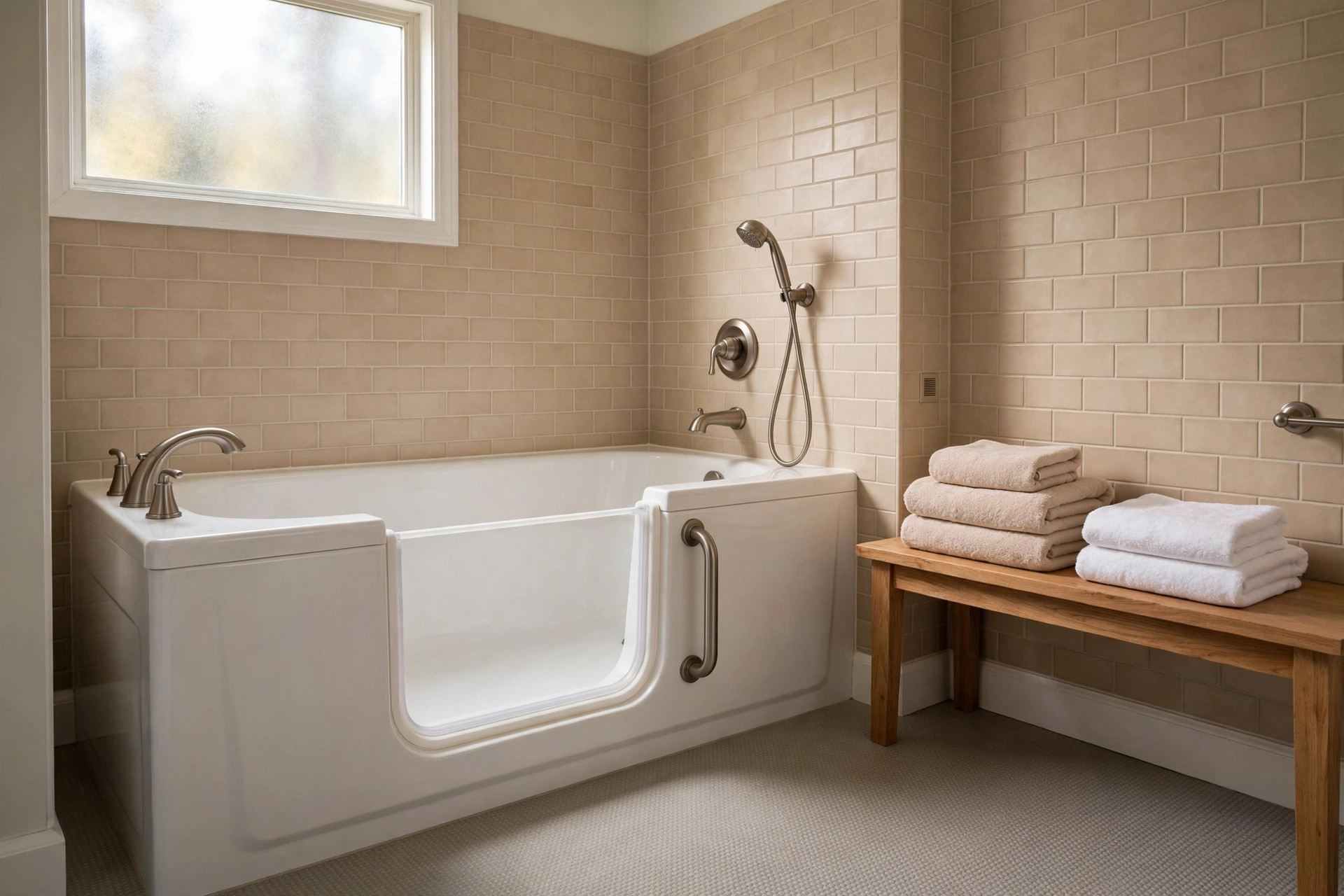

Many older Americans face the same problem every day. The regular bathtub is too high to step over. A fall in the bathroom can cause a broken hip or worse. The best walk in tub for seniors reviews usa shoppers read each year point to one clear answer. A walk-in tub lets a senior step through a low door instead of climbing over a tall wall. This simple change makes bathing safe again. It also brings back a sense of freedom. This guide explains how walk-in tubs work, what types exist, what they cost, and what to check before you buy.
Why It Matters
The bathroom is the most dangerous room in the house for seniors. Wet floors, hard edges, and high tub walls combine into a real risk. Falls are the top cause of injury among adults over 65. A walk-in tub cuts that risk in a direct way. The step-in height is only a few inches. A watertight door closes behind the bather. Grab bars sit within easy reach.
Seniors who review walk-in tubs often say the same thing. They got their privacy back. A spouse or adult child no longer has to help them into the tub. That matters a great deal. Bathing is personal. A walk-in tub keeps it that way.
There is also comfort. Warm water eases stiff joints and sore muscles. Many tubs add jets that massage the back and legs. For seniors with arthritis, this is more than a luxury. It is daily relief. Reviews of the best walk in tub models for seniors often mention less morning stiffness after a few weeks of use.
What to Look for When You Choose: Best Walk in Tub for Seniors Reviews Usa
Door style
Walk-in tubs come with doors that swing in or swing out. Inward-swing doors are the most common. The water pressure keeps the seal tight. They need room inside the tub for the door to open. Outward-swing doors are easier for people who use wheelchairs. A caregiver can help the person into the seat before closing the door.
Step-in height
Look for a low threshold. Most good tubs have a step of two to four inches. Compare that to a standard tub wall of about fifteen inches. The lower the step, the safer the entry. This is one of the first details that reviews of the best walk in tub for seniors reviews usa check.
Seat and comfort
Most walk-in tubs have a built-in seat. The bather sits upright, which is safer than lying flat. Check the seat width and depth. A wider seat suits larger bathers. Some seats are heated. A warm seat feels better on a cold morning.
Size and fit
Walk-in tubs come in sizes to fit standard tub openings. Many fit the same space as a regular 60-inch alcove tub. Measure the bathroom before you shop. Bring the numbers to the dealer. A bathroom fixtures guide can help you match the tub to your space.
Types and Options
Soaker tubs
A soaker tub is the basic model. It holds warm water and lets the bather soak. It has no jets. It costs less than fancier models. Many seniors find a soaker is all they need. It is quiet. It uses less water than a jetted model.
Whirlpool and air jet tubs
A whirlpool tub shoots streams of water through jets. An air jet tub blows warm air through small holes. Both create a massage effect. They help sore muscles and tired legs. They cost more and use more water. They also need more cleaning, since jets must be flushed to stay fresh.
Combination tubs
A combination tub has both water jets and air jets. It gives the strongest massage. It is also the most costly type. Seniors with bad arthritis or back pain often pick this type. Reviews of the best walk in tub for seniors reviews usa sites often rank these high for therapy.
Bariatric tubs
A bariatric tub is wider and built to hold more weight. The seat is larger. The door is wider too. These tubs suit bigger bathers or those who need more room to turn.
Two-person and transfer tubs
A few models seat two people. Others, called transfer tubs, let a person slide in from a wheelchair. These are less common and cost more. A transfer model helps when a caregiver must assist.
When you pick fixtures to go with the tub, read up on related bathroom parts. Many owners add new taps at the same time. If you want help with taps, see our notes on best shower filters for hard water or the wider topic of brushed gold bathroom faucets.
Warranty and brand trust
A walk-in tub is a long-term fixture. Check the warranty before you buy. Good makers offer a lifetime warranty on the door seal and a long warranty on the tub shell and frame. Read the fine print. Some warranties cover parts but not labor. Ask who handles warranty service in your area. A maker with a local service team is worth more than one with a phone line only. Reviews of the best walk in tub for seniors reviews usa often rate after-sale service as high as the tub itself.
How to Read Reviews Like an Expert
Not all reviews are equal. When you read the best walk in tub for seniors reviews usa pages, use these checks.
First, look for verified purchases. A review from a confirmed buyer carries more weight. Second, read the middle ratings. Three-star reviews often give the most balanced view. They list what works and what does not. Third, check the date. A tub model can change from year to year. A review from five years ago may describe an older version.
Fourth, look for reviews from people like the buyer. A senior with arthritis cares about different things than a young home flipper. Look for mentions of step height, seat comfort, and fill time. Fifth, watch for patterns. If ten reviews mention a slow drain or a leaky seal, take that seriously. One bad review can be a fluke. Ten is a trend.
Sixth, compare the tub to others in the same price band. A $3,000 tub should be judged against other $3,000 tubs, not a $10,000 model. Finally, read the answers to reader questions when a site has them. They often cover real-life details that the main review skips, such as whether the door can be re-hinged or whether the tub works with a tankless water heater.
Cost and Price
A walk-in tub is a real purchase. Prices in the United States run from about $2,000 to $12,000 for the tub itself. Basic soaker models sit at the low end. Jetted and combo models sit at the high end. Bariatric and transfer models cost more too.
Installation adds $1,000 to $5,000 or more. The range is wide because every bathroom is different. A simple swap into an old tub opening costs less. A job that moves pipes or widens a door costs more. Old plumbing may need updates. A licensed plumber should do the work.
Some seniors ask about help with the cost. Medicare usually does not cover a walk-in tub, since it counts as home equipment rather than medical gear. Some state programs or veterans benefits may help. Ask your local aging office. A few makers offer financing plans. Get all price details in writing before you sign.
To get a fair price, ask for three written quotes. Make sure each quote lists the tub model, the install steps, and the warranty. A clear quote makes review reading easier. You can compare reviews of the best walk in tub for seniors reviews usa against the quotes in your hand.
Care and Upkeep
A walk-in tub needs regular care to stay clean and safe. After each bath, wipe the tub with a soft cloth. Use a mild cleaner. Harsh bleach can harm the acrylic finish and the door seal.
Once a month, clean the jets if your tub has them. Fill the tub above the jets with warm water. Add a small amount of dish soap or a jet cleaner. Run the jets for ten minutes. Drain the tub and rinse. This keeps the lines clear of soap and body oil.
Check the door seal twice a year. Look for cracks or worn spots. A worn seal can leak. Most seals are easy to replace and cheap to buy. Also check the grab bars. They should be tight with no wobble. A loose bar is not safe.
The drain and overflow work the same as in a regular tub. A trusted home retailer sells cleaners and parts that fit most models. Keep the manual that came with the tub. It lists the right cleaner for your finish.
Do not use rough pads or powders on the tub walls. They scratch the surface. Scratches catch dirt and make the tub look dull. If hard water leaves white spots, wipe them with a mix of water and white vinegar. Rinse well after. This simple step keeps the finish bright for years. A plumbing care guide also suggests checking the drain lever now and then, since hair and soap can slow the drain over time.
Once a year, check the caulk where the tub meets the wall. Old caulk can crack and let water seep behind the tub. If you see gaps, remove the old caulk and apply a fresh bead. It is a small job that prevents big repairs. Family members can help with this if the senior cannot reach the spot.
Safety
A walk-in tub is safer than a standard tub, but rules still apply. Test the water before you sit down. The water should feel warm, not hot. A safe water temperature guide notes that water over 120 degrees can scald skin, and older skin burns faster. Set the water heater to 120 degrees or lower.
Use the grab bars every time you enter and leave. Keep the floor dry around the tub. A small bath mat outside the door helps. Make sure the room has good light. If the bather feels dizzy, sit still and rest. Never lock the bathroom door from the inside.
Some tubs have extra safety parts. An anti-scald valve keeps the water from getting too hot. A slip-proof floor texture is standard on good models. An emergency alert button can be added near the tub. These small parts add real peace of mind.
When you plan the full bathroom, match the tub with safe fixtures. A sturdy faucet and a clean water line matter too. Many buyers also read about best widespread bathroom faucets and best shower filter for hard water when they redo the room.
FAQ
How long does it take to fill and drain a walk-in tub?
Filling takes about 10 to 15 minutes with a standard water line. Draining takes about the same time. The bather must wait inside while the tub drains, since the door cannot open until the water is gone. Fast-drain models cut drain time in half.
Do walk-in tubs use more water than regular tubs?
Most use about the same amount or a bit more. A standard walk-in tub holds 50 to 80 gallons. Check your water heater size. A 40-gallon heater may need to recover before the tub fills. Tankless heaters work well with these tubs.
Can a walk-in tub fit in a small bathroom?
Yes. Many models fit a standard 60-inch tub opening. Measure the room first. Some narrow models fit rooms that are only 30 inches wide. A dealer can check your measurements.
Are walk-in tubs hard to clean?
No. The acrylic surface wipes clean with a soft cloth and mild soap. Jetted models need the monthly jet flush. That takes about 20 minutes. Do not use scouring pads or bleach.
What is the lifespan of a walk-in tub?
A good walk-in tub lasts 15 to 20 years with normal care. The door seal may need replacing every five to ten years. Buy from a maker with a strong warranty for peace of mind.
Do I need a permit to install one?
Many towns ask for a permit when plumbing moves or changes. A simple swap may not need one. Ask the local building office before work starts. A licensed installer usually handles the permit for you.
A Short Final Word
The best walk in tub for seniors reviews usa all tell one story. A walk-in tub turns a risky chore into a safe daily comfort. Pick the right type, check the price in writing, and hire a licensed installer. Read reviews, but trust your own needs most. The right tub is the one that fits your body, your bathroom, and your budget. With the right choice, bathing stays safe and private for years to come.
Buying guides are also published by Moen and Lowe’s.
References
Aquasana. (n.d.). Water filtration systems. https://www.aquasana.com Family Handyman. (n.d.). DIY home repair and maintenance. https://www.familyhandyman.com Kohler. (n.d.). Bathroom and kitchen fixtures. https://www.kohler.com Lowe’s. (n.d.). Home improvement products. https://www.lowes.com Moen. (n.d.). Faucets and plumbing fixtures. https://www.moen.com The Home Depot. (n.d.). Home improvement products. https://www.homedepot.com This Old House. (n.d.). Home renovation guidance. https://www.thisoldhouse.com U.S. Environmental Protection Agency. (n.d.). Protecting human health and the environment. https://www.epa.gov
Was this guide helpful?

About James Carter
The My Garden US editorial team writes practical, in-depth home and garden guides for American homeowners — tested advice, no fluff.
You May Also Like
Thermostatic Shower Valve Pros Cons USA Homeowners Should Know
May 10, 2026 0 views
Water Heater Replacement Cost Near Me 2026: A Complete Price Guide
February 22, 2026 0 views
What Does Exterior Basement Waterproofing Cost in the USA?
August 3, 2026 0 views