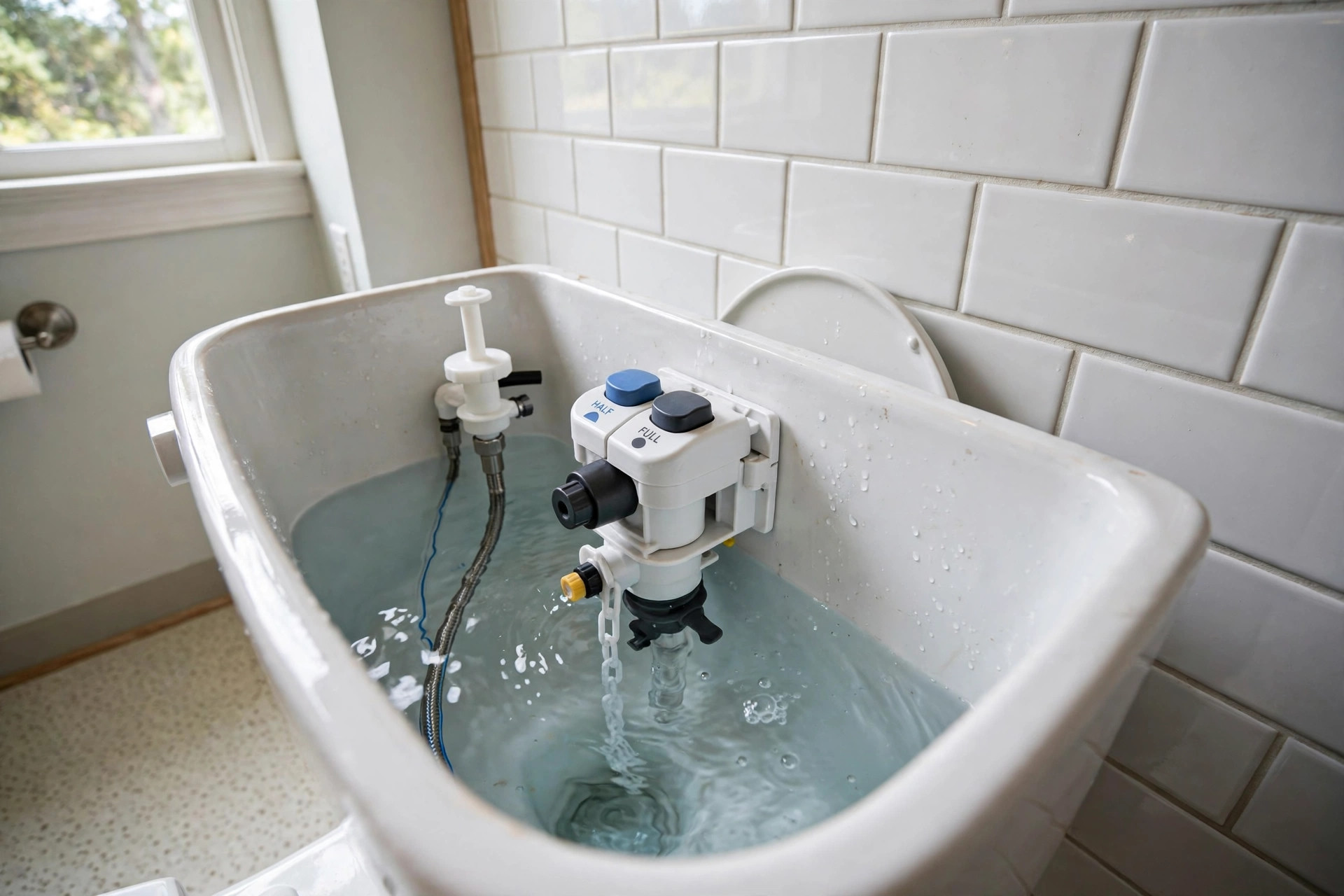

A standard toilet uses the same amount of water for every flush. That means liquid waste and solid waste both get a full tank of water. This wastes a great deal of water over a year. The best dual flush converter kit reviews usa shoppers look for point to one simple fix: a small kit that turns an ordinary toilet into a dual flush toilet. This article walks through what these kits do, how to pick one, what they cost, and how to keep one working well.
Why a Dual Flush Converter Kit Matters
Toilets are one of the largest users of water in an American home. Older models can use three and a half gallons or more per flush. Even the newer federal standard toilets use 1.6 gallons every time the handle is pressed. A dual flush system changes this picture. It gives the user two choices. A short flush for liquid waste uses less than a gallon. A full flush for solid waste uses the normal amount.
A converter kit brings this choice to a toilet that was built as a single flush model. There is no need to buy a new toilet. There is no need to call a plumber for a full replacement. The kit replaces the flush valve and the handle or the push button on top of the tank. Most people finish the job in under an hour with common hand tools.
Water saving is the main reason people buy these kits. A family of four can cut toilet water use by a third or more. That lowers the water bill each month. It also helps in areas where water is scarce or where local rules limit water use. Many cities in the western states now encourage or require water saving fixtures in homes. A dual flush conversion is a low cost way to meet that goal.
How to Choose the Best Dual Flush Converter Kit: Best Dual Flush Converter Kit Reviews Usa
Not every kit fits every toilet. The first thing to check is the tank itself. Most kits fit standard two piece toilets with a tank that bolts to the bowl. Some kits also fit one piece toilets, but the choice is smaller. Measure the flush valve opening at the bottom of the tank. Common sizes are two inches and three inches. The kit must match.
Next, look at how the kit triggers the flush. Most kits use a push button that sits on the tank lid. Some use a lever with two positions. Push button kits look modern and are simple to use. Lever kits work well when the existing handle hole is the only opening. Either type does the job if it is made well.
Material quality matters more than price. The best kits use sturdy plastic parts that resist chlorine and hard water. Cheap parts may warp or crack in a year or two. Read product reviews with care. Look for reviews from people who have used the kit for several months, not just the day it was installed. The best dual flush converter kit reviews usa buyers leave often mention quiet refilling, strong flushes, and parts that hold their shape.
Also check the flush volume settings. A good kit lets you adjust both the light flush and the full flush. This is important because water pressure and bowl shape differ from house to house. Adjustable settings let you fine tune the kit so waste clears in one flush. A kit that is not adjustable may leave the bowl half cleaned, which defeats the purpose.
Types of Dual Flush Converter Kits
Push Button Top Kits
These are the most common type. A round push button replaces the tank lid in most cases, or fits into a hole in the lid. Pressing one half of the button gives a light flush. Pressing the other half, or both halves, gives a full flush. These kits are easy for guests to understand. Most major fixture makers such as Kohler and Moen offer styles in this form, and plumbing guides at This Old House walk through how they install.
Side Lever Dual Flush Kits
These kits keep a lever on the side or front of the tank, like a standard toilet. Lifting the lever one way gives a light flush. Lifting it the other way gives a full flush. This type is a good choice for people who do not want to drill a hole in the tank lid. It also helps when the lid has a shape that will not take a button. Family handymen often discuss lever style kits at Family Handyman, where install tips and photos show the lever setup.
Adjustable Float Valve Kits
Some kits focus on the fill valve more than the flush valve. They add a second float that stops the refill early for a light flush. These kits are less common now. They still work in very old tanks where a full valve replacement is hard. Most buyers today are better served by a full push button kit.
What to Look for in Reviews
Product reviews are the best guide, but they must be read with care. Here is what to look for.
First, look at the install story. A good kit fits a standard tank without cutting or drilling. Reviews that mention a 30 minute install are a good sign. Reviews that mention leaks around the valve seat are a warning.
Second, look at flush strength after months of use. Some kits flush well on day one but weaken as parts wear. Reviews written three to six months after purchase tell the true story.
Third, look at the refill noise. Some fill valves hiss or take a long time to refill. A quiet valve makes a real difference in a small home.
Fourth, look at the company behind the kit. A maker that sells replacement parts is worth more than a maker that sells only the kit. Seals and flappers wear out. Being able to buy a small part in five years is better than buying a whole new kit. Large home improvement retailers such as Home Depot and Lowe’s stock many of the top kits and their spare parts, and their review sections hold hundreds of owner reports.
Finally, look at water savings claims. Some kits promise savings of up to 70 percent. That number assumes every light flush is used correctly. Real savings depend on the habits of the household. Reviews from large families give the most honest numbers.
Cost and Price
Dual flush converter kits are one of the cheapest water saving upgrades in the home. Prices in the United States range from about fifteen dollars to about fifty dollars. Most of the well reviewed kits sit between twenty five and forty dollars.
Budget kits near fifteen dollars can work, but they often use thinner plastic. They may need a seal replaced sooner. Mid range kits near thirty dollars are the sweet spot for most buyers. They use better seals and stronger valve bodies. Premium kits near fifty dollars may add brass parts, quieter fill valves, or longer warranties.
Payback is fast. A family that saves two thousand gallons a year may save twenty to forty dollars on the water bill, depending on local rates. The kit pays for itself in about one year. After that the savings are pure gain. The EPA publishes water use facts that help estimate savings, and its WaterSense program sets the standard many dual flush products aim to meet.
When you compare kits, also compare the cost of replacement seals. A kit with a two dollar seal that lasts two years is fine. A kit with a ten dollar seal that lasts five years is also fine. What you want to avoid is a kit whose seals cannot be bought at all.
Installation in Plain Steps
Turn off the water supply to the toilet. Flush the toilet and hold the handle down to drain the tank. Sponge out the water that remains.
Remove the old flush valve and the old fill valve if the kit replaces them. Unbolt the tank from the bowl if needed to reach the valve nuts. Clean the tank surfaces where the new seals will sit.
Install the new flush valve through the tank opening. Tighten the nut by hand, then a quarter turn with a wrench. Do not over tighten, or the tank may crack.
Install the new fill valve and set its height so the water line sits at the mark inside the tank. Connect the refill tube to the overflow pipe.
Fit the push button or lever. Set the light flush and full flush volumes to the middle of their range. Turn the water on and let the tank fill. Test both flushes. Adjust until the light flush clears the bowl for liquid waste and the full flush clears it fully. Delta Faucet (Delta Faucet) and other fixture makers publish clear install sheets that follow these same steps.
Check for leaks at the base of the valve and at the supply line. A dry sheet of paper held under the fittings will show even a small drip.
Care and Upkeep
A dual flush kit needs little care, but a few habits keep it working for years.
Clean the tank once a year. Turn off the water, flush, and wipe the tank walls with a soft cloth. Do not pour bleach or harsh chemicals into the tank. They attack the rubber seals and shorten the life of the kit. Plain water and a cloth are enough. Specialists at Aquasana note that in tank cleaning can also stir sediment that affects valves, so gentle cleaning is best.
Check the flapper or valve seal twice a year. Press it closed and look for water leaking into the bowl when the toilet is not in use. A leak shows as a faint ripple in the bowl or as the fill valve turning on by itself. Replace the seal when this starts.
Keep the button or lever free of grime. A sticky button may not spring back, which can hold the valve open and waste water.
If the fill valve starts to hiss, the washer inside may be worn. Many kits include a spare washer, or one can be bought for a few dollars.
In hard water areas, mineral scale can build on the valve parts. A yearly wipe with a cloth dampened in white vinegar removes the scale. Rinse with clean water after.
Safety Notes
The work is simple, but a few safety points matter. The porcelain tank is heavy and can crack if dropped or over tightened. Lift it with both hands and set it on a towel.
Turn off the water supply before starting. A supply line left open can spray water across the bathroom.
Do not use drop in tank cleaning tablets with a dual flush kit unless the maker says they are safe. The chemicals in some tablets damage seals and may void the warranty.
If the toilet rocks or the floor around it is soft, stop the kit install and fix the base first. A loose toilet can leak at the wax ring, and no tank kit will fix that.
Keep small parts away from young children during the install. Valve nuts and screws are a choking hazard.
Related Water Saving Upgrades
A dual flush kit is a good first step. Other low cost upgrades can save more water across the home. A drain strainer for shower hair keeps hair out of the drain so the shower runs clear. If you are weighing larger projects, our guide to heat pump water heater installation cost lays out prices in plain terms. For drinking water, read our RO system remineralization filter reviews before you buy.
FAQ
How much water does a dual flush converter kit save?
Most homes save between one thousand and three thousand gallons per toilet per year. The exact number depends on how many people use the toilet and how often the light flush is used. Homes where everyone uses the light flush for liquid waste see the largest savings.
Will a dual flush kit fit my toilet?
Most kits fit standard two piece toilets with a two inch or three inch flush valve. Check the valve size and the tank bolt spacing before buying. One piece toilets and very old toilets may need a kit made for that style.
Is the install hard for a beginner?
No. Most beginners finish in thirty to sixty minutes. The tools needed are a wrench, a sponge, and a towel. No special plumbing skills are required. If you can turn off a water valve, you can install the kit.
Does a dual flush toilet clog more often?
A well adjusted kit does not clog more than a standard toilet. Clogs happen when the full flush is set too low or when too much paper is used. Set the full flush high enough to clear the bowl in one go, and the kit will work as well as the old single flush.
Do I need a permit to install one?
In most places no permit is needed to change parts inside a toilet tank. The work does not change the drain or the water supply lines. Check local rules if you are unsure.
How long does a converter kit last?
A good kit lasts five to ten years. Seals may need replacement every two to four years. Kits made with stronger plastic and replaceable parts last the longest.
Final Word
The best dual flush converter kit reviews usa homeowners write share a common theme. The kits are cheap, the install is simple, and the water savings are real. Pick a kit that fits your tank, read reviews from long term users, and adjust the flush volumes with care. In one afternoon you can cut your toilet water use by a third and lower your bill for years to come.
References
Aquasana. (n.d.). Water filtration systems. https://www.aquasana.com Delta Faucet. (n.d.). Kitchen and bathroom faucets. https://www.deltafaucet.com Family Handyman. (n.d.). DIY home repair and maintenance. https://www.familyhandyman.com Kohler. (n.d.). Bathroom and kitchen fixtures. https://www.kohler.com Lowe’s. (n.d.). Home improvement products. https://www.lowes.com Moen. (n.d.). Faucets and plumbing fixtures. https://www.moen.com The Home Depot. (n.d.). Home improvement products. https://www.homedepot.com This Old House. (n.d.). Home renovation guidance. https://www.thisoldhouse.com U.S. Environmental Protection Agency. (n.d.). Protecting human health and the environment. https://www.epa.gov
Was this guide helpful?

About Jennifer Lee
The My Garden US editorial team writes practical, in-depth home and garden guides for American homeowners — tested advice, no fluff.
You May Also Like
Toilet Auger vs Plunger Comparison: Which Tool Clears Clogs Best in USA Homes
June 3, 2026 0 views
Tub Drain Hair Catcher Reviews 2026 USA: A Plain Buyer’s Guide
January 9, 2026 0 views
Backwater Valve Installation Cost for Basement: What Homeowners Pay in 2026
June 17, 2026 0 views