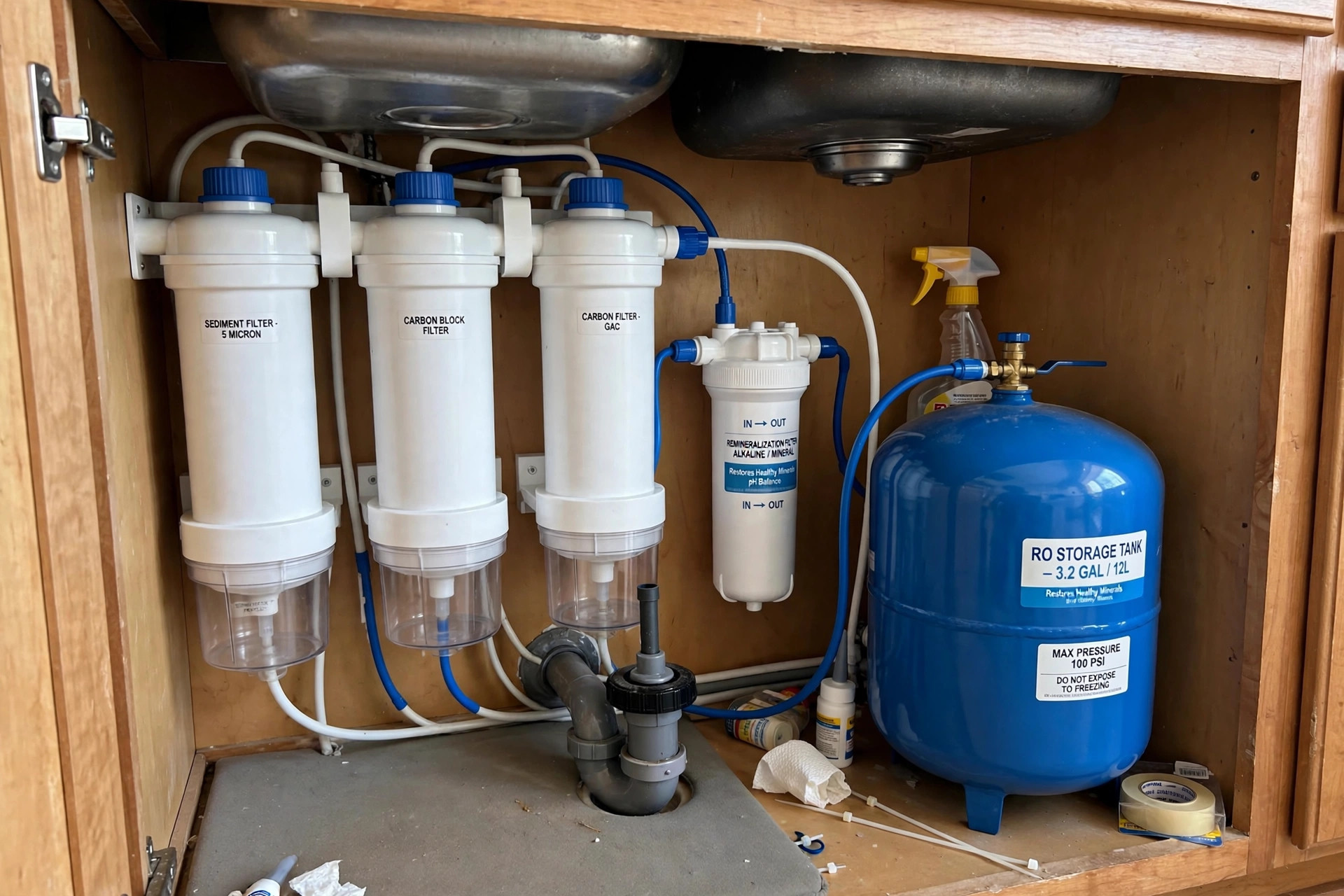

A reverse osmosis unit gives you very clean water. It also takes almost everything out, including calcium and magnesium. That is why many owners add a last-stage cartridge. This article pulls together what ro system remineralization filter reviews usa buyers report, so you can choose with care. You will learn how these filters work, which types exist, what they cost, and how to keep them safe. If you are comparing a reverse osmosis system under sink reviews usa setup, the notes below will fit your search.
Why Remineralization Matters
Reverse osmosis is strong. The membrane stops most dissolved solids. Product water often reads near zero on a TDS meter. Many people call this water flat or empty. They want a little mineral back for taste. A remineralization cartridge adds calcium, magnesium, and sometimes potassium as water passes through. It also lifts the pH a bit, which makes the water taste less sharp.
Taste is the main reason buyers give in reviews. Owners say coffee and tea taste smoother. Plain drinking water feels rounder. The second reason is pipe and fixture care. Very pure water can be slightly acidic. Over time it may wear at metal parts. A mineral stage buffers the water and can slow that wear.
A fourth reason is guest comfort. Visitors notice odd water right away. A glass of flat RO water can taste strange to someone used to tap water. A light mineral stage keeps the water friendly to all palates. Hosts mention this in reviews more often than you would think.
Some buyers also hope for health gains. Be honest with yourself here. The mineral dose from one cartridge is small. You get far more calcium from a glass of milk or a handful of almonds. The filter helps taste first. Any health bonus is minor. Set that hope aside and judge the cartridge on flavor.
How to Choose a Remineralization Filter: Ro System Remineralization Filter Reviews Usa
Start with your water report. City systems publish one each year. A private well can be tested by a local lab. Note the TDS, pH, and hardness. If your RO water comes out at pH 6 or lower, a remineralization stage will help the most. If your feed water is already high in minerals, you may need a smaller dose.
Look at the cartridge housing next. Most inline filters use quick-connect fittings in one-quarter inch size. Measure the space under your sink. A standard ten-inch cartridge fits most setups. Some are smaller, made for tight cabinets. Check the flow rate too. A slow cartridge can make your storage tank fill slowly.
Read what reviewers say about taste change. Some cartridges add a strong mineral note. Others are mild. Reviews often mention the first week as a break-in time. The taste settles after some water runs through. If you drink mostly through a fridge dispenser, the flow may be low, and the mineral dose will be higher per glass.
Read the media type on the box. Some cartridges use natural stone. Others use made blends. Both can work. Reviews favor brands that name the media plainly. Vague labels like “mineral mix” tell you little. A maker that lists calcite or magnesium oxide is being straight with you.
Ask about waste water too. RO systems send some water to drain. That ratio does not change with a mineral stage. But a cartridge that needs long flushing wastes more at install. Most flush clean in two to three gallons. If a brand asks for ten gallons of flush, look for a simpler unit.
Check the claimed life. Most cartridges last six months to one year. Some claim longer. Real life depends on how much water your home uses. A family of four will wear one out faster than a single user. Mark the install date on the filter with a marker so you do not forget.
Types and Options
You will see three main types in ro system remineralization filter reviews usa listings.
Calcite Cartridges
These are the most common. Water flows over calcium carbonate media. It picks up calcium and the pH rises. They are simple and low cost. Many under-sink kits include one by default. The change in taste is gentle. If you want only a mild lift, this is the usual pick.
Calcite Plus Corosex
This blend adds magnesium oxide to the calcite. It lifts pH faster than plain calcite. It suits homes whose RO water is quite acidic. The taste can be a bit stronger. Reviewers with very low pH report good results here. The media is used up faster than plain calcite, so check it sooner.
Alkaline and Mineral Blends
These cartridges mix several media. Some add potassium or trace minerals. Many are sold with best alkaline ro system reviews 2026 usa kits. Makers claim pH near 8 or 9. Reviews are mixed on the numbers. Most users care more about taste than the exact pH. If high pH is your goal, buy a small test strip kit and check at home.
Inline Versus Add-On
Inline cartridges sit in the line after the membrane. Add-on stages fit systems that did not come with one. Most brands use the same fitting size, so mixing brands often works. Check the direction arrow on the cartridge. Water must enter on the marked side. Wrong direction gives weak results.
Cost and Price
A single inline remineralization cartridge costs about fifteen to forty dollars in the United States. Brand-name units run higher. Store brands run lower. A full five-stage RO system with remineralization built in costs about two hundred to five hundred dollars.
Install cost is low if you do it yourself. You need a wrench for quick-connect fittings and maybe a bit of tubing. A plumber may charge one hundred to two hundred dollars for the visit. Most owners do it in under an hour.
Running cost is the yearly cartridge change. Plan for two filter changes per year if your family uses a lot of water. That adds about thirty to eighty dollars per year. Some reviewers buy two at a time to save on shipping.
Value is fair when you weigh taste. A family that drinks a gallon a day from the tap spends little per glass. Compare that with bottled mineral water at a dollar or more per gallon. The cartridge pays for itself in weeks for heavy users.
Care and Upkeep
Change the cartridge on schedule. Old media stops adding minerals. Worse, it can harbor bacteria if left too long. The six-month mark is a safe rule for most homes. If your water starts tasting flat again, that is the sign.
Flush a new cartridge before use. Run two to three gallons through it into a bucket. The first water carries fine dust from the media. It is harmless but cloudy. After the flush, the water should run clear.
Sanitize the system once a year. Drain the storage tank. Wipe the housing with a food-safe sanitizer. This step keeps all stages clean, not just the mineral one. Guides on sites like Family Handyman walk through basic under-sink care.
Watch the fittings. Quick-connect seals can weep after years of pressure. A paper towel test helps. Wrap each joint for a day and check for damp spots. Replace worn O-rings right away. Small leaks under a sink turn into big cabinet damage.
Keep a log. Write the date, the brand, and the model each time you change a cartridge. A simple card taped inside the cabinet door works well. When taste shifts, the log tells you how long the last one lasted. Photos of each old cartridge next to the new one also help. You can see at a glance how much media was used up.
Safety
Remineralization filters are low risk, but a few points matter.
Do not use one as a fix for bad source water. The RO membrane does the real cleaning. The mineral stage only adds taste. If your feed water has lead, nitrates, or germs, the membrane and pre-filters must handle those. The EPA publishes drinking-water standards that show what limits apply.
Do not overdo pH. Very high pH water tastes soapy and can upset sensitive stomachs. If your cartridge claims pH above 9, test the water at home. Strips cost little at Home Depot or Lowes.
Use parts rated for drinking water. Look for NSF certification marks on the cartridge. Certified parts are tested for material safety. Uncertified bargain units may leach plastic taste. Reviews often flag this problem in the first week.
Keep the area dry and clean. Under-sink cabinets get humid. Wipe spills. A small leak pan under the system costs little and saves the cabinet. Safety notes from This Old House stress the same point for all under-sink gear.
If anyone in the home is on a low-mineral diet for medical reasons, ask a doctor first. The mineral dose is small, but a doctor should know about it. People with kidney issues should be careful with added potassium.
Frequently Asked Questions
Does a remineralization filter make RO water healthy?
It improves taste and adds small amounts of calcium and magnesium. It does not turn tap water into a mineral supplement. Most of your minerals still come from food. Think of it as a taste upgrade with a small mineral bonus.
Will it raise my TDS a lot?
A little. RO water may read 5 to 15 ppm. After remineralization it often reads 30 to 80 ppm. That is still low compared with most tap water. Reviewers who wanted high mineral content were sometimes let down. These cartridges are mild by design.
Can I add one to my old RO system?
Yes, in most cases. You need an open spot in the line after the membrane and before the faucet. Most cartridges use standard quick-connect fittings. Measure your cabinet first. If space is tight, look for a compact inline model.
How do I know the cartridge is spent?
The taste goes flat again. That is the clearest sign. Some owners test pH each month. When the pH drops back near the pre-filter level, the media is used up. A dated label on the cartridge keeps you honest.
Does it slow down my water flow?
Slightly. Any added stage adds a little resistance. Most owners do not notice. If your tank fills slowly, check whether the cartridge is clogged. A permeate pump guide can help if low pressure is the real cause.
Is alkaline water from these filters the same as bottled alkaline water?
Not quite. Bottled brands often add minerals in a plant with tight control. A home cartridge gives a smaller, less exact dose. Many owners find the home version tastes better because it is fresh. If you want exact numbers, test with strips at home.
A Short Final Word
A remineralization stage is a small add with a clear job. It makes RO water taste better and a little kinder to pipes. Reviews in the United States favor simple calcite cartridges for most homes. Blends suit very acidic water. Keep to a change schedule, flush new cartridges, and buy certified parts. For broader filter shopping, Consumer Reports tests water gear each year, and retailer guides at Aquasana and Bob Vila show current models. If fluoride is also on your mind, see fluoride water filter for home reviews usa before you buy. A little care at install time gives you better-tasting water for years.
References
Aquasana. (n.d.). Water filtration systems. https://www.aquasana.com Bob Vila. (n.d.). Home improvement advice. https://www.bobvila.com Consumer Reports. (n.d.). Product reviews and ratings. https://www.consumerreports.org Family Handyman. (n.d.). DIY home repair and maintenance. https://www.familyhandyman.com Lowe’s. (n.d.). Home improvement products. https://www.lowes.com The Home Depot. (n.d.). Home improvement products. https://www.homedepot.com The Spruce. (n.d.). Home and garden advice. https://www.thespruce.com This Old House. (n.d.). Home renovation guidance. https://www.thisoldhouse.com U.S. Environmental Protection Agency. (n.d.). Protecting human health and the environment. https://www.epa.gov
Was this guide helpful?

About James Carter
The My Garden US editorial team writes practical, in-depth home and garden guides for American homeowners — tested advice, no fluff.
You May Also Like
Best Basement Dehumidifier With Pump USA: A Plain Guide for Dry, Healthy Basements
September 7, 2026 0 views
Bidet Attachment vs Bidet Seat Comparison USA: A Simple Guide
February 22, 2026 0 views
Chloramine Filter for City Water Reviews USA: What to Know Before You Buy
September 22, 2026 0 views