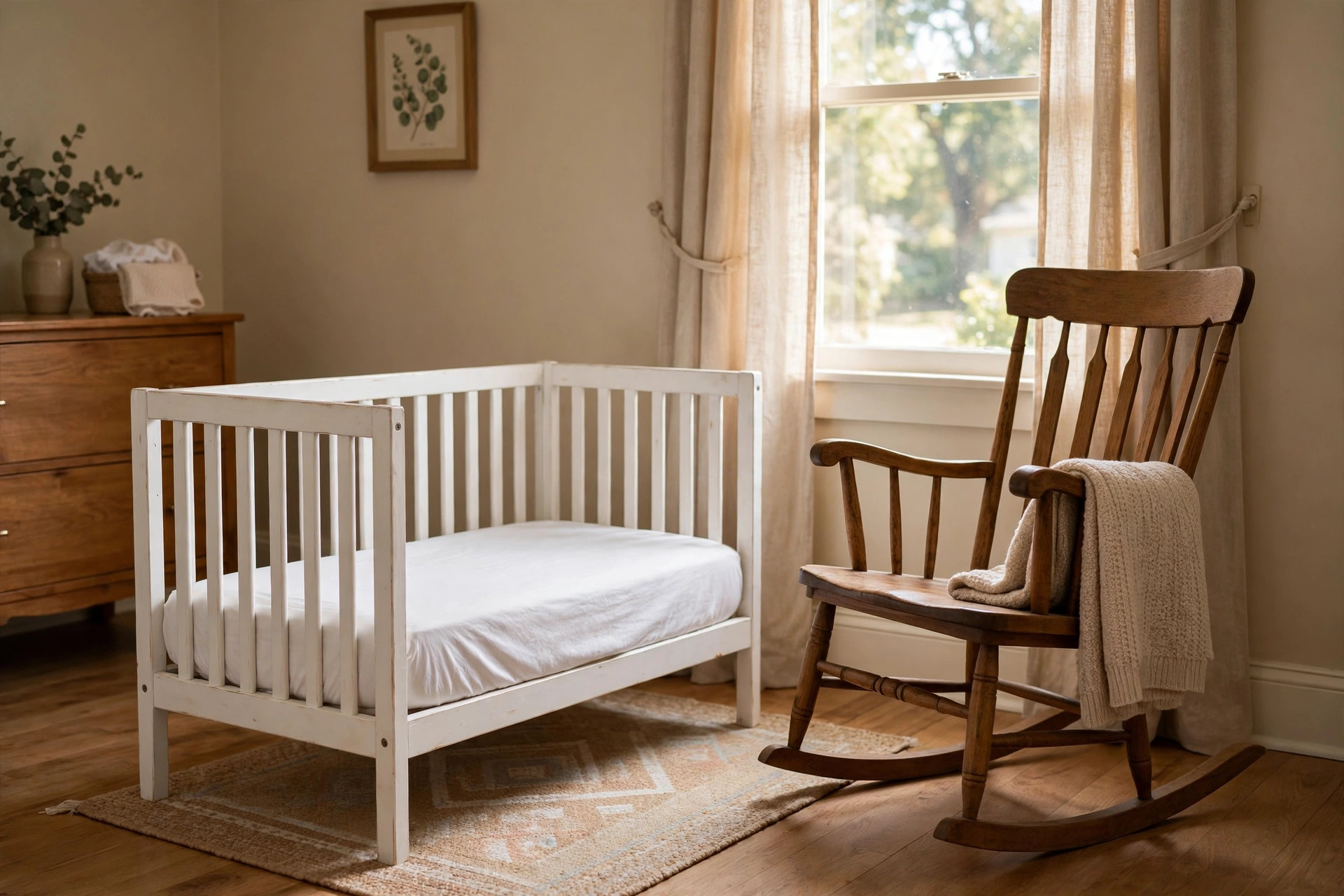

When a new grandchild is on the way, grandparents often want a safe place for the baby to sleep during visits. A nursery crib for grandparents house use does not have to be big or costly. It only has to be safe, strong, and easy to set up. The best nursery crib for grandparents house is one that fits a spare room, folds away when the baby goes home, and meets current safety rules.
Many grandparents do not need a full nursery. The baby may sleep over once a week or once a month. In that case, a folding crib or a compact crib makes more sense than a heavy wooden piece. This guide explains what to look for, which types work best, and how much to spend. It also covers safety steps that every grandparent should know.
Why a Crib Matters at the Grandparents’ House
A baby needs a safe, flat place to sleep wherever the night is spent. A couch, an adult bed, or a soft chair is not safe for infant sleep. The American Academy of Pediatrics warns that soft surfaces raise the risk of suffocation. A proper crib gives parents peace of mind and lets grandparents enjoy the visit without worry.
Having a crib ready also makes visits easier. Parents do not have to haul a heavy crib or a pack and play in the car. The baby gets used to the same sleep spot at grandma and grandpa’s house. This steadiness helps the child fall asleep faster.
For health guidance on safe infant sleep, grandparents can turn to resources like health guidance for grandparents from the American Academy of Pediatrics. The U.S. Consumer Product Safety Commission also sets the rules that every crib sold in America must meet, and its site is a good place to check for recalls before buying. Parents can review recall lists at the U.S. Consumer Product Safety Commission site.
What to Look for When Choosing: Best Nursery Crib for Grandparents House
Safety Standards
This is the most important point. Every crib sold in the United States must meet federal safety standards. Look for a label or a note on the box that states the crib meets ASTM F1169 and CPSC rules. The slats must be no more than two and three eighths inches apart. The mattress must fit tight, with no gap wider than two fingers between the mattress and the crib sides.
Avoid old cribs with drop sides. Drop-side cribs were banned in the United States in 2011. If a neighbor offers a crib from years ago, check it against the U.S. Consumer Product Safety Commission recall list first. Many older cribs are not safe by today’s rules.
Size and Fit
Measure the room before you buy. A standard full-size crib is about 54 inches long and 30 inches wide. A mini crib is about 39 inches long and 25 inches wide. A mini crib fits well in a spare bedroom or a corner of a guest room. If space is tight, a mini crib is often the best nursery crib for grandparents house use.
Easy Setup and Storage
Grandparents may set up the crib only when the baby visits. A crib that folds flat is a great help. Look for models with clear directions and few parts. Some folding cribs need no tools at all. If you plan to read setup reviews, sites like The Spruce often walk through assembly steps in plain words.
Adjustable Mattress Height
A mattress that moves up and down is useful. The high setting makes it easy to lift a newborn without bending far. The low setting keeps a standing toddler from climbing out. Most good cribs have at least two height settings. Three or four settings are even better.
Material and Build
Solid wood frames are strong and last long. Metal frames are lighter and often cost less. Both can be safe if they meet the standards. Pressed wood or thin particle board breaks down faster and may not hold screws well over time. A solid pine or hardwood crib is a sound choice for years of visits.
Types of Cribs That Work Well for Grandparents
Standard Full-Size Cribs
A standard crib is the classic choice. It is roomy and lasts until the child is about three years old. Many standard cribs change into a toddler bed and then a daybed. A best convertible crib for a small nursery room can serve the grandchild for years and later suit a guest room. The drawback is size. A full crib takes up real space and is hard to move.
Mini Cribs
Mini cribs are smaller than standard cribs but still meet safety rules. They are a fine pick for a spare bedroom. Most mini cribs fold flat or have wheels for easy moving. A baby can use a mini crib until about eighteen months, depending on size. For grandparents who host a baby part time, this is often the sweet spot.
Folding and Portable Cribs
These cribs fold like a book and slide under a bed or into a closet. They are light and simple to carry from room to room. Some have mesh sides so air flows well. They are ideal when the spare room also serves guests. Retailers such as IKEA and Wayfair carry compact and folding sleep options at many price points.
Pack and Plays
A pack and play is not a true crib, but many families use one for short stays. It folds into a bag and sets up in minutes. For an occasional overnight, it works well. For weekly sleepovers, a real crib with a firm mattress is more restful for the baby.
Cost and Price: What to Expect
Crib prices vary widely. A simple mini crib or folding crib costs between 100 and 200 dollars. A solid wood standard crib costs between 200 and 400 dollars. High-end convertible cribs from shops like Pottery Barn Kids can run 500 dollars or more.
Grandparents do not need the most costly model. A safe, simple crib in the 150 to 300 dollar range is enough for part-time use. Add about 60 to 120 dollars for a firm, tight-fitting mattress. A waterproof organic crib mattress is a smart extra since it keeps the sleep surface clean and dry.
Also plan for two fitted crib sheets. Buy sheets made for the exact crib size. A loose sheet can bunch up and is not safe. Sheets cost about 10 to 20 dollars each. A crib skirt is not needed for safety, but it can hide the space under the crib and make the room look neat.
Watch for sales. Big stores such as Target run baby sales several times a year. Registry sites like Babylist also list cribs with price tracking that helps you buy at the right time. Buying during a sale can save fifty dollars or more.
Setting Up the Crib: Step by Step
Read the manual before you start. Lay out all parts on the floor. Count the screws and bolts. Most cribs take thirty to sixty minutes to build.
Tighten every bolt firmly. Shake the frame when done. It should not wobble. Check that no screw sticks out where a baby could scratch skin. If the crib has wheels, lock them before the baby goes in.
Place the crib away from windows. Cords from blinds are a strangulation risk. Keep the crib away from heaters and air vents. A cool, quiet corner of the room is best. For more room setup ideas, parenting sites such as What to Expect offer nursery layout tips that work in small spare rooms too.
Use only a firm mattress made for that crib. The sheet should be tight and fitted. Keep the crib bare. No pillows, no blankets, no bumpers, no stuffed animals. A bare crib is the safest crib. If the room is cool, dress the baby in a sleep sack instead of using a blanket.
Care and Upkeep
Wipe the crib frame with a damp cloth every month or two. Check the bolts twice a year. Wood screws can loosen with use. If paint chips, touch it up with paint made for children’s furniture. Never use lead paint.
Wash crib sheets after every visit. Air the mattress now and then. A mattress cover that zips on keeps dust out. Store a folded crib in a dry place. Damp basements can warp wood and rust metal parts.
If the crib folds, open and fold it a few times a year to keep the hinges moving smooth. Oil a stiff hinge with a drop of food-safe oil. Keep the manual in a drawer near the crib so a sitter can find it.
Safety Rules Every Grandparent Should Know
Safety rules for babies have changed since today’s grandparents raised their own children. It is worth learning the current guidance.
– Always place the baby on the back to sleep. – Keep the crib fully bare: no soft bedding, pillows, or toys. – Make sure slats are close together and the mattress fits tight. – Never use a drop-side crib. – Check the U.S. Consumer Product Safety Commission site for recalls once a year. – Keep cords, curtains, and wall hangings out of the baby’s reach. – Set the mattress to the lowest level once the baby can sit up. – Do not hang anything over the crib rails.
Grandparents who want a refresher on safe sleep can read the free guides at health guidance for grandparents. Short and clear, they cover back sleeping, room sharing, and what to avoid.
Frequently Asked Questions
Do grandparents really need a crib, or is a pack and play enough?
For rare visits, a pack and play is fine. For regular sleepovers, a real crib is better. A crib mattress is firmer and the baby sleeps more soundly. If the grandchild stays over weekly, a crib is worth the cost.
What is the best nursery crib for grandparents house with a small spare room?
A mini crib or a folding crib is best for small rooms. It takes up less floor space and can fold away when guests use the room. Measure the room first and leave space to walk around the crib.
Is it safe to use a secondhand crib?
It can be, but only with care. The crib must meet current federal standards and have no drop side. Check every joint and slat for damage. Look up the model on the U.S. Consumer Product Safety Commission recall list. When in doubt, buy new. A basic new crib costs less than many fear.
How long can a grandchild use a mini crib?
Most babies fit a mini crib until about eighteen months. Taller toddlers may outgrow it sooner. Move the child to a larger crib or a toddler bed when the head or feet press the ends, or when the child tries to climb out.
Should the crib convert to a toddler bed?
A convertible crib is nice but not needed for part-time use. Grandparents may find a simple fixed crib easier to manage. If you expect many years of visits from more than one grandchild, a convertible model pays for itself.
Where should the crib go in the grandparents’ house?
Pick a quiet room away from the television and street noise. A spare bedroom works well. Keep the room at a mild temperature, about 68 to 72 degrees. A small night light helps with night feedings, and The Spruce has guides on picking a soft, dim nursery light.
A Short Final Word
The best nursery crib for grandparents house is safe, simple, and sized for the room. You do not need a showroom nursery. A sturdy mini crib or folding crib, a firm mattress, and two tight sheets are enough. Follow current safety rules, keep the crib bare, and check for recalls. Then the only thing left is to enjoy the visit and the quiet joy of a sleeping grandchild.
References
American Academy of Pediatrics. (n.d.). HealthyChildren.org. https://www.healthychildren.org Babylist. (n.d.). Baby registry and gear guides. https://www.babylist.com IKEA. (n.d.). Home furnishings. https://www.ikea.com Pottery Barn Kids. (n.d.). Kids furniture and decor. https://www.potterybarnkids.com Target. (n.d.). Retail store. https://www.target.com The Spruce. (n.d.). Home and garden advice. https://www.thespruce.com U.S. Consumer Product Safety Commission. (n.d.). Product safety information. https://www.cpsc.gov Wayfair. (n.d.). Furniture and home goods. https://www.wayfair.com What to Expect. (n.d.). Pregnancy and parenting guidance. https://www.whattoexpect.com
Was this guide helpful?

About Michael Thompson
The My Garden US editorial team writes practical, in-depth home and garden guides for American homeowners — tested advice, no fluff.
You May Also Like
Toddler Pillow for First Bed Transition: How to Pick One That Is Safe
March 23, 2026 0 views
Best Nursery Dresser for Cloth Diaper Storage
April 17, 2026 0 views
Best Nursery Glider With Ottoman Combo Set
February 16, 2026 0 views