
Many homeowners mix up these two machines. They both sit in the attic and move air. But they do very different jobs. This whole house fan vs attic fan comparison explains each one in plain terms. It shows how they work, what they cost, and which one makes sense for your house.
Why This Comparison Matters
A hot house in summer is hard to live in. Air conditioning can fix the problem, but it costs money every month. Many people look for a cheaper way to stay cool. Both of these fans promise relief. Yet they work on different parts of the problem.
One fan cools the rooms where you live. The other cools the attic space above your head. Some homes need both. Picking the wrong one wastes money.
This guide walks through each machine step by step. It covers function, cost, noise, and upkeep. It also covers safety, which matters more than most people think.
What Each Fan Actually Does: Whole House Fan vs Attic Fan Comparison
The Whole House Fan
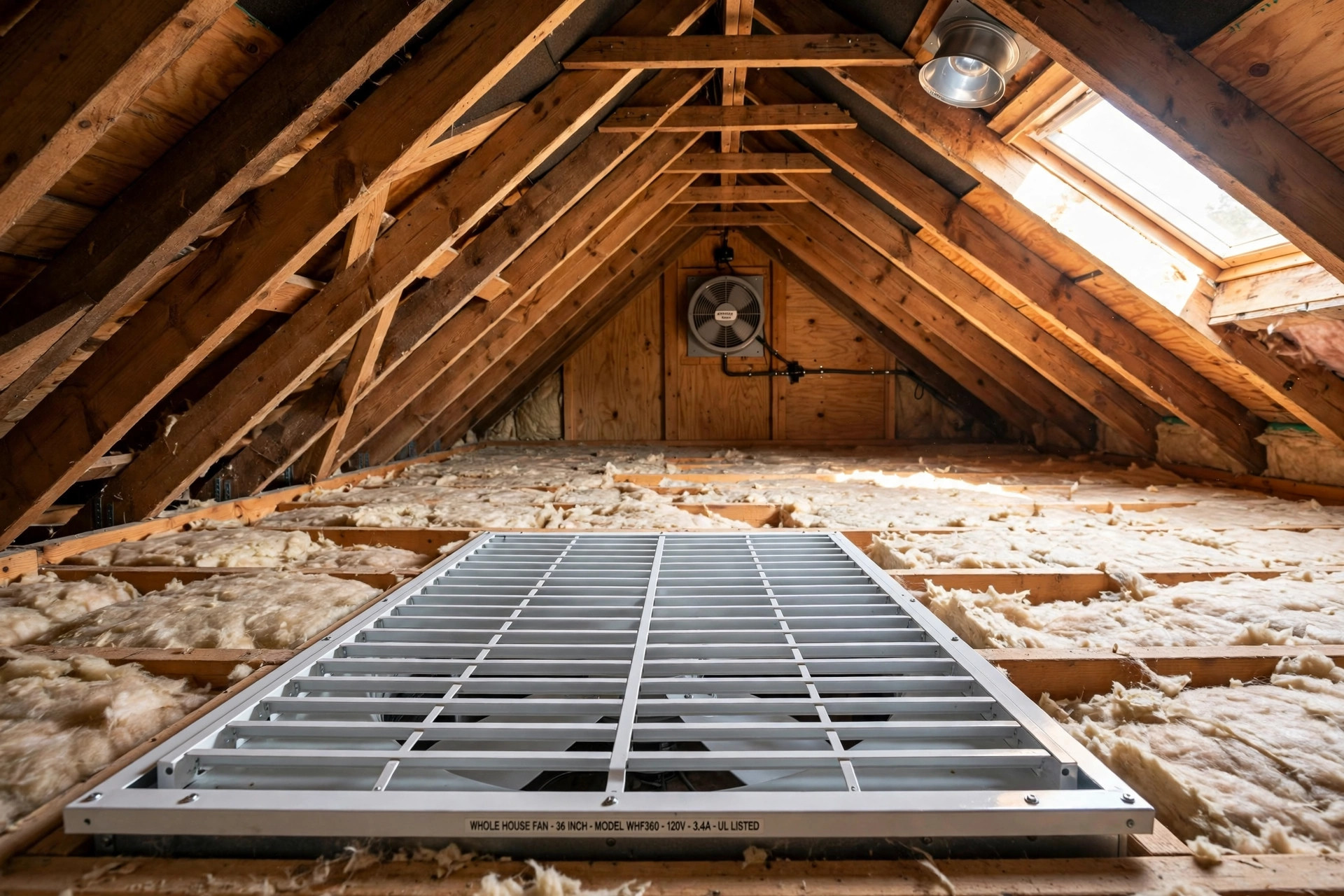
A whole house fan sits in the ceiling of the top floor. It is often mounted in a hallway ceiling. When you turn it on, it pulls warm air from every room below. It pushes that air up into the attic. From there, the air flows out through the roof vents.
The fan does not just move inside air. It also draws in fresh air from outside. You open a few windows a few inches. Cool evening air rushes in. It sweeps through the bedrooms and living areas. Then it carries heat up and out.
This fan works best in the evening and at night. After sunset, the outside air drops. The fan trades the hot air inside for the cooler air outside. Many families use it to delay air conditioning. Some never turn the air conditioner on at all.
Whole house fans are large. A common unit moves 2,000 to 7,000 cubic feet of air per minute. Sizing matters. The rule of thumb is to pick a fan that can change the air in your home three to six times per hour. Makers like Carrier and Trane publish sizing charts for their ventilation lines. For sizing help, guides on whole house fan sizing explain how installers match fan power to square footage.
These fans need a clear path for air to leave the attic. Without enough roof vents, pressure builds up and the fan gets loud.
The Attic Fan
An attic fan sits in the attic itself. It mounts on the roof or on a gable wall. It does not touch the air in your living rooms. It never draws air through your windows. Its job is simple: it removes hot air from the attic.
On a summer day, an attic can reach 150 degrees. That heat presses down into the house below. An attic fan vents that trapped heat outside. It pulls in cooler outside air through the soffit vents under the eaves.
A cooler attic means a cooler house. The air conditioner works less. In hot climates, this can cut cooling bills by a noticeable amount. Many homeowners pair an attic fan with strong attic ventilation for hot climates to get the best result.
Attic fans run on their own. Most have a thermostat. It switches the fan on when the attic hits a set temperature. Some also have a humidistat. That switch turns the fan on when moisture in the attic gets too high. Install guides from Lennox and Rheem stress placing the thermostat away from the hottest roof spots. Solar models run on a small panel on the roof. They need no wiring at all. Reviews of solar attic fans show they appeal to owners who want a simple, wire-free setup.
Side by Side: Key Differences
The clearest difference is the air path. A whole house fan moves air through your rooms. An attic fan moves air only through your attic. One cools people. The other cools the building shell.
The time of use differs too. Whole house fans run when the outside air is cooler than the inside air. That means evenings, nights, and mild mornings. Attic fans run when the attic is hot. That means the middle of the day in summer. They serve opposite parts of the day.
Noise is another gap. A whole house fan sits in your ceiling, so you hear it in nearby rooms. Newer insulated models run much quieter than old ones. An attic fan sits far above you. You rarely hear it inside the house.
Cost differs as well. A whole house fan costs more to buy and install. The install cuts into the ceiling. An attic fan is smaller and simpler. A solar unit may need only an hour of labor.
Energy use is low for both. A whole house fan may use 200 to 700 watts. An attic fan may use 100 to 300 watts. A solar model uses none from the grid. All beat the 3,000 watts or more of a central air conditioner.
Homeowners in dry regions get the most from a whole house fan. Places like California and the Mountain West have cool nights. The fan brings in that cool air for hours. In humid regions like Florida and the Gulf Coast, nights stay warm and damp. The fan has less cool air to work with. An attic fan can still help there. It lowers attic heat in the day no matter the humidity.
How to Choose the Right One
Look at Your Climate
Climate is the first test. If your summer nights drop below 75 degrees, a whole house fan can do real work. Open windows will bring in pleasant air. The fan will flush the day’s heat in minutes. Shoppers often compare fan brands on sites like Consumer Reports before they buy.
If nights stay hot and humid, the whole house fan loses its edge. It will pull in sticky air. You may not feel cooler. An attic fan is the better pick. It works in the day when the sun bakes the roof. It needs no cool night air to do its job.
Some homes sit in the middle. Warm days, mild nights, some humidity. These homes can use both fans. The attic fan runs in the afternoon. The whole house fan runs after dark. Together they cut the air conditioner’s load from both sides.
Look at Your House
House design matters. A whole house fan needs open interior space so air can flow from the windows to the fan. Homes with many closed doors work less well.
The attic needs vent space for both fans. A whole house fan pushes a large volume of air into the attic. That air must escape through roof or gable vents. A good rule is one square foot of net free vent area for every 750 cubic feet per minute of fan power. An attic fan also needs intake vents at the eaves. Without them, it pulls conditioned air from the house below. That raises your bills instead of lowering them.
Older homes with little insulation gain more from an attic fan. The roof heat pours into the rooms below. Well-insulated newer homes still benefit, but the gain is smaller. Vent-planning advice from This Old House and Family Handyman helps owners get the vent balance right.
Look at Your Budget
Both fans are cheaper than new air conditioning. A whole house fan costs more up front but can replace air conditioning on many days. An attic fan costs less but never replaces air conditioning. It only helps it run less.
A whole house fan may save 50 to 90 percent on cooling costs for the days it runs. An attic fan may save 10 to 30 percent on the air conditioner’s summer workload. Your climate decides where you fall in those ranges.
Cost and Price
A whole house fan unit costs 300 to 1,500 dollars. Basic belt-drive models sit at the low end. Quiet direct-drive and insulated ducted models sit at the high end. Professional installation adds 500 to 1,500 dollars. The installer cuts the ceiling opening, wires the switch, and checks the vents. For a full breakdown, see our guide to whole house fan installation cost.
Total installed cost often lands between 1,000 and 3,000 dollars. Multi-speed controls and timers add to the price.
An attic fan unit costs 100 to 500 dollars. Roof-mount and gable-mount electric models are the most common. Solar models cost 300 to 600 dollars. They skip the wiring cost. Installation for an electric attic fan runs 200 to 600 dollars. A solar unit may cost 100 to 300 dollars to install. Many handy owners do it themselves in an afternoon.
Total installed cost often lands between 300 and 1,000 dollars. That makes the attic fan the cheaper first step. Retailers like The Home Depot stock both fan types, so you can compare prices side by side.
Running costs stay low for both. At average electric rates, a whole house fan costs 5 to 15 cents per hour to run. An attic fan costs 2 to 8 cents per hour. A solar attic fan costs nothing to run. Energy Star lists efficient ventilation products that keep these numbers low.
Care and Upkeep
Both fans need little care. That is part of their appeal. Still, a small routine keeps them quiet and safe.
Clean the whole house fan grille twice a year. Dust builds up on the louvers and cuts airflow. Check the belt on belt-drive models each spring. A worn belt slips and the fan loses power. Replace belts every few years.
Lubricate the motor if the manual calls for it. Many newer motors are sealed. They need no oil. Older motors have oil ports. Owner manuals from makers such as Goodman show where the oil ports sit on their motors.
For the attic fan, check the thermostat each spring. Set it to turn on near 100 to 110 degrees. Clean the fan blades of dust and cobwebs. Check the screen over the intake, since birds and squirrels like to nest near warm vents.
Solar attic fan owners should wipe the solar panel each spring. Dust and pollen cut its power.
Listen for new sounds. A fan that rattles or grinds needs attention. Loose mounts cause most rattles. Worn bearings cause grinding. Fix small problems early.
Safety
Safety deserves a full section. Both fans move large volumes of air. That creates risks you should know.
A whole house fan can backdraft combustion appliances. It pulls air from the house. If a gas water heater or furnace sits nearby, the fan can pull exhaust gases down the flue. Never run a whole house fan with an open-flame appliance in the same zone unless a professional has checked the setup.
Install a carbon monoxide detector on each floor and test it monthly. The U.S. Department of Energy publishes guidance on safe home ventilation at Energy.gov.
An attic fan can also backdraft if the attic connects to a flue. Seal gaps around pipes, wires, and the attic hatch. This keeps the fan pulling from the eave vents, not from your living room.
Both fans need proper wiring. A licensed electrician should wire any hardwired unit. The attic is hot and cramped. Wiring mistakes there are hard to spot. A professional install costs more. It is worth it.
Turn fans off during a fire or when you smell smoke. A whole house fan will feed air to a fire. It will also spread smoke through every room. Make this a house rule. Tell every family member.
Frequently Asked Questions
Can I install both a whole house fan and an attic fan?
Yes. Many homes use both. Run the attic fan in the hot afternoon and the whole house fan in the cool evening. They do not fight each other. Just make sure the attic has enough vent space for both.
Will a whole house fan work without air conditioning?
In the right climate, yes. Dry regions with cool nights are ideal. The fan flushes the day’s heat and draws in cool night air. In hot, humid regions, the fan helps but rarely replaces air conditioning.
Does an attic fan really lower cooling bills?
It can. By venting superheated attic air, it keeps ceilings cooler. The air conditioner cycles less. Savings of 10 to 30 percent on summer cooling are common in hot climates.
Are whole house fans noisy?
Older models were loud. Newer insulated and ducted models are much quieter. Multi-speed controls help too. You can run low speed at night for gentle airflow.
How long do these fans last?
A good whole house fan lasts 15 to 25 years. Belt-drive models need belt changes along the way. An attic fan lasts 10 to 20 years. Motors wear out first, and replacing a motor is cheaper than replacing the whole unit.
Do I need a permit to install one?
Rules vary by town. Many places require an electrical permit for hardwired fans. The ceiling cut for a whole house fan may need a building permit. Solar attic fans often need no permit. Call your local building office before work starts. A licensed installer usually handles permits for you.
A Short Final Word
This whole house fan vs attic fan comparison comes down to one question. Do you want to cool your rooms, or cool your attic? The whole house fan cools rooms with fresh evening air. The attic fan cools the attic shell in the heat of the day. Dry climates with cool nights favor the whole house fan. Hot humid climates favor the attic fan.
Pick the fan that matches your climate, your house, and your budget. Size it right. Vent it right. Keep it clean. Either machine can cut your cooling bills.
References
Carrier. (n.d.). Heating and cooling systems. https://www.carrier.com Consumer Reports. (n.d.). Product reviews and ratings. https://www.consumerreports.org ENERGY STAR. (n.d.). Energy efficient products. https://www.energystar.gov Family Handyman. (n.d.). DIY home repair and maintenance. https://www.familyhandyman.com Goodman. (n.d.). Heating and cooling equipment. https://www.goodmanmfg.com Lennox. (n.d.). Heating and cooling systems. https://www.lennox.com Rheem. (n.d.). Heating, cooling, and water heating. https://www.rheem.com The Home Depot. (n.d.). Home improvement products. https://www.homedepot.com This Old House. (n.d.). Home renovation guidance. https://www.thisoldhouse.com Trane. (n.d.). Heating and air conditioning. https://www.trane.com U.S. Department of Energy. (n.d.). Energy efficiency and renewable energy. https://www.energy.gov
Was this guide helpful?

About Jennifer Lee
The My Garden US editorial team writes practical, in-depth home and garden guides for American homeowners — tested advice, no fluff.
You May Also Like

Best Attic Ventilation for Hot Climates USA
March 12, 2026 0 views
Best Inline Duct Fan Reviews 2026 USA: A Simple Guide for Homeowners
January 11, 2026 0 views
Best Outdoor Fireplace Kits for Sale USA: A Buyer’s Guide
July 26, 2026 0 views