Why the Best EV Charger for Home Reviews 2026 USA Matter to You
When it comes to best ev charger for home reviews 2026 USA, getting the details right makes all the difference.
Many homeowners find that best ev charger for home reviews 2026 USA is easier than they expected once they know the basics.
More Americans are bringing electric cars home each year. The car is only half the story. The other half sits on your garage wall. A home charger decides how fast your car fills up, how safe the process is, and how much you spend on power. That is why the best EV charger for home reviews 2026 USA have become so important. They give you plain facts before you spend your money.
Table of Contents
Table of Contents
- Why the Best EV Charger for Home Reviews 2026 USA Matter to You
- Why a Home Charger Changes the Way You Own an Electric Car: Best Ev Charger for Home Reviews 2026 USA
- It turns fuel stops into a habit you never think about
- It costs less than public charging
- It protects your battery
- What to Look For When You Choose a Home EV Charger
- Power level, measured in amps
- Plug type and cord length
- Smart features that save money
- Certification marks
- Weather rating
- Types of Home EV Chargers
- Level 1: the cord that comes with the car
- Level 2: the wall unit most owners buy
- Portable Level 2 cords
- Hardwired versus plug in
- How to Read Reviews the Smart Way
- Cost and Price: What You Will Really Pay
- The charger itself
- Installation costs
- Permits and inspections
- Tax credits and rebates
- Running costs
- Care and Upkeep of Your Charger
- Safety: The Rules That Protect Your Home
- Use a licensed electrician
- Keep the area clear
- Watch for recalls
- Teach the household
- Choose certified gear
- Smart Home Links Worth Knowing
- Frequently Asked Questions
- How fast will a home charger fill my car?
- Can I install the charger myself?
- Will a home charger raise my electric bill a lot?
- Do I need a panel upgrade?
- What is the difference between J1772 and NACS?
- How long does a home charger last?
- A Short Final Word
- References
Charging at home is the cheapest way to fuel an electric car. Public fast chargers cost more per mile. Home charging lets you use night rates. It lets you wake up each morning with a full battery. A good unit will serve you for ten years or more. A poor one can trip your breaker, overheat, or fail in two winters. Reviews help you tell the difference.
Why a Home Charger Changes the Way You Own an Electric Car: Best Ev Charger for Home Reviews 2026 USA
Many homeowners find that best ev charger for home reviews 2026 USA is easier than they expected once they know the basics.
The key to best ev charger for home reviews 2026 USA is choosing the right approach for your space and budget.
It turns fuel stops into a habit you never think about
With a gas car, you drive to a station. With an electric car and a home charger, you plug in at night and forget about it. The car charges while you sleep. In the morning it is ready. This small change removes the one chore that new owners fear most. It is the main reason people stay loyal to electric cars after the first year.
It costs less than public charging
Home power is cheap in most of the United States. Public fast charging often costs two or three times as much per mile. Over a year of driving, the gap adds up to hundreds of dollars. A home charger pays for itself through these savings alone. Many owners see the full cost returned in under two years.
It protects your battery
Slow, steady home charging is gentle on a battery. A good charger talks to the car and follows its limits. It stops when the battery is full. It adjusts when the house draws heavy power. This kind of care keeps the battery healthy for many years. It also keeps your warranty safe.
What to Look For When You Choose a Home EV Charger
The key to best ev charger for home reviews 2026 USA is choosing the right approach for your space and budget.
With a little planning, best ev charger for home reviews 2026 USA can fit even a busy schedule.
Power level, measured in amps
Most home chargers run on a 240 volt circuit, like a clothes dryer. The strength is measured in amps. Common sizes are 32, 40, and 48 amps. Higher amps mean faster charging. A 48 amp unit can add about 35 to 40 miles of range per hour. A 32 amp unit adds about 25 miles per hour. Most drivers charge overnight, so even the smaller size is enough. Pick the size that fits your panel and your driving.
Plug type and cord length
American electric cars use two plug shapes. The J1772 plug fits most cars from Ford, GM, Hyundai, Kia, and others. Tesla cars use the Tesla plug, now called NACS. Some chargers ship with both options. Cord length matters more than people think. A 25 foot cord reaches either side of a two car garage. A 20 foot cord may not. Measure your parking spot before you buy.
Smart features that save money
Smart chargers connect to WiFi. An app shows how much power you used. You can set the car to charge only at night, when rates are low. Some units work with solar panels. Some balance the load so they do not overload your panel. These features are not toys. They cut real dollars from your bill. Check the latest smart home reviews for side by side tests of connected devices.
Certification marks
Look for a UL or ETL mark on the box. These marks mean an independent lab tested the unit for fire and shock risk. They matter for insurance. They matter for permits. Never buy a charger with no certification. The Consumer Product Safety Commission tracks reports of faulty electrical products, and certified units have far fewer complaints.
Weather rating
If you mount the unit outside, it needs a strong weather rating. Look for NEMA 4 or IP66 on the label. This means it can stand rain, dust, and snow. Even in a garage, a good rating helps in damp or dusty air. Indoor only units cost less, but they limit where you can put them.
Types of Home EV Chargers
With a little planning, best ev charger for home reviews 2026 USA can fit even a busy schedule.
Before you start, it helps to understand how best ev charger for home reviews 2026 USA works in real homes.
Level 1: the cord that comes with the car
Every electric car ships with a Level 1 cord. It plugs into a normal 120 volt outlet. It adds three to five miles of range per hour. For a driver who covers 30 miles a day, it is enough. It costs nothing extra. Its weakness is speed. A full charge can take 40 hours or more on a big battery.
Level 2: the wall unit most owners buy
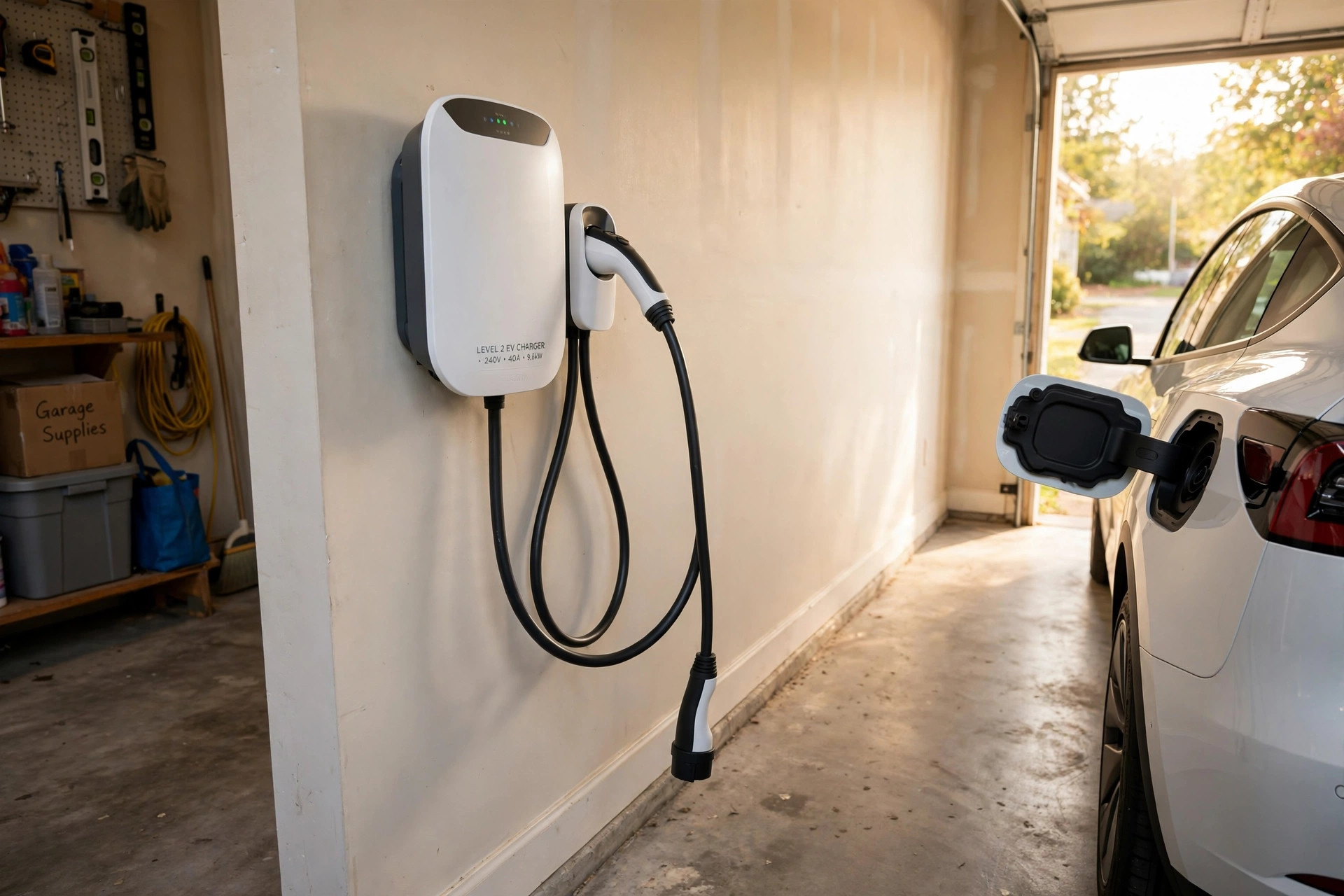
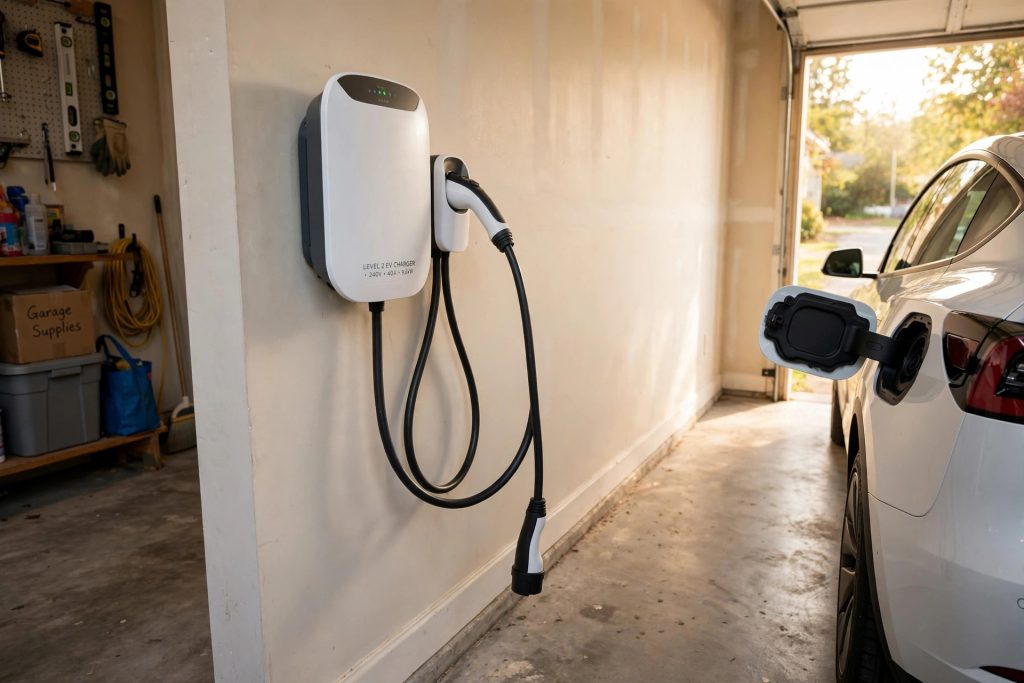
A Level 2 charger uses a 240 volt circuit. It adds 20 to 40 miles of range per hour. A full charge takes four to eight hours. This is the standard choice for American homes. Units cost between 400 and 800 dollars. Installation adds more. Most owners find this the right balance of price and speed. Many garage charging reviews rate Level 2 as the sweet spot for daily driving.
Portable Level 2 cords
Some makers sell portable Level 2 cords. They plug into a dryer outlet and give Level 2 speed. They cost less than wall units. They are handy for renters and travelers. Their limits are lower power and thinner cables. They are a bridge, not a permanent answer.
Hardwired versus plug in
A hardwired charger connects straight to your panel. It supports the highest amps and looks neat. A plug in charger uses a 240 volt outlet with a NEMA 14-50 plug. It is easy to replace or take with you when you move. Plug in units top out around 40 amps. Hardwired units can reach 48 or even 80 amps.
How to Read Reviews the Smart Way
Before you start, it helps to understand how best ev charger for home reviews 2026 USA works in real homes.
A good plan for best ev charger for home reviews 2026 USA saves time, money, and frustration.
Reviews for chargers vary in quality. Some are honest. Some are paid. Here is how to read them well.
First, check the date. A review from 2026 carries the newest firmware, prices, and safety rules. Older reviews may praise a model that has since changed parts.
Second, look for long term reports. A charger that works on day one may fail in month six. Owners who report back after a year tell you the truth about build quality. Pay special attention to reports about heat, app bugs, and warranty claims.
Third, compare across sites. One site may favor one brand. Read three or four sources and look for agreement. When several independent reviewers note the same flaw, trust it. Technology sites like The Verge often cover smart charging features in depth.
Fourth, weigh your own case. A reviewer in Arizona cares about heat. A reviewer in Minnesota cares about cold. If your garage is like theirs, their words count more. Match the review to your climate and your panel.
Cost and Price: What You Will Really Pay
A good plan for best ev charger for home reviews 2026 USA saves time, money, and frustration.
For most people, best ev charger for home reviews 2026 USA comes down to a few smart choices.
The charger itself
Basic Level 2 units start near 400 dollars. Mid range smart units run 500 to 700 dollars. Top models with long cords and strong weather ratings reach 800 dollars or more. Price often tracks with build quality and app polish. It does not always track with charging speed.
Installation costs
Installation is the wild card. If your panel has space and the run is short, an electrician may charge 300 to 600 dollars. If you need a panel upgrade or a long run of wire, the bill can pass 2,000 dollars. Get two or three quotes. Make sure the electrician is licensed and insured. Our guide to home EV charger installation cost near me walks through the numbers in detail.
Permits and inspections
Most towns require a permit for a new 240 volt circuit. The permit costs 50 to 200 dollars. An inspector checks the work after it is done. This protects you. It also protects your insurance claim if something ever goes wrong. Never skip the permit to save a small fee.
Tax credits and rebates
The federal tax credit for home charging equipment has changed over the years. Some states add their own rebates. Some power companies pay part of the cost or offer cheap night rates for EV owners. These programs change fast. Check the current rules before you file. Our page on the EV charger tax credit 2026 for homeowners USA explains what is on the table this year. The Department of Energy also keeps guidance for home EV charging on its public site.
Running costs
A typical American driver adds about 3,000 to 4,000 kilowatt hours a year for charging. At 15 cents per kilowatt hour, that is 450 to 600 dollars a year. Night rates can cut this in half. Compare this to 1,500 dollars or more for gas over the same miles. The savings are real and they grow each year.
Care and Upkeep of Your Charger
For most people, best ev charger for home reviews 2026 USA comes down to a few smart choices.
If you are new to best ev charger for home reviews 2026 USA, start with the simplest option and build from there.
A home charger needs little care, but a little goes a long way.
Keep the plug clean. Wipe it with a dry cloth now and then. Dirt in the plug can cause poor contact and heat. Check the cord for cuts or wear once a season. Replace a damaged cord at once.
Keep the unit dry inside. Even outdoor rated units last longer under a small shelter. Do not let snow pile against the box. Do not blast it with a hose.
Update the app and firmware. Makers fix bugs through updates. An old firmware can cause failed charges or lost WiFi. Set updates to run on their own if the app allows it.
Once a year, look at the breaker and the outlet. Feel for heat after a long charge. Smell for anything burnt. If you find warmth or a strange smell, call your electrician. Small problems caught early stay small.
Safety: The Rules That Protect Your Home
If you are new to best ev charger for home reviews 2026 USA, start with the simplest option and build from there.
When it comes to best ev charger for home reviews 2026 USA, getting the details right makes all the difference.
Use a licensed electrician
The 240 volt circuit is not a do it yourself job. A licensed electrician sizes the wire, sets the breaker, and pulls the permit. This work is worth every penny. Faulty wiring is the top cause of charger fires.
Keep the area clear
Do not stack boxes around the charger. Air must move around the box and the cord. Keep gasoline, paint, and solvents far from the unit. A garage that holds a car and a charger should stay tidy.
Watch for recalls
Chargers are electrical products, and recalls do happen. The Consumer Product Safety Commission posts recall notices for home electrical gear when makers report defects. Sign up for alerts if the site offers them for your product class.
Teach the household
Show everyone how to plug and unplug the car. Tell children never to touch the plug with wet hands. Keep the cord off the floor where it can trip someone or get run over. Simple habits prevent most accidents.
Choose certified gear
This point bears repeating. A UL or ETL mark is your basic guard. Certified units are tested for ground faults, heat, and water. Uncertified units from unknown sellers skip these tests. The risk is not worth the small saving.
Smart Home Links Worth Knowing
When it comes to best ev charger for home reviews 2026 USA, getting the details right makes all the difference.
Many homeowners find that best ev charger for home reviews 2026 USA is easier than they expected once they know the basics.
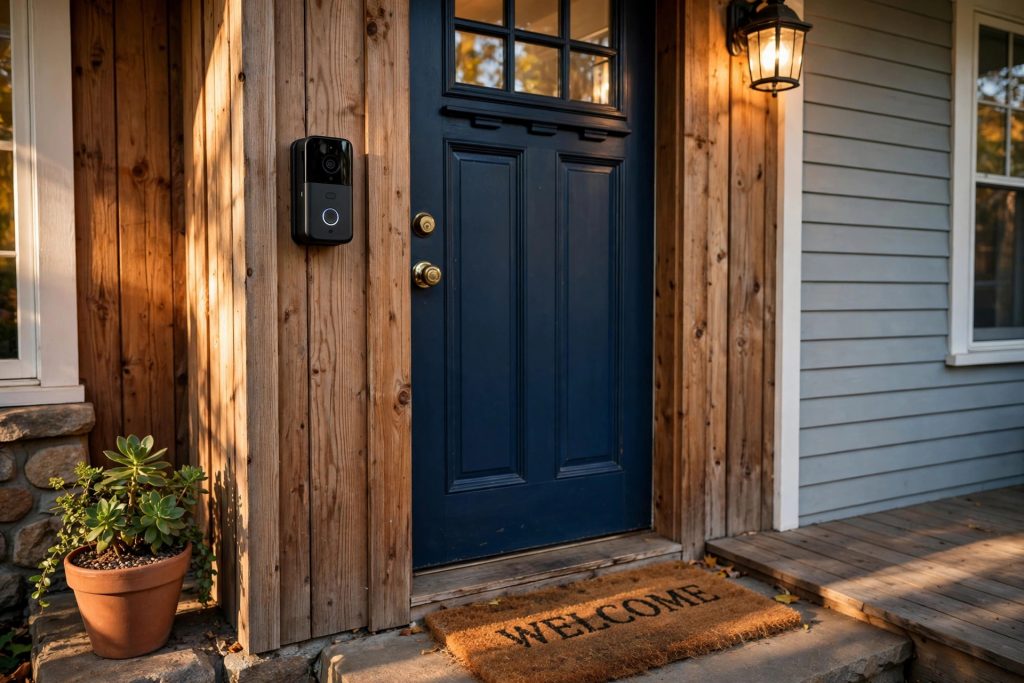
A charger works best as part of a larger smart home. Many owners pair it with a doorbell camera or a security system on the same WiFi. A single app can watch the front door, the garage, and the power bill. If you plan to build out your setup, read smart security reviews to see how the pieces fit together. Voice assistants from the Google store can also announce when charging starts or stops, which some owners find handy. Home tech reviewers at Ring and similar makers often cover how garage devices share a network without slowing each other down.
Frequently Asked Questions
Many homeowners find that best ev charger for home reviews 2026 USA is easier than they expected once they know the basics.
The key to best ev charger for home reviews 2026 USA is choosing the right approach for your space and budget.
How fast will a home charger fill my car?
A 40 amp Level 2 charger adds about 30 miles of range per hour. A typical overnight charge of eight hours adds about 240 miles. That covers most drivers with ease. Cars with bigger batteries take longer for a full charge from empty, but few owners ever run to empty.
Can I install the charger myself?
You can mount the box on the wall yourself in many towns. The 240 volt wiring must be done by a licensed electrician. The permit and inspection also require a pro. Check local rules before you touch anything electrical.
Will a home charger raise my electric bill a lot?
It adds 30 to 60 dollars a month for average driving. Night rates can cut this to 15 to 30 dollars. This is still far below the cost of gasoline for the same miles. Most owners find the bill easy to absorb.
Do I need a panel upgrade?
Some homes need one. If your panel is 100 amps and full, a 48 amp charger may not fit. A 200 amp panel handles most chargers with room to spare. Your electrician will do a load check and tell you. Load sharing chargers can avoid an upgrade in many cases.
What is the difference between J1772 and NACS?
J1772 is the standard plug for most non Tesla cars. NACS is the Tesla plug, now opening to other brands. Adapters exist both ways. Many new chargers ship with NACS as standard. Pick the plug that fits your car, or a unit with both.
How long does a home charger last?
A good unit lasts 10 to 15 years. The weak points are the cord, the plug, and the electronics inside. Units with strong warranties, five years or more, tend to last longer. Keep it clean, dry, and updated, and it will serve you well.
A Short Final Word
The key to best ev charger for home reviews 2026 USA is choosing the right approach for your space and budget.
The best EV charger for home reviews 2026 USA all point the same way. Buy a certified Level 2 unit that fits your panel. Size the amps to your driving. Pick the plug that matches your car. Get a licensed electrician to wire it. Use the tax credits that are open to you. Do these five things and you will charge at home with ease for years.
If you are still comparing models, our roundup of the best level 2 charger for garage reviews USA narrows the field to the top picks. For the latest lab tests, the ENERGY STAR certified charger list is a solid starting point. Read a few honest reviews, match the charger to your home, and enjoy the quiet comfort of waking up to a full battery every morning.
References
With a little planning, best ev charger for home reviews 2026 USA can fit even a busy schedule.
CNET. (n.d.). Technology news and reviews. https://www.cnet.com ENERGY STAR. (n.d.). Energy efficient products. https://www.energystar.gov Google Store. (n.d.). Smart home devices. https://store.google.com PCMag. (n.d.). Technology product reviews. https://www.pcmag.com Ring. (n.d.). Smart home security devices. https://www.ring.com SimpliSafe. (n.d.). Home security systems. https://www.simplisafe.com The Verge. (n.d.). Technology news and reviews. https://www.theverge.com U.S. Consumer Product Safety Commission. (n.d.). Product safety information. https://www.cpsc.gov U.S. Department of Energy. (n.d.). Energy efficiency and renewable energy. https://www.energy.gov
Before you start, it helps to understand how best ev charger for home reviews 2026 USA works in real homes.
A good plan for best ev charger for home reviews 2026 USA saves time, money, and frustration.
For most people, best ev charger for home reviews 2026 USA comes down to a few smart choices.
If you are new to best ev charger for home reviews 2026 USA, start with the simplest option and build from there.
Was this guide helpful?

About David Wilson
The My Garden US editorial team writes practical, in-depth home and garden guides for American homeowners — tested advice, no fluff.