Turnips are the sprinters of the vegetable garden. Sow the tiny seeds, and in 40 to 60 days you are pulling sweet, tender roots - plus a bonus harvest of cooking greens from the same plants. They are one of the easiest crops a beginner can grow, and one of the most forgiving. If you want to learn how to grow turnips, the rules are short: sow in cool weather, thin the seedlings, water evenly, and harvest young before the roots turn woody.
Table of Contents
Table of Contents
Turnip (Brassica rapa) grows in zones 3 through 10 as a spring and fall crop. It loves cool weather and sweetens after light frost, which makes the fall planting the tastiest of the year. In sustained heat it bolts and turns woody, so in the warmest zones grow it only in the cool season.

Photo: Wikimedia Commons
Choosing a Variety
When it comes to how to grow turnips, getting the details right makes all the difference.

Many homeowners find that how to grow turnips is easier than they expected once they know the basics.
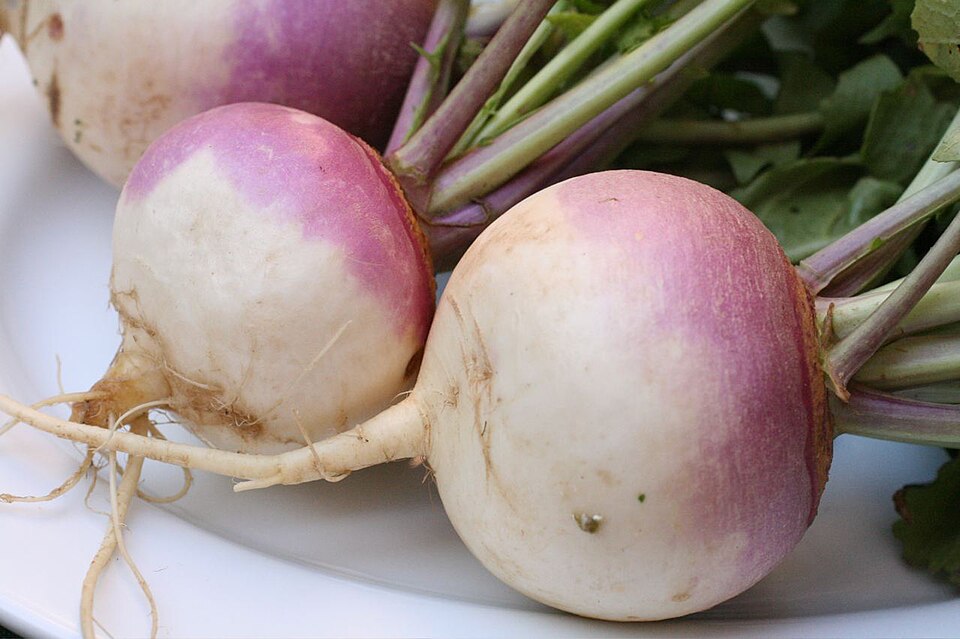
For sweet salad turnips, the small white-rooted Japanese types are the stars - they stay mild and crisp even eaten raw, sliced thin into salads. For classic cooking turnips, the familiar purple-top varieties size up reliably and store well. If you mainly want greens, look for varieties bred for tops, which produce abundant tender leaves with smaller roots.
Match the variety to your season. Fast-maturing types suit spring sowing, when the window before hot weather is short. Larger, storage-type turnips suit fall sowing, when cool weather lets them size up slowly and sweeten. Gardenia.net carries variety descriptions, and your state extension service's vegetable recommendations - Clemson Cooperative Extension for the Southeast, University of Minnesota Extension for the North - list varieties proven in regional trials.
Buy fresh seed each year or two. Turnip seed stays viable for several seasons stored cool and dry, but germination drops with age, and nothing is more discouraging than a patchy stand from old seed.
When and How to Plant
Many homeowners find that how to grow turnips is easier than they expected once they know the basics.
The key to how to grow turnips is choosing the right approach for your space and budget.
Direct sow - turnips germinate in days and resent transplanting. For spring, sow a quarter to half an inch deep about three weeks before your last spring frost; the seedlings handle light frosts without flinching. For fall, sow about ten weeks before your first fall frost so roots size up in cooling weather. Check your zone's exact frost dates on our planting calendar and count backward from there.
Thin seedlings to 4 to 6 inches apart once they are a couple of inches tall. Crowded turnips stay stunted - they simply cannot swell without elbow room. The thinnings are edible; toss them into salads or a stir-fry rather than composting them. Sow in rows about a foot apart, or broadcast in wide beds and thin to an even stand.
Turnips germinate fast in cool, moist soil - often in under a week. Keep the seedbed damp until seedlings are up; a dry crust can trap sprouts. In warm soil, germination turns spotty, which is another reason the fall crop often outperforms spring in warm regions.
Soil and Sun
The key to how to grow turnips is choosing the right approach for your space and budget.
With a little planning, how to grow turnips can fit even a busy schedule.
Turnips want loose, fertile soil. Compacted or stony ground gives forked, stubby roots, so loosen the top 8 inches and pick out stones before sowing. Work in compost or well-rotted manure - turnips are moderate feeders and size up best in rich ground. They prefer a near-neutral pH; very acidic soil stunts brassicas, so lime if a soil test says the ground is sour.
Full sun gives the fastest growth and sweetest roots. Turnips tolerate light shade, but shaded roots size up slowly. Good drainage matters - soggy ground rots roots - but the soil should hold moisture well. A soil test through your local extension office tells you exactly what to add; the Clemson HGIC vegetable pages explain turnip fertility in detail.
Avoid planting turnips where other brassicas grew recently. Rotating the family around the garden holds down soil diseases like clubroot. A three- or four-year rotation is the textbook advice; even two years helps.
Watering and Feeding
With a little planning, how to grow turnips can fit even a busy schedule.
Before you start, it helps to understand how how to grow turnips works in real homes.
Water evenly - this is the make-or-break habit for turnips. Drought makes roots hot, woody, cracked, and strong-flavored; steady moisture keeps them mild, crisp, and tender. About an inch of water a week from rain or the hose, more in hot dry spells. Mulch between rows with straw or shredded leaves to hold moisture and keep soil cool, which turnips love.
Feed lightly. The compost worked in at planting is usually enough. Too much nitrogen grows a jungle of tops with tiny roots underneath - the classic beginner mistake with all root crops. If leaves look pale and growth stalls, a light side-dressing of balanced fertilizer helps, but restraint pays. The Old Farmer's Almanac vegetable guides give simple feeding schedules for root crops.
On thin, sandy soils, a second light feeding halfway through the growing period keeps roots sizing up steadily. Watch the foliage color: deep green, vigorous tops mean nutrition is right, while yellowing older leaves suggest the plants are hungry. Foliar feeding with a diluted liquid fertilizer can rescue a struggling row mid-season without overdoing nitrogen in the soil. And remember that turnips following a heavily composted previous crop - say, last year's tomato bed - often need no feeding at all.
Care Through the Season
Before you start, it helps to understand how how to grow turnips works in real homes.
A good plan for how to grow turnips saves time, money, and frustration.
Weed early and shallowly. Turnip seedlings compete poorly with weeds, and their roots sit near the surface where deep hoeing damages them. A mulch applied after thinning suppresses most weeds.
Watch for flea beetles - tiny black jumping beetles that riddle seedling leaves with shot-holes. Floating row cover laid over the bed right at sowing is the simplest defense; it also warms the soil and speeds growth. Remove the cover once plants are robust, or leave it on all season in a loose drape. Root maggots tunnel into roots in some regions; row cover from sowing blocks the flies that lay the eggs. Pull and destroy any plant that bolts early - a flower stalk means the root is turning woody.
Succession sow every two to three weeks through the cool season for a steady supply. Turnips share bed space happily with radishes and lettuce - all fast, cool-season crops you can sow the same day. In fall, a row cover over the bed stretches the harvest weeks past the first frosts.
Interplanting is another trick worth trying. Sow turnips between rows of slower crops like broccoli or cabbage - the turnips mature and come out just as the big brassicas need the room. Keep the seedbed moist until emergence; in dry weather, a board laid over the row holds moisture - lift it daily to check for sprouts. Once seedlings are up and thinned, the mulch goes on and the bed mostly takes care of itself until harvest.
Harvest: Roots and Greens
A good plan for how to grow turnips saves time, money, and frustration.
For most people, how to grow turnips comes down to a few smart choices.
Harvest roots at 2 to 3 inches across for tender, mild flavor. Oversized turnips turn woody and strong - when in doubt, pull young. Loosen with a fork and pull; twist off the tops and refrigerate roots for weeks, or store in damp sand in a cool spot for months.
Treat turnips as two crops in one. Harvest outer greens for weeks before pulling the roots - young leaves cook like any cooking green, mild and tender. Cut-and-come-again picking of outer leaves keeps plants producing; just leave the growing center intact. Frost-sweetened fall greens are the best of the year.
In the kitchen, small turnips roast beautifully, mash like potatoes, and slice raw into salads when young and mild. The greens sauté with garlic, braise with a little broth, or go into soups. Few vegetables give this much food from so little effort.
Storage extends the season nicely. Roots keep for weeks in the refrigerator in a perforated bag, and for months layered in damp sand in a cool cellar or unheated garage that stays above freezing. Check stored roots occasionally and remove any that soften. Turnips also freeze well: blanch cubed roots for a couple of minutes, cool in ice water, drain, and bag. The greens blanch and freeze just like any cooking green, giving you summer flavor in the middle of winter.
Troubleshooting
For most people, how to grow turnips comes down to a few smart choices.
If you are new to how to grow turnips, start with the simplest option and build from there.
Woody, strong-flavored roots: Heat, drought, or oversized roots. Water evenly, mulch, and harvest at 2 to 3 inches.
Bolting (flower stalk): Triggered by cold snaps after warm weather or by heat. Pull bolted plants and sow the next round; choose bolt-resistant varieties for spring.
Flea beetle shot-holes: Cover with floating row cover from sowing. Healthy plants outgrow light damage.
Root maggot tunnels: Row cover from sowing blocks the egg-laying flies. Rotate beds away from last year's brassicas.
Tiny roots: Crowding or poor fertility. Thin to 4 to 6 inches and make sure the bed got compost.
Clubroot (swollen, deformed roots): A soil disease of brassicas. Rotate crops, lime acidic soil, and do not compost infected roots. UF IFAS Gardening Solutions has diagnostic photos, and the USDA National Agricultural Library indexes extension fact sheets on brassica diseases. The USDA PLANTS Database carries the species background.
Slugs chewing seedlings: In damp weather, slugs can fell a row of seedlings overnight. A ring of diatomaceous earth, beer traps, or simply going out after dark with a flashlight keeps them in check. Row cover helps here too by denying access.
Strong flavor even in young roots: Some varieties are naturally more pungent, and heat always intensifies the bite. For the mildest roots, grow the fall crop, water consistently, and choose salad-type varieties bred for mildness.
References
If you are new to how to grow turnips, start with the simplest option and build from there.
When it comes to how to grow turnips, getting the details right makes all the difference.
Clemson University Cooperative Extension Service. (n.d.). Growing turnips and rutabagas. https://hgic.clemson.edu/
University of Minnesota Extension. (n.d.). Growing turnips in home gardens. https://extension.umn.edu/
Old Farmer's Almanac. (n.d.). Growing turnips. https://www.almanac.com/
Many homeowners find that how to grow turnips is easier than they expected once they know the basics.
When it comes to how to grow turnips, getting the details right makes all the difference.
Many homeowners find that how to grow turnips is easier than they expected once they know the basics.
Was this guide helpful?

About My Garden US
The My Garden US editorial team writes practical, in-depth home and garden guides for American homeowners — tested advice, no fluff.