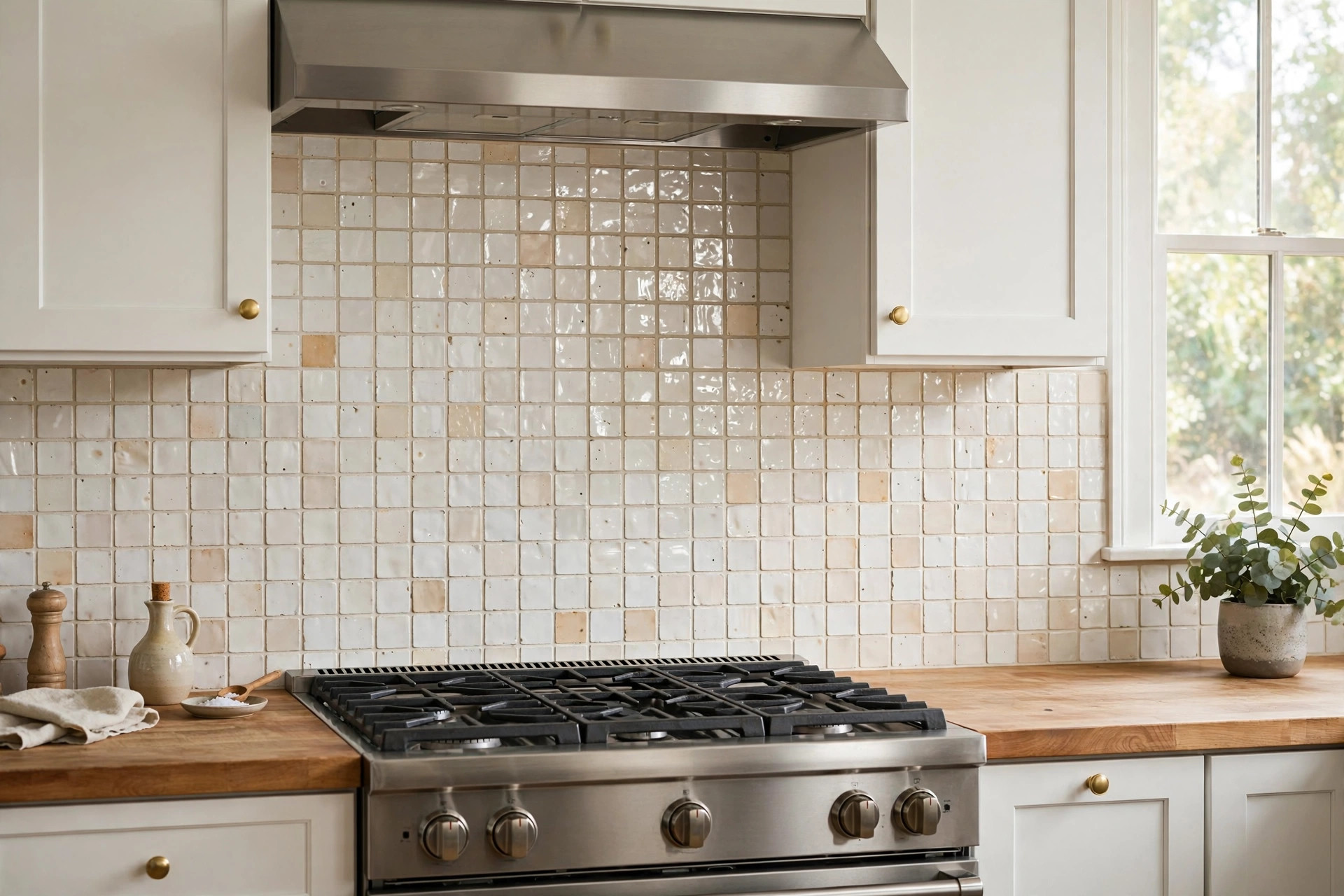

Few kitchen details draw the eye the way a zellige tile backsplash does. The small square tiles carry a thick glaze that pools and breaks across the surface, so no two pieces look alike. In daylight the wall seems to move a little, and in the evening it glows with a warmth that flat machine-made tile cannot match. The subject of this piece is zellige tile backsplash cost and reviews: what a real zellige job costs in the United States, what owners actually report after living with it, and how to make a sound choice before you order.
Zellige is a handmade glazed clay tile with roots in North Africa. Craftsmen shape each square from earth, fire it, and coat it with glaze by hand. The result is a tile of real character and real imperfection. That character is why people pay more for it than for factory tile, and it is also the reason the installation takes more time. Before you fall in love with the look, it pays to study zellige tile backsplash cost and reviews with a clear head.
Why a Zellige Backsplash Matters
A backsplash covers a small area, but it sets the mood of the whole kitchen. Paint can be changed in a weekend. Cabinets cost a small fortune to replace. The tile on the wall sits between the two in price and in permanence. Zellige gives a kitchen a crafted, old-world feel without a full remodel. It suits both farmhouse kitchens and spare modern ones, because the handmade surface softens clean lines and warms up plain paint.
The appeal also shows up in resale value. A kitchen that looks thought out sells faster, and buyers remember a wall of real handmade tile. Still, you should buy zellige for your own pleasure first. No backsplash pays for itself in full, and the best reason to choose it is that you like looking at it every day. Owners who say they are happy with their zellige almost always say the same thing: they bought it for the look and never tired of it.
What Zellige Tile Really Is: Zellige Tile Backsplash Cost and Reviews
True zellige comes from Morocco, where tile makers have worked the clay of the region for centuries. Each tile is cut by hand, glazed by hand, and fired in small kilns. The glaze thickness varies from piece to piece. Edges may be a touch uneven. Small pits and bumps are normal. This is not a flaw in the eyes of its fans; it is the whole point.
The market also sells zellige-look tile. These factory tiles copy the handmade appearance with printed color shifts on a flat porcelain body. They cost less and install like normal tile, but they do not catch light the way real zellige does. When you read zellige tile backsplash cost and reviews online, check which product the reviewer bought. Many mixed reviews turn out to be about the imitation, not the real thing.
The standard size is about two by two inches, and some makers cut the squares in half for a one-by-two pattern. Larger squares and specialty shapes exist as well. Color runs from snowy white to deep blue, green, and black. White and soft neutrals are the most common choice for kitchens, because they bounce light and sit well with most cabinet colors.
What It Costs in Real Terms
Tile material is only part of the bill. A fair estimate of zellige tile backsplash cost and reviews work across the country looks like this. Big retailers such as The Home Depot and Lowe’s stock both real imported zellige and factory imitations, which makes price comparison easy. The tile itself runs from about fifteen to thirty-five dollars per square foot for genuine imported zellige. Rare colors and larger formats can push past forty dollars. The imitation versions sell for five to twelve dollars per square foot.
Labor is where zellige separates itself from ordinary tile. A setter must work with uneven pieces, and the layout takes care. Expect installation charges of ten to thirty dollars per square foot, with the higher end in large coastal cities. Many setters quote by the day or by the job rather than by the square foot, because each wall is different.
So a typical thirty square foot kitchen backsplash might cost around seven hundred fifty to one thousand two hundred dollars for real tile, plus one thousand to two thousand five hundred dollars for labor. All in, most owners report spending between two thousand and four thousand dollars for the finished wall. For broader context on how tile labor is priced across the country, see our guide to tile installation cost per square foot usa.
Do not forget the extras. Zellige often ships from overseas or from a specialty importer, and freight charges can add a few hundred dollars. Order at least fifteen percent more tile than your measured area. Breakage is higher with handmade tile, and a few pieces will not suit your wall. You also need grout, and most owners choose a color close to the tile so the wall reads as one soft surface.
What Owners Say: The Reviews
Across retailer sites and home forums, the pattern of zellige tile backsplash cost and reviews is steady. Owners give high marks to the look. Words like rich, deep, and alive come up again and again. Many say guests notice the backsplash before anything else in the kitchen. Owners of white zellige note that it hides small splashes better than a flat white tile, because the glaze already carries soft gray and cream tones.
The complaints follow a pattern too. First is thickness. Handmade tiles vary in thickness, and some owners find the wall looks wavy once the light hits it at an angle. Skilled setters handle this by adjusting the mortar bed, so the complaint is really about the setter, not the tile. Second is staining and chips. The glaze can chip if struck hard, and the raw clay edges can absorb grease if left ungrouted. Both problems are small if the tile is set and sealed well.
The most common buyer regret is buying too little. Because each batch of handmade tile is fired separately, a second order may not match the first. Order your full quantity plus extra in one batch. A few owners also wish they had viewed a sample in their own kitchen light before ordering. Colors on a screen can be far from colors in a room.
How to Choose the Right Tile
Start with samples. Order four to six sample tiles in the colors you like, and tape them to the wall. Watch them through a full day. Morning light and evening lamp light will change the color more than you expect. The choice often comes down to this same test; our overview of handmade subway tile for kitchen reviews usa shows how sample viewing shapes final satisfaction.
Next, ask the supplier where the tile is made and how it is fired. Genuine zellige is cut and glazed by hand. Ask about lead in the glaze. Old Moroccan kilns sometimes used lead glazes, and modern reputable makers use lead-free glazes. A trustworthy supplier will answer in writing.
Check the edges. Zellige is usually set with tight joints, but American kitchens need some grout to seal the wall. Most setters use a narrow joint and a grout color matched to the tile. Finish and material guides from makers such as Daltile and Shaw show how glaze pooling looks across a full batch, which helps you judge a sample box. Ask your setter how they have handled zellige before, and ask to see a photo of finished work. If the setter has never worked with handmade tile, keep looking.
Color matters for cleaning. White and pale colors show every mark less than you might fear, because the glaze is already uneven. Deep blue, green, and black show dust and water spots more plainly. All zellige is wiped clean with a damp cloth; avoid harsh acids and scouring pads, which can dull the glaze.
Types and Patterns Worth Knowing
The classic choice is the two-inch square set in a straight grid. The grid keeps the handmade character while looking calm. Running bond, the offset pattern of a brick wall, softens the look further. Some owners set the squares on the diagonal for a bolder feel, but that pattern uses more cuts and more tile.
Half tiles, roughly one by two inches, give a refined scale in small kitchens. Larger four-inch squares make a strong statement and cost more per tile. Keep the pattern simple if your budget is tight. The handmade glaze is decoration enough.
Color choice sets the mood. Snow white is the safe classic. Warm whites and pale grays suit traditional kitchens. Soft green and powder blue suit coastal and farmhouse styles. Deep green and navy turn the backsplash into the main feature of the room. Black is dramatic but shows every crumb.
Cost Compared to Common Alternatives
To judge zellige tile backsplash cost and reviews fairly, set it beside the usual choices. A standard subway tile comparison helps here; see our subway tile backsplash cost per square foot guide for the full numbers. In short, ordinary ceramic subway tile costs two to eight dollars per square foot, with easy installation. Factory marble-look porcelain costs five to fifteen dollars per square foot. Real marble tile costs fifteen to forty dollars per square foot, much like zellige, but marble needs regular sealing.
Zellige sits at the high end of backsplash budgets, but it is not the highest. The value question is simple: if you love the handmade look, zellige is the real thing and nothing cheaper copies it well. If you only want a clean white wall, subway tile gives that for far less.
Installation: What to Expect
Good installation is the difference between a wall you love and a wall you regret. Find a setter with real zellige experience. Ask how they level uneven tile, what grout joint they plan, and how they cut around outlets. The answers should be specific. A good setter will talk about test boards and sample layouts before the first tile goes up.
The wall must be flat and clean. Old tile should come down, and the surface should be primed for adhesion. The setter will likely lay out a large section dry before spreading any mortar, so the color mix looks even. This takes time, and time is what you are paying for.
Grout choice matters. Use a sanded grout for joints wider than an eighth of an inch, and an unsanded grout for tight joints. Many owners pick a grout color that matches the tile so the wall reads as one surface. The craft side of the job is well covered by This Old House, which explains how setters bed uneven handmade tile, and tile upkeep advice at The Spruce covers the cleaning basics. Sealers are not always needed on the glazed face, but some setters seal the whole wall for extra protection against kitchen grease. Ask your setter what they recommend and why.
Care and Upkeep
Zellige is easy to live with. Wipe it with warm water and a mild dish soap. A soft cloth is all you need for daily care. Avoid bleach, vinegar, and scouring powder, which can wear the glaze over time. Floor and surface care guides from Mohawk and LL Flooring give the same basic rule for glazed tile: mild soap, soft cloth, no acids. Dry the wall after heavy cooking to stop water spots.
Chips happen. Keep a few spare tiles from your original batch. A skilled handyman can replace a single tile without disturbing the rest. Small chips at the edge of a tile can be touched up with a dab of color-matched paint, though the repair will never be invisible. This is the honest trade of a handmade material: it asks a little more of you and gives a little more back.
Grout needs care too. Light grout in a kitchen will darken with grease over the years. A yearly cleaning with a grout brush and a mild cleaner keeps it fresh. If the grout color bothers you, a professional can recolor it.
Safety Notes
Tile itself is safe once it is on the wall, but a few points deserve care. If you are removing old tile, test for lead paint and asbestos if your home is old. Wear a dust mask and eye protection during demolition. Turn off the power at the breaker before a setter cuts around outlets.
Ask your supplier for a lead-free glaze certificate. Reputable modern zellige is lead free, but old stock or unknown imports may not be. This matters most behind a cooking range, where heat and food are present. Keep the certificate with your home records.
Zellige tiles are small and breakable. Store boxes flat and keep them away from foot traffic until installation day. Children and pets should stay out of the work area while the setter cuts tile, because cut edges are sharp.
Frequently Asked Questions
How much does a zellige tile backsplash cost per square foot? Material runs about fifteen to thirty-five dollars per square foot for genuine zellige. Installation adds ten to thirty dollars per square foot. Most finished jobs land between sixty and one hundred twenty dollars per square foot, all in.
Is zellige tile worth the extra cost over subway tile? If you want the handmade look, yes. Nothing else moves with the light the way zellige does. If you want a plain clean wall for the least money, ordinary subway tile is the better buy.
Does zellige tile need to be sealed? The glazed face does not need sealer, but some setters seal the whole wall to guard against grease. The raw edges and grout benefit from sealing. Ask your setter what they use.
Can I install zellige tile myself? A careful homeowner can, but the uneven tiles make it harder than standard tile. Practice on a test board first. Many do-it-yourself jobs go wrong at the layout stage, so be honest about your skill.
How do I clean a zellige backsplash? Warm water, mild dish soap, and a soft cloth. Skip acids, bleach, and scouring pads. Dry the wall after heavy cooking to prevent spots.
Will my second order of zellige match the first? Probably not exactly. Handmade batches vary. Order all your tile at once, with at least fifteen percent extra, and keep spares.
A Short Final Word
The record of zellige tile backsplash cost and reviews is clear enough to act on. The tile costs more than factory tile and takes a skilled hand to set, but owners stay happy with it year after year. The light on the wall, the small shifts of color, the sense that a person made it: these are the reasons people pay the price. Order samples, hire a setter who has done this work before, and buy enough tile in one batch.
References
Daltile. (n.d.). Ceramic and porcelain tile. https://www.daltile.com LL Flooring. (n.d.). Hardwood, vinyl, and tile flooring. https://www.llflooring.com Lowe’s. (n.d.). Home improvement products. https://www.lowes.com Mohawk Flooring. (n.d.). Flooring products. https://www.mohawkflooring.com Shaw Floors. (n.d.). Flooring products. https://www.shawfloors.com The Home Depot. (n.d.). Home improvement products. https://www.homedepot.com The Spruce. (n.d.). Home and garden advice. https://www.thespruce.com This Old House. (n.d.). Home renovation guidance. https://www.thisoldhouse.com
Was this guide helpful?

About Robert Taylor
The My Garden US editorial team writes practical, in-depth home and garden guides for American homeowners — tested advice, no fluff.
You May Also Like

Best Flooring for Kitchens with Dogs USA: A Practical Guide for Pet Owners
January 28, 2026 0 views
Pet Friendly Flooring Options for USA Homes
June 17, 2026 0 views
Composite Decking Cost Per Square Foot in the USA: A Plain Guide
July 26, 2026 0 views