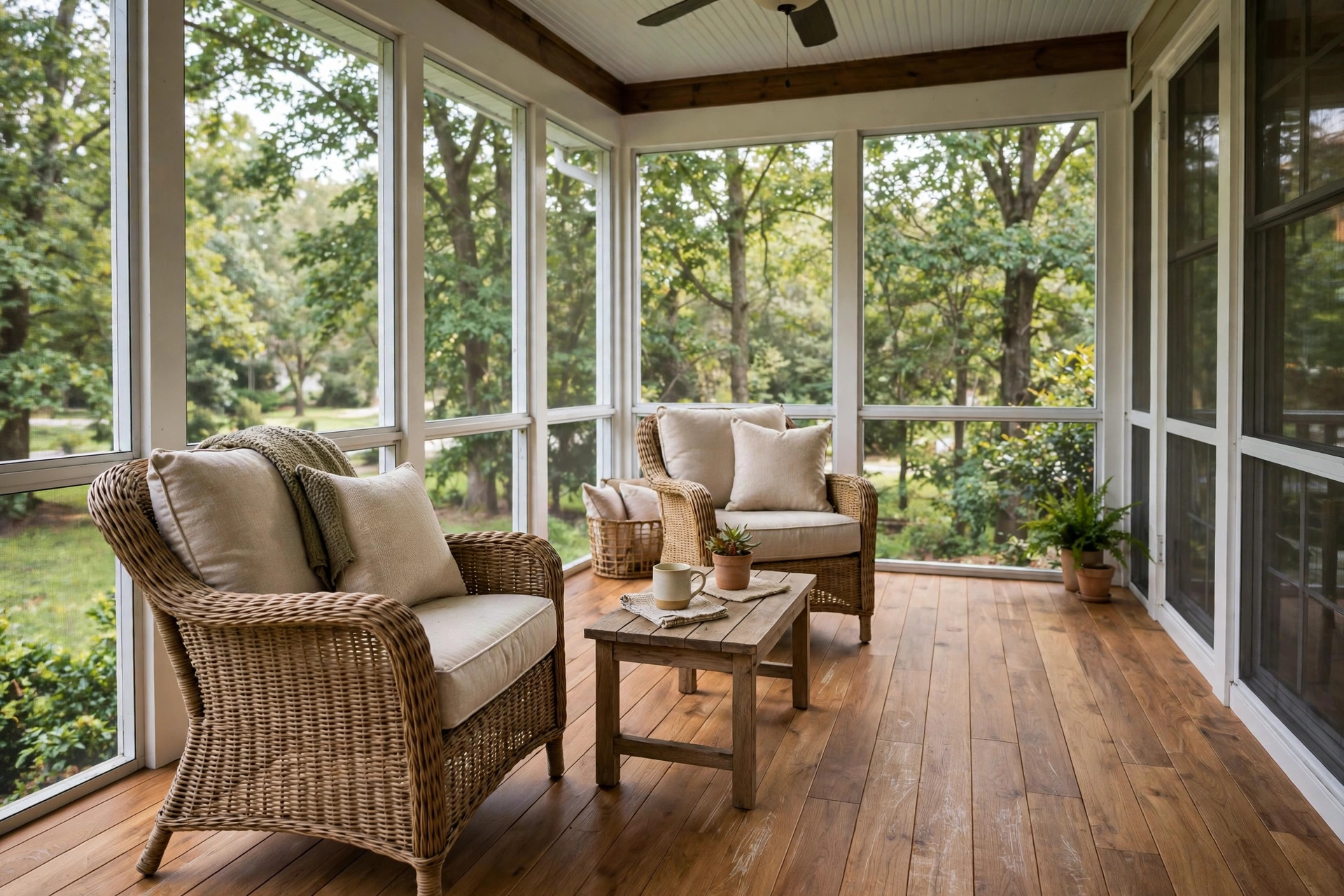

A three season porch is a room that lives between two worlds. It is not fully indoors, and it is not fully outdoors. It has walls and windows, yet it may have no heat in winter and no air conditioning in summer. This means the floor must stand up to more than a normal indoor floor. Rain can blow in through the screens. Morning frost can coat the boards. Hot summer sun can bake the surface. The best flooring for three season porch usa spaces is a material that can face all of this without warping, rotting, cracking, or lifting. This guide walks through the choices in plain terms, so you can pick a floor that lasts.
Why Porch Flooring Needs Special Care
A porch floor works harder than any floor inside your home. Indoor floors sit in steady air. The temperature stays near seventy degrees all year, and the air stays dry. A three season porch does not have that comfort. On a cold spring morning, the floor may be near freezing. By afternoon, the sun can warm it by thirty degrees. That swing makes wood shrink and swell. It makes cheap glue fail. It makes paint crack.
Water is the other test. Even a well built porch gets wet. Wind drives rain through screen panels. Snow blows in during a late spring storm. Wet shoes and muddy boots track water across the floor every day. If the floor cannot shed water, it will stain, rot, or grow mold. Flooring that handles temperature swings and standing water is not a luxury here. It is the basic need.
Sunlight matters too. Many three season porches face south or west. The floor may bake in direct sun for six hours a day. Cheap vinyl can fade. Dark stain can blister. Thin coatings can peel. A good porch floor must hold its color and its finish through years of sun.
What to Look For When You Choose: Best Flooring for Three Season Porch Usa
Not every floor material suits a three season porch. Keep these four points in mind as you shop.
Moisture Resistance
Water will find your porch floor. Pick a material that does not soak it up. Solid hardwood soaks up water and swells. Carpet holds water and grows mold. Better choices are vinyl, porcelain tile, sealed concrete, and composite boards. These either shed water or seal it out.
Temperature Swing
Ask how the material moves with heat and cold. Wood moves a lot. That is why solid wood floors buckle in porches. Vinyl plank and composite decking are made to expand and shrink a little without damage. Tile barely moves at all. For a porch floor material for cold climates, low movement is a strong point.
Slip Safety
A wet porch floor can be slick. Look for a finish with some grip. Textured vinyl, matte tile, and composite boards with a wood grain pattern all give shoes something to hold. Glossy smooth tile looks fine in a kitchen, but it can be risky on a porch that sees rain.
Sun and Fade
Check how the color holds up in sun. Quality vinyl plank has a wear layer that blocks ultraviolet light. Porcelain tile keeps its color for decades because the color runs through the body of the tile. Stained wood needs new stain every two or three years on a sunny porch.
Best Three Season Porch Flooring Options
Here are the five strongest three season porch flooring options for American homes. Each one has real strengths. Your pick will depend on your budget, your style, and how harsh your weather gets.
Luxury Vinyl Plank
Luxury vinyl plank is the most popular pick for three season porches today, and for good reason. It is fully waterproof. It comes in planks that look like real wood, with grain patterns and beveled edges. It feels warmer underfoot than tile, which matters on a cool spring morning. It installs as a floating floor, so it can expand and shrink with the seasons without buckling.
Vinyl plank costs less than most other hard floors. It cleans with a damp mop. It resists scratches from dog claws and dragged furniture. Major flooring makers such as LL Flooring, Shaw Floors, and Mohawk Flooring all publish guides on picking the right plank for rooms with wide temperature swings. For full details on how vinyl compares with other hard floors, read our guide on luxury vinyl plank flooring reviews 2026. One caution: buy a plank rated for wide temperature swings. Cheap vinyl made only for indoor rooms can warp in a hot porch. Check the maker’s range before you buy.
Porcelain Tile
Porcelain tile is the toughest floor you can put on a porch. It does not soak up water. It does not burn, fade, or scratch. It handles freezing cold and summer heat with no change. A porcelain floor can look like stone, slate, or wood, and the color will still be true in twenty years. Tile makers like Daltile offer porcelain rated for freeze and thaw cycles, which is exactly what a porch floor faces.
The trade off is cost and comfort. Tile costs more to buy and more to install than vinyl. You need a strong, flat subfloor, because tile cracks if the base moves. Tile also feels cold and hard underfoot. In a cold climate, some owners add an electric radiant heat mat under the tile. That raises the price, but it makes the porch usable weeks earlier in spring. If you want tile that resists spills and mud, also see our piece on waterproof laminate flooring for bathrooms usa for ideas on how water moves across hard floors.
Composite Decking Boards
Composite decking is made from wood fiber mixed with plastic. It was built for outdoor decks, so it laughs at rain and sun. It does not rot, splinter, or need stain. On a three season porch it gives a warm, wood-like look without the upkeep of real wood.
Composite boards cost more than vinyl but less than stone tile. They install with hidden clips or screws, much like a deck. The surface can get warm in full sun, so pick a lighter color if your porch faces west. Composite is also thicker than vinyl, so check your door clearances before you commit.
Brick Pavers and Slate
Brick and slate are the old, honest choice. They have floored porches for a hundred years. Both handle water and frost without complaint. Brick gives a warm, classic look that suits older homes. Slate gives a darker, more formal floor with natural texture that grips shoes well.
Both are heavy and need a solid base. They cost more to install because the work is slow and skilled. Mortar joints can crack if the porch slab settles, so the base must be sound. But once laid well, these floors can outlast the house itself.
Sealed and Stained Concrete
If your porch sits on a concrete slab, you may already have a fine floor. A sealed or stained concrete slab costs the least of all these options. An acid stain can give the floor the look of marble or leather. A good sealer keeps water out and makes cleanup easy.
Concrete is hard and can feel cold. Area rugs fix both problems, and rugs are easy to change with the seasons. The sealer must be redone every few years, especially on a porch that gets full sun. For tough slab floors in other parts of the home, see our guide on best garage floor mats for winter usa.
Cost and Price Guide
Prices change by region and by installer, but these ranges give a fair picture for 2026 in the United States. All prices are per square foot, installed.
| Flooring type | Material cost | Installed cost | |—|—|—| | Luxury vinyl plank | $2 to $5 | $5 to $10 | | Porcelain tile | $3 to $8 | $10 to $20 | | Composite decking | $6 to $12 | $12 to $22 | | Brick pavers | $4 to $9 | $12 to $25 | | Slate tile | $5 to $12 | $15 to $30 | | Sealed concrete | $1 to $3 | $3 to $8 |
Labor is the big variable. Tile and brick need skilled hands, so labor can double the material cost. Vinyl plank and sealed concrete are the kindest to a tight budget. Always get three written quotes. Big box stores such as Home Depot and Lowe’s can also connect you with local installers, and sites like This Old House and The Spruce explain what a fair porch flooring quote should include. Ask each installer if they have floored a three season porch before, because porch work is not the same as indoor work.
Care and Upkeep
A porch floor needs a little more care than an indoor floor. Sweep or vacuum once a week. Grit from shoes acts like sandpaper on any finish. Mop with a damp mop and a mild cleaner. Skip harsh chemicals. Bleach can dull vinyl and stain grout.
Reseal what needs sealing. Concrete sealer wears off in two to four years on a sunny porch. Grout sealer on tile lasts about the same. Composite decking needs only washing. Vinyl plank needs no sealer at all.
Watch the edges where the floor meets the walls. Caulk that cracks lets water under the floor. A quick check each spring and fall takes ten minutes and can save a costly repair. Pull up area rugs now and then and let the floor dry fully underneath. Trapped damp is the start of most porch floor problems.
Safety Notes
Safety on a porch is mostly about water and trips. Choose a floor with a matte or textured finish so wet shoes do not slide. Keep the porch floor clear of clutter. A toy or a garden hose on the floor is a trip waiting to happen.
If you use an electric heater or a heat lamp on the porch, keep it away from rugs and furniture. Check that railings and steps are sound each spring. A loose board on the steps is more dangerous than any floor choice. And if your porch has old paint from before 1978, test it for lead before you sand or scrape. Old porch floors are a common place to find lead paint.
Frequently Asked Questions
Can I use regular indoor laminate on a three season porch?
No. Standard indoor laminate swells when it gets wet, and a porch always gets wet sooner or later. The boards can buckle in one season. If you like the look of laminate, choose a waterproof vinyl plank instead. It gives the same wood look with none of the water risk.
What is the cheapest good floor for a three season porch?
Sealed concrete is the cheapest if you already have a slab. Next comes luxury vinyl plank, which costs little and installs fast. Both handle water well. Brick and tile cost more but last longer. Match the floor to how long you plan to stay in the home.
Will vinyl plank fade in a sunny porch?
Quality vinyl plank resists fading well because the wear layer blocks ultraviolet light. Cheap thin vinyl can fade in strong sun. Look for a plank with a thick wear layer, at least 12 mil, and a maker warranty that covers fading. Rotate rugs now and then so no single spot takes all the sun.
How do I stop my porch floor from getting slippery when wet?
Pick a textured finish from the start. Matte porcelain, textured vinyl, and natural slate all grip better than glossy tile. Keep the floor clean, because dust and pollen make any floor slicker when wet. Outdoor rated mats at the door catch water before it spreads.
Can I install a porch floor myself?
Vinyl plank and sealed concrete are fair do it yourself projects for a handy owner. Tile, brick, and slate are harder. They need a flat base, the right mortar, and steady hands. A bad tile job costs more to fix than a pro job would have cost. If you are unsure, hire the tile and do the painting yourself.
Should I heat my three season porch floor?
A little heat extends the season by weeks. Electric radiant mats under tile are the cleanest way to add warmth. Portable heaters work but cost more to run and need care around rugs. Even without heat, a good insulated floor and tight windows make the porch pleasant from March to November in most states.
A Final Word
The best flooring for three season porch usa homes is not one single product. It is the product that fits your weather, your budget, and your style. Vinyl plank fits most porches and most budgets. Porcelain tile is the toughest long term pick. Composite decking gives real wood warmth without real wood work. Measure your porch, get three quotes, and pick a floor that you will still like in ten years. A porch is meant for slow mornings and long evenings. The right floor lets you enjoy all of them.
References
Daltile. (n.d.). Ceramic and porcelain tile. https://www.daltile.com LL Flooring. (n.d.). Hardwood, vinyl, and tile flooring. https://www.llflooring.com Lowe’s. (n.d.). Home improvement products. https://www.lowes.com Mohawk Flooring. (n.d.). Flooring products. https://www.mohawkflooring.com Shaw Floors. (n.d.). Flooring products. https://www.shawfloors.com The Home Depot. (n.d.). Home improvement products. https://www.homedepot.com The Spruce. (n.d.). Home and garden advice. https://www.thespruce.com This Old House. (n.d.). Home renovation guidance. https://www.thisoldhouse.com
Was this guide helpful?

About Sarah Mitchell
The My Garden US editorial team writes practical, in-depth home and garden guides for American homeowners — tested advice, no fluff.
You May Also Like
Flagstone Patio Installation Cost Near Me: A Homeowner’s Guide
July 25, 2026 0 views
Carpet Installation Cost Per Square Foot USA: A Plain Guide
June 14, 2026 0 views
Polished Concrete Floors Cost Residential USA: A Plain Guide
January 14, 2026 0 views