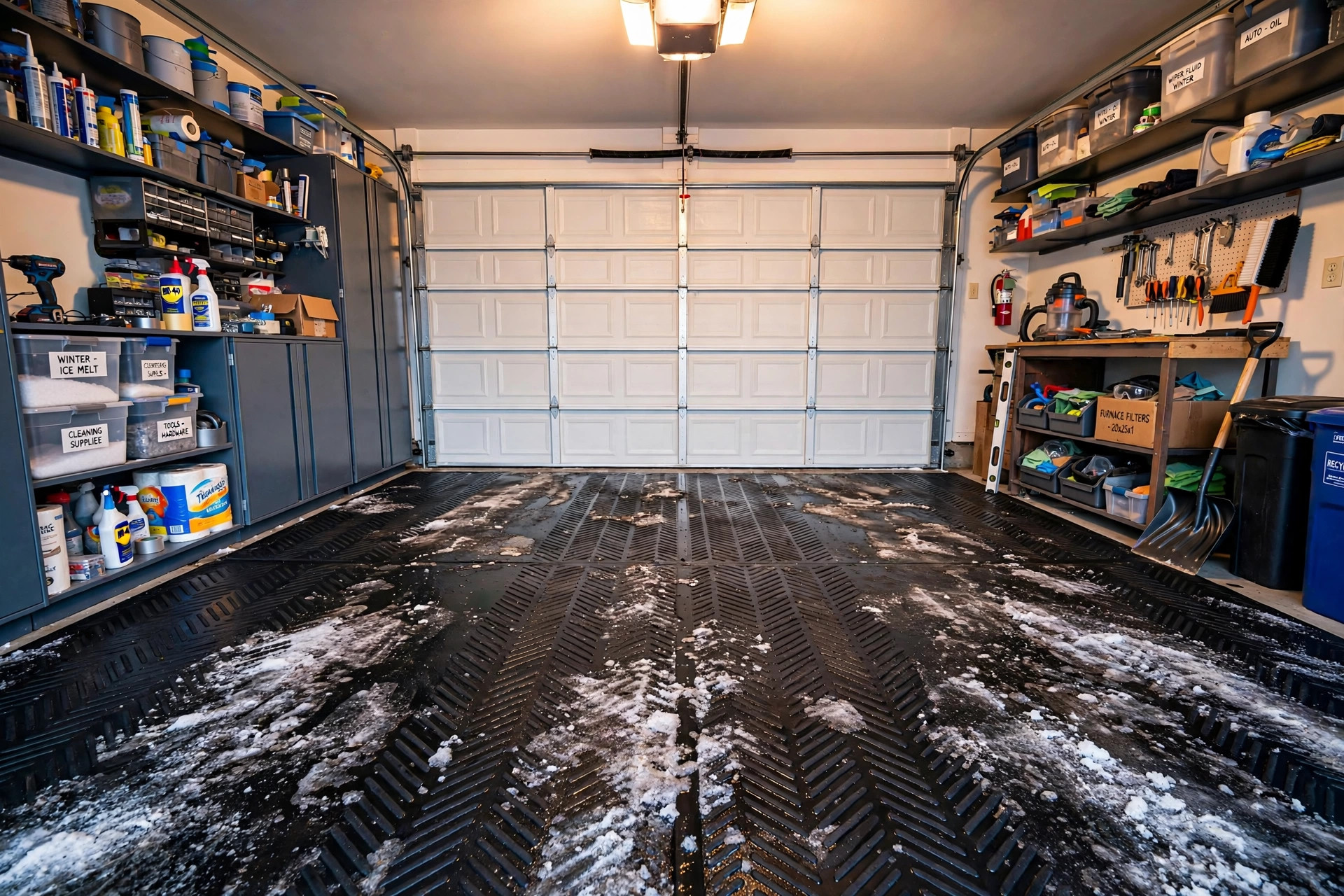

Winter is hard on a garage. Every car that rolls in carries snow, ice, road salt, and slush on its tires. All of that water drops onto the concrete and stays there. Over time it stains the floor. It can also cause pitting and cracks. The best garage floor mats for winter USA drivers can buy solve this problem in a simple way. They sit under the car and catch the mess. In spring you lift them, rinse them off, and the concrete below looks like new.
A garage floor mat is not the same as a mat by the front door. It is larger, thicker, and built for harsh conditions. Winter mats are made to hold water. They have raised edges that act like a dam. Snow melts off the car, flows across the mat, and stays inside the border. Nothing runs out onto the bare concrete. This guide explains why they matter, how to choose one, the main types, typical costs, care tips, and safety notes.
Why Winter Garage Floor Mats Matter
Concrete looks tough, but it soaks up water. In cold weather the water in the slab can freeze and expand. That freeze and thaw cycle opens small cracks. Year after year the cracks grow wider. Salt makes the damage worse. De-icing salt left on the floor eats at the surface and leaves white stains that are very hard to remove.
A mat takes the beating instead of the floor. Rubber and vinyl mats do not absorb water. They keep salt brine off the concrete. This is the main reason owners in the snow belt buy them. Homes in Minnesota, Michigan, New England, and upstate New York see the worst conditions. But any state that salts its roads can stain a garage floor. Even one winter of salted slush can leave marks.
There is a second benefit. Wet concrete is slippery. Mats with a textured surface give better footing. You are less likely to slip when you walk to the car on an icy morning. Many owners also like the cleaner look. A dark mat hides tire marks and dirt. It gives the garage a finished feel for very little money.
How to Choose the Right Winter Mat: Best Garage Floor Mats for Winter Usa
Measure Your Parking Space
Start with a tape measure. Measure the length and width of the area where each car parks. A standard parking space is about 8 feet wide and 18 feet long. Most winter mats come in sizes that cover the full footprint of a car. Some are smaller and sit only under the engine area. Full coverage works better. Water drips from the whole car, not just the front.
Check the height of the mat edges too. Raised edges of one to two inches hold melting snow in place. Low edges let water escape.
Check the Material
Most winter garage mats are made from rubber, polyvinyl, or a rubber-poly blend. Rubber is heavy and stays flat. It handles cold well and does not crack in freezing weather. Polyvinyl mats are lighter and often cheaper. They can be rolled up for storage. Blends try to offer both strength and low weight.
Look at the thickness as well. Thin mats shift under tires. Mats that are at least one quarter inch thick stay put. Thicker mats also feel better underfoot.
Look for Cold Weather Ratings
Not every mat is built for winter. Some cheap mats stiffen and crack when the temperature drops below freezing. Check the product details for a low temperature rating. A good winter mat should stay flexible well below zero degrees Fahrenheit. Rubber mats usually pass this test. Thin plastic mats often fail it.
Think About Drainage and Texture
The top surface matters more than most buyers expect. A mat with channels or a diamond tread moves water away from your shoes. It also gives tires more grip. Smooth mats turn into a skating rink when wet. Choose a textured top every time.
Types of Winter Garage Floor Mats
Containment Mats
Containment mats are the most popular choice for winter. They are large trays with raised edges all the way around. Melt water stays inside. Some models have a squeegee edge or a drain corner so you can empty the water outside. These mats are ideal for cars that come home covered in snow every day. They cost more than flat mats, but they protect the most floor.
Flat Ribbed Mats
Flat ribbed mats are thinner and simpler. They have ribs or grooves that channel water to the sides. They do not have raised borders, so some water may run off the edge. They work best in milder climates where the snow load is light. They are also a good choice under workbenches or along walkways in the garage.
Interlocking Tile Mats
Interlocking tiles snap together like puzzle pieces. You can cover any shape or size of floor. They are easy to replace one at a time if a tile gets damaged. The seams can let water through, so they are less waterproof than a single-piece mat. Tiles work well when you want to cover the whole garage floor, not just the parking spots.
Roll Out Vinyl Mats
Roll out mats come in long rolls that you cut to length. They cover large areas fast. The vinyl is waterproof and easy to hose down. Rolls are a good value for two-car and three-car garages. The edges may curl at first. Laying heavy objects on them for a day usually flattens them out.
Cost and Price Ranges
Prices vary with size, material, and brand. As a rough guide, small mats that cover one parking spot start around forty to eighty dollars. Full-size containment mats for one car usually run from one hundred to two hundred dollars. High-end heavy rubber containment mats can cost three hundred dollars or more per car space.
Roll out vinyl is often sold by the foot or by the roll. A roll that covers a two-car garage can cost two hundred to four hundred dollars. Interlocking tiles are sold in packs. Covering a full two-car garage with tiles can run three hundred to six hundred dollars.
Installation is simple and usually free. You roll the mat out and trim it if needed. Delivery fees can add to the cost for heavy mats. Buying during fall sales at major home improvement stores or lowes can save real money. Seasonal discounts often appear in October and November, just before the first snow.
Think about value over time. A two hundred dollar mat that lasts ten winters costs twenty dollars per year. Repouring or coating a damaged concrete slab costs far more. Viewed that way, the mat is cheap insurance.
Care and Upkeep Through the Season
Winter mats need little care, but a small routine keeps them working well. The most important job is draining standing water. On days when a lot of snow melts off the car, water can pool inside the raised edges. Use a squeegee or a wet vacuum to push the water out the garage door. Letting it sit for days can leave a salty film.
Every few weeks, lift the edges and look underneath. Some water always finds its way under the mat. If the concrete stays damp for long periods, it can grow mildew. Lift the mat, let the floor dry for a day, then lay it back down. This simple step prevents most moisture problems.
In spring, pull the mats out and wash them. A garden hose and a stiff brush remove salt and grit. For tough salt stains, use a mix of warm water and white vinegar. Let the mats dry fully in the sun before you store them. Store them flat or loosely rolled in a dry spot. Avoid folding heavy rubber mats in sharp creases, since creases can become permanent.
Check the mats each fall before the snow arrives. Look for cracks, torn edges, or worn spots. A mat that is falling apart will not hold water. Replace worn mats before winter starts. Many guides from This Old House and Family Handyman stress this yearly check for all garage gear.
Safety Notes
A mat should make the garage safer, not more dangerous. Watch for curling edges. A raised corner can catch a shoe and cause a fall. If a corner will not lie flat, trim it or weigh it down until it settles.
Keep mats away from heat sources. Do not place them under a running car with the exhaust pointed at the mat for long periods. Rubber can soften or give off odor in high heat. Keep portable heaters and torches away from the mats as well.
Make sure the mat does not block the garage door. A thick mat that slides under a closing door can jam the safety sensors. Leave a clear gap near the door track. Also keep the walkway from the house door to the car clear of standing water. Wipe up puddles that form outside the mat area.
If you use a floor coating or sealant under the mat, let it cure fully first. Trapping fresh coating under a mat can ruin the finish. Most coatings need several days to harden. When in doubt, ask the coating maker or read the advice from a flooring maker or Mohawk Flooring guide.
Frequently Asked Questions
Will a garage floor mat stop salt stains?
Yes, if it is large enough and has raised edges. The mat catches the salty water that drips off the car. Salt never touches the concrete. Flat mats without borders help less, because water can run off the sides. For the best salt protection, choose a containment mat that covers the full parking space.
Can I drive over the mat every day?
Winter garage mats are made for daily driving. Heavy rubber and thick vinyl handle car weight without tearing. Park straight so the tires stay on the mat. Turning the steering wheel while the car is stopped can scuff the surface over time. Small scuffs are normal and do not hurt performance.
Do mats work on sealed or coated concrete?
Yes. Mats work on bare concrete, sealed concrete, and epoxy-coated floors. In fact, they add extra protection for coatings, which salt can dull. Just make sure any coating is fully cured before you lay the mat down. Trapped moisture under the mat can cloud some coatings, so lift the mat now and then to air out the floor.
How long do winter garage mats last?
A good quality mat lasts five to ten years. Heavy rubber mats often last the longest. Cheaper vinyl mats may need replacement after three to five hard winters. Sunlight, heavy use, and harsh cleaners shorten the life. Store mats out of the sun in summer to get the most years from them.
Are garage floor mats slippery when wet?
Textured mats are not very slippery. Ribbed tops, diamond tread, and channel patterns give shoes good grip. Smooth mats can be slippery when covered in melt water. If your mat feels slick, add a textured runner on the walkway, or switch to a mat with a deeper tread pattern.
Should I cover the whole garage or just the parking spots?
Covering the parking spots is enough for most owners. That is where the snow and salt land. Full floor coverage looks nicer and protects walkways too, but it costs more. Many owners start with one mat per car and add walkway runners later. Budget guides at The Spruce and Bob Vila often suggest this step by step approach.
A Short Final Word
Winter will test any garage floor. Snow, ice, and road salt attack concrete every single day of the season. A good mat stands between the weather and your floor. Measure your space, pick a cold-rated material with raised edges, and keep up with simple draining and cleaning. The floor will thank you in the spring.
If you are planning wider updates to the house, it helps to think about all your floors at once. Many owners compare waterproof bathroom flooring options or read current luxury vinyl plank reviews before they decide. Pet owners often start with kitchen flooring that handles dogs. For product ranges and seasonal prices, check the garage and flooring sections at Lumber Liquidators and Daltile as well. A little research in the fall pays off all winter long.
References
Bob Vila. (n.d.). Home improvement advice. https://www.bobvila.com Daltile. (n.d.). Ceramic and porcelain tile. https://www.daltile.com Family Handyman. (n.d.). DIY home repair and maintenance. https://www.familyhandyman.com LL Flooring. (n.d.). Hardwood, vinyl, and tile flooring. https://www.llflooring.com Lowe’s. (n.d.). Home improvement products. https://www.lowes.com Mohawk Flooring. (n.d.). Flooring products. https://www.mohawkflooring.com Shaw Floors. (n.d.). Flooring products. https://www.shawfloors.com The Home Depot. (n.d.). Home improvement products. https://www.homedepot.com The Spruce. (n.d.). Home and garden advice. https://www.thespruce.com This Old House. (n.d.). Home renovation guidance. https://www.thisoldhouse.com
Was this guide helpful?

About Sarah Mitchell
The My Garden US editorial team writes practical, in-depth home and garden guides for American homeowners — tested advice, no fluff.
You May Also Like
Trex vs TimberTech Decking Comparison for USA Homeowners
June 20, 2026 0 views
How to Use a Paver Patio Cost Calculator for USA Homes
June 4, 2026 0 views
The Best Flooring for Florida Homes Humidity: A Plain Guide
January 30, 2026 0 views