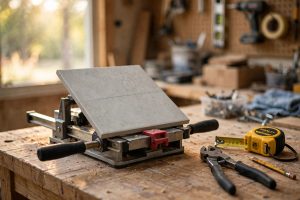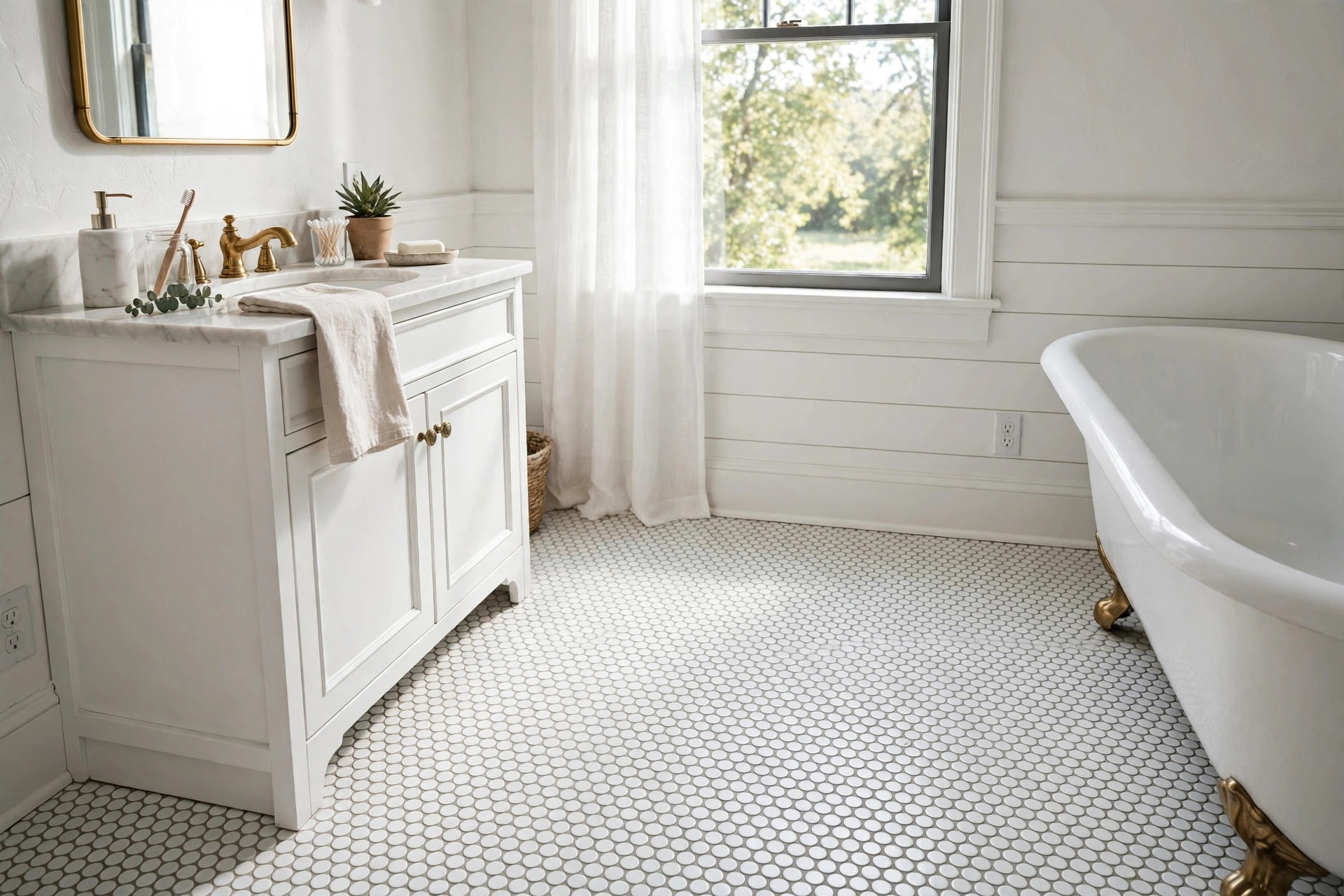

Penny tile floors have been part of American homes for more than a century. They first won favor in old houses and shop floors of the early 1900s. Today they are back in style. Homeowners choose them for small bathrooms, mudrooms, and laundry rooms. But before you buy, you need real numbers. This guide explains the penny tile floor cost per square foot usa in clear, simple terms.
The price range is wide. In most parts of the country, a finished penny tile floor costs between $12 and $30 per square foot. That figure covers both tile and labor. In high-cost cities, the total can reach $35 or more. In lower-cost areas, a simple job may land near $10. Many factors move the number up or down. Tile quality, grout choice, floor size, and the state of the subfloor all matter. The sections below break each part down.
Why Penny Tile Matters
Penny tile is a round mosaic tile. Each piece is about the size of an old penny. The tiles come glued to mesh sheets. This makes them easy to place. Installers lay full sheets instead of single dots. The result is fast coverage with a classic look.
The floor has real benefits. The grout lines give strong grip. Bare feet slip less on penny tile than on large polished tile. That makes it a smart pick for bathrooms. Small tiles also bend with slight floor curves. They fit well in old homes where floors are not perfectly flat.
There are trade-offs. Grout lines are many. More grout means more cleaning. The tiles can also show dirt fast in light colors. Still, most owners find the charm worth the work. When sealed well, a penny tile floor can last for decades.
What to Look For When Buying Penny Tile: Penny Tile Floor Cost Per Square Foot Usa
Not all penny tile is the same. Material is the first choice. Porcelain penny tile is the most common. It is hard, dense, and low in upkeep. It suits wet rooms best. Ceramic penny tile is lighter and often cheaper. It works for low-traffic spots. Natural stone penny tile exists too. Marble and slate versions look rich. They cost more and need extra sealing.
Check the sheet size. Most sheets are 12 by 12 inches. Each sheet holds dozens of small rounds. Look at how the dots attach to the mesh. Cheap sheets may have loose dots. Loose dots slow the job and raise labor cost.
Color is more than style. White penny tile is the classic. It shows dirt and grout stains fast. Gray, blue, and black hide wear better. Pattern mixes add interest. Some makers sell sheets that blend two or three colors. These create borders and simple designs at little extra cost.
Think about grout width. Penny tile usually sits with narrow joints. Tight joints use less grout. They also show fewer stains. Ask your supplier what joint width the sheet allows. Most sheets are made for joints near one sixteenth of an inch.
Types and Options for Penny Tile Floors
You have several ways to shape the project. Each path changes the cost.
Standard porcelain penny tile. This is the workhorse. Tiles sell for $5 to $10 per square foot. Install is common. Total job cost often lands between $12 and $22 per square foot.
Ceramic penny tile. These tiles are a bit softer. Material runs $3 to $7 per square foot. They suit powder rooms and walls. They may wear faster under heavy foot traffic.
Stone penny tile. Marble, slate, and travertine versions sell for $10 to $25 per square foot for the tile alone. Install takes more skill. Stone needs sealing before and after grout. Total costs can pass $30 per square foot.
Patterned and border mixes. Many lines sell border pieces and flower patterns. These cost a bit more per sheet. They add style without a second trade visit.
Heated penny tile floors. Some owners add electric heat mats under the tile. The mat adds $5 to $12 per square foot to the project. It brings warm floors in winter. If you want this, plan wiring before the tile work starts. A full review of heated bathroom floor cost per square foot can help you decide.
Wall-matched sets. Many penny tile lines also sell wall tile and shower floors. Using the same line through the room saves shopping time. It does not change the floor price much.
Cost and Price: The Full Breakdown
Let us walk through the full penny tile floor cost per square foot usa piece by piece.
Tile material: $3 to $25 per square foot. Plain porcelain sheets sit at the low end. Handmade and stone sheets sit at the high end. Most owners pay $5 to $10.
Labor: $8 to $18 per square foot. Penny tile takes longer than large tile. Each sheet must be set straight. Lines must stay even. In busy cities, labor can reach $20 per square foot. In small towns, it may fall to $7. For a side-by-side look at other tile jobs, see our guide on tile installation cost per square foot usa.
Grout: $1 to $3 per square foot. Penny tile needs more grout than large tile. The many joints drink grout. Epoxy grout costs more than cement grout. It resists stains far better. For a wet bathroom, epoxy grout is worth the extra price.
Underlayment and prep: $1 to $5 per square foot. The floor under the tile must be flat and firm. Cement board is the common base. If the old floor is rough, leveling adds cost. Rot repair can add much more.
Sealer: $0.50 to $2 per square foot. Grout sealer protects the many joints. Stone tile needs tile sealer too. Sealer is cheap insurance against stains.
Trim and extras. Floor transitions, door thresholds, and baseboard touch-ups add to the bill. Plan a few hundred dollars for a small room.
A typical 50-square-foot bathroom shows how the math works. At $18 per square foot all-in, the job costs $900. At $28 per square foot, the same room costs $1,400. Always get three bids. Ask each bidder to break out tile, labor, and materials. Compare the parts, not just the total.
Regional gaps are real. Labor in coastal cities runs high. Material prices are steadier across the country since tile ships well. Buying tile from a big-box store and hiring a local setter can save money. Learn more about supply options from the Home Depot flooring department and the Lowe’s tile center.
Care and Upkeep
A penny tile floor lasts long if you care for it right. The care is simple. It just needs to be regular.
Sweep or vacuum each week. Grit wears grout down. A soft broom is enough for daily care. Mop with warm water and a mild cleaner. Avoid harsh acids. Vinegar can eat cement grout over time. Use a cleaner made for tile. The care guides at The Spruce offer more floor cleaning basics.
Seal the grout once a year. This takes an hour in a small bath. A sealed joint blocks stains and mold. If you used epoxy grout, sealing is not needed. That is one of its main selling points. Our piece on the best grout sealer for bathroom tile usa lists products that hold up well.
Dry the floor after showers. A bath mat helps. Standing water feeds mildew in grout lines. A small fan or open vent cuts drying time. Check grout lines each spring. Re-grout any cracks before water seeps under the tile.
For design ideas that pair well with penny tile, browse hexagon tile bathroom floor ideas usa and the pattern guides at Daltile.
Safety
Penny tile is among the safest tile floors. The many grout lines break up the smooth surface. Feet grip better. This matters most in bathrooms and entryways. Older adults and small children benefit the most.
Still, take care. Wet stone penny tile can turn slick. Honed stone grips better than polished stone. Ask the maker for a slip rating. A coefficient of friction above 0.6 is good for wet floors.
Grout joints can chip over time. A loose tile edge can catch a bare toe. Inspect the floor once a year. Fix popped tiles right away. Keep spare sheets from your install. Matching tile years later is hard.
If you strip and reseal, ventilate the room. Sealers smell strong. Open a window and run the bath fan. Wear gloves when you handle grout chemicals. Read each label before use.
Frequently Asked Questions
How much does a penny tile floor cost per square foot in the USA? Most installed jobs run $12 to $30 per square foot. Tile alone costs $3 to $25 per square foot. Labor adds $8 to $18 per square foot. Grout, sealer, and prep fill out the rest. City prices trend higher than rural prices.
Is penny tile more expensive than regular tile? Often yes. The tile sheets cost about the same as plain mosaic tile. The labor costs more. Setting small rounds straight takes more time than laying large squares. Plan for labor near the top of the local range.
Does penny tile work in showers? Yes. Penny tile is a classic shower floor tile. The small size follows the slope to the drain. The grout lines give grip underfoot. Use porcelain for the best water resistance. Seal the grout on a set schedule. Tile lines from Mohawk Flooring and Shaw Floors include shower-rated mosaics.
What grout is best for penny tile floors? Epoxy grout is the top pick for bathrooms. It resists stains and needs no sealer. It costs more and sets fast, so hire an experienced installer. Cement grout with a good sealer works for low-moisture rooms. Avoid dark grout with white tile unless you want a bold look.
Can I install penny tile myself? A handy homeowner can try a small floor. You need a flat cement board base, thinset mortar, a notched trowel, and patience. Keep sheet lines straight. Check your work often. Large rooms and shower pans are best left to pros. Mistakes in wet areas cause leaks. The step-by-step guides at This Old House and Bob Vila show the full process.
How long does a penny tile floor last? With good install and care, 20 to 30 years is common. Porcelain outlasts ceramic. Sealed grout outlasts bare grout. In a guest bath, the floor may look new for decades. In a busy family bath, expect some grout wear by year ten.
A Short Final Word
Penny tile gives an old-style charm that few floors can match. The penny tile floor cost per square foot usa is higher than plain tile, mostly because of labor. The tile itself is fair in price. Plan for $12 to $30 per square foot installed. Pick porcelain for wet rooms. Choose epoxy grout for easy care. Seal stone and cement grout on schedule. Get three written bids. Then enjoy a floor that has looked right in American homes for more than a hundred years. For more floor shopping help, see the tile ratings at LL Flooring.
References
Bob Vila. (n.d.). Home improvement advice. https://www.bobvila.com Daltile. (n.d.). Ceramic and porcelain tile. https://www.daltile.com LL Flooring. (n.d.). Hardwood, vinyl, and tile flooring. https://www.llflooring.com Lowe’s. (n.d.). Home improvement products. https://www.lowes.com Mohawk Flooring. (n.d.). Flooring products. https://www.mohawkflooring.com Shaw Floors. (n.d.). Flooring products. https://www.shawfloors.com The Home Depot. (n.d.). Home improvement products. https://www.homedepot.com The Spruce. (n.d.). Home and garden advice. https://www.thespruce.com This Old House. (n.d.). Home renovation guidance. https://www.thisoldhouse.com
Was this guide helpful?

About Lisa Anderson
The My Garden US editorial team writes practical, in-depth home and garden guides for American homeowners — tested advice, no fluff.
You May Also Like
Pebble Shower Floor Pros and Cons USA: A Plain Guide for American Homes
March 16, 2026 0 views
Electric Radiant Floor Heat for Tile Reviews: A Plain Guide
July 20, 2026 0 views
Cold Climate Flooring Options for Cabins USA
July 17, 2026 0 views