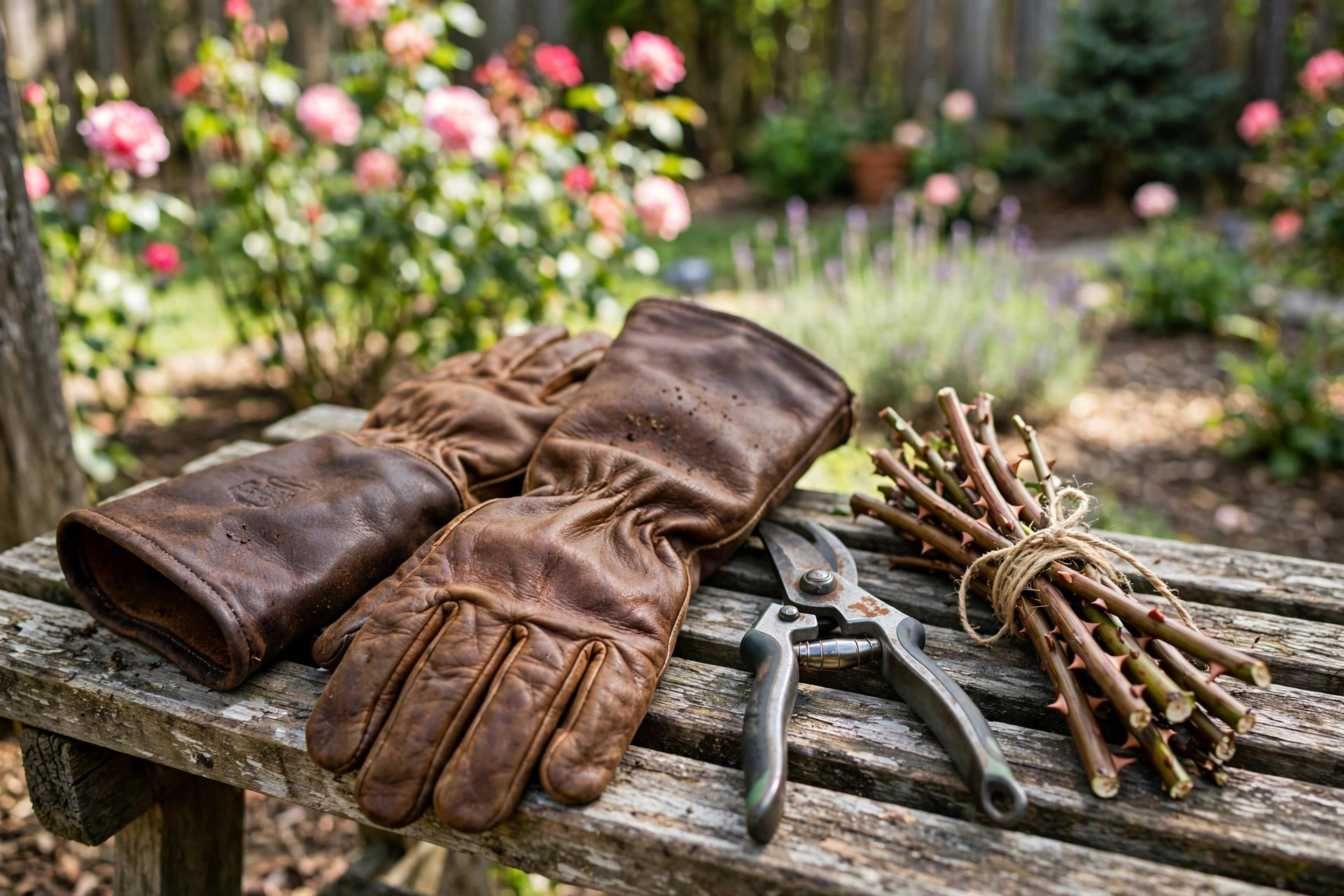

Every gardener who keeps roses, blackberries, or bougainvillea knows the same sting. One careless reach into the bush and a thorn slides under a fingernail or rakes across the wrist. The best garden gloves for pruning thorns turn that job from a gamble into routine work. This guide explains what makes a pruning glove work, how to choose one, what the different types cost, and how to keep your pair in good shape for years.
Why Thorn Protection Matters
A thorn wound is more than a nuisance. Garden soil carries bacteria, and a puncture can carry them deep under the skin. Covering open skin when working with soil and sharp plants is plain good sense. A deep thorn scratch on the hand can lead to infection, swelling, and days of missed work in the garden.
Ordinary cloth gloves do not solve the problem. Cheap cotton gloves stop the first few thorns, but the fabric softens with sweat and thorns push straight through by mid-afternoon. A proper thorn-proof glove uses dense leather or a reinforced synthetic shell that spreads the point of a thorn across a wide area, so the pressure never breaks the skin.
Hands are the gardener’s most valuable tool. Good gloves protect them the way a good frame protects a house. You would not prune a climbing rose in a short-sleeved shirt. You should not do it in thin gloves either.
The Real Cost of Bad Gloves
A pair of flimsy gloves costs less at the checkout, but it costs more over a season. Gardeners who use cheap gloves replace them three or four times a year. A well-made leather pruning glove often lasts three or four seasons. The better pair also keeps you working longer. When your hands are safe, you prune with more confidence, make cleaner cuts, and finish the job in one session instead of stopping to bandage scratches.
What to Look for When Choosing Thorn-Proof Gloves: Best Garden Gloves for Pruning Thorns
Not every glove sold as a “garden glove” will stop thorns. Look for these features before you buy.
Leather Palm and Fingers
The palm and the inside of the fingers take the most contact with thorns. Goatskin, pigskin, and split cowhide are the common choices. Goatskin is soft and flexible, so it fits close and gives good grip. Pigskin resists moisture and stays soft after getting wet, which matters on dewy mornings. Cowhide is the thickest and toughest of the three, but it feels stiffer until it breaks in.
Many thorn-proof designs add a second layer of leather across the palm. This double layer is the difference between a glove that resists rose thorns and one that merely delays them.
Long Gauntlet Cuffs
Thorns do not stop at the wrist. When you reach deep into a rose bush or pull a blackberry cane, thorns rake down the forearm. A gauntlet cuff extends five to eight inches past the wrist and guards the lower arm. Look for gauntlets made of heavy canvas or split leather. Elastic or drawstring closures at the top of the cuff keep soil and debris from sliding down inside.
Fit and Dexterity
A glove that stops every thorn but will not let you hold a pair of shears is a poor trade. Try gloves on if you can. Your fingertips should reach the ends without bunching. The glove should close into a fist without the palm pulling tight across the knuckles. Reinforced fingertips add protection where thorns strike most while keeping enough feel to tie a cane or strip a leaf.
Stitching and Construction
Double stitching along the seams lasts longer than single stitching, especially at the thumb crotch where pruning shears press. Some designs use a continuous leather patch across the thumb and index finger, the two digits that grip every stem. Avoid gloves with raw seams inside the fingers; they rub blisters during long sessions.
Thumb Crotch Reinforcement
The web of skin between the thumb and the index finger works harder than any other part of the hand during pruning. It presses against the shear handles, grips thick canes, and catches thorns that slip past the palm. Good pruning gloves reinforce this spot with an extra patch of leather. Check for it when you shop. A single thin layer at the thumb crotch wears through fast, and the first thorn through a thin spot teaches a hard lesson. Some makers wrap the patch all the way around the thumb base. This design costs a little more, but it removes the weakest link in the glove.
Breathability
Thick gloves get hot. A cotton or mesh back on the hand lets air in while the leather palm does the hard work. If you garden in a warm climate, a breathable back is worth as much as the leather itself. Sweaty hands slip inside stiff gloves and cause blisters.
Types of Gloves for Pruning Thorns
Heavy Leather Rose Gloves
These are the classic choice. Full leather palms, reinforced fingers, and long gauntlet cuffs of canvas or leather. They offer the highest thorn protection and last the longest. The trade is bulk. They feel clumsy at first and need a week of use to break in. For roses, hawthorn, barberry, and bramble fruit, they remain the safest option. Makers such as Corona Tools and Fiskars both sell gauntlet-style pruning gloves built for this work.
Synthetic Thorn-Resistant Gloves
Modern synthetics use woven fibers that resist puncture without thick leather. They feel lighter and more flexible from the first wear, and they wash easily. They do not match heavy leather against the longest, sharpest thorns, but they suit gardeners who prune lightly and value comfort. Check reviews from sources like Consumer Reports before trusting a puncture-resistance claim.
Light Duty Gloves for Quick Jobs
For light trimming of small shrubs, a lighter glove with a reinforced palm can be enough. Keep a pair by the back door for quick snips. Do not expect them to handle a full day of rose pruning. Pair them with your heavy pair rather than replacing it.
How to Choose the Right Pair for Your Garden
Start with your plants. Roses with dense canes and blackberries with hooked thorns demand the heaviest protection. If your garden has only a few thorny plants, a mid-weight synthetic may serve.
Next, consider your hands. Measure across your knuckles. Most makers print a sizing chart on the package. A glove that is too large folds at the fingertips and catches on thorns. A glove that is too small restricts blood flow and tires the hand.
Think about the season. In spring you prune hard, cutting thick canes and dragging armfuls of brush. In summer you deadhead and tidy. Many gardeners keep two pairs: heavy gauntlets for the spring cutback and a lighter pair for summer touch-ups.
Finally, set a budget. Thorn-proof gloves range from about eight dollars for basic synthetic pairs to forty dollars or more for full-grain leather gauntlets. Spending in the middle of that range usually buys the best value.
For related tasks, see our guides on pruning shears for rose bushes, garden gloves for thorn protection, and garden kneelers with handles that make long pruning sessions easier on the knees.
Cost and Price Guide
Prices vary by material and brand, but these ranges hold true at most American garden centers and hardware stores.
– Basic synthetic thorn gloves: 8 to 15 dollars. Good for light work. Expect one season of use. – Mid-range leather and synthetic blends: 15 to 25 dollars. The sweet spot for most home gardeners. Double-stitched palms and decent cuffs. – Premium full-leather gauntlet gloves: 25 to 45 dollars. Maximum protection and the longest life. Retailers like Home Depot and Lowe’s stock several options in this range.
Buying two pairs at once is sensible. Rotate them so each pair dries fully between uses. Damp leather breaks down faster than leather that is allowed to dry.
Watch for sales in late winter, when stores clear garden stock before the spring rush. Guides at Gardener’s Supply and The Spruce often list seasonal buying tips for garden gear.
Care and Upkeep
Leather gloves repay a little care with years of service. Brush off soil after each use. Do not machine wash leather gloves; soak them in lukewarm water with a mild soap only when truly dirty, then rinse and air dry away from direct heat. A light coat of leather conditioner once a season keeps the hide supple.
Store gloves where air moves freely. A damp shed corner breeds mildew. Hang them by the cuffs on a hook in the garage or potting shed. Inspect the stitching each spring. A loose seam caught early can be repaired with a few stitches. A seam that fails mid-job leaves your hand exposed.
Synthetic gloves are simpler. Most can go through the washing machine in a mesh bag. Air dry them. Replace them when the palm coating cracks or peels.
Practical maintenance advice for all kinds of garden gear appears regularly in Family Handyman and Bob Vila, both worth bookmarking.
Safety Tips for Pruning Thorny Plants
Good gloves are the first layer of safety, not the only one.
– Wear long sleeves or a dedicated forearm guard under the gauntlet. – Wear eye protection. A released cane can snap back toward your face. – Cut with sharp tools. Dull shears force you to push harder, and hard pushing causes slips. – Keep a tetanus shot current. Soil and thorns make this a serious matter. – Work in daylight. Shadows hide thorns. – Set cut canes down carefully. A pile of thorny canes is as dangerous as the bush.
Never grab a cane blindly, even with the best gloves on. Look at what you grip. Gloves reduce risk; they do not remove it.
Frequently Asked Questions
Can any leather glove stop rose thorns?
Not every leather glove. Thin fashion leather and unlined work gloves give way under a sharp thorn. You need garden gloves made for pruning, with a reinforced palm and ideally a double layer across the grip area.
Are gauntlet gloves really necessary?
For roses, blackberries, hawthorn, and pyracantha, yes. Most thorn injuries happen on the wrist and forearm, not the palm. A short cuff leaves exactly that area exposed. Gauntlets add only a few dollars and protect the most-scratched skin.
How tight should pruning gloves fit?
Snug but not tight. You should be able to pinch a coin off a table. If the glove slides around, thorns catch the loose fabric. If it binds, your hands tire fast.
Can I wash leather pruning gloves?
Occasional hand washing in mild soap and lukewarm water is fine. Rinse well and air dry slowly. Never use a machine dryer or place them near a heater. Condition the leather once a season.
How long do thorn-proof gloves last?
A quality leather pair lasts three to five seasons with basic care. Synthetic pairs last one to two seasons. When thorns begin to poke through the palm, retire the pair. A worn glove gives a false sense of safety.
Are expensive gloves worth it for a small garden?
If you prune thorny plants even a few times a year, yes. One deep thorn wound costs more in time and discomfort than the price difference between cheap and good gloves.
A Short Final Word
The best garden gloves for pruning thorns are the ones you actually wear. Choose a pair that fits, protects the forearm, and feels good enough to keep on for the whole job. Care for them, replace them when they wear thin, and your hands will thank you every spring when the roses demand their yearly haircut.
References
Bob Vila. (n.d.). Home improvement advice. https://www.bobvila.com Consumer Reports. (n.d.). Product reviews and ratings. https://www.consumerreports.org Corona Tools. (n.d.). Garden and landscape tools. https://www.corona-tools.com Family Handyman. (n.d.). DIY home repair and maintenance. https://www.familyhandyman.com Fiskars. (n.d.). Garden and cutting tools. https://www.fiskars.com Gardener’s Supply Company. (n.d.). Gardening tools and supplies. https://www.gardeners.com Lowe’s. (n.d.). Home improvement products. https://www.lowes.com The Home Depot. (n.d.). Home improvement products. https://www.homedepot.com The Spruce. (n.d.). Home and garden advice. https://www.thespruce.com
Was this guide helpful?

About Michael Thompson
The My Garden US editorial team writes practical, in-depth home and garden guides for American homeowners — tested advice, no fluff.
You May Also Like
The Best Garden Dibber for Seed Planting: A Practical Guide
February 13, 2026 0 views
Best Garden Labels for Plant Identification
January 10, 2026 0 views
Cold Hardy Plants for Zone Five: A Guide to a Strong Garden
April 28, 2026 0 views