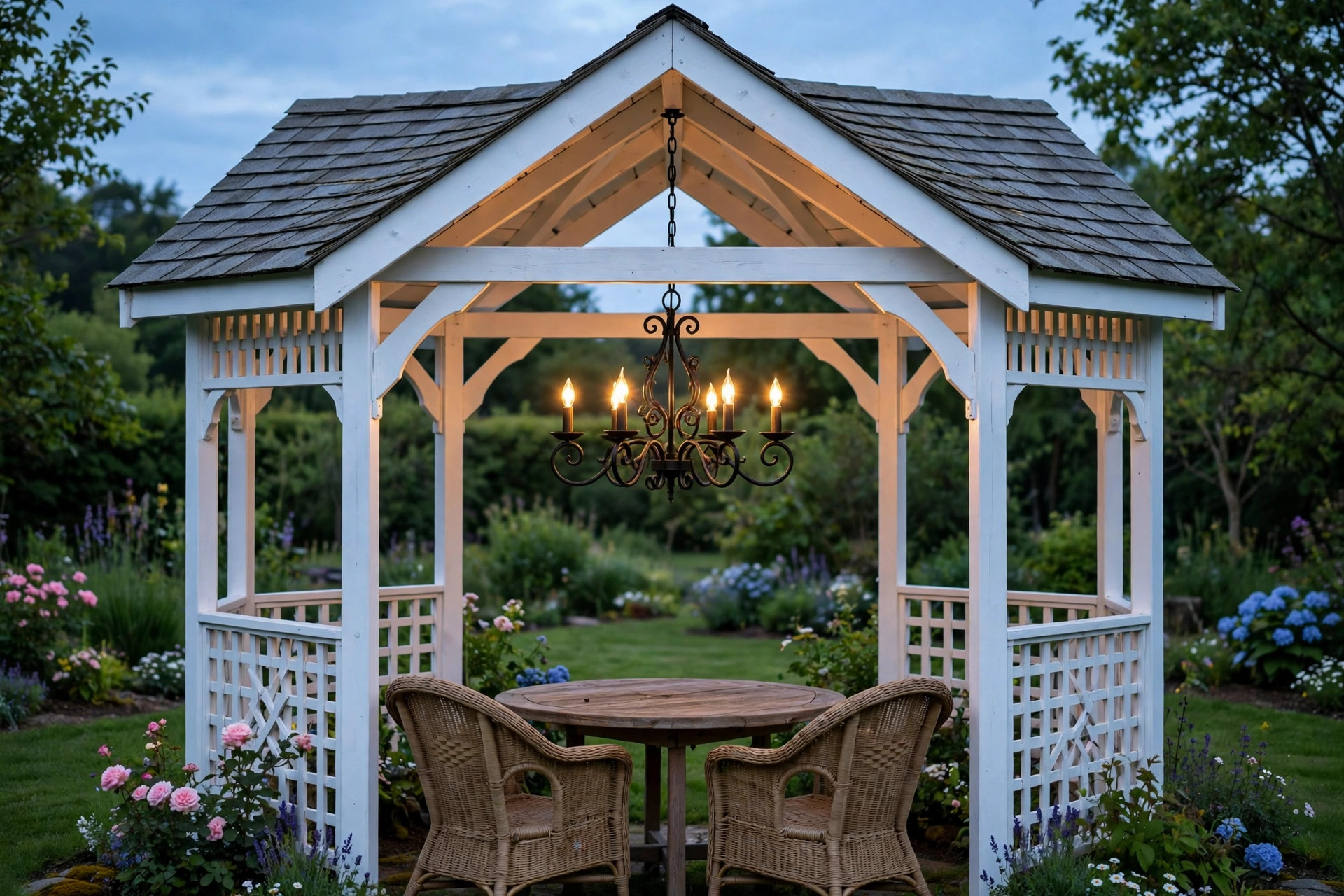

A gazebo becomes a different place after sunset. In the daylight it is a shade structure and a sitting spot. At night, with the right light, it turns into a room. The best outdoor chandelier for gazebo buyers is the one that fits the size of the structure, stands up to weather, and gives a warm, steady light for dinners, talks, and quiet hours.
Many people hang the wrong fixture in a gazebo. They pick an indoor chandelier that rusts in one season, or a light too large for the space, or a light too dim to read by. This guide walks through the choices in plain terms. It covers why a chandelier suits a gazebo, how to size it, what materials last, and what you should expect to pay.
Why a Chandelier Suits a Gazebo
A gazebo has a natural center. Most gazebos, from the small eight-foot models to the large fourteen-foot pavilions, have a peak or a center beam. That center point is where a chandelier belongs. It hangs where the eye expects it, and it throws light evenly in all directions.
Overhead light beats side light in a gazebo. Table lamps take up room on the table. String lights give mood but leave dark corners. A single chandelier at the center lights faces, plates, and pages. It also marks the gazebo as a destination from across the yard, the way a porch light marks a front door.
A chandelier also finishes the look. A bare gazebo ceiling looks plain. A fixture with arms, lanterns, or candle sleeves gives the structure the feel of a real room. Pair it with comfortable seating, such as a best wicker loveseat for screened porch, and the space reads as an outdoor living room rather than a bare shelter.
What to Look for When You Shop: Best Outdoor Chandelier for Gazebo
Start with the rating. Outdoor fixtures carry a rating of damp or wet. A damp-rated chandelier can handle humidity and covered spaces. A wet-rated chandelier can take direct rain. Most gazebos have roofs, so damp-rated fixtures usually pass. But if your gazebo has open sides and wind drives rain through it, a wet rating is the safer pick.
Check the wiring path. Ask how the chandelier will be powered. Some gazebos have no electrical outlet and no buried line. In that case you need a battery or solar option, or you need an electrician to run power. Do not drape extension cords across the yard as a permanent plan. That is unsafe and looks poor.
Think about the weight. Gazebo roofs are light structures. A heavy brass or iron chandelier can strain the beam. Most outdoor chandeliers weigh between eight and twenty-five pounds. Check the load rating of your gazebo frame before you buy. When in doubt, ask the maker of the gazebo what weight the center beam can hold.
Look at the bulb type. LED bulbs are the standard now. They use little power, give off little heat, and last for years. Choose a warm color temperature, around 2700 to 3000 kelvin, for a candle-like glow. Cool white light looks harsh outdoors and draws more insects.
Consider how you will clean it. A chandelier with many small parts collects dust and cobwebs. In an outdoor setting, spiders move in fast. Pick a design you can reach and wipe down. A simple ladder or step stool should get you there.
Sizing the Chandelier to the Gazebo
Size matters more than style. A fixture that is too big overwhelms a small gazebo. One that is too small looks lost in a large one.
Use a simple rule. Add the length and width of the gazebo in feet. That sum, in inches, is a good target for the chandelier diameter. An eight-by-ten gazebo adds to eighteen feet, so an eighteen-inch chandelier fits well. A twelve-by-fourteen gazebo adds to twenty-six feet, so look near twenty-six inches.
Watch the height. The bottom of the chandelier should hang at least seven feet above the floor. People walk under it, and tall guests should not duck. In a gazebo with a low roof, choose a flush or semi-flush fixture rather than one with a long chain. Some gazebos have steep roofs with a high peak. There you can hang a longer chain and let the fixture drop to the right height.
Count the lights. For a small gazebo, three to five candle lights give enough glow. For a large one, six to nine lights spread the brightness better. One bright bulb in the center throws hard shadows. Several small lights soften the space.
Types and Options on the Market
Candle-style chandeliers are the classic choice. They have arms that curve up and hold candle-shaped bulbs. They look like the fixtures in old dining rooms, but built for the outdoors. Powder-coated iron and aluminum are common frames. They suit wooden gazebos and garden settings.
Lantern chandeliers take a different form. They hold glass panels around each light, like a row of lanterns joined at the center. The glass shields the bulbs from wind and rain. This style fits coastal yards and screened structures where the weather pushes through.
Drum chandeliers use a fabric or woven shade around the lights. They give soft, even light with no glare. Outdoor-rated drums use weatherproof fabric. They suit modern patios and look well next to clean-lined furniture. They do need more care, since fabric shades catch dust.
Solar chandeliers need no wiring. A small panel charges by day and the lights burn by night. They are easy to install and cost nothing to run. The light is modest, more for mood than for reading. They also fade on cloudy days. For a wired gazebo, an electric fixture gives steadier light.
Rustic wood and iron fixtures match log cabins and country yards. They pair well with heavy wood tables and stone paths. Modern black or bronze fixtures fit newer homes. White or coastal styles fit beach houses and bright gardens. Match the finish to your other outdoor pieces, such as an outdoor coffee table with fire pit, so the space looks planned.
Dimmer switches are worth adding. A chandelier on full bright suits dinner and games. A dimmed chandelier suits late talks and a glass of wine. Make sure the dimmer is rated for outdoor use and that your LED bulbs are marked dimmable. Not all of them are.
Cost and Price: What to Expect
Outdoor chandeliers for gazebos span a wide price range. Small solar models start near thirty dollars. Mid-range electric fixtures run from one hundred to three hundred dollars. Large, well-made iron or brass pieces can cost five hundred dollars or more.
What raises the price? More lights raise it. Heavy materials raise it. Hand-forged iron costs more than stamped steel. A wet rating costs more than a damp rating. Brand name matters too, though many house brands perform just as well.
Watch for the hidden costs. An electrician may charge one hundred to four hundred dollars to run power to a gazebo, depending on distance and trench work. A dimmer switch adds a small cost. Replacement bulbs are cheap, but buy spares at the start so the finish matches.
Sales help. Outdoor lighting goes on sale at the end of summer in most stores. Big catalogs such as Wayfair run frequent promotions on patio lighting. Home stores like IKEA carry affordable outdoor fixtures in season. Check Consumer Reports for tested picks if you want an independent view of quality before you buy.
Care and Upkeep Through the Seasons
An outdoor chandelier needs a small amount of care. In spring, wipe the frame with a damp cloth and check for rust spots. Touch up chips in the powder coat with matching paint. Rust spreads fast once it starts, so catch it early.
Clean the glass or shades each season. Pollen and dust dull the light. Use a soft cloth and mild soap. Rinse well. Avoid strong cleaners on metal finishes, which can strip the coating.
Check the wiring once a year. Look for cracked insulation, loose wire nuts, and corroded sockets. Water finds its way into outdoor fixtures. If you see green corrosion on a socket, clean it or replace the socket before it fails.
In winter, in cold regions, some owners take the chandelier down and store it. This is the best care you can give it. If you leave it up, make sure it is rated for your coldest nights. Ice can crack glass shades. Wind can swing a hung fixture and loosen the mount. Tighten the mounting hardware each fall.
Bulbs need little care. LEDs last for years. When one fails, replace it with the same type and color temperature. Mixing warm and cool bulbs in one fixture looks wrong.
Safety Rules for Gazebo Lighting
Electricity and weather demand respect. Follow a few clear rules.
Use a licensed electrician for new wiring. Buried cable must run at the right depth with the right protection. The circuit should have a ground-fault breaker, which cuts power fast if water causes a fault. Do not skip this. It is the main guard against shock in outdoor wiring.
Keep the fixture clear of fabric. Curtains, mosquito nets, and paper lanterns should stay well away from hot bulbs. LED bulbs run cool, but older halogen or incandescent bulbs in a secondhand fixture can burn fabric. Know what bulbs you have.
Secure the mount. The chandelier must hang from a solid beam, not from thin roof boards. Use a mounting bracket rated for the fixture weight. In windy areas, a fixture that swings can wear through its wire over time. Some owners add a short safety cable as a backup.
Mind the best patio umbrella for wind reviews lesson for your whole patio: wind is the quiet enemy of outdoor gear. Close or secure anything that moves before a storm, and check the chandelier mount after high winds.
Keep water out of the junction box. The box where wires join should have a cover and sit above the splash line. If your gazebo floor floods in heavy rain, the junction box must not sit where water pools.
Frequently Asked Questions
Can I hang an indoor chandelier in a gazebo? No. Indoor fixtures lack the seals and coatings that outdoor fixtures have. Moisture gets into the sockets and wiring. The metal rusts. The fixture may also violate local electrical code. Buy a fixture rated for damp or wet locations.
Do I need an electrician to install a gazebo chandelier? If power already runs to the gazebo, a handy owner can often hang the fixture. If no power runs there, hire an electrician to run the line and add the circuit. Trenching and breaker work are not do-it-yourself jobs.
How bright should a gazebo chandelier be? Aim for enough light to see faces and read a menu, but not stadium light. A total of 800 to 1600 lumens suits most gazebos. That is roughly the light of one to two old 60-watt bulbs. A dimmer lets you tune it.
Will a chandelier attract bugs? Some insects come to any light. Warm-color LEDs draw fewer bugs than cool white or ultraviolet-rich lights. Hang the chandelier away from seating if bugs are a big problem, or add a separate bug light at the yard edge to draw them off.
Can I use a chandelier with a metal gazebo? Yes. Metal gazebos take chandeliers well. Ground the fixture properly, since metal frames conduct. Check that the frame has a solid beam for the mount. Some light aluminum models need a reinforcing plate at the mount point.
What is the best outdoor chandelier for gazebo use in rainy climates? Pick a wet-rated fixture with glass lanterns around the bulbs. The glass shields the lights from driven rain. Aluminum or stainless frames resist rust better than plain steel. Seal all wire joints and mount the junction box high and dry.
A Short Final Word
The best outdoor chandelier for gazebo owners is not the grandest one in the catalog. It is the one that fits the size of the space, carries the right weather rating, and gives warm light where people sit. Measure your gazebo. Check your power. Pick a weatherproof fixture in a style that matches the yard. Then hang it at the right height and enjoy the room you have made.
Start with the basics, buy once, and keep up with small care. A good chandelier will light your gazebo for many summers. And on a warm night, with the light low and the talk easy, you will be glad you chose well.
References
Consumer Reports. (n.d.). Product ratings and reviews. https://www.consumerreports.org IKEA. (n.d.). Outdoor furniture and lighting. https://www.ikea.com Wayfair. (n.d.). Patio and outdoor furniture. https://www.wayfair.com
Was this guide helpful?

About Sarah Mitchell
The My Garden US editorial team writes practical, in-depth home and garden guides for American homeowners — tested advice, no fluff.
You May Also Like
How to Assemble a Metal Gazebo Kit: A Plain Step-by-Step Guide
July 3, 2026 0 views
The Best Adirondack Chair for Tall People: A Complete Buying Guide
September 14, 2026 0 views
The Best Outdoor Glider Bench for Porch Sitting: A Plain Guide
May 4, 2026 0 views