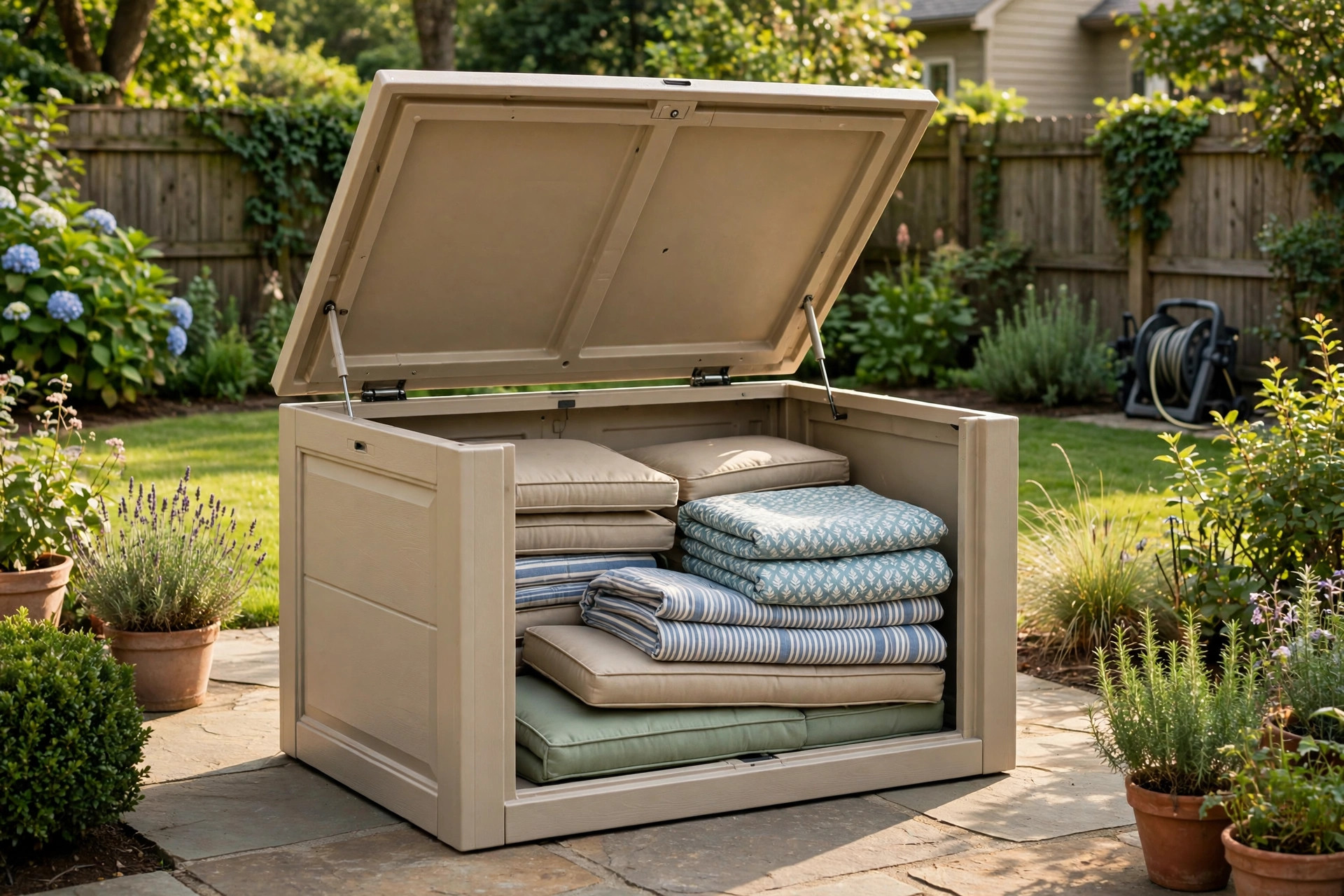

Cushions are often the most costly part of a patio set. A good sofa frame can last ten years. Its cushions, left out in rain and sun, can fail in two. A shed built for the job keeps them dry, clean, and ready to use. This guide explains how to pick the best outdoor storage shed for cushions for your home, how much to pay, and how to care for it.
Why a Shed for Cushions Matters
Outdoor cushions cost more than most owners expect. A full deep seating set can run to several hundred dollars in fabric and foam alone. Sun breaks down fabric dyes. Rain soaks foam cores. Mildew sets in once moisture is trapped inside a cushion. A single wet season can ruin them.
A storage shed answers this problem. It gives cushions a dry home close to the patio. When rain clouds gather, you can move cushions inside in minutes. When the season ends, the shed holds them through winter. Many owners who research patio furniture storage ideas for winter find that a small shed does the job better than a garage, which fills up fast.
A shed also keeps the patio tidy. Loose cushions blow around in wind. They collect pollen and bird droppings. A closed box solves both problems at once.
What to Look for When You Choose: Best Outdoor Storage Shed for Cushions
Size and Capacity
Start with a count of your cushions. Count seat cushions, back cushions, and throw pillows. Measure the largest cushion. A standard deep seat cushion is about 24 inches square and 5 inches thick. Six such cushions need roughly 25 cubic feet of space when stacked loosely. Do not pack them tight. Foam needs air around it to stay fresh.
Most makers list capacity in gallons or cubic feet. A 120-gallon deck box holds about 16 cubic feet. A full vertical shed can hold 50 cubic feet or more. Buy one size larger than your count suggests. You will add pillows and small items over time.
Material
Three main materials dominate the market: resin, metal, and wood. Each has clear strengths.
Resin sheds are the most common choice. They are made from thick plastic, often with a wood-like texture. They resist rust and rot. They need no painting. They weigh little, so two people can move one with ease. Good resin models include floor panels and locking lids. Reviews at The Spruce and Consumer Reports often rate resin high for ease of care.
Metal sheds cost less per cubic foot. They are strong but can dent. Cheap metal rusts where the paint chips. If you buy metal, look for galvanized steel with a baked enamel finish. Check that the door seals close tight.
Wood sheds look the best beside a garden. Cedar and redwood resist insects and decay. They need a fresh coat of sealer every year or two. They cost more and weigh more. Many owners of modern patio furniture choose wood sheds to match their decor.
Weather Protection
Water is the enemy. Look for a sloped roof so rain runs off. Look for a raised floor so ground water cannot seep in. Look for door and lid gaskets that seal when closed. Small vent openings near the roof let warm air escape. Trapped heat and moisture breed mildew. Some premium models, such as premium deck boxes, add built-in vents for this reason.
Security
A simple padlock hasp stops casual theft. It also keeps the lid shut in high wind. If your shed stands in a front yard, a lock is worth having. Most resin sheds include a hasp for a standard padlock.
Ease of Use
You will open this shed often. A lid that lifts with one hand matters. Hydraulic pistons hold heavy lids open. Doors that swing wide let you reach the back. Wheels or a light frame help if you move the shed for mowing. Check the latch in the store if you can. It should close with a firm click, not a struggle.
Types and Options
Horizontal Deck Boxes
Deck boxes are low, wide chests that double as benches. They hold 100 to 150 gallons. They suit small patios with four to eight cushions. Their lids often support the weight of a seated adult, which adds seating to a small deck. If you only need room for cushions, a waterproof deck box style chest is often enough.
Vertical Storage Sheds
Vertical sheds stand like small closets. They hold 50 to 100 cubic feet. They suit large sectionals with ten or more cushions. Shelves inside separate seat cushions from pillows. They need a level pad of pavers or gravel. They cost more but hold the most.
Bench Storage Boxes
Bench boxes are narrow and tall enough to sit on. They fit along a fence or house wall. They hold fewer cushions than a deck box but take less floor space. They work well on balconies and small decks.
Resin Shed Brands
Several makers focus on outdoor resin storage. Resin shed brands known for recycled plastic lumber also sell storage lines that match their furniture. Big home improvement stores carry house brands that cost less. Outdoor storage cabinets from flat-pack makers suit renters who may move. Compare wall thickness when you shop. Thick double-wall resin lasts longer than thin single-wall shells.
Cushion Bags as a Supplement
A patio furniture cushion storage bag is not a shed, but it helps inside one. Bags keep dust off cushions and group small pillows together. They also add a second layer of water defense if the shed seal ever leaks.
Cost and Price
Prices follow size and material. Expect these broad ranges in the United States:
– Small resin deck box (100 to 130 gallons): 80 to 200 dollars. – Large resin deck box (150 to 200 gallons): 150 to 350 dollars. – Mid-size vertical resin shed (50 to 70 cubic feet): 300 to 600 dollars. – Large vertical shed (80 cubic feet and up): 500 to 1,000 dollars. – Wood sheds: 400 to 1,200 dollars depending on wood type and size. – Metal sheds: 200 to 500 dollars for common sizes.
Sales at large retailers that carry them drop prices in late summer and fall. That is a good time to buy. Shipping a large shed can add 50 to 150 dollars, so check local pickup first.
Do not judge by price alone. A 150-dollar box that leaks costs more in ruined cushions than a 300-dollar box that stays dry. Read shed buying guides and independent test results before you decide.
Care and Upkeep
A storage shed needs little care, but a few habits extend its life.
Clean the shed twice a year. Wash resin with soap and water. Rinse wood and check the sealer. Touch up paint chips on metal before rust starts. Clear leaves from the roof so water drains.
Check the seals each spring. Run your hand along door gaskets. Replace cracked rubber. Make sure vents are open and not blocked by spider webs.
Keep cushions dry before they go in. Never store a damp cushion. Open the shed on a dry day once a month in winter to let air move. If you smell mustiness, pull everything out and air it in the sun.
Place the shed on a level base. Pavers, gravel, or a concrete pad all work. A level base keeps doors aligned and seals tight. It also stops the floor from sitting in puddles.
Anchor the shed in windy areas. Stakes through the base or sandbags inside stop it from tipping. This matters most for tall vertical sheds.
Safety
Sheds are safe by design, but a few points deserve care.
Do not let small children climb inside. A closed lid can trap a child. Teach children that the shed is not a toy box to hide in. Some lids are heavy enough to pinch fingers. Hydraulic pistons reduce this risk.
Keep chemicals out of a cushion shed. Pool chlorine, paint, and garden sprays give off fumes. They can stain fabric. Store them in a separate shed.
Place the shed away from grills and fire pits. Resin melts and burns. Keep at least ten feet between a resin shed and any open flame.
Check local rules before you buy a large shed. Some towns limit shed size or require a permit. A quick call to the building office saves trouble later.
Where to Place the Shed
Put the shed close to the furniture it serves. Every extra step makes you less likely to store the cushions. Most owners keep the shed within twenty feet of the seating area. That distance is short enough for a quick run when rain starts.
Pick a spot with good drainage. Low ground collects water after storms. Watch your yard during a heavy rain and note where water stands. Set the shed on high ground or on a raised pad. A pad of concrete pavers lifts the floor several inches above the soil. This small lift stops most ground moisture.
Think about sun. A shed in full afternoon sun gets hot inside. Heat fades fabric and can warp thin resin walls over time. A spot with morning sun and afternoon shade is ideal. Under a tree is fine, but trim branches so leaves and sap do not fall on the roof. Sap is hard to clean off resin.
Keep the shed reachable in winter. If you store cushions through the cold months, you may still want a pillow or two on mild days. A path that stays clear of snow and ice helps. Place the shed near a walkway you already shovel.
Mind the view. A shed is useful but rarely pretty. Place it behind a fence, beside the garage, or behind shrubs if you can. Leave at least a foot of space on all sides for air flow and for opening the lid fully. Never press the shed hard against a wooden fence. Trapped moisture between the shed and the fence rots both.
Frequently Asked Questions
Will a storage shed keep cushions dry in heavy rain?
Yes, if the shed is built well. A sloped roof, raised floor, and tight seals keep out driving rain. Cheap boxes with loose lids can leak. Read storage reviews for the model you like and look for notes on water entry.
What size shed do I need for a six-piece sectional?
Count every cushion. A six-piece sectional often has six seat cushions, six back cushions, and four to six pillows. That needs about 40 to 50 cubic feet. A mid-size vertical shed or a very large deck box fits this load.
Can I leave cushions in the shed all winter?
Yes. Clean and dry the cushions first. Add a moisture absorber inside the shed. Open it on dry winter days to refresh the air. This is one of the most common patio furniture storage ideas for winter, and it works well.
Is resin or wood better for a cushion shed?
Resin needs less care and costs less. Wood looks better and can last decades with sealer. Pick resin if you want a simple box you never think about. Pick wood if the shed will sit where guests see it and you do not mind yearly upkeep.
Do storage sheds need a foundation?
A full concrete foundation is not needed. A level pad of pavers or packed gravel is enough. It keeps the floor dry and the doors square. Never set a shed straight on bare soil.
How do I stop mildew inside the shed?
Dry cushions before storage. Keep vents open. Do not overfill the shed. Leave small gaps between stacks so air moves. A small rechargeable dehumidifier helps in humid climates.
A Short Final Word
The best outdoor storage shed for cushions is the one that fits your cushions, seals out water, and opens with ease. Measure first. Choose resin for low care, wood for looks, or metal for value. Buy a little larger than you think you need. Place it on a level pad and keep it clean. Your cushions will last years longer, and your patio will look better for it. For more patio storage ideas, browse design sites before you shop so you arrive with a clear plan.
References
Article. (n.d.). Modern furniture. https://www.article.com Bob Vila. (n.d.). Home improvement advice. https://www.bobvila.com Consumer Reports. (n.d.). Product reviews and ratings. https://www.consumerreports.org Frontgate. (n.d.). Outdoor furniture and decor. https://www.frontgate.com HGTV. (n.d.). Home and garden ideas. https://www.hgtv.com IKEA. (n.d.). Home furnishings. https://www.ikea.com Lowe’s. (n.d.). Home improvement products. https://www.lowes.com Polywood. (n.d.). Outdoor furniture. https://www.polywood.com The Home Depot. (n.d.). Home improvement products. https://www.homedepot.com The Spruce. (n.d.). Home and garden advice. https://www.thespruce.com
Was this guide helpful?

About Jennifer Lee
The My Garden US editorial team writes practical, in-depth home and garden guides for American homeowners — tested advice, no fluff.
You May Also Like
Outdoor Wall Fountain for Patio Reviews: What to Know Before You Buy
July 14, 2026 0 views
Outdoor Sectional for L Shaped Patio: A Practical Buying Guide
August 25, 2026 0 views
Best Outdoor Furniture for Lake House Living
May 13, 2026 0 views