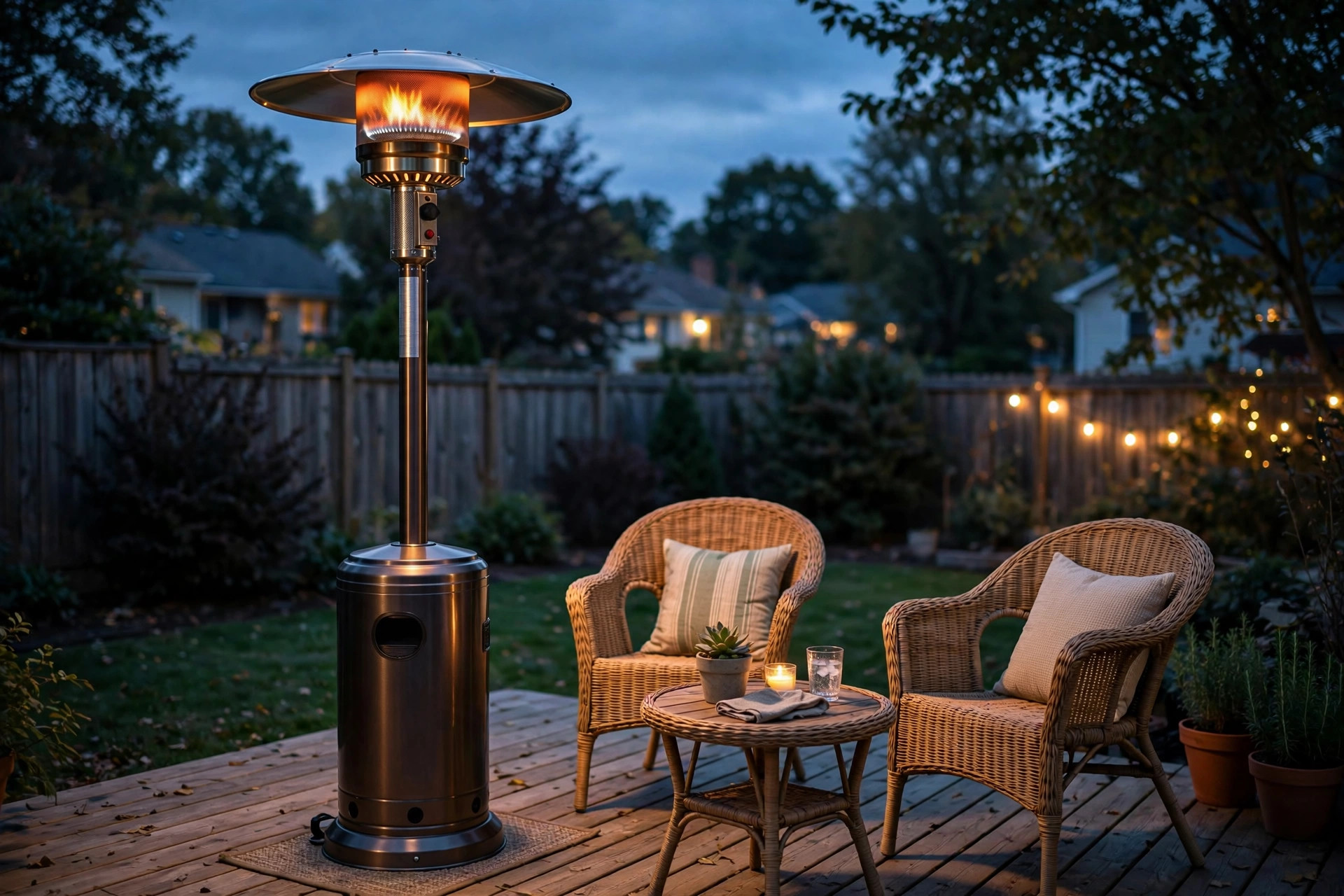

A cool evening does not have to end your time outdoors. Many deck owners now look for the best propane patio heater for deck use so they can sit outside well into the fall. Propane heaters give off strong, steady warmth. They need no wall plug and no fixed gas line. That makes them a simple choice for a deck. But not every model suits a wooden deck. Heat output, size, and safety features all matter. This guide walks you through each point in plain words. By the end you will know what to buy, what to pay, and how to keep the heater safe and clean.
Why a Propane Patio Heater Matters
A deck is an extra room of the house for much of the year. When the air turns cold, that room goes unused. A propane patio heater puts that space back in service. It warms people and chairs, not just the air. On a mild fall night, one good heater can make a deck feel like late summer again.
Propane models have a clear edge over electric ones for deck use. Electric heaters need an outlet nearby and often cost more to run. They also give less heat. A standard propane heater puts out 40,000 to 48,000 BTUs. That is enough to warm a circle of eight to twelve feet. For a family dinner or a quiet evening with friends, that circle is all you need. Because the heater runs on a tank, you can move it where you like. Put it near the dining table in October and by the lounge chairs in November.
There is also the question of mood. A heater with a visible flame adds light and a sense of comfort. It turns a plain deck into a place where people want to stay. That is why so many shoppers read a patio heater for outdoor dining review before they buy. Warmth and light together change how a deck feels.
How to Choose the Best Propane Patio Heater for Deck Use
Shopping for a heater is easier when you know what to check. The points below cover the main ones.
Heat Output
Heat output is measured in BTUs. Most full size propane patio heaters offer 40,000 to 48,000 BTUs. That range suits an open deck of up to about 200 square feet. A smaller deck of 100 square feet may do well with 30,000 BTUs or less. Do not buy more heat than your space needs. Too much heat in a small area is wasteful and can feel harsh.
Table top models are a special case. They sit on a table and give 10,000 to 12,000 BTUs. They warm only the people at that table. If your deck is small and you mostly eat outdoors, a table top unit may be enough. Many buyers pair one with an outdoor conversation set for a small deck and find the pair covers their needs.
Size and Height
Most standing heaters are about seven feet tall. They have a wide base that holds a standard twenty pound propane tank. Measure your deck before you buy. You need room for the base plus safe space around it. A good rule is three feet of clear space on all sides. Also check the height of any roof or awning above the spot. Heaters need open air above them.
Table top models are about three feet tall and fit on a sturdy table. Hanging heaters attach to a roof beam or pergola. They save floor space but need a strong mount. Wall mount models are rare on decks and best left to a professional to fit.
Tank and Run Time
Almost all standing heaters use a standard twenty pound propane tank. It hides inside the base. At full power, a tank lasts about eight to ten hours. At a medium setting, it can last fifteen hours or more. This is worth knowing when you ask how much propane does a patio heater use. The answer is simple. One tank covers several evenings of use. Keep a spare tank on hand so a cold night is never cut short.
Ignition and Controls
Look for a heater with a simple push button igniter. It should light on the first or second try. A control knob with low, medium, and high settings lets you match the heat to the night. Some models add wheels for easy moving. Wheels matter if you store the heater in a shed and roll it out for each use.
Build Quality
Steel is the most common body material. Stainless steel costs more but resists rust. Powder coated steel holds up well if you keep it covered. Check the emitter screen, which is the glowing mesh near the top. A thick, even mesh gives steady heat and lasts longer. Also check that the base door closes tight. A loose door lets wind in and can blow the flame out.
Types of Propane Patio Heaters
There are four main types. Each suits a different kind of deck.
Mushroom style heaters. This is the classic shape. A tall pole holds a round reflector at the top. Heat spreads out in a wide circle. These are the most common and often the best propane patio heater for deck use. They are stable, easy to light, and parts are cheap.
Pyramid flame heaters. A glass tube holds a tall, visible flame. The base is often square and holds the tank. These look fine and draw the eye. They give slightly less heat than mushroom models of the same BTU rating. The glass tube needs care and costs more to replace.
Table top heaters. Small units that sit on a table. They use a one pound tank or connect to a hose. They suit small decks and close seating. They are easy to carry and store.
Hanging and mounted heaters. These attach to a beam or wall and hang above the seating area. They free up floor space. They need a fixed mount and, in many cases, a gas line. On a wood deck with a pergola, a hanging unit can be a neat answer if you want no tank in sight.
Some shoppers also weigh a heater against an outdoor coffee table with fire pit. A fire pit table gives both heat and a place to set drinks. It costs more and needs more care, but it can replace a heater and a table in one piece.
Cost and Price
Prices fall into three bands. Basic mushroom style heaters run from about 100 to 200 dollars. These have standard steel bodies and simple controls. They do the job well for most decks. Mid range models run from 200 to 400 dollars. They add stainless steel, better wheels, and nicer styling. Premium pyramid flame models run from 400 to 700 dollars. You pay for looks and for the glass tube design.
Running cost is the other half of the price. A twenty pound tank refill costs around 15 to 25 dollars in most parts of the country. At full power that buys about ten hours of heat. That works out to roughly two dollars an hour at full blast. Most people run the heater on medium, which cuts the cost nearly in half. A cover for the heater adds 20 to 40 dollars and pays for itself by keeping the body clean and dry.
Before you buy, it helps to read a few product reviews and compare specs. Large home and patio stores list many models side by side, which makes the choice easier. You can browse a wide range of outdoor heating and seating options on Wayfair to get a sense of current prices and styles. For plain lab style test notes, the product reports at Consumer Reports are a solid second opinion.
Care and Upkeep
A propane heater lasts longer with small, regular care. Most tasks take only a few minutes.
Keep the heater covered when it is not in use. A fitted cover blocks rain and dust. Once a month, wipe the body with a damp cloth. Do not use harsh cleaners on the emitter screen. A soft brush takes off dust and soot.
Check the gas hose and connections each season. Look for cracks, kinks, or loose fittings. Mix a little dish soap with water and brush it on the joints. Open the tank valve for a moment. If bubbles form, you have a leak. Close the valve and fix the joint before you light the heater. Replace a worn hose at once. Hoses are cheap and easy to find.
The igniter needs little care. If it stops sparking, the battery or the electrode wire is the usual cause. Both are simple to swap. Keep spiders and insects out of the burner. They build nests in the tubes over winter. A blast of air from a can of compressed air clears them out in spring.
Store the tank with care. Turn the valve fully off. Store tanks upright, outdoors, never in a closed garage or shed. Disconnect the tank from the heater if the heater will sit unused for months. This is one of the key points of propane patio heater safety on a wooden deck, and it costs nothing to do right.
Safety
Propane is safe when you respect a few rules. They are simple and worth following every time.
Keep the heater outdoors only. Never run it in a garage, under a low enclosed porch roof, or inside any room. Propane gives off carbon monoxide. Open air carries that gas away. A deck with open sides is fine. A screened room with a low ceiling is not.
Keep clear space around the heater. Three feet on every side is the common guide. Keep it away from railings, curtains, plants, and anything that can burn. Do not place it under a low awning. Heat rises, and a close ceiling can scorch or catch.
Use the built in safety features. Most modern heaters have a tip over switch that cuts the gas if the unit falls. They also have a flame failure device that shuts the gas off if the flame goes out. Test the tip over switch once a year. Tilt the heater gently and listen for the click. If it does not click, have it serviced before use.
Let the heater cool before you cover or move it. The reflector and screen stay hot for many minutes after you turn the gas off. Teach children to keep their distance. A hot emitter screen looks like a lamp but burns like a stove.
Watch the wind. Strong gusts can blow the flame out or push heat sideways. If the wind picks up, turn the heater down or off. Light it only when you can stay nearby. A patio heater is not a set and forget device.
Finally, check local rules. Some towns limit open flame devices on decks, and some apartment rules ban propane tanks on balconies. A quick call to your local fire office settles the question. The safety guidance from IKEA on outdoor living products also stresses clear space and adult supervision, which matches what fire services advise.
Frequently Asked Questions
How big a heater do I need for my deck?
Match the BTU rating to your deck size. A heater of 40,000 to 48,000 BTUs warms an open deck of about 150 to 200 square feet. For a small deck under 100 square feet, a table top model of 10,000 to 12,000 BTUs may be enough. Measure your deck and aim for the lower end of the range. You can always add a second small unit later.
How long does a propane tank last in a patio heater?
A standard twenty pound tank lasts about eight to ten hours at full power. On a medium setting, the same tank can last twelve to fifteen hours. Wind and cold air shorten the run time. Keep a spare tank so you never run dry in the middle of an evening.
Is it safe to use a propane patio heater on a wooden deck?
Yes, if you follow the maker rules. Keep three feet of clear space on all sides. Place the heater on a level spot so it cannot tip. Some owners set a heat proof mat under the base for extra care. Never use the heater in an enclosed space. With these steps, a wood deck and a propane heater go well together.
Can I use my patio heater in the rain?
Light rain is usually fine, but heavy rain is not. Water can cool the emitter and blow out the flame. Wet ground can also make the base less stable. If rain starts, turn the heater off and cover it once it cools. Store it under cover between uses to keep rust away.
How do I store the heater in winter?
Turn off the tank valve and disconnect the tank. Store the tank upright outdoors. Wipe the heater down, cover it, and keep it in a dry shed or garage. In spring, check the hose and burner for insect nests before the first lighting.
A Final Word
The best propane patio heater for deck use is the one that fits your space, your budget, and your habits. A mushroom style heater of 40,000 BTUs or more suits most decks. A table top model suits small decks and close tables. Whichever you pick, give it clear space, keep the tank in good order, and cover it between uses. Do that, and your deck will stay warm and welcoming long after the summer ends.
References
Consumer Reports. (n.d.). Product reviews and buying guides. https://www.consumerreports.org IKEA. (n.d.). Outdoor furniture and garden products. https://www.ikea.com Wayfair. (n.d.). Patio furniture and outdoor decor. https://www.wayfair.com
Was this guide helpful?

About Robert Taylor
The My Garden US editorial team writes practical, in-depth home and garden guides for American homeowners — tested advice, no fluff.
You May Also Like
How to Build a Pergola Kit Yourself: A Plain Guide
June 7, 2026 0 views
Outdoor Ottoman for Patio Seating Reviews: How to Pick the Best One
August 20, 2026 0 views
Patio Umbrella for High Wind Areas: A Buyer’s Guide
January 6, 2026 0 views