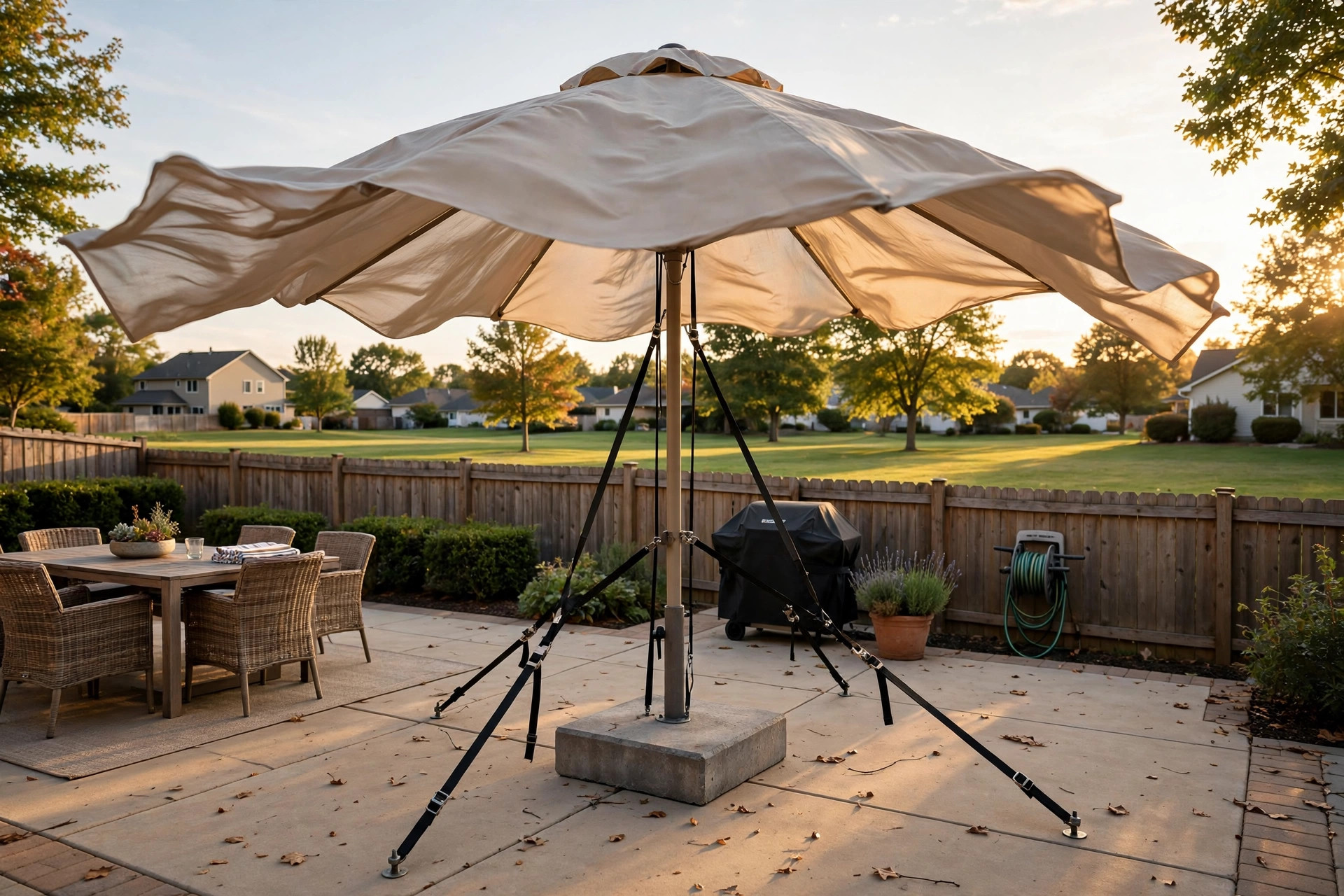

A strong gust can turn a patio umbrella into a sail. Every year, wind sends thousands of umbrellas flying across yards. They knock over chairs. They break fences. They land in pools. Knowing how to secure patio umbrella in wind saves money and keeps people safe. The fixes are simple. Most take less than an hour. This guide explains seven proven methods, from heavy bases to ground anchors. It also covers how to choose a wind-ready umbrella, what these fixes cost, and when to close the umbrella instead.
Why Wind Is the Main Danger to Patio Umbrellas
An open umbrella is shaped like a parachute. Wind catches the fabric and pulls upward. A nine-foot umbrella can catch as much force as a small sailboat sail. That force goes straight down the pole. It lifts the base. Then the whole umbrella tips.
The damage is real. An umbrella that blows away can break glass doors. It can scratch cars. It can hit people. Insurance claims for patio damage rise each spring when storm season starts. Many homeowners learn this lesson once. After that, they secure every umbrella they own.
Wind is not always dramatic. A steady breeze can rock a loose umbrella all day. The rocking wears the pole joints. It loosens bolts. Over a season, a weak base gets weaker. One gust then finishes the job. Regular checks prevent this slow failure.
How to Secure Patio Umbrella in Wind: Seven Methods
Use a Heavy Weighted Base
A base is the first line of defense. Most cheap bases weigh about 35 pounds. That is not enough for a full-size umbrella. Experts say a nine-foot market umbrella needs at least 75 pounds of base weight. An eleven-foot umbrella needs 90 pounds or more.
You can add weight to an existing base. Many bases are hollow. Fill them with sand. Sand is heavier than water. Water can leak out in winter and freeze. Sand stays put. Some owners set the base inside a large planter and fill the planter with soil and stones. That doubles the weight.
For offset or cantilever umbrellas, the math changes. These umbrellas hang to one side. They need much more weight on the other end. A cantilever umbrella base weight guide can help you pick the right amount. As a rule, plan for at least 150 pounds for a cantilever model.
Close the Umbrella When You Leave
The simplest method costs nothing. When the wind picks up, close the umbrella. When you go inside for the night, close it. A closed umbrella catches almost no wind. Many owners tie the closed canopy with the strap that came with the umbrella. That strap keeps the fabric tight against the pole.
Make this a habit. Weather apps give wind warnings. If the forecast shows gusts above 25 miles per hour, close every umbrella on the property. It takes one minute. That minute can save a two-hundred-dollar umbrella.
Add Wind Straps or Tie-Downs
Tie-down straps run from the umbrella ribs to the ground. They come in kits with stakes or anchors. You attach one strap to each rib tip. Then you stake them into the grass. The straps hold the canopy down from above. This is how beach umbrellas are secured. It works on patios too.
For hard surfaces, use screw-eye anchors in the deck. Drill small holes. Set the screw eyes. Hook the straps to them. The holes are tiny and do not harm the deck. When storms are forecast, add the straps. Remove them when the season passes.
Install a Ground Anchor or Mounting Kit
Some owners skip the base entirely. They bolt the umbrella pole into the ground or the deck. Mounting kits include a sleeve that goes into concrete or bolts to wood. The pole slides into the sleeve. A pin locks it in place.
This method holds the best in high wind. The umbrella becomes part of the patio itself. The trade-off is mobility. You cannot move the umbrella easily. For a fixed seating area, that is fine. Many restaurants use this method for their outdoor tables.
Use a Table With a Center Hole
A patio table adds a second anchor point. Slide the umbrella pole through the hole in the table. The table grips the pole at the middle. That grip cuts the leverage the wind can apply. The base still carries the weight. The table adds stability.
For this to work, the table must be heavy. A lightweight folding table will not help. Cast aluminum or wrought iron tables work best. Make sure the umbrella pole fits the hole. Most poles are one and a half inches wide. Most tables fit them. Check before you buy.
Fill the Base With the Right Material
Not all fill is equal. Water weighs about eight pounds per gallon. Sand weighs about thirteen pounds per gallon. A base that holds ten gallons of water gives you eighty pounds. The same base filled with sand gives you one hundred thirty pounds.
Wet sand is even heavier. Fill the base with dry sand. Pour in water. Let it settle. The sand locks together. It will not shift. In cold climates, drain water-filled bases before winter. Frozen water can crack the plastic shell.
Take the Umbrella Down Before Storms
Sometimes the wind is too strong for any fix. Hurricanes, tornadoes, and severe storms will defeat any base. When a major storm is forecast, take the umbrella down. Store the canopy indoors. Lay the pole flat in a garage.
This is also the time to check the fabric. Storm season wears canopies. Look for frayed edges and loose seams. A damaged canopy tears more easily in wind. Replace torn fabric before the next storm season.
What to Look for in a Wind-Resistant Umbrella
If you are buying a new umbrella, wind resistance starts at the store. Look for a vented canopy. Vents are small flaps near the top. They let wind pass through instead of catching it. Vented umbrellas stay upright in much stronger gusts.
Check the ribs. Fiberglass ribs flex without breaking. Aluminum ribs are light but can bend. Steel ribs are strong but can rust. For windy areas, fiberglass is the top pick. It bends and snaps back.
Look at the pole. Thicker poles resist bending. A pole that is two inches wide beats one that is one and a half inches. Check the crank housing. Cheap cranks strip their gears. Once the crank fails, you cannot open or close the umbrella safely.
Read the best patio umbrella for wind reviews before you buy. Reviews from real owners tell you how a model holds up in real storms. Look for comments about the base size and rib strength.
Types of Anchoring Systems
There are four common systems. Each suits a different patio.
Freestanding weighted bases. These are the most common. They sit on the patio surface. You can move them. They come in resin, concrete, steel, and cast iron. Concrete is the heaviest for the size.
Deck mounts. These bolt to a wooden deck. They use a sleeve or flange. They are very stable. They leave small holes if you remove them.
Ground stakes and augers. These screw into soil or grass. They work like giant screws. They hold fast in wind. They only work on soft ground.
In-ground sleeves. These sit in concrete underground. They are permanent. They hold the best of all. They are common in commercial settings.
Pick the system that fits your surface. Renters may prefer freestanding bases. Homeowners with decks can bolt a mount. People with big yards can use augers.
Cost and Price of Securing a Patio Umbrella
Securing an umbrella is not expensive. A heavy base costs between forty and one hundred fifty dollars. Sand to fill it costs under ten dollars. Tie-down kits cost fifteen to forty dollars. Ground anchors cost ten to thirty dollars each.
A deck mounting kit costs twenty-five to sixty dollars. Installation takes about an hour. If you hire a handyman, labor adds fifty to one hundred dollars. An in-ground sleeve kit costs thirty to eighty dollars, plus the cost of concrete.
Compare that to replacing an umbrella. A good nine-foot umbrella costs one hundred fifty to four hundred dollars. A high-end cantilever can cost over one thousand. A forty-dollar base is cheap insurance.
Covers add a small cost too. A weatherproof patio furniture cover heavy duty protects the closed canopy from rain and sun. Most covers cost twenty to fifty dollars. They extend the life of the fabric by years.
Care and Upkeep Through the Season
Check your umbrella once a month during the season. Tighten every bolt. Wiggle the pole in the base. If it moves, the base is too light or the bolt is loose. Look at the straps. Sunlight weakens nylon straps over time. Replace frayed straps.
Clean the canopy twice a year. Brush off dirt and leaves. Wash with mild soap and water. Rinse well. Let it dry fully before closing. Mildew grows on damp fabric. A clean canopy also lasts longer in sun.
Oil the crank once a year. A drop of silicone spray keeps the gears smooth. Check the tilt mechanism. If the umbrella tilts, make sure the lock holds. A tilt that slips in wind is dangerous.
At the end of the season, close the umbrella. Wrap it with its strap. Cover it or store it indoors. If you live where winters are harsh, store the whole umbrella in a garage or shed. Bases can stay outside if they are drained.
Safety Rules for Windy Days
Never sit under an umbrella in strong wind. If gusts are shaking the canopy, move away. An umbrella that breaks loose becomes a heavy object flying at speed. It can injure people and pets.
Keep umbrellas away from pools in wind. A falling umbrella can break pool coping. It can tear a pool liner. It can fall into the water and be hard to lift out.
Teach children not to hang on umbrellas. Kids sometimes grab the pole and swing. In wind, this adds force to an already stressed frame. The umbrella can tip onto the child.
Check the area around each umbrella. Move glass items away from the fall zone. If an umbrella does blow over, broken glass makes the mess worse. Keep a clear space of at least the umbrella’s radius.
Frequently Asked Questions
How much base weight do I need for my patio umbrella?
A standard nine-foot umbrella needs at least 75 pounds. An eleven-foot umbrella needs 90 pounds or more. Cantilever umbrellas need 150 pounds or more because the canopy hangs off to one side. When in doubt, add more weight. You cannot overdo it.
Can a patio umbrella survive a storm?
No standard patio umbrella can survive a severe storm. Most are rated for winds up to 25 or 30 miles per hour. Above that, close the umbrella. For hurricanes or severe storms, take it down completely. No base or strap beats a hurricane.
Should I fill my umbrella base with water or sand?
Sand is better. It is heavier and it does not leak. Water can freeze and crack the base in winter. If you use water, drain the base before the first freeze. Some owners mix sand and water for maximum weight.
How do I stop my umbrella from spinning in the wind?
Spinning means the pole is loose in the base. Tighten the hand knob on the base. Many bases have a bolt that grips the pole. Make sure it is tight. Some owners wrap a strip of rubber around the pole where it meets the base. The rubber adds grip.
Can I leave my umbrella open overnight?
It is safer to close it. Night winds are unpredictable. A gust at 3 a.m. can do the same damage as a daytime storm. Closing the umbrella takes one minute. Make it part of your evening routine, like locking the doors.
Do vented umbrellas really help in wind?
Yes. Vents let air escape through the top of the canopy. This lowers the pressure that pushes the umbrella up. Owners in coastal areas report that vented models stay upright in winds that flatten non-vented ones. If your area is windy, vents are worth the extra cost.
A Short Final Word
Wind is the oldest enemy of the patio umbrella. But it is a beatable one. A heavy base, a habit of closing the umbrella, and a few cheap straps will handle almost any normal day. For storms, take the umbrella down. Check it each month. Replace worn parts before they fail.
Shoppers looking for shade should compare models at big retailers like Wayfair and IKEA, which carry many vented designs with heavy bases included. A little care now means shade all summer, and no flying umbrellas in your yard.
References
Wayfair. (n.d.). Outdoor furniture and patio. https://www.wayfair.com IKEA. (n.d.). Furniture and home furnishings. https://www.ikea.com
Was this guide helpful?

About Robert Taylor
The My Garden US editorial team writes practical, in-depth home and garden guides for American homeowners — tested advice, no fluff.
You May Also Like

Why an Outdoor Drink Table Set of Two Is the Smallest Upgrade That Changes Everything
August 1, 2026 0 views
How to Install an Outdoor Ceiling Fan: A Step-by-Step Guide
July 15, 2026 0 views
Best Patio Chair Cushions Thick Reviews: A Buyer Guide
August 12, 2026 0 views