A cheap patio umbrella is fine until the first gust comes. Then the canopy inverts, a rib snaps, and the whole thing skitters across the yard. Any shopper who has lived through that scene knows why the best patio umbrella for wind reviews matter. These reviews tell you which shade stands up to a real storm and which ones fold like paper.
This guide reads those reviews for you and boils them down to plain advice. It covers why wind handling matters, what to look for when you shop, the main types of wind-ready umbrellas, what you should pay, how to care for the umbrella, and the safety rules no one should skip. If you want shade that survives a gusty afternoon, start here.
Why Wind Resistance Matters
A patio umbrella is a sail. A nine-foot canopy catches more wind than most people expect. Engineers say a plain umbrella can take off in winds of twenty to twenty-five miles per hour. That is not a storm. That is a breezy afternoon in Kansas.
The cost of a bad umbrella is more than money. A loose umbrella can strike a guest, dent a car, or break a neighbor’s window. Hospital reports record hundreds of such injuries every summer. A review that tests wind handling is worth more than a review that only talks about color.
A wind-ready umbrella protects your investment too. The best patio umbrella for wind reviews consistently show that a sturdy model lasts five to eight years. A flimsy one lasts one season. The difference in price is often fifty dollars. The difference in value is enormous.
If you live near the coast, on a hill, or anywhere the afternoon wind picks up, this is not a luxury. It is a requirement. Buyers who skip the wind question almost always buy twice.
What to Look for When You Shop: Best Patio Umbrella for Wind Reviews
The Canopy and the Wind Vent
Look at the top of the canopy first. A good wind umbrella has a vent: a second layer of fabric near the top that lets air escape. This vent cuts wind pressure by a third or more. Reviews call it a “wind vent” or “air vent.” It is the single most important feature.
Fabric matters as well. Solution-dyed acrylic, sold under trade names like Sunbrella, holds color and resists tear. Olefin is cheaper and still does a fair job. Thin polyester is common on cheap models, and it rips at the seams when wind works it for a season. The best patio umbrella for wind reviews often note how the fabric behaved after a storm.
The Frame and Ribs
The pole should be thick and heavy. Aluminum is light and rust-proof. Fiberglass flexes in the wind instead of snapping, and many reviewers call it the best choice for gusty yards. Steel is strong but heavy, and it rusts unless it is powder-coated. Check the metal patio furniture rust prevention tips if your set sits out all year.
Count the ribs. Eight ribs hold a canopy shape better than six. Fiberglass ribs bend under gusts and spring back. Cheap plastic ribs do not bend. They break.
The Base
A big canopy needs a heavy base. The rule of thumb is simple: use a base that weighs at least fifty pounds for a nine-foot umbrella, and more for larger canopies. Reviews that test wind handling always pair the umbrella with a proper base. Sand or water fill bases are common. Cast iron and concrete bases cost more and work best.
Some shoppers pair a wind-ready umbrella with a sturdy best swivel patio chairs set of two so the whole seating set feels planted. Others anchor the umbrella through a table with a heavy hole insert. Whatever you choose, the base is not the place to save money.
Types of Wind-Ready Umbrellas
Market Umbrellas
The classic center-pole market umbrella is the most common type. Wind-ready versions have a vented canopy, fiberglass ribs, and a pole at least one and a half inches thick. They fit most patio tables. For wind, buy nine feet or smaller unless the frame is very heavy. Bigger canopies catch too much air.
Cantilever and Offset Umbrellas
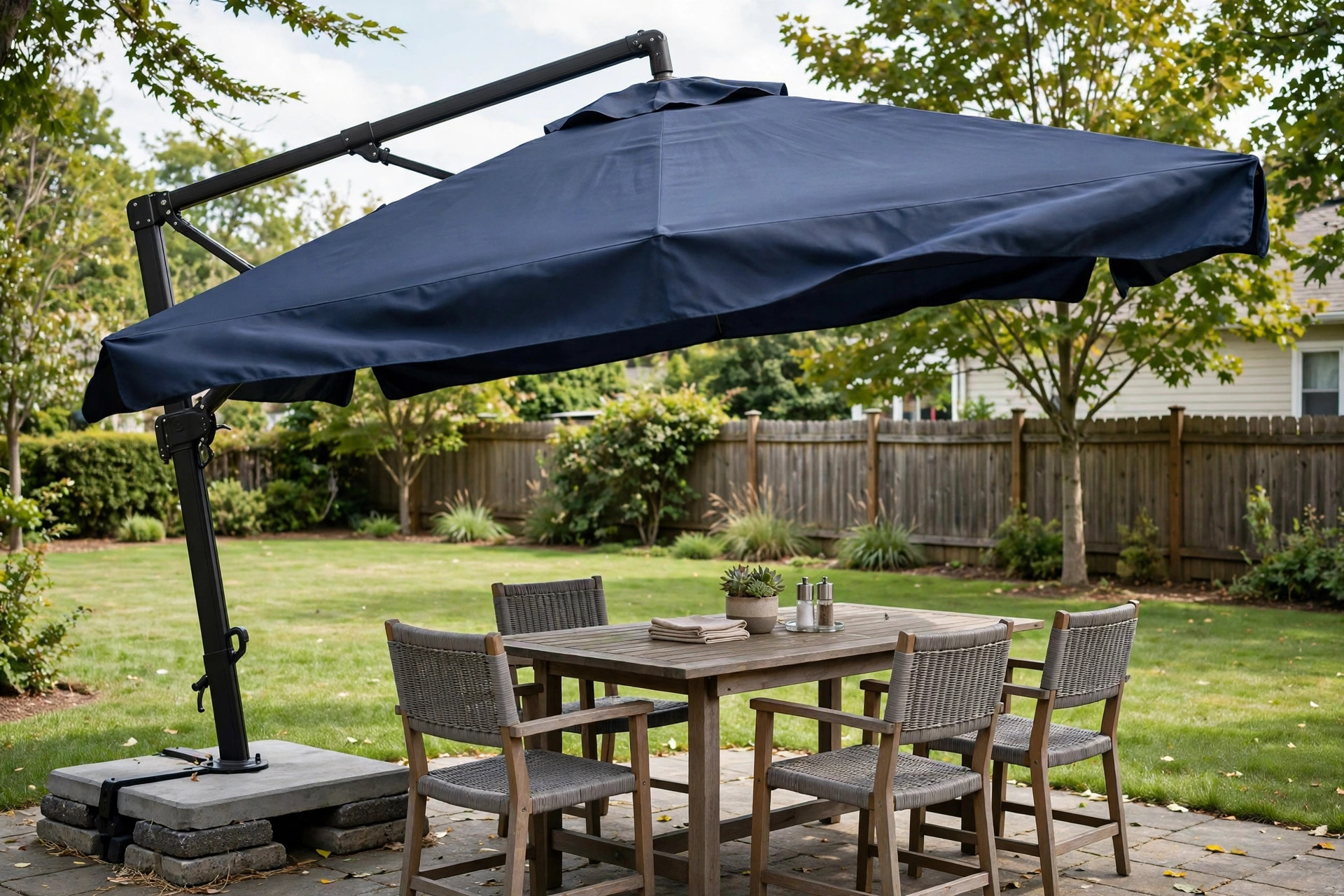
A cantilever umbrella hangs the canopy off a side arm, so no pole blocks your table. This design catches wind differently. The arm acts as a lever, so the base must be very heavy, often two hundred pounds or more. Sandbags or bolt-down plates are common. Reviews praise cantilevers for large seating areas, but they cost more than market umbrellas.
Tilt and Crank Mechanisms
A crank lift beats a push-up pole for wind use. You can lower the canopy fast when gusts arrive. A tilt lets you block low sun without moving the base. Both features add joints, and joints are weak points. Check reviews for how the tilt held up in wind. A metal tilt joint outlasts a plastic one.
Half and Wall-Mount Umbrellas
Against a wall or fence, a half umbrella gives shade without catching crosswinds. Wall-mount models bolt to the house and hold well in wind. These suit small patios and balconies. They give less shade than a full canopy, but they rarely blow away.
If you are building a whole evening set, a best fire pit chat set for backyard pairs well with a sturdy umbrella, since both need a clear, sheltered corner of the yard.
How to Read Wind Reviews Well
Not all reviews are equal. A useful wind review names the wind speed, the base used, and the umbrella’s size. A review that only says “it survived a storm” tells you little. Look for tests with numbers: held firm in a thirty-mile-per-hour gust, tipped at forty, canopy intact after one season of coastal wind.
Watch the dates on reviews. A model may change its frame or fabric between years while keeping the same name. Reviews from the last two seasons are the ones to trust. The best patio umbrella for wind reviews also come from people in windy states, not calm backyards. Sort by the lowest ratings first. One-star reviews show the weak points: cracked tilt joints, torn seams, bases that cracked after one winter. Patterns across ten reviews beat any single five-star rave.
Be wary of reviews that never mention the base. An umbrella tested with a sandbagged commercial base will behave differently in your yard. Good reviewers name the exact base they used, or say the umbrella tipped because the base was too light. That honesty is the mark of a review worth reading.
Cost and Price
Wind-ready patio umbrellas fall into three price bands. Budget models cost forty to ninety dollars. They may have a vent, but frames are thin and ribs are cheap. They suit calm yards and renters who will not keep them long.
Mid-range models cost one hundred to two hundred fifty dollars. This is where the best patio umbrella for wind reviews find the most value. You get a vented acrylic canopy, fiberglass ribs, and a thick pole. Most homeowners should shop here.
Premium models cost three hundred dollars and up. They offer oversized canopies, marine-grade frames, and replaceable canopies. For coastal homes and windy plains, the extra cost pays for itself in years of service.
Do not forget the base. A good base costs forty to one hundred dollars extra. Many shoppers compare umbrella prices without the base, then buy a light base and wonder why the umbrella tipped. Budget for both together.
Buying from large retailers helps with returns. Stores like IKEA and Wayfair stock a wide range of patio shade, and independent testers like Consumer Reports publish wind-related findings for outdoor gear. Read the return policy before you buy. A thirty-day return window lets you test the umbrella in your own yard.
Care and Upkeep
Close the umbrella when you leave the yard. This is the first rule in every review. Even a wind-rated umbrella should not sit open in a storm. Lower it when gusts pass thirty miles per hour.
Clean the canopy each spring. Hose off dust and scrub spots with mild soap and water. Do not use bleach. Bleach weakens the fibers and voids most warranties. Let the canopy dry fully before closing it. Stored damp, the fabric grows mildew.
Check the hardware once a season. Tighten bolts on the tilt joint and the base. Oil the crank if it sticks. Replace frayed cords at once. A snapped cord turns a closed umbrella into an open sail in seconds.
Store the umbrella indoors for winter. A cover helps, but a dry garage is better. Snow and ice load can bend ribs that handled wind all summer. Slip-on covers cost fifteen to thirty dollars and extend the life of the canopy.
Safety
Never leave an open umbrella unattended in wind. If a storm warning sounds, close and strap the umbrella, or lay it down flat. Strap kits cost a few dollars and hold the closed canopy tight.
Place the umbrella away from grills, fire pits, and pool edges where wind gusts funnel. Keep the canopy clear of power lines and the eaves of the house. A wind gust can lift a loose umbrella straight into a window.
Children and pets should not play with the crank or the tilt. The arm of a cantilever can swing hard in wind. Lock the moving parts when the umbrella is not in use.
Check your homeowner policy. Most policies cover damage from a runaway umbrella, but the deductible may exceed the cost of the umbrella itself. Prevention is cheaper than a claim.
Frequently Asked Questions
What wind speed can a patio umbrella handle? Most vented market umbrellas hold steady in winds up to twenty or thirty miles per hour when paired with a proper base. Above that, close them. No home umbrella is rated for storm-force wind.
Do wind vents really work? Yes. A vent lets trapped air escape instead of lifting the canopy. Reviewers who tested the same umbrella with and without a vent report far less lifting with the vent. It is the feature the best patio umbrella for wind reviews mention most.
How heavy should the base be? Use at least fifty pounds for a nine-foot canopy and one hundred pounds or more for an eleven-foot canopy or a cantilever. When in doubt, buy heavier. Concrete and cast iron bases outlast fillable plastic ones.
Is fiberglass better than aluminum for the frame? For wind, yes. Fiberglass flexes and springs back. Aluminum holds shape until it bends, and a bent pole is hard to fix. Aluminum still works well for the pole, where stiffness helps. Many top models mix both: aluminum pole, fiberglass ribs.
Can I leave my umbrella out all summer? You can leave it standing closed through the summer, but close it every day and strap it. Take the canopy down or cover it for winter. Year-round open exposure shortens fabric life by half.
What is the best type of umbrella for a very windy yard? A small vented market umbrella with a fiberglass frame and a heavy base is the safest pick. Cantilevers work too, but they need a much heavier base. Wall-mount models are the most secure of all for small spaces.
A Short Final Word
The best patio umbrella for wind is not the prettiest or the biggest. It is the one with a vented canopy, flexible ribs, a thick pole, and a base heavy enough to hold it all. Read the wind-focused reviews, buy a mid-range model with a proper base, close it when gusts rise, and store it dry in winter. Do those few things and your shade will still be standing when the next storm blows through.
References
IKEA. (n.d.). Outdoor furniture and patio products. https://www.ikea.com Wayfair. (n.d.). Outdoor furniture and patio shade. https://www.wayfair.com Consumer Reports. (n.d.). Product reviews and ratings. https://www.consumerreports.org
Was this guide helpful?

About Robert Taylor
The My Garden US editorial team writes practical, in-depth home and garden guides for American homeowners — tested advice, no fluff.