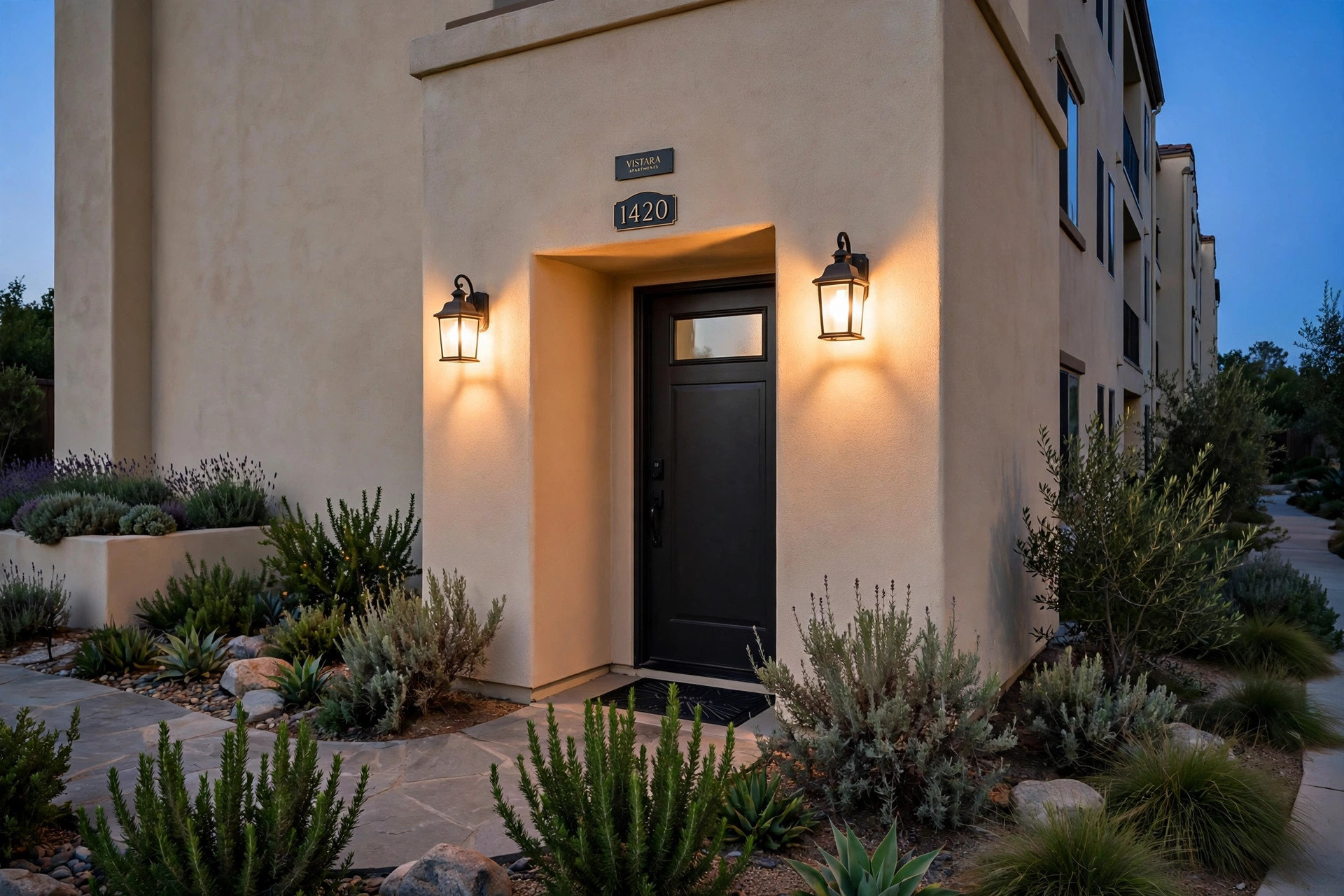

Apartment living in California brings a warm climate, long evenings, and dense neighborhoods. In this setting, professional grade exterior lighting fixtures for california apartments do real work every night. They guide tenants to their doors, light parking areas, and show the building at its best. Poor lighting, on the other hand, creates dark corners and uneasy paths. This guide explains what these fixtures are, why they matter for apartment buildings, and how to choose and care for them.
Why Exterior Lighting Matters for Apartment Buildings
Good exterior light changes how a building feels after dark. Tenants walk home with more confidence when stairs and walkways are clear and bright. Visitors find the right unit with ease. Managers face fewer complaints and fewer slip-and-fall claims.
Security is the first reason. A well-lit entrance discourages break-ins and trespass. Dark parking lots invite trouble. Studies of urban crime often point to poor lighting as a factor. Bright, even light at entries, gates, and mail areas gives tenants peace of mind.
Curb appeal is the second reason. In a tight rental market, the night view of a building matters. A clean row of warm lanterns or sleek modern sconces tells renters that the owner cares. This impression helps fill units faster and supports higher rent.
Energy use is the third reason. Old high-wattage lamps waste power and fail often. Modern LED fixtures cut power bills and last for years. California energy rules also favor efficient lighting, so a smart upgrade can keep a building in line with local code. The ENERGY STAR program offers clear guidance on efficient outdoor lamps for residential buildings.
What to Look for When You Choose: Professional Grade Exterior Lighting Fixtures for California Apartments
Professional grade exterior lighting fixtures for california apartments are built for hard use. They differ from the bargain lamps sold for single homes. Here are the key points to check before you buy.
Build Quality and Materials
Commercial fixtures use heavy housings made of cast aluminum or solid brass. These materials resist rust, sun damage, and salt air along the coast. Look for powder-coated finishes in bronze, black, or white. Check the hardware too. Stainless steel screws and sealed gaskets keep water out of the wiring.
Plastic housings may cost less at first, but they fade and crack under California sun. They also break more easily when a tenant bumps a fixture with a bike or a moving cart. A metal housing pays for itself in fewer replacements.
Brightness and Color Temperature
Brightness for outdoor lamps is measured in lumens. For apartment entries and stairs, 400 to 800 lumens per fixture is often enough. Parking areas and long paths may need 1,500 to 3,000 lumens per pole light.
Color temperature is measured in Kelvin. Warm white at 2700K to 3000K feels welcoming and suits most residential exteriors. Cool white at 4000K and above looks harsh and can bother tenants through bedroom windows. For apartment courtyards and doorways, stay with warm tones.
Motion Sensors and Controls
Motion sensors save power by keeping lamps dim or off until someone passes. Photocells switch lights on at dusk and off at dawn without human help. Timers handle common areas on a set schedule.
For apartment buildings, a mix works best. Use dusk-to-dawn lamps at entries and parking. Add motion sensors on side paths and trash areas. Timers can shut decorative courtyard lights after midnight. Good controls cut the electric bill and keep light from spilling into bedrooms.
Weather and Safety Ratings
Outdoor fixtures carry an IP rating for dust and water protection. Look for IP65 or better for exposed locations. The UL or ETL listing mark shows the fixture passed safety tests. In California, the Dark Sky friendly fixtures also help reduce light pollution, which many cities now require.
Types of Fixtures for Apartment Buildings
Different spots on a property call for different lamps. Here are the main types used in apartment settings.
Wall Sconces and Lanterns
Wall sconces mount beside doors, under balconies, and along corridors. They give a soft wash of light and define the entry. Lantern styles suit older buildings. Clean modern shapes suit newer complexes. Mount them six to eight feet high for even coverage.
Floodlights and Security Lights
Floodlights cover wide areas such as parking lots and back alleys. Modern LED floods use far less power than old halogen floods. Aim them down, not outward, to avoid blinding drivers and neighbors. Shielded housings keep the beam on your own property.
Pathway and Bollard Lights
Short bollard posts line walkways and garden beds. They mark the path edge without glare. Space them six to ten feet apart for a steady line of light. Solar versions exist, but wired LED bollards give steadier output for commercial use.
Pole Lights for Parking Areas
Tall pole lights raise the lamp high above cars and trees. They light a wide circle with even coverage. For small lots, a twelve to fifteen foot pole is often enough. Larger lots may need twenty foot poles with multiple heads.
Ceiling and Soffit Lights
Covered entries and parking garages use recessed or surface-mount ceiling lights. Flush mounts sit tight to the ceiling and resist tampering. LED panels give smooth, even light in garages and laundry rooms.
Cost and Price Guide
Prices for professional grade fixtures vary by type and quality. A single wall sconce can run from 60 to 250 dollars. Bollard lights often cost 90 to 300 dollars each. Floodlights range from 80 to 350 dollars. Pole lights with the pole can cost 400 to 1,200 dollars installed per pole.
Labor adds to the total. An electrician may charge 100 to 200 dollars to replace a single fixture on an existing circuit. A full property upgrade with new wiring runs much higher. For a mid-size complex with thirty fixtures, a full retrofit often falls between 8,000 and 25,000 dollars.
The return on the cost comes from three places. First, lower power bills. A 60-watt wall pack replaced by a 15-watt LED saves about 45 watts per night. Across thirty fixtures, that adds up. Second, fewer service calls. LED lamps last 50,000 hours or more. Third, fewer vacancy days. A building that looks safe and cared for rents faster. The U.S. Department of Energy publishes data on the savings from LED upgrades in commercial buildings.
Get three bids from licensed electricians before you commit. Ask each bidder to list fixture models, wattage, and warranty. A five-year warranty is standard for professional fixtures. Some brands offer seven or ten years.
How to Plan the Layout
A good lighting plan starts with a walk of the property at night. Note every dark spot: the back stair, the trash corner, the far end of the lot. These are your priority zones.
Next, layer the light. Ambient light comes from pole lights and floods. Task light comes from sconces at doors and stairs. Accent light comes from landscape lamps in planted beds. Each layer has its own job.
Keep light where it belongs. Shine lamps down and toward the building, not into the sky or the neighbor’s window. This practice, called full cutoff lighting, follows many California city rules. It also keeps tenants happy.
Place fixtures out of easy reach where vandalism is a concern. Under-eave mounts and tamper-proof screws help. In high-traffic corridors, choose flush mounts that no one can grab or swing from.
If the building has an insulated vinyl siding price comparison project in the works, plan the lighting at the same time. New siding crews can patch and seal around fixture boxes in one visit. This saves labor and leaves a cleaner finish.
Installation Tips
Professional fixtures should be installed by a licensed electrician. Exterior wiring must meet code for wet locations. Boxes must be sealed. Wires must be rated for outdoor use.
Before install day, confirm the circuit capacity. LED fixtures draw little power, so old circuits usually handle them. But large properties may still need panel work.
Label every circuit at the panel. Write the fixture zone on each label. This small step saves hours on future service calls.
Take photos of the wiring before the covers go back on. Keep the fixture manuals in a folder with the building records. When a lamp fails five years later, you will know the exact model.
For older buildings with budget friendly vinyl replacement windows buying guide and aging entries, lighting upgrades pair well with other exterior work. A coordinated plan cuts repeat visits and keeps the property looking sharp.
Care and Upkeep
Professional fixtures need little care, but a simple routine keeps them bright.
Clean the lenses twice a year. Dust and insect grime cut output more than most owners expect. A soft cloth and mild soap do the job. Never use a pressure washer on sealed fixtures. It can force water past the gaskets. If the whole building is due for a wash, a top rated house power washing service can clean walls and paths while you hand-clean the fixtures yourself.
Check the gaskets and seals once a year. Cracked seals let water in and cause early failure. Replace damaged seals at once.
Trim plants around ground-level fixtures. Shrubs that block the light waste power and create dark spots. Keep a clear radius of two feet.
Test motion sensors and timers each spring and fall. Clocks drift. Sensors get blocked by new growth. A quick test each season keeps the system honest.
Replace failed lamps with the same model and color temperature. Mixing warm and cool lamps on one building looks sloppy and confuses the maintenance team.
Safety and Code Notes
California has its own energy code, Title 24, which sets limits on outdoor lighting power for many buildings. Check with your local building department before a major upgrade. A licensed contractor or lighting designer can confirm compliance.
Electrical safety comes first. Always cut power at the breaker before touching a fixture. Use a voltage tester to confirm the line is dead. Outdoor circuits must have GFCI protection in most locations. If the property is in a wildfire-prone zone, choose fixtures rated for high heat and keep lamps clear of dry plants.
Dark sky rules matter too. Many California cities limit the brightness and color of outdoor light to protect the night sky. Full cutoff fixtures and warm color temperatures usually meet these rules. Guides from This Old House and Bob Vila explain cutoff optics in plain terms.
Tenant safety runs both ways. Bright light should never shine into a bedroom window. Walk the property after install and stand where tenants stand. If a lamp glares in your eyes, adjust the aim or add a shield.
FAQ
How long do professional grade exterior fixtures last? Most quality LED fixtures last 50,000 to 100,000 hours of use. At twelve hours per night, that is eleven to twenty-two years. The housing often outlasts the electronics. Replace the driver or module when the lamp dims, not the whole fixture.
Are solar lights good enough for apartment buildings? Solar lamps suit remote path markers but fall short for entries and parking. They dim on cloudy days and fail in shaded courtyards. For safety-critical areas, use wired fixtures. Lumens and The Home Depot both carry commercial lines where you can compare solar and wired options side by side.
What is the best color temperature for apartment exteriors? Warm white between 2700K and 3000K suits most apartment buildings. It feels calm and matches interior light through windows. Cool white above 4000K looks cold and can disturb sleep. Stick with warm tones for entries, courtyards, and paths.
Do I need a permit to upgrade exterior lighting? Simple fixture swaps on existing circuits usually need no permit. New circuits, new poles, or major rewiring usually do. Rules vary by city and county in California. Call the local building department or ask your electrician before work starts.
How do I stop light from bothering tenants? Choose full cutoff fixtures that aim light straight down. Mount lamps under eaves where the roof blocks upward spill. Add shields or louvers where needed. Avoid placing bright floods near bedroom windows. A night walk after install shows you every problem spot.
Can I mix fixture styles on one property? Yes, but keep one finish and one color temperature across the building. A black finish with 3000K lamps can appear in lantern, flood, and bollard forms. This keeps the look consistent while each fixture does its own job. Family Handyman and The Spruce both show how matched finishes tie a property together.
How often should I relamp or service the system? Inspect fixtures once a year and clean lenses twice a year. Test sensors and timers each season. With LED lamps, there is no fixed relamp schedule. Replace modules when output drops. Keep spare gaskets and one spare fixture on hand for quick swaps.
A Short Final Word
Professional grade exterior lighting fixtures for california apartments are a quiet investment that works every night. They protect tenants, cut power bills, and lift the image of the building. Start with a night walk, fix the dark spots first, and choose heavy housings with warm LED light. Add smart controls to save power after hours. Keep up the simple cleaning routine. With that plan, a California apartment building stays bright, safe, and welcoming for years to come. For product research and step-by-step how-to guides, trusted resources such as Lowe’s and James Hardie can round out your planning.
References
Bob Vila. (n.d.). Home improvement advice. https://www.bobvila.com ENERGY STAR. (n.d.). Energy efficient products. https://www.energystar.gov Family Handyman. (n.d.). DIY home repair and maintenance. https://www.familyhandyman.com James Hardie. (n.d.). Fiber cement siding and exterior products. https://www.jameshardie.com Lowe’s. (n.d.). Home improvement products. https://www.lowes.com Lumens. (n.d.). Lighting and ceiling fans. https://www.lumens.com The Home Depot. (n.d.). Home improvement products. https://www.homedepot.com The Spruce. (n.d.). Home and garden advice. https://www.thespruce.com This Old House. (n.d.). Home renovation guidance. https://www.thisoldhouse.com U.S. Department of Energy. (n.d.). Energy efficiency and renewable energy. https://www.energy.gov
Was this guide helpful?

About David Wilson
The My Garden US editorial team writes practical, in-depth home and garden guides for American homeowners — tested advice, no fluff.
You May Also Like
Premium Deck Building Contractors Near Me: How to Choose the Right Builder
May 10, 2026 0 views
Best Fence Installation Contractors Near Me: How to Hire the Right Crew
January 14, 2026 0 views
Budget Friendly Vinyl Siding Installation Near Me: A Homeowner’s Guide
April 12, 2026 0 views