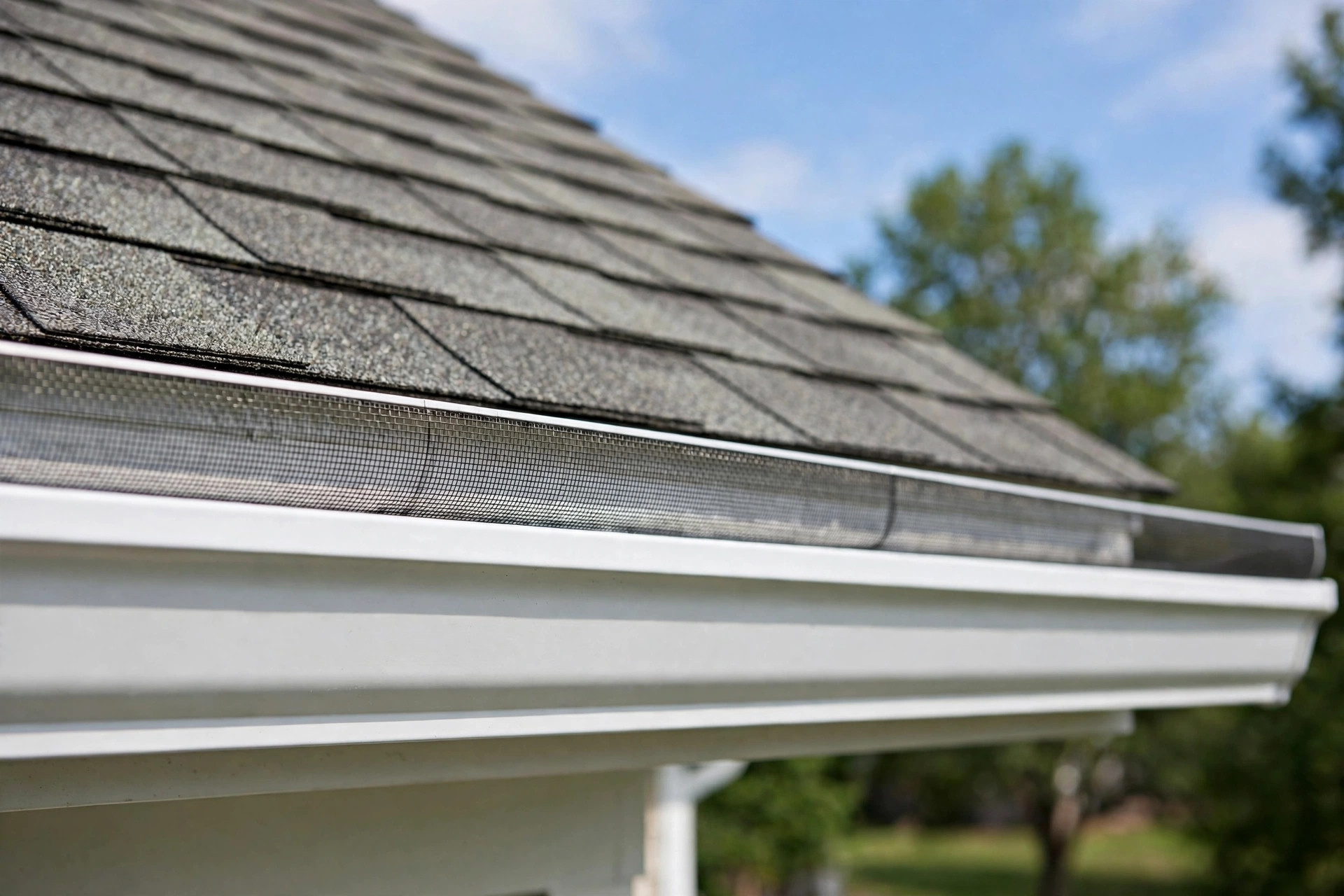

This seamless gutter guards reviews and buying guide is written for the homeowner who is tired of climbing a ladder every fall. Clogged gutters cause real damage. Water spills over the edge, stains the siding, pools by the foundation, and can rot the wood behind the gutter itself. A good guard system lets rain pass through while keeping leaves, pine needles, and twigs out. It will not end gutter care for all time, but it can cut it down to a rare, simple task.
Seamless gutter guards are different from the flat screens sold in boxes at the store. A seamless system is measured, cut, and fitted to run in one unbroken length along each side of the house. There are no joints in the middle of a run for debris to catch on. That single fact makes a real difference in how well the guard works over ten or fifteen years.
Why Gutter Guards Matter
Gutters are a quiet part of the house. When they work, no one thinks about them. When they fail, the cost shows up fast. A gutter full of wet leaves weighs many times more than an empty one. The hangers pull loose. The gutter sags. Water falls straight down next to the foundation, and over time that water can find its way into a basement or crawl space.
Guards matter most where trees are close to the house. Maples, oaks, and pines shed all year in their own way. A homeowner who cleans gutters three or four times a year will see the biggest payoff from a guard system. Even a home with few trees benefits, since wind carries seeds, shingle grit, and dust into any open trough.
There is another honest reason to buy them: safety. Ladder falls send many homeowners to the hospital each year. A guard that lasts a decade or more can take that chore off the list. If you pair new guards with a soffit and fascia repair before they go on, the whole roof edge will be sound for years.
What to Look For in Seamless Gutter Guards: Seamless Gutter Guards Reviews and Buying Guide
The best system is the one that fits your roof, your trees, and your budget. Start with the fit. A seamless guard is rolled or cut to the exact length of the gutter run. It should slide under the first row of shingles and lock to the front lip of the gutter without screws showing on the outside. Ask the installer how the guard meets the corners and the end caps. Corners are where cheap systems fail first.
Material comes next. Aluminum is the most common choice for seamless guards. It is light, does not rust, and can be painted or powder-coated to match the gutter. Stainless steel mesh on an aluminum frame is the top of the line. It resists pine needles and fine seed pods that pass through larger holes. Vinyl and plastic guards cost less, but they grow brittle in the sun after several years.
Water handling is the heart of any gutter guard review. Rain runs down the roof fast in a hard storm. Some solid-cover guards rely on the water curving around a nose and into the gutter while leaves fall off the edge. In light rain that works well. In a heavy downpour the water can shoot right past the nose and spill over the side. Mesh and micro-mesh screens take water through hundreds of tiny holes, so they handle heavy rain better. The trade is that very fine mesh can slow a bit under thick debris, so it needs an occasional brushing.
Warranty tells you what the maker thinks of the product. A lifetime or transferable warranty suggests real confidence. Read the fine print. Some warranties cover the guard only if the maker installs it. Others exclude clogging from fine debris, which is exactly the problem many buyers face.
Types of Seamless Gutter Guards
Most systems on the market fall into four types.
Micro-mesh screens. These are the highest rated in most seamless gutter guards reviews and buying guide write-ups today. A fine stainless steel mesh sits on an aluminum frame. Holes are small enough to block pine needles and seed pods. Water passes through freely. Cost is high, but life is long.
Perforated metal screens. Holes are larger than micro-mesh. They stop leaves and large twigs but let small seeds through. They cost less than micro-mesh and suit homes with only broadleaf trees nearby.
Solid covers with a curved nose. A solid sheet of aluminum covers the gutter. Water follows the curve into a slot while leaves fall to the ground. These work best on roofs with a moderate pitch and light tree cover. On steep roofs in heavy rain regions, overshoot can be a problem.
Foam and brush inserts. These are not true seamless guards, but they appear in many reviews because they are cheap. Foam wedges sit inside the gutter and let water pass. Brushes are like bottle cleaners laid end to end. Both clog over time and are hard to clean out. Most contractors do not recommend them as a long-term fix.
Cost and Price Expectations
Seamless guards cost more than box-store screens because they are fitted on site. Expect roughly five to ten dollars per linear foot for a basic seamless screen installed, and nine to twenty dollars per foot for a premium micro-mesh system with full installation. A two-story house with 200 feet of gutter might run from one thousand dollars at the low end to four thousand at the top.
Price moves with several factors. A steep or high roof adds labor cost. Removing old gutter screens or repairing damaged gutters adds to the bill. Some companies bundle new gutters with the guards, which raises the total but gives one warranty for the whole system.
Do-it-yourself kits cost far less, often one to three dollars per foot. They are sold in fixed lengths, so the “seamless” advantage is lost at every joint. For a small one-story home with easy roof access, a careful homeowner can get good results from a snap-in kit. For a two-story house, most experts advise professional fitting.
Get at least three written bids. The bid should list the material, the mesh size, how it attaches, the warranty terms, and the full installed price per foot. A bid that only gives a lump sum makes it hard to compare.
Care and Upkeep
No guard makes gutters maintenance free. Even the best micro-mesh can gather a fine film of pollen, dust, and shingle grit on top. In dry months this film can turn into a thin crust that slows water entry. A soft brush on a long pole clears it in minutes. Most makers suggest a light brushing once or twice a year.
Walk around the house after a heavy storm. Look for water spilling over the gutter edge in one spot. That can mean a section of guard has shifted or a corner is packed with debris. Catching it early keeps a small fix small.
Trees still need care. Branches that rub the roof shed leaves straight onto the guard and shorten its life. Trimming branches back a few feet is cheap insurance. While you are planning roof-edge work, it is worth reading a metal roofing installation cost guide if your roof is nearing the end of its life, since guards are best fitted after any roof work is done. The same goes for siding: a vinyl siding installation cost guide helps you plan the order of projects so the guards go on last.
Safety
Work on gutters is work at height, and it deserves respect. If you inspect or brush your guards yourself, use a sturdy extension ladder set on firm, level ground. Keep the ladder at a safe angle, with the base one foot out for every four feet of height. Never lean past the side rails to reach a far corner.
Wear work gloves when you touch gutter metal. Cut edges can be sharp. Watch for wasp nests under the gutter lip in summer; guards give insects shelter too, and a nest is best left to a pest service.
If a guard needs repair on a steep or high roof, call the installer back. Most good warranties include a service visit, and no saved dollar is worth a fall.
Frequently Asked Questions
Do gutter guards really work? Yes, for the job they are built to do. A good seamless guard keeps out leaves, twigs, and needles, and it greatly reduces how often gutters need cleaning. No guard blocks everything. Fine grit and seeds can still enter, and the top of the guard needs a brushing now and then.
What is the best type for pine needles? Micro-mesh with stainless steel mesh on an aluminum frame. Pine needles are thin and slip through larger holes. Reviews from pine country rate micro-mesh far above solid covers and perforated screens for this job.
Will guards work on a steep roof? They can, but the type matters. On steep roofs water moves fast and can overshoot solid-nose covers. Mesh screens take the water in through holes across the whole surface, so they handle steep pitches better. Tell the bidder your roof pitch so the right type is chosen.
Can I install seamless gutter guards myself? True seamless guards are cut and fitted on site, which is why they are usually a professional job. Snap-in kits sold at home centers are a do-it-yourself option, but they come in fixed lengths with joints every few feet. On a one-story home they can work well. On higher roofs, professional installation is the safer and better-fitting choice.
How long do they last? Aluminum and stainless steel systems often carry twenty-year to lifetime warranties, and they can last that long in practice. Vinyl and plastic guards may last five to ten years before sun and ice wear them out. Warranty length is a fair guide to expected life.
Do guards void my roof warranty? Some guards slide under the first shingle course, and a few shingle makers have raised concerns about lifting shingles. Ask your guard installer how the product attaches, and check your shingle warranty terms before work starts. Guards that attach to the gutter lip rather than sliding under shingles avoid this question entirely.
A Short Final Word
A seamless gutter guard is one of those home purchases that pays back quietly. It is not exciting, but it protects the roof edge, the siding, and the foundation every time it rains. Choose the type that fits your trees and your roof, get written bids from three installers, and read the warranty before you sign. Done right, the job lasts for decades, and the ladder can stay in the garage where it belongs.
For broader reading on roof-edge products, the This Old House site carries long-form guides on gutters and guards, and Bob Vila covers many guard types in plain buyer language. Product and material background is available from maker sites such as James Hardie, CertainTeed, and the big home centers The Home Depot and Lowe’s. Independent testing appears at Consumer Reports, while hands-on repair advice is steady at Family Handyman, The Spruce, and the Better Business Bureau can help you check an installer’s record before you hire.
References
Better Business Bureau. (n.d.). Business reviews and ratings. https://www.bbb.org Bob Vila. (n.d.). Home improvement advice. https://www.bobvila.com CertainTeed. (n.d.). Building materials and exterior products. https://www.certainteed.com Consumer Reports. (n.d.). Product reviews and ratings. https://www.consumerreports.org Family Handyman. (n.d.). DIY home repair and maintenance. https://www.familyhandyman.com James Hardie. (n.d.). Fiber cement siding and exterior products. https://www.jameshardie.com Lowe’s. (n.d.). Home improvement products. https://www.lowes.com The Home Depot. (n.d.). Home improvement products. https://www.homedepot.com The Spruce. (n.d.). Home and garden advice. https://www.thespruce.com This Old House. (n.d.). Home renovation guidance. https://www.thisoldhouse.com
Was this guide helpful?

About Emily Rodriguez
The My Garden US editorial team writes practical, in-depth home and garden guides for American homeowners — tested advice, no fluff.
You May Also Like

How to Find Top Rated House Power Washing Services Near Me
July 4, 2026 0 views
Top Rated Retaining Wall Builders Reviews: A Homeowner Guide
March 6, 2026 0 views
Foundation Crack Repair Cost Guide USA: What Homeowners Should Know
January 29, 2026 0 views