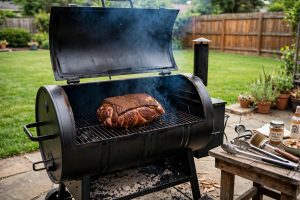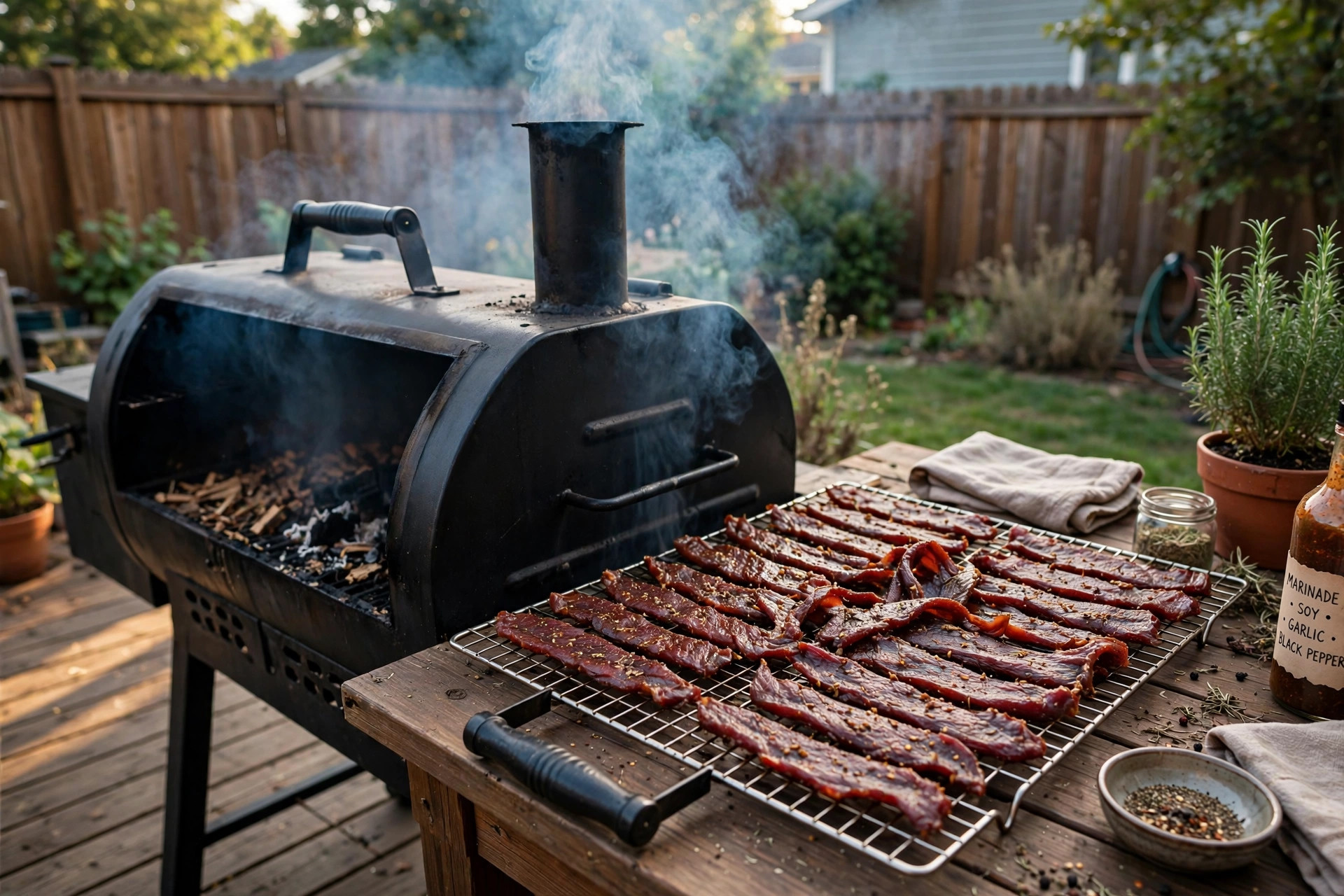

Learning how to make beef jerky on smoker equipment is simpler than many cooks expect. You do not need a commercial dehydrator or a butcher shop. You need a good cut of lean beef, a simple marinade, steady low heat, and a few hours of patience. The smoker does the rest. It dries the meat slowly while adding real wood flavor that a dehydrator cannot match.
This guide walks through the whole process. It covers the meat to buy, the marinade to mix, the temperature to hold, and the signs that tell you the jerky is done. It also covers food safety, because raw meat left at low heat can be a risk if you skip the rules. Follow the steps here, and you will have a batch of smoky, chewy jerky by evening.
Why Smoke Your Jerky
Beef jerky has been made for thousands of years. It was a way to keep meat without a refrigerator. Native peoples dried thin strips of meat in the sun and over fire smoke. The same idea still works. The smoker removes water from the meat. Bacteria cannot grow in food that has too little water. Salt and acid in the marinade help the same cause.
Smoking gives jerky two things at once. It dries the meat and it seasons it with smoke. A dehydrator only dries. An oven only dries. The smoker adds flavor from real wood. Hickory gives a strong, bold taste. Mesquite gives a sharp, earthy bite. Fruit woods like apple and cherry give a soft, sweet note. That flavor is the main reason people ask how to make beef jerky on smoker setups instead of other tools.
Choosing the Right Meat: How to Make Beef Jerky on Smoker
The meat matters more than the recipe. Start with lean beef. Fat does not dry well. It turns soft and rancid instead of firm and chewy. The best cuts for jerky are lean and cheap: top round, bottom round, eye of round, flank steak, and sirloin tip. Eye of round is the classic choice. It is very lean, and it slices into neat, even strips.
Buy about three pounds of meat for one full smoker rack of jerky. The meat will lose more than half its weight as it dries. Three pounds of raw beef makes roughly one pound of jerky. Trim every bit of visible fat from the meat. This step is dull but it matters. Fat left on the strips will spoil the flavor and shorten the shelf life.
The Marinade
The marinade is where your flavor is built. A basic smoked beef jerky recipe needs only a handful of ingredients. Soy sauce or tamari gives salt and depth. Worcestershire sauce gives tang. Brown sugar or honey gives balance. Garlic powder, onion powder, and black pepper give the backbone. A little liquid smoke is not needed since the smoker will do that job, but some cooks add it for extra strength.
For three pounds of sliced beef, mix in a large bowl: one cup of soy sauce, half a cup of Worcestershire sauce, two tablespoons of brown sugar, two teaspoons of garlic powder, two teaspoons of onion powder, two teaspoons of black pepper, and one teaspoon of red pepper flakes if you want heat. Some cooks add a half cup of pineapple juice. The juice has enzymes that tenderize the meat. It also adds a mild sweetness.
Place the strips in a zip-top bag or a glass dish. Pour the marinade over them. Turn the bag so every strip is coated. Lay the bag flat in the refrigerator. Marinate for at least twelve hours. Twenty-four hours is better. The long soak lets the salt move deep into the meat. That salt is part of the preservation. Do not marinate at room temperature. Raw meat must stay cold.
Preparing Your Smoker
Almost any smoker will work for jerky. Pellet smokers that hold steady heat are a fine choice because temperature control is easy. Charcoal smokers and offset smokers work too, but you must watch the fire more closely. Electric smokers are simple and steady. Even a gas grill with a smoker box can do the job. The type matters less than your control of the heat. For a closer look at how cookers differ in the flavor they give, read our guide on pellet grill vs offset smoker flavor comparison.
Clean the grates before you start. Old grease and ash can ruin the flavor. Lay the marinated strips across the grates in a single layer. Do not let the strips touch. Air must move around every piece. If the strips overlap, those spots stay wet and unsafe. Many cooks pat the strips dry with paper towels before placing them. This step removes surface liquid and speeds the drying.
Heat the smoker to between 160 and 180 degrees Fahrenheit. Beef jerky smoking temperature should stay in this range. Lower than 150 degrees and the meat dries too slowly, which is a safety risk. Higher than 200 degrees and you cook the meat instead of drying it. The result will be brittle and dark. Hold 165 to 175 degrees for the steadiest results.
Wood for the Job
Wood choice shapes the final flavor. Hickory is the most common wood for beef jerky. It gives a strong smoke that stands up to beef. Oak is milder and works well for long smokes. Mesquite is bold and earthy but can turn bitter if you use too much. Fruit woods like apple, cherry, and maple are gentle and add a sweet note that suits honey or teriyaki marinades.
Use wood chips, chunks, or pellets that match your smoker. In an electric or pellet smoker, add smoke only for the first two to three hours. After that, the meat has taken on most of the flavor it will hold. Extra smoke past that point adds little flavor and can make the jerky bitter. In a charcoal or offset smoker, use a small amount of wood with the coals and feed it in the early hours the same way.
The Smoking Process, Step by Step
Once the smoker is steady at temperature and the meat is laid out, the work is mostly waiting. Plan for four to six hours. Thicker strips take longer. Humid weather takes longer. Cold days take longer. Check the strips at the three-hour mark, then every hour after that.
Open the smoker as little as possible. Every time you open the door, heat escapes and the process slows. When you do check, look for the surface of the meat. It should be dry to the touch. Press a strip between your fingers. If wet juice comes out, it is not done.
The bend test tells you when jerky is ready. Pick up a cooled strip and bend it. It should bend and crack slightly but not snap in half. If it bends without cracking, it needs more time. If it snaps clean in two, it is overdone and will be crumbly. Pull a test strip off the smoker and let it cool for five minutes before you judge it. Hot jerky always feels softer than it really is.
Flip or rotate the strips halfway through. Meat near the hot spots dries faster. Moving the strips gives you an even batch. This step is easy to forget and worth the trouble.
Food Safety Rules
Safety is the one part of how to make beef jerky on smoker rigs that you must not guess about. Raw meat held at low heat can grow harmful bacteria. The rules below keep your jerky safe.
Keep the meat cold until the moment it goes on the smoker. Cold raw meat, a hot smoker, and a steady finish are the safe path. Never leave raw strips out on the counter while the smoker heats up. Time them so the smoker is ready when the meat comes out of the refrigerator.
Some food safety guides suggest heating the meat to 160 degrees internal temperature before or after smoking to kill bacteria. You can do this by placing the marinated strips in a 275-degree oven for ten minutes before they go on the smoker, or by finishing the dried jerky in the oven at 275 degrees for ten minutes. The oven step does not change the smoke flavor much. It adds a margin of safety. People new to jerky making should use it.
Use clean hands, clean boards, and clean tools at every step. Wash anything that touched raw meat before it touches the finished jerky. Cool the finished jerky on a rack for one to two hours before you pack it. Warm jerky packed in a sealed bag will sweat, and that moisture shortens its life.
Store homemade jerky in sealed bags or jars at room temperature for one to two weeks. It keeps longer in the refrigerator, about one month. For long storage, use the freezer. Vacuum-sealed jerky stays good in the freezer for six months. If you see mold or smell anything sour, throw the jerky away. Do not taste it to check.
Cost and Price
The cost of a batch depends on the beef and the fuel. Three pounds of eye of round at typical store prices runs between fifteen and twenty-five dollars. The marinade ingredients cost only a few dollars. Wood pellets or chips for one batch cost a few dollars. In total, expect to spend twenty to thirty dollars to make about one pound of finished jerky. Store-bought jerky of the same weight often sells for thirty to sixty dollars. You save money and you get better flavor.
A smoker is the main cost if you do not own one yet. Entry-level smokers on sites like Char-Broil start under two hundred dollars. Popular pellet and kettle smokers from brands like Weber and Traeger run from a few hundred to over a thousand dollars. Independent tests of smoker brands can help you compare before you buy. Replacement racks and wood chips are easy to find at Home Depot. For a kamado-style cooker that also smokes, cooks often look at Big Green Egg. Gas smokers from Napoleon are another option for steady low heat. If you plan to use the smoker often, also think about where it will sit: our outdoor kitchen ventilation requirements guide covers airflow and placement for covered patios.
Jerky Varieties to Try
Once you know how to make beef jerky on smoker heat, you can change the flavor in many ways. The base method stays the same. Only the marinade and the wood change.
Teriyaki jerky uses soy sauce, brown sugar, ginger, and garlic. Peppered jerky adds cracked black pepper and cayenne. Sweet jerky uses maple syrup or honey with a light wood like apple. More seasoning ideas live in the trusted smoking guides at AmazingRibs and the recipes and jerky seasonings at The Spruce Eats.
You can also try other meats once the method is comfortable. Turkey jerky and venison jerky work well with the same times and temperatures. They are lean and take smoke nicely. Hold charcoal heat steady the same way you hold smoker heat; our charcoal grill temperature control tips cover vent and fuel basics that apply here too.
Care and Upkeep of Your Smoker
A clean smoker gives better jerky. After each batch, let the smoker cool. Scrape the grates with a wire brush. Wash removable racks with hot soapy water and dry them well. Empty the ash from charcoal smokers after every use. Old ash holds moisture and causes rust. Grease the inside of a cast-iron smoker lightly after cleaning to stop rust.
Cover the smoker when it is not in use. Rain and sun wear down the paint and the parts. A dry smoker lasts years longer than one left open to the weather.
FAQ
How long to smoke beef jerky?
Most batches take four to six hours at 165 to 175 degrees Fahrenheit. Thicker strips, humid air, and cold weather add time. Use the bend test to judge doneness, not the clock.
What beef jerky smoking temperature is safest?
Hold the smoker between 160 and 180 degrees Fahrenheit. This range dries the meat at a safe speed. Finish the meat with a ten-minute oven step at 275 degrees if you want extra safety.
Do I need to cure the meat with pink salt?
For a marinade with plenty of soy sauce, extra curing salt is not required if you dry the meat fully and store it well. Some recipes use curing salt for longer room-temperature storage. Follow a trusted recipe exactly if you use it, since too much is unsafe.
Why is my jerky tough?
Tough jerky usually comes from strips cut too thick or meat sliced with the grain. Slice the meat one quarter inch thick and cut against the grain for a tender bite. Overdrying also makes jerky hard, so pull strips when they bend and crack instead of snapping.
Can I use a grill instead of a smoker?
Yes, if the grill can hold low steady heat. Use a two-zone fire with the meat on the cool side and add wood chips for smoke. A kettle grill or a gas grill with a smoker box can work for small batches.
How do I know the jerky is fully dried?
A finished strip bends and shows small white cracks but does not break. The surface feels dry and leathery. If juice presses out when you squeeze it, it needs more time on the smoker.
A Final Word
Smoked jerky is a simple craft with a short learning curve. Buy lean beef, slice it thin, marinate it well, and hold the smoker at a steady low heat. Watch the clock but trust the bend test. Keep the food safety rules in mind and you will have nothing to worry about. Your first batch may not be perfect. Your third batch will be better than anything in a store bag. Start with a small load, take notes, and make it again. That is how the skill grows.
References
AmazingRibs.com. (n.d.). Barbecue and grilling science. https://www.amazingribs.com Big Green Egg. (n.d.). Kamado grills and outdoor cooking. https://www.biggreenegg.com Char-Broil. (n.d.). Gas and charcoal grills. https://www.charbroil.com Consumer Reports. (n.d.). Product reviews and ratings. https://www.consumerreports.org Napoleon. (n.d.). Fireplaces, grills, and heating products. https://www.napoleon.com The Home Depot. (n.d.). Home improvement products. https://www.homedepot.com The Spruce Eats. (n.d.). Recipes and cooking guides. https://www.thespruceeats.com Traeger. (n.d.). Wood pellet grills. https://www.traeger.com Weber. (n.d.). Grills and outdoor cooking. https://www.weber.com
Was this guide helpful?

About Michael Thompson
The My Garden US editorial team writes practical, in-depth home and garden guides for American homeowners — tested advice, no fluff.
You May Also Like
Best Outdoor Grill for Townhouse Patio: A Complete Buyer’s Guide
April 7, 2026 0 views
Pellet Grill for Beginners Buying Guide: How to Choose Your First Grill
April 2, 2026 0 views
Best BBQ for Fathers Day Gift: How to Choose the Right One
May 15, 2026 0 views