
Introduction
Brisket is the hardest cut of meat to smoke well. It needs low heat for many hours. A small mistake early in the cook can show up on the plate at dinner. The fuel you choose decides much of the result. That is why best charcoal for smoking brisket reviews matter so much to backyard cooks. Good charcoal burns steady and long. Bad charcoal burns fast, burns hot, and dies out at the worst time.
A full packer brisket can weigh twelve to sixteen pounds. It can take ten to fourteen hours in the smoker. No other common cut asks so much of your fuel. When you read best charcoal for smoking brisket reviews, you are really looking for one thing. You want a fuel that holds a low, even fire for a very long time. Everything else comes second.
This guide walks through the full picture. It explains why the choice matters. It shows what to look for on the bag. It compares the main types of charcoal. It covers cost, setup, storage, and safety. By the end, you will know how to pick a charcoal that serves a long brisket cook with no drama.
Why Charcoal Choice Matters for Brisket: Best Charcoal for Smoking Brisket Reviews
Brisket is a tough cut from the chest of the cow. It is full of hard connective tissue. That tissue turns soft only when it is held at a low temperature for many hours. The target is usually about 225 to 250 degrees Fahrenheit. The meat must stay in that zone until its inside reaches about 203 degrees. Rushing the cook makes the meat dry and tough.
Heat that jumps up and down hurts the result. When the fire flares, the outside of the meat cooks too fast. The inside lags behind. When the fire dies, the cook stalls and drags on. The meat sits in the danger zone for temperature too long. A steady fire gives an even smoke ring and a tender bite.
Charcoal also shapes the flavor. Brisket gets its taste from three things: the meat, the rub, and the smoke. Cheap charcoal can add harsh chemical notes. Natural charcoal made from real wood gives a clean taste. Many pitmasters can tell the difference in the first bite. The smoke ring under the bark is also thinner when the fuel burns dirty.
Long burn time is the third reason. A brisket cook may run past midnight. You cannot babysit the fire every twenty minutes for fourteen hours. The best fuel for the job lets you rest between checks. Some cooks set an alarm every two hours instead of every thirty minutes. That is the value of good charcoal.
What to Look for When You Buy Charcoal
The bag tells you more than the brand name. Read it before you pay. Here are the points that matter most for a long brisket cook.
Burn Time
Look for claims about long burn. Lump charcoal from dense hardwoods burns longer than lump from soft wood. Large pieces last longer than small chips and dust. Some bags are full of tiny bits. Those bags burn out fast. Shake the bag in the store if you can. A bag that rattles with many small pieces will not serve a long cook.
Heat Steadiness
Briquettes are prized for even heat. Each piece is the same size and shape. The fire burns in a smooth curve. Lump charcoal burns hotter but with more swing. For brisket, many cooks mix the two. They use briquettes as a steady base and add lump for clean heat. Reviews often test how long a smoker holds 225 degrees on one load. That number is worth more than any ad slogan.
Smoke Flavor
Natural charcoal adds a light wood taste. Oak, hickory, and mesquite are common woods. Some bags name the wood on the front. That is a good sign. Bags that say nothing about the wood may hold scrap lumber. Scrap can hold glue or treated wood. Those flavors do not belong near meat. If the bag says “100 percent natural hardwood,” that is what you want.
Size and Shape of Pieces
Big chunks are best for smoking. They leave air gaps that feed the fire. They also catch slowly and burn long. Fines and dust smother the fire. They block airflow and make ash. Open a corner of a broken bag if the store allows it. You want fist-size chunks, not gravel. This simple check separates good bags from bad ones.
Types of Charcoal for Smoking Brisket
There are three main kinds of fuel for the job. Each has strengths. Each has a place in a brisket cook.
Lump Charcoal
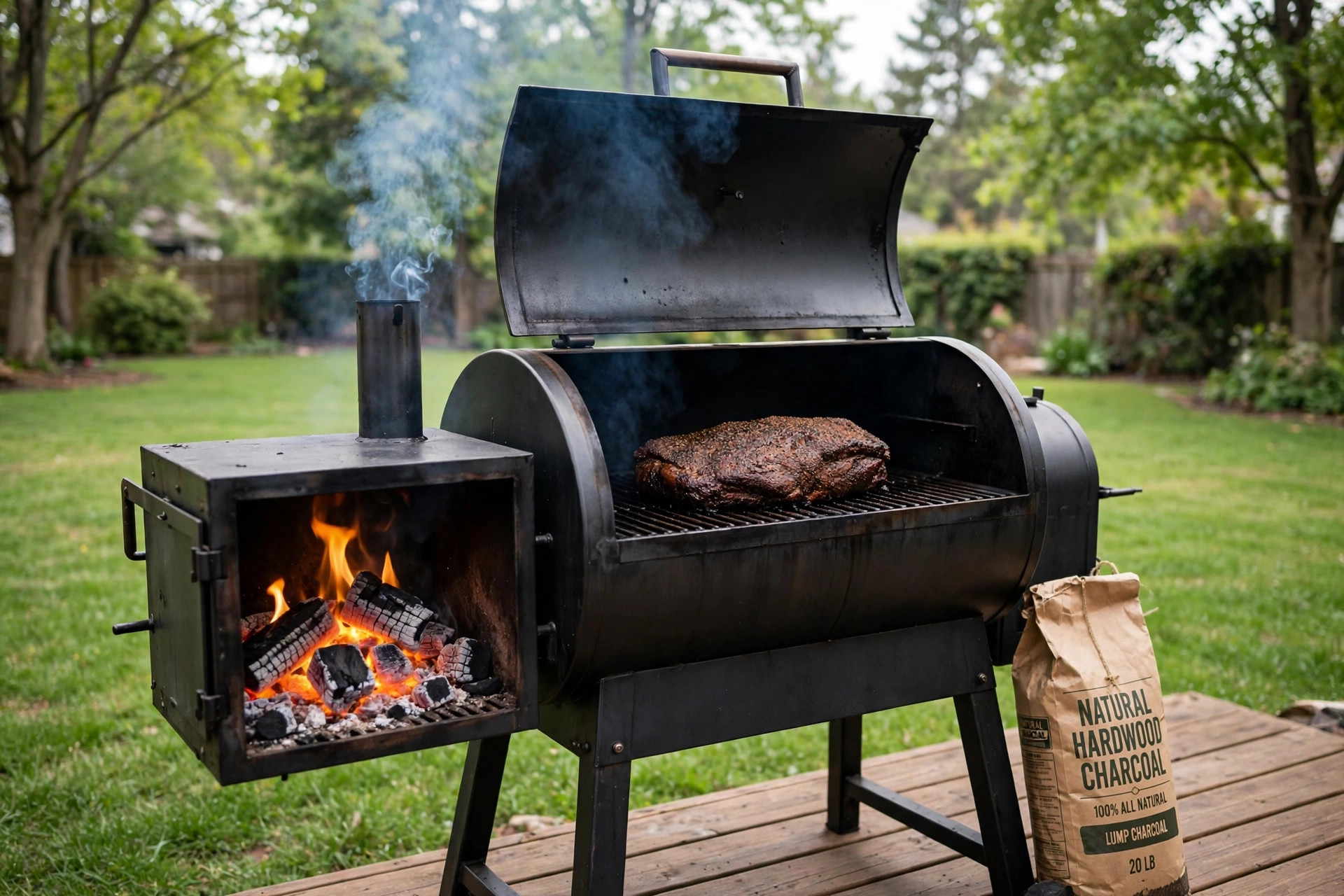
Lump charcoal is real wood that has been burned down to carbon. Nothing is added. It lights fast and burns hot. It gives a clean, light smoke flavor. Many competition cooks prefer it. The downside is uneven piece size. One bag may hold big chunks and fine dust. That mix burns unevenly. For a long brisket cook, sort the bag. Use the large pieces for the fire. Save the dust for the grill.
Briquettes
Briquettes are pressed blocks of charcoal dust and starch. Every piece is the same. They light slower but burn very even. They are the easiest fuel for a beginner. The classic long-cook method, the snake method, uses briquettes. Cooks lay them in a long row around the smoker. The fire creeps along the row for ten hours or more.
Buy briquettes with no lighter fluid added. Match-light types contain chemicals. Those chemicals can flavor the meat. Plain blue-bag briquettes are the safe pick. Many best charcoal for smoking brisket reviews rank standard briquettes high for steadiness. They are the workhorse of the backyard.
Binchotan and Specialty Fuels
Binchotan is a Japanese white charcoal. It burns extremely hot and very long with almost no smoke. It costs much more than lump or briquettes. It suits short hot grilling more than a long brisket smoke. It is a luxury, not a need.
Coconut shell charcoal is another option. It burns long and leaves little ash. It is popular in some parts of the world. For most American cooks, good lump or briquettes do the job at a fair price.
Cost and Price: What You Should Pay
Charcoal is one of the smaller costs of a brisket cook. The meat itself costs far more. Still, prices vary enough to matter over a season of cooking.
A twenty-pound bag of standard briquettes often sells for a modest price at big stores. Sale prices in spring can cut that further. Premium lump charcoal costs roughly twice as much per pound. A twenty-pound bag of good lump may cost what forty pounds of briquettes cost.
Think in cost per cook, not cost per bag. A long brisket cook may use twelve to eighteen pounds of fuel. The difference between cheap and good charcoal for one cook is only a few dollars. The meat costs fifty dollars or more. Saving three dollars on fuel while risking a fifty-dollar brisket is a bad trade.
Bulk buying helps. Some stores sell two-packs of large bags at a discount. If you cook often, stock up during spring sales. Keep the math simple. Divide the bag price by the bag weight. That gives the price per pound. Compare bags that way, not by the size of the bag.
How to Set Up Your Smoker for a Long Cook
Good charcoal still needs a good setup. The fire must get air but not too much. Here is a simple method that works in most charcoal smokers.
Start with a full basket of unlit charcoal. Use large pieces on the bottom. Fill the gaps with medium pieces. Leave the dust out. Bury a few chunks of smoking wood in the pile. Oak and hickory suit brisket well. Fruit woods like cherry give a milder taste.
Light only a small part of the fuel. Many cooks light ten to fifteen briquettes in a chimney starter and pour them on one side of the pile. This is called the minion method. The lit coals slowly light their neighbors. The fire spreads over hours. The smoker climbs to 225 degrees and holds there.
Set the vents before the meat goes on. Start with the intake vent about one quarter open. Let the smoker settle for thirty minutes. Small moves of the vent make big changes in heat. Do not chase the needle. A swing of ten degrees either way is fine.
Place a water pan in the smoker if it has one. The water steadies the heat and keeps the air moist. Refill it with hot water when it runs low.
Put the brisket on only when the smoke runs thin and blue. Thick white smoke means the fire is still settling. Wait for the clean smoke. That patience pays off in flavor. For more on fire control, see our guide on how to keep a charcoal grill lit longer.
Care and Upkeep: Storing and Handling Charcoal
Charcoal is tough but it hates water. A bag left in the rain is ruined. Damp charcoal lights poorly and burns with bad smoke. Store every bag indoors or under a dry cover. A garage shelf or a sealed bin works well.
Keep bags off damp concrete. Concrete sweats in warm weather. Set bags on a pallet or a shelf. Once a bag is open, roll the top tight and clip it shut. Some cooks pour open bags into plastic bins with lids. That keeps out damp air and pests.
Sort your lump before a big cook. Shake the bag gently. Pull out the big chunks for the smoker. Put the small bits in a bucket for the grill. This takes five minutes. It makes the long cook far more even.
Clean out old ash before each cook. Ash blocks airflow. A smoker full of ash from last week will not hold heat today. Dump the ash pan and brush the grates. Check the vents for stuck ash too. A clean smoker is a steady smoker.
Safety First
Charcoal fire is real fire. Treat it with respect. Never burn charcoal indoors or in a garage. Charcoal makes carbon monoxide. That gas has no smell. It can kill in a closed space. Keep the smoker outside, away from the house wall.
Place the smoker on a flat, non-burning surface. Keep it away from dry grass, wooden decks railings, and low branches. Have a spray bottle of water for small flare-ups. Keep a fire extinguisher within reach for big ones.
Ash stays hot longer than most people think. Coals can stay hot for two days. Put used ash in a metal can with a lid. Keep the can away from the house. Do not put ash in a paper bag or a plastic bin. Wait at least three days before you throw ash in the trash.
Wash your hands after handling charcoal. Wear gloves when you load the smoker. Keep children and pets away from the hot cooker. A smoker looks harmless from a distance. Its metal skin can burn skin on contact.
Frequently Asked Questions
How much charcoal do I need to smoke a brisket?
Plan on twelve to eighteen pounds for a full packer brisket. The exact amount depends on your smoker and the weather. Cold and wind burn more fuel. A well-sealed smoker burns less. Buy a twenty-pound bag so you have extra. Running out of fuel at hour ten is a cook-ruiner.
Lump or briquettes: which is better for brisket?
Both work well. Briquettes win on steady heat and ease of use. Lump wins on clean flavor and high heat. Many skilled cooks use both. They build the fire with briquettes and add lump on top. If you must pick one as a beginner, pick plain briquettes. They forgive small mistakes.
How long does charcoal last in a smoker?
A full load of good briquettes can hold 225 degrees for eight to twelve hours. Lump burns faster, often six to nine hours per load. Weather, smoker size, and vent settings change these numbers. Learn your own smoker. Keep notes on each cook. After three cooks you will know your fuel use by heart.
Can I add unlit charcoal during a long cook?
Yes. Add it in small amounts through the side door. Do not dump a full chimney of unlit coals at once. That drops the heat and makes thick smoke.
Does cheap charcoal make brisket taste bad?
It can. Very cheap charcoal may hold fillers, scrap wood, or chemical starters. Those add harsh or odd flavors. The meat cooks for twelve hours in that smoke. Bad smoke has twelve hours to sink in. Mid-price natural charcoal is the sweet spot. You do not need the most costly bag. Avoid the cheapest one.
How do I light charcoal for low and slow smoking?
Use a chimney starter and newspaper. Fill the chimney only one quarter full. Light the paper and wait until the coals glow. Pour them onto one side of the unlit pile. Never use lighter fluid on a smoker. The fluid taste lingers for hours. An electric starter also works and adds no taste at all.
A Final Word
The best charcoal for smoking brisket is the one that burns long, burns even, and burns clean. Read the bag. Pick natural fuel. Sort out the dust. Set up the fire with care. Keep notes on each cook. Do these simple things and your brisket will reward you with tender slices and a deep smoke ring.
For cooks who want to try other cuts on the same fuel, our guide on how to smoke ribs on a charcoal grill uses many of the same fire skills. And if you are still choosing your cooker, see our look at the best offset smoker under 500 dollars before you buy.
For more background, see AmazingRibs.com, Consumer Reports, and Char-Broil. For more background, see Traeger, Napoleon, and Big Green Egg. See Broil King for more detail.
References
AmazingRibs.com. (n.d.). Barbecue and grilling science. https://www.amazingribs.com Big Green Egg. (n.d.). Kamado grills and outdoor cooking. https://www.biggreenegg.com Broil King. (n.d.). Gas and charcoal grills. https://www.broilkingbbq.com Char-Broil. (n.d.). Gas and charcoal grills. https://www.charbroil.com Consumer Reports. (n.d.). Product reviews and ratings. https://www.consumerreports.org Napoleon. (n.d.). Fireplaces, grills, and heating products. https://www.napoleon.com Traeger. (n.d.). Wood pellet grills. https://www.traeger.com Weber. (n.d.). Grills and outdoor cooking. https://www.weber.com
Was this guide helpful?

About Sarah Mitchell
The My Garden US editorial team writes practical, in-depth home and garden guides for American homeowners — tested advice, no fluff.
You May Also Like
Best Smoker Pellets for Chicken Reviews
April 9, 2026 0 views
Best Kamado Grill for the Money: What to Know Before You Buy
May 9, 2026 0 views
Best Outdoor Utensil Holder for Grill: How to Choose One That Lasts
April 4, 2026 0 views