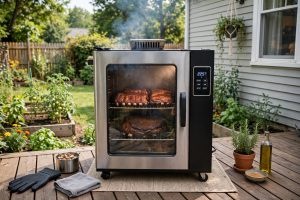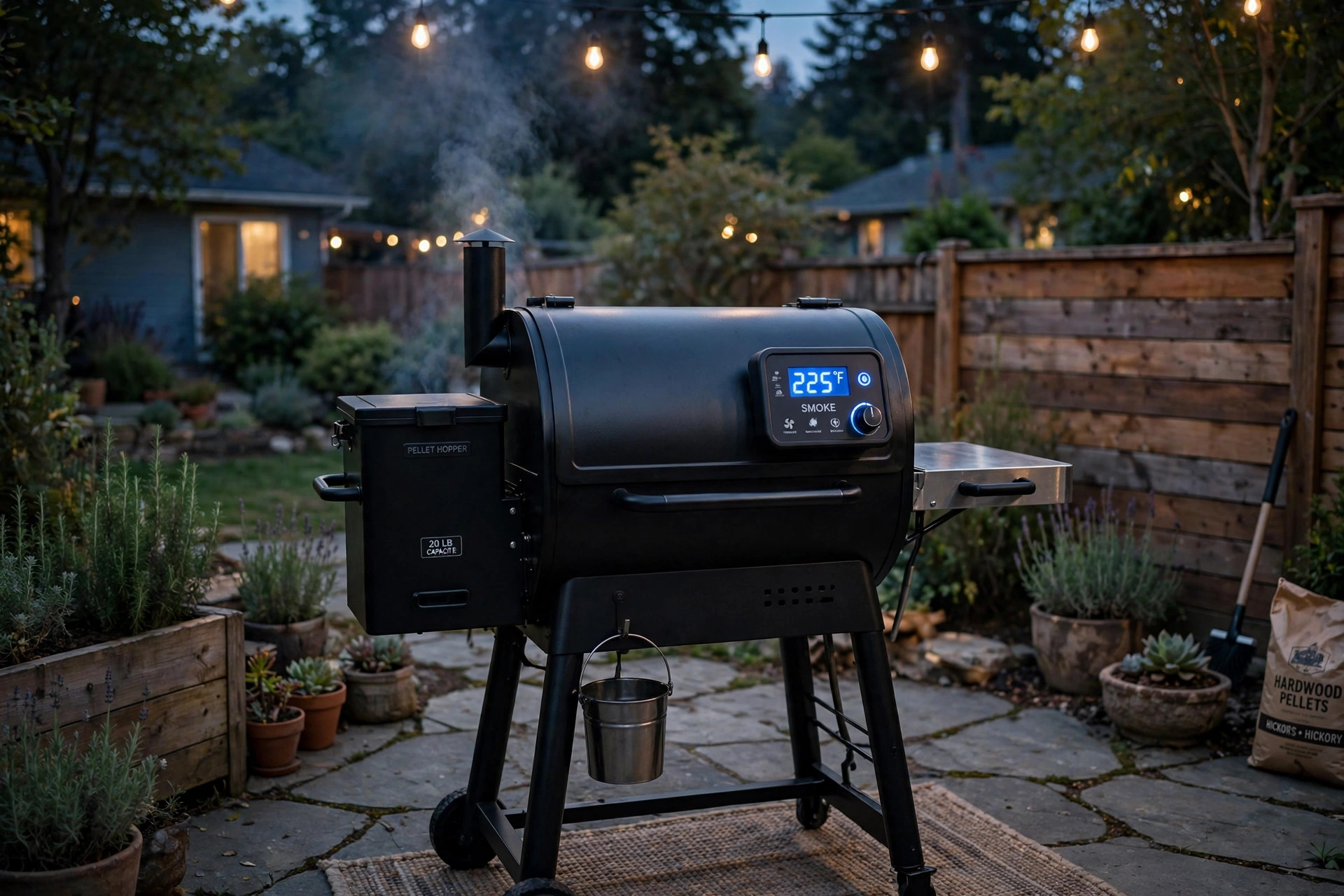

This pellet grill error codes troubleshooting guide is for any owner who has stared at a blinking code on the control panel and wondered what to do next. A pellet grill is a fine machine. It feeds wood pellets with an auger, lights them with a hot rod, and holds heat with a fan and a computer brain. When something goes wrong, the control panel shows a code. The code is a hint, not a verdict. Most of these problems have simple fixes you can do yourself.
This guide explains the most common error codes, what they mean, and how to fix them. It also covers upkeep that keeps codes from coming back. Work through it one step at a time. Do not force parts or skip the safety rules.
Why Error Codes Matter
A pellet grill does three jobs at once. It moves fuel, it makes fire, and it holds a steady heat. The control board watches each job. If the fire pot has no flame, if the heat runs too high or too low, or if a part draws too much power, the board shows a code and often shuts the grill down. This is not a fault. It is protection. The code tells you where to look.
Many owners panic when they see an unfamiliar code and assume the grill is broken. Most of the time it is not. A low pellet level, a dirty fire pot, a wet bag of pellets, or a power blip can trigger a code. Fix the cause, clear the code, and the grill works again. Learning the codes saves time, money, and ruined meals.
Common Pellet Grill Error Codes and What They Mean: Pellet Grill Error Codes Troubleshooting Guide
Each brand uses its own list of codes. Your manual is the final word. Still, most pellet grills share the same family of codes. Below are the ones owners meet most often.
Temperature and Heat Errors
Codes like ERR, ErH, HEr, or a high-temperature warning mean the grill read a heat level outside its safe range. The probe may be dirty, blocked by grease, or failing. A grease fire can also drive the heat up fast.
First, check the cook chamber. Look for flames or heavy smoke. If you see an actual fire in the grease pan, close the lid, unplug the grill, and keep your distance until it cools. If there is no fire, the heat probe is the likely cause. Clean the probe with a soft cloth and a mild cleaner. Make sure the probe wire is fully seated in its plug. Restart the grill and watch the reading. If the code returns, the probe may need to be replaced.
Low-temperature codes, such as ErL or LE, mean the grill could not hold heat. The fire pot may be empty of pellets, the pellets may be damp, or the igniter may have failed. This code often appears during startup on a cold day.
Auger and Feed Errors
Auger codes tell you the fuel system has trouble. The auger is the screw that moves pellets from the hopper to the fire pot. Common codes are ER1, AUg, or a jammed-auger warning. The most common cause is a pellet jam. Dust from cheap or broken pellets can clog the tube. Damp pellets swell and stick together.
Empty the hopper and look inside. Pull out any swollen or dusty pellets. Clear the tube by hand or with the tool your maker suggests. Never stick your fingers near the auger while the grill has power. Some grills let you run a feed cycle to push the jam through. Do this only with the power connected as the manual says, and keep clear of moving parts.
A good pellet grill error code reset start is to remove old pellets after a jam. Fresh, dry pellets feed far better than old ones.
Igniter, Fan, and Power Errors
If the fire never starts, the code often points at the igniter. The hot rod lights the pellets. A failed rod shows as an igniter code or a flame-out code. Fans have their own codes. If the fan does not spin, the fire starves for air.
Check the basics first. Is the grill plugged in? Is the outlet working? Is the power cord whole and dry? Pull the plug and look at the fan blades. Ash and grease can freeze them. Clean them gently. Reconnect and run the startup cycle. You should hear the fan hum and see the rod glow. If the rod stays dark, it has likely burned out and needs replacement. This is a common repair part and costs little.
How to Troubleshoot Your Pellet Grill Step by Step
Use this simple order every time a code appears.
Check the Basics First
Start with the fuel and the power. Open the hopper and look at the pellet level. Top it up with fresh, dry pellets. Many owners store pellets in a damp shed. Moisture is the number one cause of feed codes. Keep pellets in a sealed bin.
Check the outlet and the cord. A loose plug or a tripped breaker will stop the startup cycle cold. If the grill shares a circuit with other heavy loads, move it to its own outlet. Many makers suggest a grounded, outdoor-rated extension cord of the right gauge.
Read the Code and Find the Cause
Write down the exact code and any number after it. Open your manual to the error code table. Match the code to the cause. Then inspect that part of the grill.
For heat codes, inspect the probe and the grease system. For feed codes, inspect the hopper and auger tube. For flame-out codes, inspect the fire pot and igniter. Work on the area the code points to. Do not take the whole grill apart.
Clean, Clear, and Reset
Most fixes end with cleaning. Vacuum the fire pot and the cook chamber. Scrape grease from the drip pan and the heat shield. Clear the auger tube. Then reset the control board. Many boards reset by holding the power button for a few seconds. Others reset when you unplug the grill for five minutes. Your manual gives the exact steps for a wood pellet grill maintenance reset.
After the reset, run a full startup cycle with the lid open until the fire is steady. Close the lid and let the grill reach its set heat. If the code stays away for a full cook, you have fixed it.
Types of Pellet Grill Problems
Pellet grill faults fall into three groups. Knowing the group speeds up the fix.
Fuel and Feed Problems
These are the most common. Pellets absorb water fast. A bag left open in humid air can swell in days. Swollen pellets jam the auger and smother the fire. Dusty pellets do the same. The fix is simple. Use fresh pellets, store them sealed, and clean the hopper now and then. Sift out dust when you fill the hopper. Cheap pellets often carry more dust than good brands. A better pellet can end a cycle of feed codes.
Heat and Flame Problems
These include flame-outs, runaway heat, and poor heat hold. Grease is the usual villain. A greasy drip pan can catch fire and spike the heat. A dirty heat shield blocks airflow and cools the cook zone. A failing probe lies about the heat and the board overcorrects.
Clean the grease system every few cooks. Replace foil liners each time. Clean the probe with each deep clean. If the grill cannot hold heat on a windy day, place it out of the wind. Wind steals heat from the thin steel body.
Electronic and Sensor Problems
These are less common but harder to fix. A failed probe, a dead fan, a burned-out igniter, or a bad control board each shows its own code. Start with the wires. Loose plugs and chewed wires cause strange codes. Seat every plug firmly. If a part shows damage, order the exact replacement part for your model. Makers like Char-Broil and Napoleon sell common parts direct, and big stores carry them too.
If the control board itself has failed, the grill may show random codes or none at all. Board replacement is a bigger job. Call the maker before you buy one. They can often confirm the fault from your notes.
Cost and Price of Repairs
Most pellet grill repairs cost little. A new igniter rod often costs between fifteen and forty dollars. A heat probe costs about the same. A fan runs twenty to sixty dollars. These parts are made to be swapped by owners, and most makers sell them online.
A new auger motor costs more, often sixty to one hundred twenty dollars. A control board can cost one hundred to three hundred dollars depending on the model. These are rare failures. Labor at a shop adds fifty to one hundred dollars an hour, so learning to swap small parts saves real money.
Think of upkeep as the cheap option. A bag of good pellets, a shop vacuum, and an hour of cleaning each month cost far less than one repair call. Read independent product ratings before you buy parts or a new grill, so you know which brands hold up well.
Care and Upkeep to Prevent Errors
A clean pellet grill throws fewer codes. Make these habits part of your cooking.
Vacuum the fire pot and the ash after every two or three cooks. Ash chokes the fire and fools the probe. Scrape the drip pan and swap the foil liner each cook. Grease buildup is a fire risk and a code risk.
Store pellets indoors in a sealed container. Never leave the hopper full for weeks in humid weather. Old pellets swell and jam. Before a long cook, fill the hopper fresh.
Deep clean the whole grill every month of heavy use. Take out the grates, the drip pan, and the heat shield. Vacuum everything. Wipe the probe. Check the auger tube for dust. Look at the wires for wear. This one hour of work stops most feed codes, heat codes, and flame-outs.
Cover the grill when it is not in use. Rain kills electronics. Snow adds weight and moisture. A good cover costs little and adds years to the control board. Browse covers and care gear at a home improvement store or your grill maker.
While you care for the grill, care for the cook too. A best bbq apron for grill masters keeps grease off your clothes, and a best bbq rub for ribs homemade makes the meat shine. If you ever wonder about smoke flavor, read our pellet grill vs offset smoker flavor comparison to see how pellet smoke stacks up against stick burners.
Safety Rules
A pellet grill is a real fire appliance. Respect it.
– Keep the grill on a flat, hard surface away from the house, deck rails, and low trees. – Never move a hot grill. Let it cool fully first. – Unplug the grill before you touch the auger, fan, or igniter. – Keep a fire extinguisher or a box of baking soda nearby. Never use water on a grease fire. – If you smell gas or see smoke from the hopper, unplug the grill and step back. – Do not use the grill indoors, in a garage, or under a low roof. – Keep children and pets away from the hot grill.
Grill makers publish clear safety pages. Broil King and The Spruce Eats both keep grilling safety guides worth reading before your first long smoke. The crew at AmazingRibs also explains fire and heat science in plain words.
Frequently Asked Questions
Why does my pellet grill show an error code right at startup?
Most startup codes come from the fire pot. Old ash may fill the pot, or the igniter may be weak. Vacuum the pot, check that the rod glows, and try again. Cold, damp pellets also slow the start. Use fresh fuel.
What does a flame-out code mean?
A flame-out code means the fire went out during a cook. The hopper may have run empty, the pellets may be damp, or a gust of wind may have killed the flame. Refill with dry pellets, restart, and shield the grill from wind.
Can I reset the error code without fixing the cause?
You can clear most codes with a reset, but the code will return if the cause remains. Clear the jam, clean the probe, or replace the failed part first. A reset is the last step, not the fix.
How often should I clean my pellet grill?
Vacuum the fire pot every two or three cooks. Clean grease parts every cook. Do a deep clean each month in heavy season. Heavy ash and grease cause most error codes, so steady cleaning is the best prevention.
Are error codes the same on every brand?
No. Each maker uses its own codes. The causes are much alike, but the letters differ. Always check your own manual first. This guide covers the common families of codes, not any one brand list.
When should I call the maker instead of fixing it myself?
Call when the code points at the control board, when you see burned wires, or when a new part does not fix the code. The maker can confirm the fault and keep your warranty valid. Do not open sealed electrical parts if the warranty is still good.
Final Word
Error codes look scary, but they are useful. They point you to the exact part that needs help. Most fixes take ten minutes and no new parts. Clean the grill, feed it dry pellets, check the wires, and reset the board. Your pellet grill will reward you with steady heat and fine smoke. Keep this guide near the grill, and the next blinking code will be a small job, not a lost cook.
References
AmazingRibs.com. (n.d.). Barbecue and grilling science. https://www.amazingribs.com Broil King. (n.d.). Gas and charcoal grills. https://www.broilkingbbq.com Char-Broil. (n.d.). Gas and charcoal grills. https://www.charbroil.com Consumer Reports. (n.d.). Product reviews and ratings. https://www.consumerreports.org Napoleon. (n.d.). Fireplaces, grills, and heating products. https://www.napoleon.com The Home Depot. (n.d.). Home improvement products. https://www.homedepot.com The Spruce Eats. (n.d.). Recipes and cooking guides. https://www.thespruceeats.com Traeger. (n.d.). Wood pellet grills. https://www.traeger.com Weber. (n.d.). Grills and outdoor cooking. https://www.weber.com
Was this guide helpful?

About Robert Taylor
The My Garden US editorial team writes practical, in-depth home and garden guides for American homeowners — tested advice, no fluff.
You May Also Like
Best Grill Mats for Gas Grills: What to Buy and Why
April 29, 2026 0 views
Charcoal Grill Deals Near Me USA: Where to Find the Best Bargains
August 18, 2026 0 views
How to Grill Steak on Gas Grill: A Plain Guide to Juicy Steaks
January 9, 2026 0 views