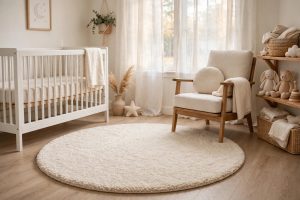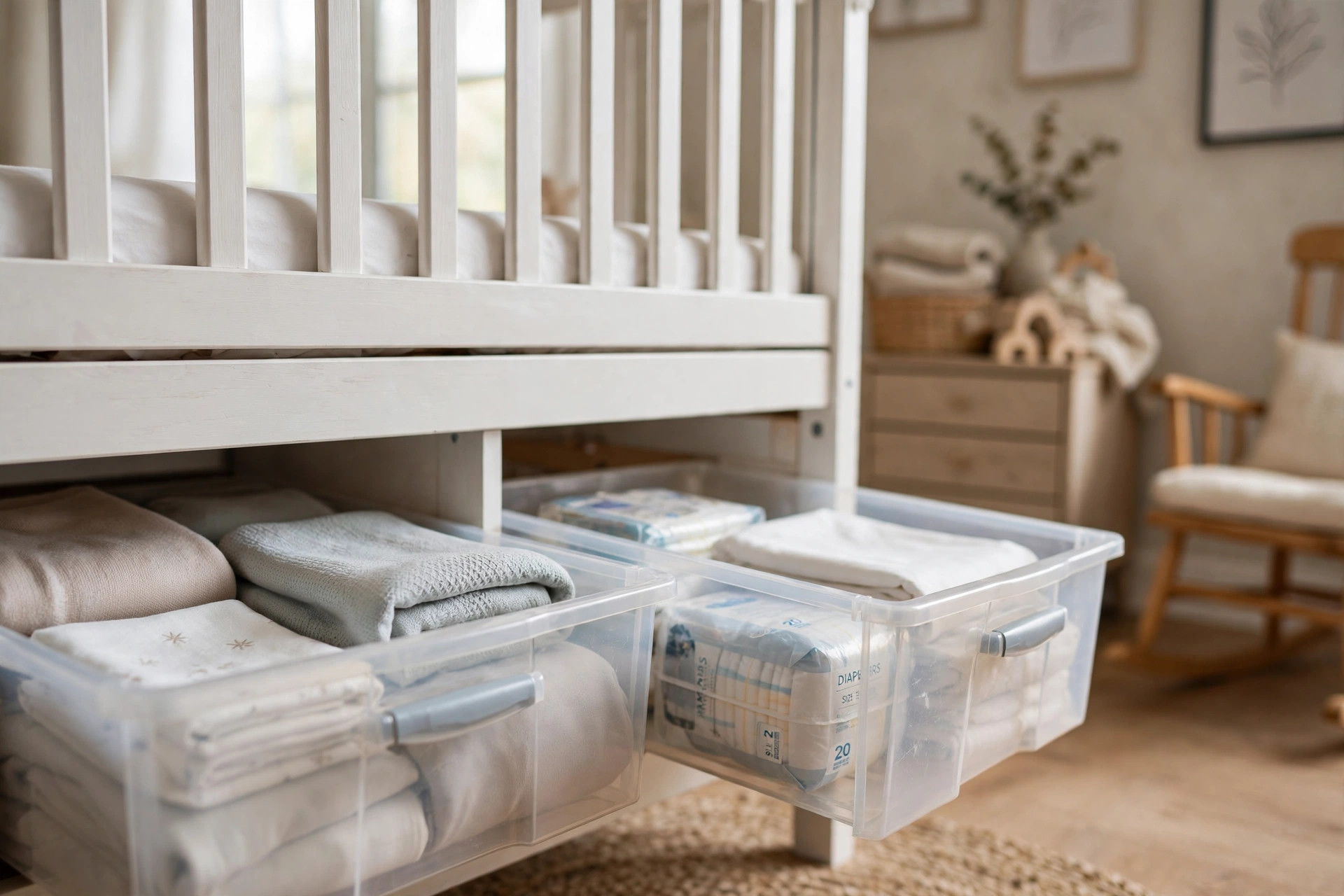

A new baby brings many small things. Diapers, wipes, blankets, sheets, spare clothes, and lotions fill every corner of the nursery. The space under the crib is often wasted. Parents walk past it every day and never think of it as storage. That is a mistake. Nursery storage drawers under crib space turn this dead space into useful room. They slide in and out with ease. They keep supplies within reach during night feedings. They help a small nursery feel calm and orderly. This guide explains why these drawers matter, what kinds exist, how to choose them, what they cost, and how to use them with safety in mind.
Why It Matters
Babies need more gear than their small size would suggest. A nursery closet can only hold so much. A dresser takes up floor space. When the room is small, every square inch counts. The area under the crib is often the largest unused patch of floor in the nursery. Most cribs stand on legs that leave six to ten inches of clearance. That gap is deep enough for flat drawers and wide enough to run the full length of the crib. Used well, it can replace a small shelf or half a dresser.
Night feedings are another reason. A baby cries at three in the morning. If fresh diapers, a clean sheet, and a swaddle are stored in drawers under the crib, the parent can reach them without crossing the room. This saves time and keeps the baby drowsy.
Order matters in a nursery too. A cluttered room feels stressful. Small drawers give each item a home. Sheets go in one drawer. Blankets go in another. Diapers and wipes go in a third. When everything has a place, the parent spends less time searching.
What to Look For and How to Choose: Nursery Storage Drawers under Crib Space
Measure first. The most common error is buying drawers that do not fit. Measure the height from the floor to the lowest rail of the crib. Subtract one inch so the drawer slides freely. Measure the width between the legs. Measure the depth from front to back. Write these numbers down. Take them to the store or keep them open while shopping online. A drawer that is half an inch too tall is useless.
Check how the drawer moves. Wheels or casters make a drawer easy to pull. Felt pads or glides make it slide quietly. Quiet movement matters when the baby is sleeping. Some drawers have open tops. Some have lids. Open tops are easier for quick access. Lids keep dust out. Think about which matters more in your home.
Look at the material. Plastic drawers are light and easy to clean. Wicker or fabric baskets look warm and soft but can be harder to dust. Wood drawers are strong and handsome but cost more. For under a crib, plastic or wood usually works best because they slide with ease and wipe clean.
Think about what you will store. Bulky blankets need tall, wide drawers. Flat sheets fit in shallow ones. Divide your list into groups. Buy enough drawers to cover each group. It is better to have one extra drawer than to run out of space later.
Consider visibility. Clear plastic lets you see what is inside without opening the drawer. This is a real help at night. Fabric drawers hide clutter and look tidy. Choose based on how neat you like the room to look and how much you value speed.
Look for smooth edges. Drawers sit low to the floor. They sit near where a crawling baby may one day reach. Sharp corners and rough edges can scratch. Run your hand along the rim before you buy. If you shop online, read reviews that mention the finish and edges. A smooth, rounded edge is the mark of a well-made drawer.
Check for crib safety rules before you place anything under the crib. The drawers must not block airflow or make the crib unstable. They should slide fully under the frame and never stick out where a toddler could trip on them.
Types and Options
Rolling drawer carts are a popular choice. These are low carts with two or three drawers on wheels. They roll out with one hand. Many models are sized to fit under a standard crib. Look for locking wheels so the cart stays put.
Flat fabric bins are soft, collapsible boxes with handles. They are light and quiet and come in many colors. Some have dividers for small items. They have no hard edges, which some parents prefer. The downside is that they can sag when empty and hide dust.
Wood under-crib drawers are the classic choice. Many are made to match a specific crib brand. They are sturdy and slide on wooden runners. Some have dust covers on top. The price is higher than plastic or fabric, but the quality shows. Check nursery furniture collections if you want a matching set.
Plastic stackable drawers are the budget choice. They come in sets of two or three and wipe clean with a damp cloth. Clear models let you see the contents. They are cheap enough to replace as the baby grows.
Built-in trundle drawers come with some cribs. The crib maker builds the drawer into the frame. These fit perfectly because they were designed for the crib. If you are buying a new crib, ask the seller about this option. A wide range of nursery drawers is also sold online if your crib has no built-in model.
Cost and Price
Prices vary widely. Simple plastic flat drawers cost between ten and twenty-five dollars for a set of two. Fabric bins run from fifteen to forty dollars depending on size and brand. Rolling drawer carts with three drawers usually cost thirty to sixty dollars. Wood under-crib drawers cost sixty to one hundred fifty dollars, and matching sets from furniture brands can cost more.
Do not judge by price alone. A cheap drawer that breaks in two months costs more than a good one that lasts for years. Read reviews for reports of cracked plastic, broken wheels, or drawers that stick. Spend a little more on the drawer that holds daily supplies.
Sales and store brands can cut the cost. Major retailers often discount storage in January and at back-to-school time. Storage ideas for small nurseries from flat-pack furniture makers tend to cost less than specialty baby brands. Check the clearance section of baby stores too.
Remember to count hidden costs. Some drawers need assembly. Some need extra casters sold apart. Shipping can add ten to twenty dollars for online orders. If you buy in a store, bring your measurements to avoid a second trip.
Care and Upkeep
Clean the drawers often. Dust gathers under cribs faster than in other spots. Pull the drawers out once a month. Wipe the inside with a damp cloth. Let them dry before sliding them back. This keeps baby supplies fresh. It also lets you check for dampness, which can cause mold.
Wash fabric bins when they look dull. Most fabric bins can be hand washed with mild soap. Let them air dry fully. Do not put them back under the crib while damp. Moisture under a crib is hard to spot and easy to ignore.
Check wheels and glides twice a year. Wheels collect hair and thread. Pull off the wrapped hair with tweezers or small scissors.
Rotate supplies with the seasons. Heavy blankets go in winter. Light sheets go in summer. When you swap them, take the chance to clean the drawer. Toss items the baby has outgrown. This keeps the drawers useful and stops them from filling with junk.
If a drawer cracks or breaks, replace it. A broken drawer with sharp edges has no place in a nursery.
Safety
Safety comes first in any nursery. Under-crib drawers are safe when chosen and placed with care. Start with the crib safety rules from the Consumer Product Safety Commission. The crib itself must meet current federal standards. Drawers do not change that, but they must not interfere with it.
Leave airflow clear. A baby breathes near the mattress. Nothing stored under the crib should push up against the mattress support or block air moving around the frame. Keep drawers low and flat. Do not stack items on top of the drawers under the crib.
Keep the path clear. Drawers should slide fully under the crib when not in use. A drawer left half open is a trip hazard for a tired parent.
Watch for small parts. Some drawers come with knobs, labels, or caster locks that can come loose. Check them often. A loose knob near a crawling baby is a choking risk. Tighten screws. Replace missing caps. Choose drawers with built-in handles rather than added knobs when the baby is close to crawling age.
Avoid heavy loads. Under-crib drawers are not shelves. Do not pile heavy books or large bottles in them. Light and medium items are best.
Keep cords and plugs away. Some parents plug a monitor or lamp near the crib. Drawers that slide back and forth can catch cords. Keep all cords well clear of the drawer path. The American Academy of Pediatrics guidance on safe sleep also warns against soft bedding and loose items in the crib itself, so keep the drawers strictly outside the crib frame.
Once the baby starts to crawl and pull up, rethink the setup. A curious toddler can open drawers, pull out contents, and climb on them. Move small or sharp items to higher storage and consider drawers with child-resistant latches. Newborn essentials checklists cover the early months, but safety needs change as the baby grows, so review your storage every few months.
Frequently Asked Questions
Can any drawer fit under any crib? No. Crib heights vary. Some cribs sit very low to the floor. Measure the clearance before you buy. Many under-bed drawers sold for adult beds are too tall for cribs. Look for drawers made for cribs, or for low-profile storage. Bring your measurements when you shop.
What should I store in under-crib drawers? Store the items you reach for most. Spare crib sheets, diapers, wipes, swaddles, and light blankets are good choices. Keep one drawer for night supplies so you can reach them in the dark.
Are fabric bins safe under a crib? Yes, when used with care. Fabric bins are soft and light. They should sit flat on the floor and slide fully under the frame. Wash them often so dust does not build up. Once the baby crawls, make sure the baby cannot pull heavy bins out. Nursery organization ideas often suggest fabric bins because they are quiet and soft.
Do I need drawers that match my crib? No, but matching sets look nice. What matters is fit, safety, and ease of use. A plain plastic drawer that fits well beats a matching wood drawer that sticks. Crib buying guides recommend measuring first and choosing the crib, then finding storage to fit it.
How do I keep the drawers from getting dusty? Dust is the main problem with under-crib storage. Choose drawers with lids if dust bothers you. Vacuum under the crib once a week and wipe the drawers once a month. Small-space storage guides often note that enclosed drawers stay cleaner than open bins in tight rooms.
When should I stop using under-crib drawers? There is no fixed age. Many parents use them through the toddler years. Reassess when the child can open drawers and pull items out. Move anything unsafe to higher places. If the child climbs on the drawers, remove them or secure them. The drawers themselves can then serve in a closet or under a toddler bed guard setup in the next stage.
How do under-crib drawers compare to a dresser? Drawers under the crib use space that would otherwise sit empty. A dresser uses floor space. In a small room, the under-crib drawers may replace a small dresser entirely. In a larger room, use both. A nursery hamper with lid for odor control pairs well with the drawers to keep laundry tidy too.
Can I use the drawers for toys? Yes. Shallow drawers work well for small toys, books, and stuffed animals. Open bins make it easy for a toddler to pick toys and put them back. Keep toys with small parts out of reach of babies. A kids room organizer for closet and shelves can take over toy storage as the child grows.
A Short Final Word
Nursery storage drawers under crib space are a simple answer to a common problem. Babies bring clutter. Nurseries are often small. The space under the crib is there, empty and waiting. Low drawers fill it with purpose. They keep night supplies close. They keep the room tidy. They cost little and last long. Measure your crib. Choose smooth, sturdy drawers. Keep them clean and closed. Watch safety as your baby grows. Do these things, and the small space under the crib will serve your family well from the first night home to the day the crib is taken down. For the room around the crib, nursery design ideas and soft touches like nursery wall stickers for baby boy jungle can finish the space without adding clutter.
References
American Academy of Pediatrics. (n.d.). HealthyChildren.org. https://www.healthychildren.org Apartment Therapy. (n.d.). Home design ideas and inspiration. https://www.apartmenttherapy.com Consumer Reports. (n.d.). Product reviews and ratings. https://www.consumerreports.org HGTV. (n.d.). Home and garden ideas. https://www.hgtv.com IKEA. (n.d.). Home furnishings. https://www.ikea.com Pottery Barn Kids. (n.d.). Kids furniture and decor. https://www.potterybarnkids.com The Spruce. (n.d.). Home and garden advice. https://www.thespruce.com U.S. Consumer Product Safety Commission. (n.d.). Product safety information. https://www.cpsc.gov Wayfair. (n.d.). Furniture and home goods. https://www.wayfair.com What to Expect. (n.d.). Pregnancy and parenting guidance. https://www.whattoexpect.com
Was this guide helpful?

About Lisa Anderson
The My Garden US editorial team writes practical, in-depth home and garden guides for American homeowners — tested advice, no fluff.
You May Also Like
Nursery Ceiling Fan with Light for Air Circulation: A Parent’s Guide
September 9, 2026 0 views
A Firm Crib Mattress for Safe Infant Sleep: What Parents Should Know
May 15, 2026 0 views
Nursery Wall Hanging Macrame for Boho Decor: A Warm Welcome for the Baby Room
September 24, 2026 0 views