
Two children sharing one room can be a joy. It can also be a test of how well a room is planned. A single dresser that holds the clothes of two children is often the piece that makes the whole room work. When the dresser is too small, clothes pile up on beds and floors. When it is too tall or unstable, it becomes a danger. The best kids dresser for shared sibling room use is roomy, sturdy, low, and easy for small hands to use.
This guide walks you through what to look for, the main types on the market, what you can expect to pay, how to keep the piece in good shape, and how to keep your children safe around it. You do not need to be a furniture expert. You only need a clear plan before you shop.
Why the Right Dresser Matters So Much
A shared bedroom has to do double duty. Two beds, two sets of school clothes, two sets of pajamas, sports gear, and winter layers all live in one space. The dresser is the backbone of that storage. If each child has clear, marked drawers, mornings go smoother. There are fewer fights over who owns which shirt. Clothes stay folded instead of heaped.
The wrong choice causes real problems. A narrow dresser with three shallow drawers will not hold the folded clothes of two growing children. Drawers that stick or slam can pinch small fingers. A tall, light dresser can tip forward when a child pulls out a full drawer or tries to climb it. Reports from safety groups show that tip-over accidents send thousands of children to emergency rooms each year. Guidance from the U.S. Consumer Product Safety Commission urges parents to anchor dressers to the wall and to pick stable, low pieces for rooms where children play.
A good dresser also protects your budget. Solid pieces last through years of daily use. Cheap, flimsy ones loosen, lose drawer slides, and end up replaced within two or three years. Spending a little more once is often cheaper than buying twice.
What to Look for in a Shared-Room Kids Dresser: Best Kids Dresser for Shared Sibling Room
Size and drawer count
Count the drawers before you count anything else. For two children, six drawers is a practical minimum. Eight is better. Each child should have at least three drawers: one for tops, one for bottoms, and one for underclothes and pajamas. Wide dressers beat tall dressers for shared rooms. A wide, low piece gives more floor space above it for storage and keeps the center of gravity low, which makes it harder to tip.
Measure your wall space first. Leave at least a few inches on each side of the dresser so drawers can open fully without hitting a bed frame or door. A piece that is 48 to 60 inches wide fits most shared rooms and holds a full wardrobe for two children. Depth matters too. Drawers that are 15 to 18 inches deep hold folded clothes well without swallowing small socks at the back.
Sturdy build and materials
Solid wood or high-grade plywood holds up best to daily use by children. Look at how the drawers are built. Dovetail joints or solid corner joints hold strong. Metal drawer slides that glide smoothly are better than plastic or bare wood tracks. Pull a drawer all the way out in the store if you can. It should move without wobbling or sticking.
Particleboard and medium-density fiberboard can work for lighter use, but they chip and swell faster in humid rooms. If you buy such a piece, keep it away from windows where rain can reach it. Check the finish. Low-VOC or water-based finishes give off fewer fumes in a small room where two children sleep.
Safety features
Safety is not an extra. It is the first thing to check. The best kids dresser for shared sibling room safety follows the voluntary ASTM F2057 standard, which sets stability rules for clothing storage units. Choose a piece that is wide and low rather than tall and narrow. Confirm that it ships with a wall anchor kit. Use the kit. Anchor the dresser to a wall stud with a proper screw, not just to drywall.
Rounded or softly beveled edges are kinder to heads and knees in a room where children play on the floor. Soft-close drawer slides stop drawers from slamming on small fingers. Locking or latch mechanisms are worth having on the top drawer if you store medicine, batteries, or small sharp items there. The American Academy of Pediatrics offers clear guidance on making children’s bedrooms safe, and anchoring heavy furniture sits near the top of that list.
Kid-friendly design
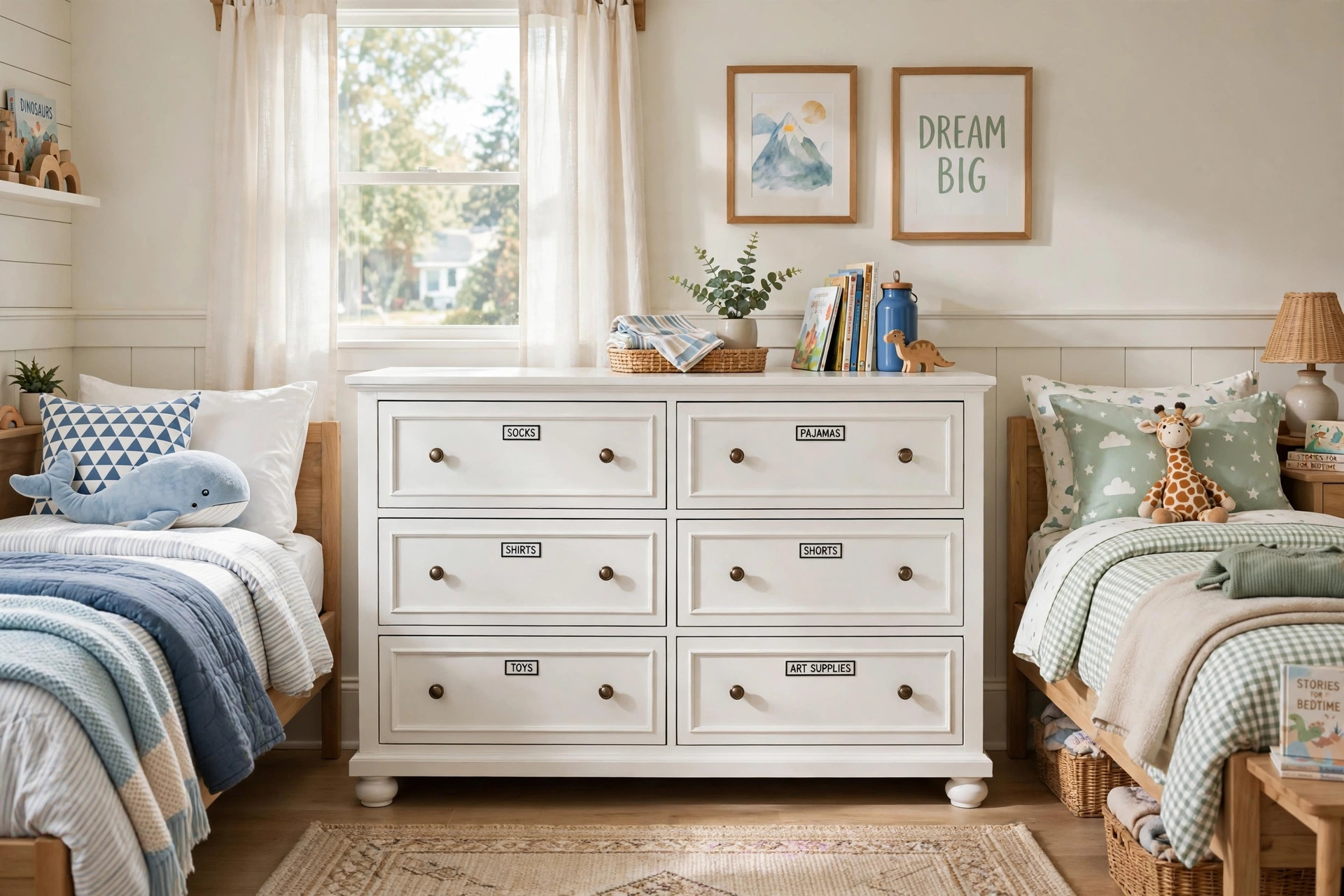
Drawers should open with one easy pull. Large knob or cup pulls are easier for small hands than thin bar handles or tiny knobs. Label holders or a simple system of picture labels let even young children find their own clothes. A dresser with two columns of drawers works well: give each child their own column and mark it with a color or a name tag.
Keep the top surface low enough that children can reach it. It doubles as a landing spot for a clock, a lamp, or folded clothes from the laundry. Avoid glass tops or sharp decor on a dresser in a children’s room.
Main Types of Kids Dressers for Shared Rooms
Wide horizontal dressers
The classic choice. Six to eight drawers spread across a wide body. Each child takes a side. These pieces are stable by nature because they are wide and low. They also offer a long top surface that can hold two lamps or a shared book stack. If you have the wall space, this is usually the best answer.
Double dressers with two columns
Some dressers are built as two clear columns of three or four drawers each. This design makes it easy to split the piece down the middle: left column for one child, right column for the other. It looks fair, which matters to siblings. Retailers such as Wayfair and IKEA carry many such models in a range of finishes.
Tall dressers
Tall, narrow dressers save floor space, but they are the least safe option for a children’s room. A tall piece with full drawers is top-heavy and tips more easily. If you must use one, it has to be anchored firmly to the wall, and heavy items should go in the bottom drawers. For two children sharing, two short dressers usually beat one tall one.
Dressers with changing tops
If one sibling is still in diapers, a kids dresser with changing top can serve both purposes. The changing tray lifts off when the baby years pass, leaving a standard dresser. Our guide to a kids dresser with changing top for the nursery explains what to check in these convertible pieces. This type suits families where the age gap is wide.
Dresser and hutch or mirror sets
Some sets add a hutch or a mirror on top. Mirrors must be bolted to the dresser and to the wall in a children’s room. A freestanding mirror that leans on the back is a hazard. Hutches add shelf space but raise the center of gravity, so anchoring is a must.
Cost and Price Ranges
Prices for children’s dressers vary widely. Simple rules hold: wider pieces and solid wood cost more, and safety-tested pieces from known makers cost more than no-name imports.
For budget pieces in the 100 to 250 dollar range, you get particleboard or thin pine with basic slides. These can work for a few years with gentle use. Expect wobble in the drawers over time.
In the 250 to 600 dollar range, you find solid pine or hardwood veneer with metal slides, safer finishes, and better stability testing. This is the sweet spot for most families. The piece should last through both childhoods if cared for.
Above 600 dollars, you get solid hardwood, dovetail drawers, soft-close slides, and often a matching bed or nightstand line. Specialty children’s stores such as Pottery Barn Kids sell at this level. The finish quality and hardware are a clear step up.
Watch for seasonal sales in late summer and around major holidays. Floor models can be a good deal, but check every drawer and slide before you buy. Shipping large dressers can add a real cost, so factor delivery into the total price.
Setting Up the Dresser in a Shared Room
Place the dresser against a solid interior wall if you can. Keep it out of the path between the door and the beds so children do not bump it at night. Anchor it to the wall before the children use it. Put the anchor screws into a wall stud.
Divide the drawers clearly. Give each child their own side or their own set of drawers. Use labels with names or pictures. A simple system prevents daily arguments. Put everyday clothes in the middle drawers where small hands reach best. Heavy items such as jeans and sweaters go in the bottom drawers to keep the piece bottom-heavy and stable.
If the room also uses bunk beds, keep the dresser away from the ladder so a child climbing down cannot kick a drawer open. Our notes on the best bunk bed with stairs for a kids room cover how to arrange furniture safely around elevated beds.
For rooms that need more privacy between siblings, a kids room divider curtain for a shared bedroom can split the space without new walls. The dresser can sit along the divider line as a natural boundary.
Care and Upkeep
A kids dresser takes daily punishment. Keep it working well with a little care. Tighten screws and bolts every six months. Children yank drawers, and hardware loosens. Check the wall anchor at the same time and re-tighten it if it has shifted.
Wipe spills at once. Water rings and juice stains sink into wood and veneer fast. Use a damp cloth and a mild soap, then dry the surface. Keep crayons and markers off the top by giving children a proper desk or table for drawing.
Wax or oil drawer slides once a year if they start to stick. A dry silicone spray or a rub of paraffin wax on wooden tracks keeps drawers gliding. Touch up chips with a matching furniture marker so bare wood does not absorb moisture.
Teach both children the drawer rules. Pull one drawer at a time. Never climb on the dresser or hang from an open drawer. Close drawers after use. These habits cut wear on the slides and cut the tip-over risk.
Safety Rules to Follow
Safety around a dresser is mostly about habit and setup. Anchor every dresser to the wall. Put televisions and other heavy items somewhere else, never on top of a children’s dresser. Keep remote controls, toys, and candy off the top so children are not tempted to climb for them.
Place heavy items in the lowest drawers. Keep the top drawers light. If a drawer needs force to open, fix the slide instead of letting children tug at it. Remove drawers that cannot be fixed.
Check recalls now and then. The safety commission posts recalls for dressers and other children’s furniture on its website. If your model is recalled, stop using it and follow the remedy instructions. Parenting resources like What to Expect also keep parents up to date on nursery and kids’ room safety basics.
Rooms change as children grow. Re-check the anchor points after any move of the furniture. A dresser that was safe in one spot can become a hazard if it is pushed to a new wall without being re-anchored.
Frequently Asked Questions
How many drawers do two kids need in one dresser?
Six drawers is the practical minimum, three per child. Eight drawers gives more room for seasonal clothes and sports gear. If the dresser has fewer than six drawers, add a second small chest or use closet bins for the overflow.
Is a tall dresser safe in a kids’ shared room?
A tall dresser can be used, but only if it is anchored to the wall with proper hardware. Wide, low dressers are safer by design because they are harder to tip. Put heavy items in the bottom drawers either way.
At what age can children use a dresser on their own?
Most children can open and close drawers and pick out clothes by age three or four with labeled drawers. Keep small or sharp items out of reach until the children are older. Never let young children climb on the dresser.
Should each child have their own dresser instead?
Two small dressers work fine if the room has the space. One wide dresser is cheaper and leaves more floor space for play. The key is a clear split of drawers so each child knows which ones are theirs.
What is the best material for a kids dresser?
Solid wood or high-grade plywood lasts longest and holds screws and slides best. Particleboard is cheaper but wears out faster and swells with moisture. For a shared room that gets heavy daily use, solid construction pays for itself.
How do I stop siblings fighting over the dresser?
Give each child a clearly marked set of drawers and keep the system fixed. Picture or name labels help younger children. Hold a short room-tidying routine each week where each child checks only their own drawers. Home guides like The Spruce offer simple kids’ room organization ideas that cut down on these daily battles.
A Short Final Word
The best kids dresser for shared sibling room life is not the fanciest one. It is the wide, low, sturdy piece with enough drawers for two children, smooth safe hardware, and a firm anchor to the wall. Measure first, buy for stability, split the drawers fairly, and keep up with small maintenance. Do those four things and one dresser will serve both children well for years.
For more background, see Target.
References
American Academy of Pediatrics. (n.d.). HealthyChildren.org. https://www.healthychildren.org IKEA. (n.d.). Home furnishings. https://www.ikea.com Pottery Barn Kids. (n.d.). Kids furniture and decor. https://www.potterybarnkids.com Target. (n.d.). Retail store. https://www.target.com The Spruce. (n.d.). Home and garden advice. https://www.thespruce.com U.S. Consumer Product Safety Commission. (n.d.). Product safety information. https://www.cpsc.gov Wayfair. (n.d.). Furniture and home goods. https://www.wayfair.com What to Expect. (n.d.). Pregnancy and parenting guidance. https://www.whattoexpect.com
Was this guide helpful?

About Robert Taylor
The My Garden US editorial team writes practical, in-depth home and garden guides for American homeowners — tested advice, no fluff.
You May Also Like
Nursery Ottoman Matching Glider for Nursing: A Complete Guide
March 3, 2026 0 views
Kids Room Rug for Boys Sports Theme
September 16, 2026 0 views
Nursery Glider Swivel for Easy Movement: A Full Buying Guide
September 4, 2026 0 views