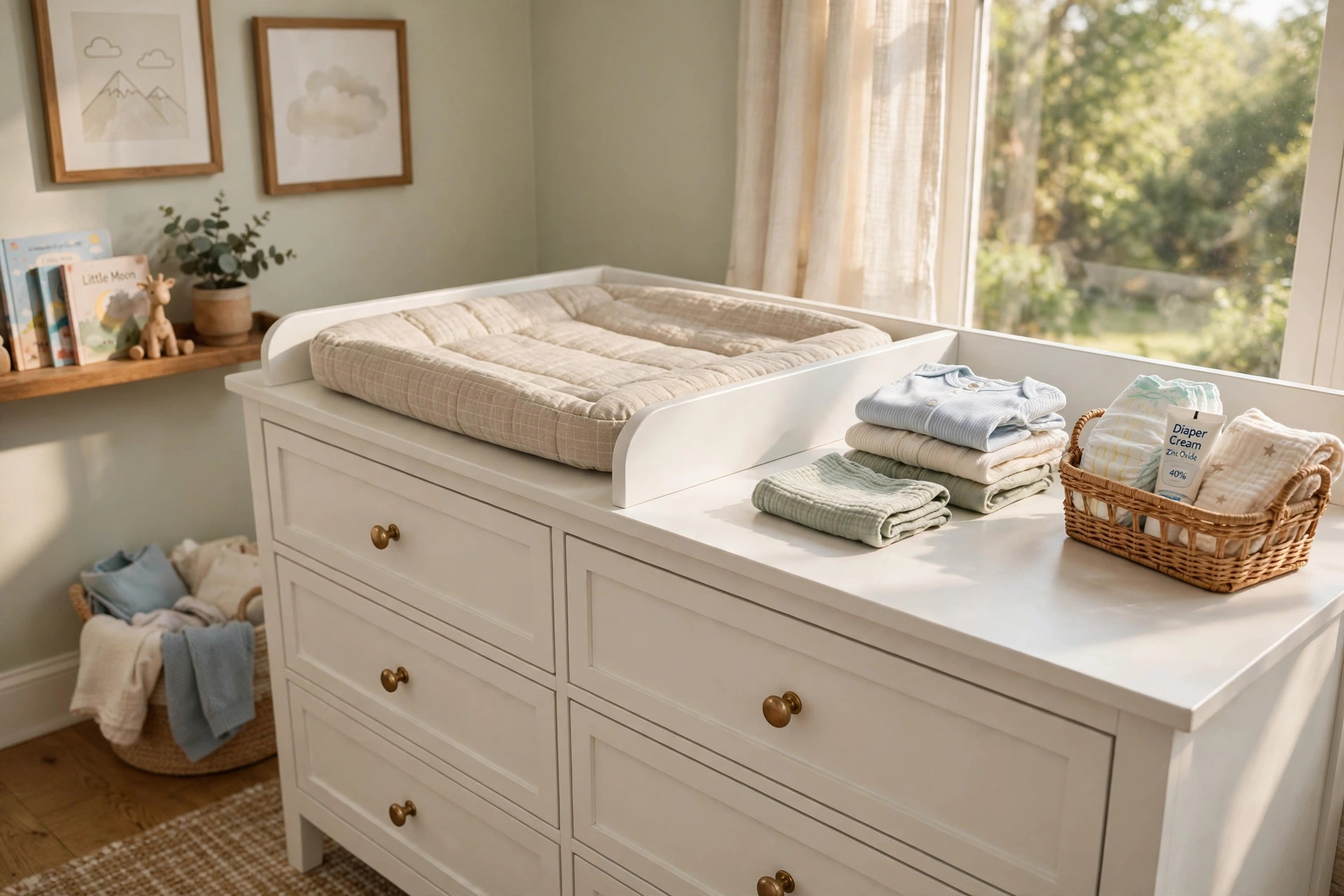

A kids dresser with changing top for nursery is one of the smartest buys for a new baby room. It joins two pieces of furniture into one. The bottom is a dresser with drawers for clothes. The top is a flat pad where you change diapers. Many young parents pick this piece first when they set up the nursery. It saves floor space. It saves money. It also gives the room a neat and steady look. This guide will walk you through why it matters, what to look for, the types you can buy, what it costs, how to care for it, and how to keep it safe. The U.S. Consumer Product Safety Commission also offers clear rules for safe nursery furniture, and it is wise to follow them.
Why It Matters
A nursery is often the smallest room in the home. A standard dresser and a separate changing table would fill it fast. A kids dresser with changing top for nursery does the job of both in the same floor space. That is a real help in apartments and in small bedrooms.
A child needs many changes a day. A newborn may need ten to twelve changes in twenty-four hours. Each change is easier when the pad, the diapers, the wipes, and the spare clothes are all within arm’s reach. A dresser with a changing top keeps all of these things together. You do not walk across the room with a wet baby in your arms.
The piece also lasts past the baby years. When the child is done with diapers, you take off the changing top. What is left is a normal dresser. It can serve a toddler, a school-age child, or even a teen. Parents on What to Expect often say that convertible furniture was their best nursery choice for this very reason.
Finally, the right dresser keeps the room calm. A baby room works best when it is simple and uncluttered. One solid piece of furniture does more for peace of mind than three small ones that wobble and crowd the floor.
What to Look for When You Choose: Kids Dresser with Changing Top for Nursery
Size and Fit
Measure the wall where the dresser will stand before you shop. A kids dresser with changing top for nursery is often about 48 to 52 inches wide, 18 to 20 inches deep, and 36 to 40 inches tall with the top in place. The top must be at a height that lets you work without bending too far. Most adults find a surface near 36 inches to be comfortable.
Check the depth of the changing area. A standard changing pad is about 16 by 31 inches. The top should hold the pad with room to spare on each side. Leave at least two inches of guard rail around the pad if the design includes one.
Drawer Build
Open and close the drawers in the store, or read the specs with care online. Drawers should slide in and out with one hand. That matters more than you think, because your other hand will be holding a baby. Deep drawers work well for diapers and blankets. Shallow top drawers work well for small items like socks, creams, and nail clippers. Look at the stop mechanism. Good drawers cannot be pulled out all the way by accident. That is a safety point as well as a comfort point.
Material and Finish
Solid wood is the sturdiest choice. Pine and rubberwood are common in mid-priced pieces. Hardwood like maple costs more but lasts longer. Many budget dressers use engineered wood, which is fine if the joints are tight and the finish is smooth. Whatever the material, the finish should be low in VOCs and clearly labeled as non-toxic. A baby will breathe the room air for many hours a day, so the paint and stain matter.
The Changing Top Itself
Some dressers come with a permanent changing surface. Others come with a removable tray that locks onto the top. A removable top is better. It lets you convert the piece to a plain dresser later without scars on the wood. The tray should have a rim or guard rails at least two inches high on three sides. It should also have a strap to hold the changing pad in place. Make sure the tray fits snug. It should not rock or slide when you press on one corner.
Types and Options
Two-in-One Convertible Dressers
This is the most common type. The dresser has three to six drawers and a changing tray on top. When the diaper years end, the tray comes off. Many models at IKEA follow this simple pattern, and it suits most families well.
Wide Double Dressers
A wide double dresser has two columns of drawers. It is about 60 inches across. It gives the most storage of any type. It also gives the widest changing surface. It suits a larger nursery or a room shared by twins. The trade-off is clear. It takes up more wall space, and it costs more.
Narrow Chest-Style Dressers
A narrow dresser has one column of three to five drawers. It is about 32 to 36 inches wide. The changing tray still fits on top. This type suits very small rooms and tight budgets. Storage is limited, but you can pair it with a nursery dresser changing table combo for small space plan that adds baskets and wall shelves.
Hutch-Top Models
A hutch-top model has a raised shelf unit above the changing surface. The shelf holds diapers, wipes, and bottles at eye level. It saves counter space on the pad. It also looks charming in a classic nursery. Keep in mind that a tall hutch can make the dresser top-heavy. Anchor it to the wall without fail.
Finish and Style Options
White is the most popular finish for nursery furniture. It brightens the room and matches most decor. Natural wood tones are rising in popularity. Gray and soft sage are also common. Painted pieces should use water-based, non-toxic paint. The Spruce nursery guides note that light finishes make small rooms feel larger, which is worth keeping in mind.
Cost and Price
A kids dresser with changing top for nursery can cost anywhere from 150 to 900 dollars in the United States. The wide range comes from material, brand, and build quality.
Budget models from 150 to 300 dollars use engineered wood or soft pine. They do the job for two to three years. Look for tight joints and a smooth finish even at this price. Walmart carries many options in this range.
Mid-range models from 300 to 550 dollars use better joinery and thicker panels. They convert cleanly to a plain dresser. This is the sweet spot for most families. Pieces at Wayfair often fall in this band with many style choices.
Premium models from 550 to 900 dollars use solid hardwood. They come from nursery specialists like Pottery Barn Kids. They are built to last through several children and to look good for years.
Do not forget the hidden costs. A changing pad costs 25 to 50 dollars. A pack of pad covers costs 15 to 30 dollars. A wall-anchor kit is often included, but a good one costs 10 dollars if not. If the nursery is on an upper floor, delivery and assembly may add 50 to 100 dollars. Plan the full budget before you order.
Care and Upkeep
A kids dresser with changing top for nursery takes daily wear. Wipes, creams, and bottles spill on it. The wood will last if you care for it with a few simple habits.
Wipe the changing surface after each use. A damp cloth with mild soap is enough. Dry it right away so water does not sit in the seams. Once a week, wipe the drawer fronts and the frame. Check the drawers every month. Tighten any loose screws and make sure the stops still work.
Keep the room at a stable humidity. Very dry air can crack wood. Very damp air can swell drawers so they stick. A room between 40 and 50 percent humidity is kind to furniture and to babies alike.
When the changing top comes off, save the hardware in a labeled bag. You may want to use the tray again for a second child. Touch up small chips with a matching non-toxic paint pen. Do this soon after you spot them so the chip does not grow.
Store spare clothes and diapers so the drawers are not stuffed. Overloaded drawers strain the slides and the joints. A nursery closet organizer for baby clothes and nursery storage baskets for diapers and wipes take pressure off the dresser drawers.
Safety
Safety is the first thing to get right, and it is also the easiest to get wrong. A dresser that tips can hurt a child in seconds. Follow these rules without exception.
Anchor the dresser to the wall. This is the single most important step. Every dresser taller than 27 inches should be anchored. Most come with a strap or bracket kit. Screw the bracket into a wall stud, not just into drywall. The Consumer Product Safety Commission reports far too many tip-over injuries each year, and anchoring stops most of them.
Never leave the baby alone on the top. A child can roll in a blink. Keep one hand on the baby at all times during a change. Set everything out before you lift the baby onto the pad.
Use the pad strap. The changing pad should have a safety strap, and you should use it every time. The strap is not a substitute for your hand, but it adds one more layer of care.
Check the guard rails. The changing tray should have rails at least two inches high on three sides. They keep the pad from sliding and give you a small margin for error.
Watch the paint. Older secondhand dressers may carry lead paint. If you buy used, test the paint or strip and repaint with a modern non-toxic finish. HealthyChildren.org, the parent site of the American Academy of Pediatrics, stresses that nursery furniture should be free of lead and phthalates.
Mind the small parts. Screws, knobs, and drawer stops can work loose over time. A loose knob is a choking hazard. Check them on a set schedule, once a month, and fix what you find the same day.
Frequently Asked Questions
How long can my child use the changing top?
Most children use the changing top until they are about two to two and a half years old, or until they pass the weight limit of the tray. Many trays are rated for 30 pounds. Watch for signs that the child is too big or too active for the tray. When the child can climb or rock the tray, it is time to stop.
Can I use the dresser without the changing top?
Yes. That is the whole point of a convertible design. Remove the tray, plug or cover any screw holes, and you have a regular dresser. It will look like it was always meant to be one.
Is a separate changing table better than a combo?
A separate changing table gives you a dedicated station, but it takes up more room and costs more. For most homes, a kids dresser with changing top for nursery is the better choice. You get storage and a changing surface in one footprint. If you have a very large nursery, a separate table with a Target dresser nearby is also a fine setup.
What size changing pad fits a standard dresser top?
Most pads are 16 by 31 inches or 17 by 32 inches. Measure your tray before you buy the pad. The pad should sit flat with a little room on each side, and the strap should reach around it with ease.
How do I anchor a dresser if I rent?
Renters should still anchor furniture. Use the kit that comes with the dresser. When you move out, fill the small screw holes with spackle and touch up the paint. The holes are small and easy to hide. Some landlords accept toggle bolts in drywall when a stud is not in reach. A safe dresser is worth the patch work.
Do I need special drawers for baby clothes?
No. Regular drawers work well. Drawer dividers help a lot. They keep tiny onesies and socks from turning into a pile. Fabric bins inside deep drawers do the same job for less money.
A Short Final Word
A kids dresser with changing top for nursery is a quiet workhorse. It holds the clothes, it holds the changing pad, and it holds the room together. Choose one with strong drawers, a removable top, and a non-toxic finish. Anchor it to the wall on the day it arrives. Care for it with simple cleaning and regular checks. When the diaper years pass, take off the top and let the dresser grow up with your child. That is good value, and it is good sense.
References
American Academy of Pediatrics. (n.d.). HealthyChildren.org. https://www.healthychildren.org IKEA. (n.d.). Home furnishings. https://www.ikea.com Pottery Barn Kids. (n.d.). Kids furniture and decor. https://www.potterybarnkids.com Target. (n.d.). Retail store. https://www.target.com The Spruce. (n.d.). Home and garden advice. https://www.thespruce.com U.S. Consumer Product Safety Commission. (n.d.). Product safety information. https://www.cpsc.gov Walmart. (n.d.). Everyday low prices. https://www.walmart.com Wayfair. (n.d.). Furniture and home goods. https://www.wayfair.com What to Expect. (n.d.). Pregnancy and parenting guidance. https://www.whattoexpect.com
Was this guide helpful?

About James Carter
The My Garden US editorial team writes practical, in-depth home and garden guides for American homeowners — tested advice, no fluff.
You May Also Like
Best Toddler Bed With Storage for Toys
June 15, 2026 0 views
Nursery Dresser with Removable Changing Tray: A Practical Buying Guide
January 3, 2026 0 views
Nursery Night Light With Dimmer for Feeding: A Simple Guide
February 13, 2026 0 views