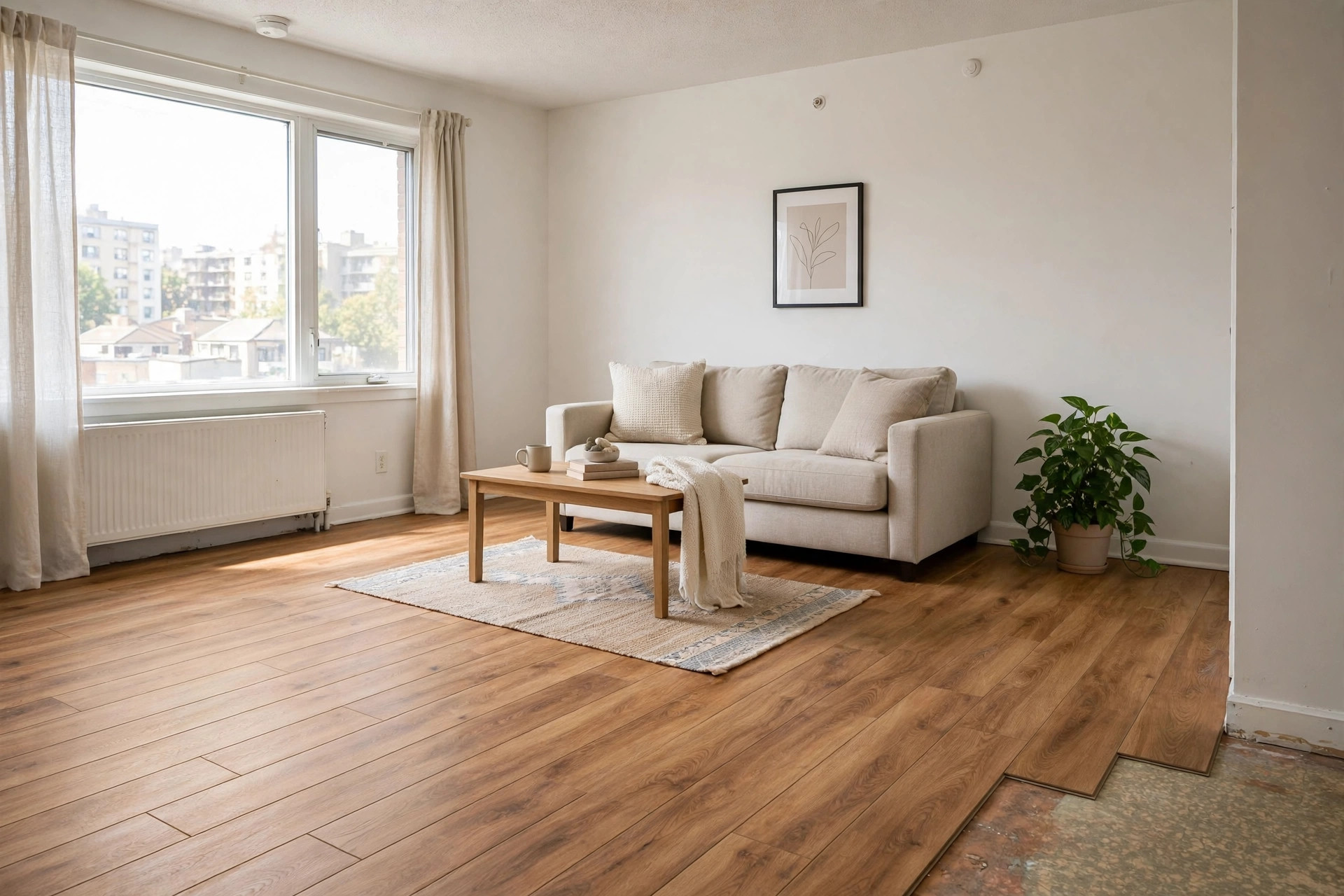

When a lease forbids permanent change, temporary flooring for renters reviews USA shoppers can guide them well. Millions of American renters live with worn carpet, scuffed vinyl, or cold concrete they did not choose. Most leases bar new tile or hardwood. A renter who glues or nails anything down may lose a security deposit at move-out. That is why removable flooring for rental apartments has become a large market in the United States. Reviews from real buyers tell which products truly come up clean, which hold up to daily life, and which are worth the price.
Why Renters Turn to Temporary Flooring
A rental home should still feel like home. Old floors can make a whole apartment look tired. Stained rental carpet collects odors and may aggravate allergies. Cheap builder vinyl cracks and curls at the edges. Landlords rarely agree to replace them, and renters rarely want to pay for a floor they cannot take with them.
Temporary flooring solves this conflict. It lays on top of the existing floor without glue or nails. When the lease ends, the renter pulls it up, and the floor beneath looks much as it did on move-in day. That promise drives every purchase. Review after review returns to the same question: did it come up without damage. Products that pass that test earn loyal buyers. Products that fail draw sharp warnings.
What to Look for When You Choose: Temporary Flooring for Renters Reviews Usa
Damage-Free Removal
This is the first filter. Peel-and-stick products use light adhesive that should release with heat and slow pulling. Loose-lay planks rely on weight and friction alone. Interlocking tiles click together and float over the surface. Reviews favor systems that leave no residue on vinyl, tile, or sealed concrete. On carpet, low-profile options work best, and many reviewers add that planks shift on thick carpet and need a firm base.
Room Fit
Measure each room before you order. Renters often cover only one room, such as a bedroom or home office, and reviewers note that partial coverage saves money and makes removal faster. Door clearance matters too. Thick tiles can block doors from swinging, so many buyers check the door gap first. Trim with a utility knife for vents and corners, and always order five to ten percent extra for cuts and mistakes.
Wear and Traffic
Kitchens and entryways take hard use. Water, grit, and chair wheels punish soft materials. Reviewers in busy homes favor rigid vinyl and interlocking floor tiles for these rooms, while bedrooms do fine with carpet tiles or low-pile rugs. Check the wear layer on vinyl products. A thicker wear layer resists scratches from pets and furniture much longer.
Budget
Prices range widely. Foam tiles cost the least per square foot. Peel-and-stick vinyl sits in the middle. Rigid interlocking planks cost the most but last the longest. Independent product testers such as Consumer Reports note that price often tracks durability, and reviews confirm that very cheap options may need replacement within a year.
Main Types of Temporary Flooring
Peel-and-Stick Vinyl Planks
Peel-and-stick vinyl is the classic renter floor. Each plank has a thin adhesive backing. The installer peels the paper and presses the plank down, often over old vinyl or tile. It looks convincing at a glance. Many luxury vinyl plank flooring products in this line copy wood grain in detail.
Reviews praise the low cost and fast install. A small bedroom can be done in an afternoon. The weak point is removal. Heat from a hair dryer softens the adhesive, but old or cheap planks can leave sticky residue that needs solvent to clear. Buyers advise testing one plank in a closet before covering a whole room. Grout lines and deep texture in old tile can also telegraph through thin planks.
Interlocking Foam and Rubber Tiles
Foam tiles snap together like puzzle pieces. Rubber tiles use a hidden edge system or simple weight. Both float over the floor with no adhesive at all. They are favorites for kids’ rooms, play areas, and workout corners. Reviews for foam tiles for a home gym show how well the format suits heavy use.
Buyers like the soft surface and the easy install. Damaged tiles can be swapped one by one. The trade-off is looks. Most foam tiles read as gym or playroom, not living room. Heavy furniture can dent foam and leave marks. Rubber is tougher but heavier to move, and some brands carry a strong odor for the first days. Airing tiles out before install helps.
Loose-Lay Vinyl Sheets and Rolls
Loose-lay vinyl comes in wide rolls that simply rest on the floor. Perimeter tape or a few adhesive strips may hold the edges. There is no bond to the floor itself. This makes removal almost effortless, which reviewers love at lease end.
The challenge is fit. A roll must be cut cleanly around walls and fixtures, and a poor cut shows. In large rooms the sheet can creep over time, so door thresholds and furniture help pin it down. Water can also seep under the edges in bathrooms, so many reviewers keep loose-lay out of wet rooms or seal the edges with removable tape.
Interlocking Rigid Tiles
Rigid interlocking tiles borrow the garage-floor idea and dress it up for home use. Small square tiles click into a grid and float over concrete or old flooring. They handle chair casters, pet claws, and heavy loads with ease. Reviews rate them high for durability and damage-free lift-up.
Cost is the main objection. Per square foot, rigid tiles run well above peel-and-stick. They also raise the floor height by a half inch or more, which can trip up rugs and block doors. Renters with low door clearance often skip this type. For basements, workshops, and entryways, though, reviewers call them the toughest renter option.
Carpet Tiles and Area Rugs
Carpet tiles use a light tack strip or simply lie flat and grip the floor. They warm up cold rental floors and cut noise between floors, a real help in apartment buildings. Area rugs serve the same role with zero install at all. Reviews for both stress pattern choice: busy patterns hide wear and stains far better than plain beige.
Maintenance matters. Renters vacuum often and spot-clean spills fast. Individual carpet tiles can be lifted and washed or replaced, which reviewers cite as the top advantage over wall-to-wall carpet. Big-box retailers such as Home Depot and Lowe’s carry wide selections of both, and flooring specialty retailers like LL Flooring list renter-friendly lines too.
Cost and Price
Expect wide ranges. Basic foam tiles often cost under two dollars per square foot. Peel-and-stick vinyl runs from under a dollar to about three dollars per square foot. Loose-lay rolls fall in a similar band. Rigid interlocking tiles can reach five dollars or more per square foot. Carpet tiles range from one to four dollars per square foot.
Add ten percent for cuts and waste. Add the cost of a threshold or transition strip where the temporary floor meets another room. Reviews warn against buying exactly the measured area. A short box means a visible patch or a second order in a different dye lot, and color can vary between batches. Order it all at once.
Care and Upkeep
Most temporary floors ask little. Sweep or vacuum weekly. Damp-mop vinyl with a mild cleaner. Lift carpet tiles to clean spills before they reach the floor beneath. Reviewers stress one habit: keep water from pooling under loose edges. Trapped moisture can damage the landlord’s floor and cause mold.
Furniture pads prevent scratches on vinyl and dents in foam. Reviewers who move dressers and sofas across peel-and-stick planks report gouges that ruin the look. Lift, never drag. In sunny rooms, rotate rugs now and then, since vinyl can fade or yellow under steady sun.
Safety
Choose low-VOC products for bedrooms and nurseries. Cheap vinyl from unknown sellers sometimes carries a strong chemical smell. Air new flooring in a garage or spare room before install. Reviews often mention the first-week odor, and good ventilation clears it faster.
Mind the edges. Curled edges and lifted corners trip feet, especially for older residents and small children. Press edges flat and replace warped pieces at once. In kitchens and baths, wipe spills quickly. Wet vinyl gets slick, and water under loose-lay sheets can breed mildew. Guidance from government health agencies, such as the EPA pages on indoor air, supports choosing low-emission materials and keeping floors dry.
How to Read the Reviews Themselves
Reviews vary in quality, so read them with care. Sort by most recent first. Old reviews may describe a product that has since changed. Look for reviews from renters, not homeowners, since their needs differ. A homeowner may praise a strong adhesive that a renter would curse at move-out.
Watch for patterns across many reviews rather than single complaints. If ten buyers mention residue on old vinyl, treat it as fact. If one buyer reports a defect and fifty do not, it may be a bad batch. Photos from real buyers show how the floor looks after months of use, which studio photos never show. Reviewers who post updates after a year give the most honest verdicts of all.
Reading Review Ratings
A product with a 4.3 average from thousands of reviews is usually a safer bet than a 5.0 from twelve reviews. Check the one-star reviews to learn the worst case. Check the three-star reviews for balanced takes. Many reviewers explain exactly what they would do differently, and that advice is often more useful than praise.
Frequently Asked Questions
Will temporary flooring damage the floor underneath? Usually no, if you pick the right type and follow the rules. Floating systems that use no adhesive are the safest. Peel-and-stick products carry some risk of residue, so test one piece in a hidden spot first. Reviews are clear on this point: test before you commit.
Can I install temporary flooring over rental carpet? Thin, rigid products can work over low-pile carpet. Thick carpet causes planks to flex and joints to separate. Most reviewers say the best results come over hard surfaces like vinyl, tile, or sealed concrete. Foam tiles are the main exception and sit fine on carpet.
How long does temporary flooring last? It depends on traffic and type. Foam tiles may last one to three years in a playroom. Good peel-and-stick vinyl often serves three to five years. Rigid interlocking tiles can go longer. Reviews track this closely, so check the one-year and two-year updates in buyer reviews, not just first impressions.
Is temporary flooring allowed by most leases? Most leases ban permanent alteration, not removable coverings. Still, read your lease and ask the landlord in writing when in doubt. Reviewers recommend keeping a small sample and the original box. If a dispute arises at move-out, proof that the floor was temporary helps.
What is the easiest type to remove at move-out? Loose-lay sheets and interlocking tiles lift fastest, often in under an hour per room. Carpet tiles pull up one by one. Peel-and-stick takes the longest because of the adhesive. Reviewers who plan their exit in advance tend to choose floating systems for exactly this reason.
Do I need tools to install it? A tape measure, a straightedge, and a sharp utility knife cover most jobs. A rubber mallet helps seat interlocking tiles. Home how-to sites such as The Spruce and home guides like This Old House publish step-by-step install walkthroughs that reviewers find useful before a first install.
A Final Word
The market for temporary flooring for renters reviews USA buyers has matured, and the reviews tell a consistent story. Damage-free removal matters more than looks. Floating systems win on that score. Cost matters too, and mid-range vinyl remains the sweet spot for most rooms. Measure well, test in a hidden spot, and order extra. With those steps, a renter can enjoy a floor that feels chosen, not inherited, and hand the keys back with the deposit intact. Major flooring brands such as Shaw and Mohawk, and tile makers like Daltile, all list renter-friendly lines worth comparing before you buy.
References
Consumer Reports. (n.d.). Product reviews and ratings. https://www.consumerreports.org Daltile. (n.d.). Ceramic and porcelain tile. https://www.daltile.com LL Flooring. (n.d.). Hardwood, vinyl, and tile flooring. https://www.llflooring.com Lowe’s. (n.d.). Home improvement products. https://www.lowes.com Mohawk Flooring. (n.d.). Flooring products. https://www.mohawkflooring.com Shaw Floors. (n.d.). Flooring products. https://www.shawfloors.com The Home Depot. (n.d.). Home improvement products. https://www.homedepot.com The Spruce. (n.d.). Home and garden advice. https://www.thespruce.com This Old House. (n.d.). Home renovation guidance. https://www.thisoldhouse.com U.S. Environmental Protection Agency. (n.d.). Protecting human health and the environment. https://www.epa.gov
Was this guide helpful?

About Emily Rodriguez
The My Garden US editorial team writes practical, in-depth home and garden guides for American homeowners — tested advice, no fluff.
You May Also Like

Marble Floor Polishing Service Near Me Cost: A Plain Guide
January 17, 2026 0 views
Engineered Hardwood Flooring Cost per Square Foot: A Plain Guide for American Homeowners
August 23, 2026 0 views
Best Grout Sealer for Bathroom Tile USA
August 26, 2026 0 views