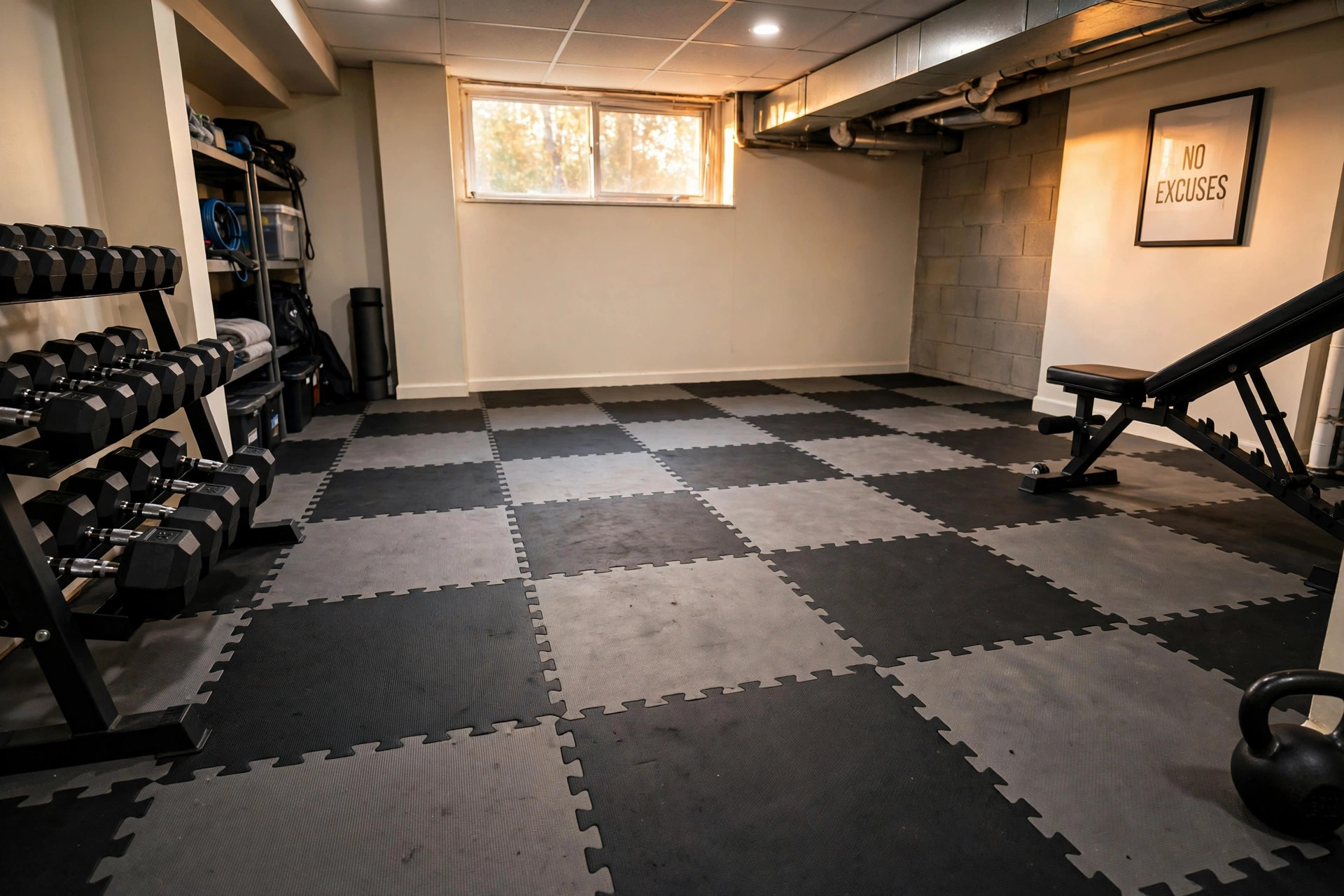

More and more people are building workout rooms at home. A corner of the basement, a spare bedroom, or one half of the garage can become a fine place to train. One of the first things such a room needs is a good floor. That is why foam tiles for home gym for sale usa have become so popular. They are cheap, easy to lay down, and soft under the feet. You can buy them in packs, carry them in yourself, and cover a room in one afternoon. This guide explains what these tiles are, what kinds exist, what to pay, and how to keep them in good shape.
Why It Matters
Protecting the Floor Beneath
A home gym puts hard stress on a floor. Dumbbells drop. Kettlebells land with a bang. Treadmills and weight benches press their legs into one spot for years. Bare concrete can crack. Hardwood can dent and scratch. Foam tiles sit between the equipment and the real floor and take the hit instead.
Protecting the People on Top
The floor matters to the body too. Joints, knees, and ankles feel every landing. A thin, hard floor sends the shock straight up the legs. Foam tiles cushion that shock. Stretching on foam feels kinder than stretching on bare tile or wood. If someone slips or drops to one knee during a hard set, a foam surface gives instead of bruising. For homes with children or pets nearby, this softer landing is one more layer of safety.
Noise Control
Sound travels in a house. A dropped barbell on concrete rings through the whole building. Foam tiles will not silence a gym, but they take the edge off. The foam soaks up part of the thud and vibration. For many buyers, noise control is one of the main reasons they shop for foam tiles for home gym for sale usa in the first place.
What to Look For When You Buy: Foam Tiles for Home Gym for Sale Usa
Tile Thickness
Thickness is the most important number. Common thicknesses are half an inch, five-eighths of an inch, three-quarters of an inch, and one inch. Thinner tiles suit light exercise such as yoga, stretching, and bodyweight moves. Thicker tiles suit weight training. Under a power rack or where heavy dumbbells land, one inch of dense foam is a wise choice. Thicker is not always better for everything, though. Cardio machines and weight benches feel wobbly on very thick soft foam, so match the thickness to the use.
Foam Density and Firmness
Not all foam is alike. Cheap foam feels soft and squishy. Good foam feels firm when you press it with a thumb but still gives a little. Firm, high-density foam lasts longer. It bounces back after heavy weight instead of staying dented. When you read listings, look for terms like high density EVA foam. EVA is the common material for these tiles. A tile that is both thick and firm will serve a home gym far longer than a tile that is thick but soft.
Tile Size and Edges
Most interlocking tiles are two feet by two feet. Some are four feet by four feet, which covers a room faster but is harder to cut around posts. The edges matter. Look for puzzle-style interlocking edges that grip each other tightly. Tiles that come with straight border pieces give you a clean, finished edge along walls instead of a zigzag line. A set that includes end pieces saves you from cutting as many borders by hand.
Surface Texture and Grip
A home gym floor must not be slippery. Sweat gets on the floor during a workout. A smooth shiny tile can turn slick under wet shoes. Look for a textured top, often with a diamond plate or crosshatch pattern. This texture gives shoes and bare feet something to bite on. The texture also helps hide small scuffs and marks that build up over time.
Smell and Off-Gassing
Fresh foam tiles can have a strong rubbery or chemical smell. This fades with time, but it can bother people for the first week or two. Airing the tiles out in an open space for a few days before laying them down helps a great deal. Tiles labeled low odor or non toxic are worth the extra money if the gym sits in a bedroom or a space with little ventilation.
Types and Options
Interlocking Puzzle Tiles
This is the most common type. The tiles link together like puzzle pieces. You need no glue and no tools beyond a utility knife for trimming edges. You can pick them up and move them if you rearrange the room. Packs usually cover between 24 and 100 square feet. For a first home gym, interlocking puzzle tiles are the simplest and most forgiving choice.
Straight-Edge Mat Tiles
Some tiles have straight edges and rely on tape or their own weight to stay in place. These give a smoother look with no puzzle seams. They work well under large equipment where you want a flat surface. They can shift with use, so many owners run double sided tape along the seams. They are easy to replace one by one when a single tile wears out.
Roll-Out Rubber and Foam Mats
Instead of separate tiles, you can buy long rolls of foam or rubber mat. You roll them out like carpet. This gives the smoothest surface of all, with almost no seams. Rolls are heavier and harder to handle alone. They also cost more per square foot than tiles. They suit larger rooms where a person wants a clean, wall to wall look.
Center Medallion and Color Choices
Foam tiles come in black, gray, blue, red, and wood-look patterns. Many sets let you mix colors to mark zones, such as a lifting area and a cardio area. Dark colors hide dirt and wear better than light ones.
Cost and Price
What Foam Tiles Cost
Prices move with thickness, density, and brand. Thin half inch tiles can cost under one dollar per square foot. Mid range three quarter inch tiles often run one to two dollars per square foot. Thick one inch high density tiles can run two to four dollars per square foot. A set covering 100 square feet at a mid price will cost roughly 100 to 200 dollars. Large national retailers carry wide selections, and it is easy to compare prices online at sites like Home Depot and Lowe’s.
How Much You Need
Measure the room first. Multiply length by width to get square feet. Add ten percent extra for cuts, mistakes, and future replacements. A room that is ten feet by twelve feet is 120 square feet. Buy enough for about 132 square feet. Running short in the middle of a job is a common frustration, and dye lots can differ if you order more later.
Cost Compared With Other Floors
Foam tiles are among the cheapest gym floors. Rubber stall mats cost more but last longer under extreme weights. Vinyl plank costs several times more and needs careful installation. Interlocking foam sits at the sweet spot of price and ease for most home users. For advice on other floor types in damp rooms, see our notes on waterproof flooring for basements reviews usa and best basement flooring for concrete slab usa. Pet owners may also want to read about best flooring for kitchens with dogs usa for ideas on tough, scratch resistant surfaces.
Where the Money Goes
Two thirds of the cost is the foam itself. Buying in bulk packs is cheaper per tile than buying small sets. Shipping can add cost for heavy one inch tiles, so check whether the seller offers free delivery or local pickup.
Installation
Prepare the Room
Start with a clean, dry, flat floor. Sweep and mop. Let it dry fully. Fill any large cracks in concrete so tiles do not dip. The room should be dry. Foam does not like standing water under it. If the room feels damp, fix the moisture first or choose a different floor.
Laying the Tiles
Work from one corner toward the door. Snap the puzzle edges together as you go. Press the joints down firmly so the seams sit flat. Leave a small gap, about a quarter inch, at the walls. Foam expands a little in heat, and the gap keeps tiles from buckling in summer. Use straight border pieces where they fit.
Cutting to Fit
A sharp utility knife and a straight edge are all you need. Mark the cut line on the back of the tile. Score it with several passes rather than trying to cut through at once. A metal ruler keeps the line straight. Save your offcuts. They are useful for small fills and future patch jobs.
When to Call a Professional
Most people can install foam tiles alone. Call a professional if the subfloor is uneven or damaged, if the room is very large, or if you are combining foam with other flooring in a full remodel. Flooring specialists can be found through established guides such as This Old House and product information at makers like Shaw Floors and Mohawk Flooring.
Care and Upkeep
Daily and Weekly Cleaning
Sweep or vacuum the tiles often. Dirt ground into the surface wears the texture down. Mop with warm water and a mild cleaner. Avoid harsh chemicals, bleach, and oil based cleaners. They can break down foam over time. A mix of water and a small amount of dish soap works well for most jobs.
Dealing With Sweat and Smell
Sweat is the main enemy of a gym floor. Wipe up heavy sweat after each session. A light spray of vinegar and water helps keep odor down. Never soak the tiles. Water that seeps under the foam can grow mold on the subfloor. Lift a corner tile now and then to check that the floor beneath stays dry.
Repairing Damage
Foam tiles are easy to fix. If one tile tears or dents badly, pull it up and drop in a spare. Keep a few extra tiles from your original order for this purpose. Small dents often pop back out on their own after a day or two. Deep cuts from dropped plates may not heal, which is why a spare stack is worth keeping.
How Long They Last
With normal home use, good foam tiles last five to ten years. Heavy lifters who drop weights often may wear through tiles faster in the drop zone. Sunlight also breaks foam down, so keep direct sun off the tiles where you can. When tiles start to curl at the edges or feel thin and hard, it is time to replace them.
Safety
Fire and Heat
Foam is not fireproof. Keep foam tiles away from space heaters, wood stoves, and open flames. Some tiles carry a fire rating. Check the product listing if this matters to you. Never place hot equipment, such as a just used iron, directly on the foam.
Slips and Trips
Curled edges are a trip hazard. Replace tiles that will not lie flat. Keep the surface clean so it stays grippy. Wear proper shoes. Bare feet on sweaty foam can slip, and socks on foam are worse. If the gym is in a shared space, keep the tiles in good repair so no one catches a toe on a lifted seam.
Heavy Equipment
Very heavy machines can sink into soft foam. Place plywood boards under equipment legs to spread the load. This keeps the machine level and protects the foam. For thick rubber alternatives and heavy duty options, flooring makers such as Daltile and LL Flooring publish useful guidance, and The Spruce keeps plain how to articles on home flooring.
Frequently Asked Questions
How thick should foam tiles be for a home gym?
For light exercise, half an inch is enough. For general fitness with dumbbells and a bench, three quarters of an inch works well. For heavy lifting and dropped weights, choose one inch of high density foam. Under treadmills and benches, a firmer thinner tile keeps the machine stable.
Can I put foam tiles on carpet?
You can, but it is not ideal. Carpet lets the tiles shift and rock. Low pile carpet works better than thick carpet. For the best result, pull the carpet up or place rigid boards over it first. If you must lay foam on carpet, check the tiles often and press loose seams back down.
Do foam tiles work on concrete?
Yes. Concrete is one of the best bases for foam tiles. Make sure the concrete is clean, dry, and free of sharp ridges. A vapor barrier under the tiles helps in damp basements. Concrete plus foam gives a firm but forgiving workout surface.
How do I clean gym foam tiles?
Sweep or vacuum first. Then mop with warm water and mild soap. Wipe up sweat after each workout. Avoid bleach and strong solvents. Air the room well so moisture does not sit under the tiles.
Will foam tiles hold up under heavy weights?
Firm high density tiles handle most home weights well. Extremely heavy drops, such as a loaded barbell from overhead, can dent even thick foam. Many lifters add a dedicated lifting platform or extra thick mats in the drop zone. Plywood under equipment legs spreads the load and extends tile life.
Are foam gym tiles toxic?
Most modern EVA foam tiles sold in the United States are made without the harshest chemicals found in older foam products. They can still smell strong at first. Let them air out before use. If chemical sensitivity is a concern, look for tiles labeled low VOC or non toxic and check the product details on the maker or seller page.
A Final Word
A home gym does not need to be fancy. It needs to be safe, easy to use, and kind to the house around it. Foam tiles for home gym for sale usa check all three boxes. They cost little, go down in an afternoon, and protect both the floor and the person training on it. Measure your room, pick a thickness that matches your workouts, buy ten percent extra, and keep the tiles clean. Do that, and your gym floor will serve you well for years.
References
Daltile. (n.d.). Ceramic and porcelain tile. https://www.daltile.com LL Flooring. (n.d.). Hardwood, vinyl, and tile flooring. https://www.llflooring.com Lowe’s. (n.d.). Home improvement products. https://www.lowes.com Mohawk Flooring. (n.d.). Flooring products. https://www.mohawkflooring.com Shaw Floors. (n.d.). Flooring products. https://www.shawfloors.com The Home Depot. (n.d.). Home improvement products. https://www.homedepot.com The Spruce. (n.d.). Home and garden advice. https://www.thespruce.com This Old House. (n.d.). Home renovation guidance. https://www.thisoldhouse.com
Was this guide helpful?

About David Wilson
The My Garden US editorial team writes practical, in-depth home and garden guides for American homeowners — tested advice, no fluff.
You May Also Like
Linear Drain for Curbless Shower Reviews: A Buyer’s Guide for USA Homes
September 26, 2026 0 views
The Cheapest Way to Redo Floors: A Practical USA Guide
June 16, 2026 0 views
Black Grout Bathroom Floor Ideas USA: A Plain Guide
September 21, 2026 0 views