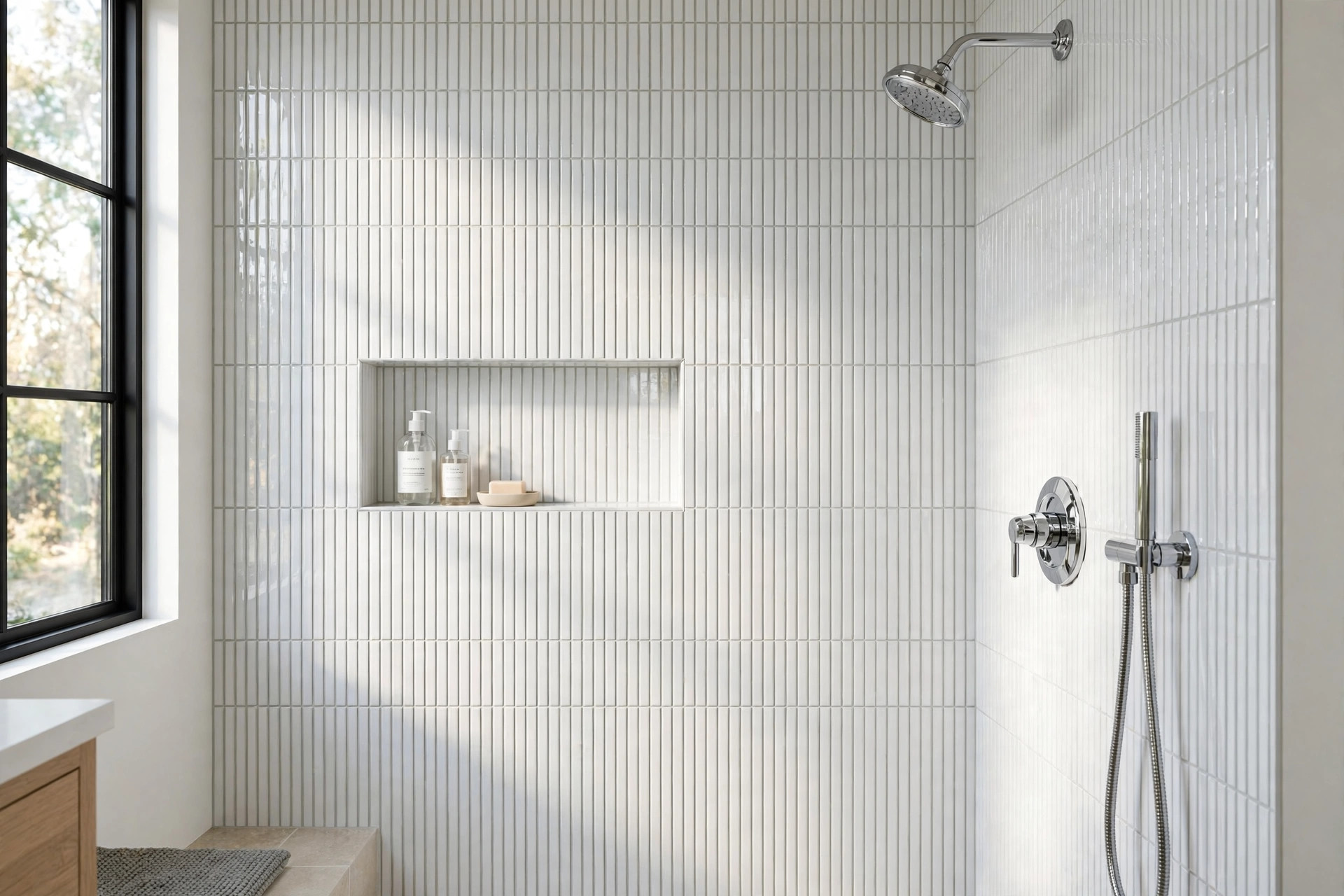

Kit kat tile has won a place in the American bathroom. The slim sticks of mosaic, often called finger tile or kit kat tile, give a wall or floor a soft rhythm that plain square tile cannot match. This guide on kit kat tile for bathroom reviews usa brings together what real buyers report after they order, set, and live with it. You will read what they praise, what they warn about, how much it costs, and how to keep it clean. If you want a bathroom that feels calm and current, these reviews can help you decide if kit kat tile is right for your home.
Why Kit Kat Tile Suits the Bathroom
Kit kat tile is a mosaic made of narrow bars. Each bar is about as wide as a finger and two to four inches long. The bars come glued to a mesh sheet, so a tiler can set a whole sheet at once. The narrow shape breaks up large wet areas into fine lines of color and grout. In a small bath, that fine texture adds interest without noise. In a large bath, it gives a spa feel.
Buyers in the United States use it in several places. The most common is the shower wall, where the vertical bars pull the eye up and make the ceiling feel higher. Many also lay it on the bathroom floor, since the many grout lines give grip under bare feet. Others use it as a backsplash behind the vanity, or on a niche shelf inside the shower. Reviews note that the tile works in both new builds and remodels, and that it suits modern, coastal, and farmhouse styles alike.
One reason the tile has grown so fast is its forgiving nature. A wall that is not quite flat still looks good under kit kat tile, because the small bars and grout joints hide small waves. That does not mean sloppy work is fine, but buyers say the tile is kind to walls that are less than perfect.
What Buyers Say in Kit Kat Tile Reviews: Kit Kat Tile for Bathroom Reviews Usa
Across American stores and tile shops, kit kat tile for bathroom use earns steady praise. Reviewers like the look most of all. Words like elegant, soft, and timeless appear again and again. Glossy white and pale blue are the colors buyers pick most, and they report that these shades make a small bath feel larger and brighter.
Buyers also praise the mesh backing. Most sheets stay flat and do not fall apart in the bucket or on the trowel. People who set the tile themselves say the sheets are easy to cut with a wet saw, and that small offcuts can fill corners neatly. Several reviews mention that the tile pairs well with both chrome and brushed brass fixtures, which makes it easy to match to the rest of the bath.
Not all reviews are glowing. The most common complaint is about the grout. Because kit kat tile has so many joints, grout takes longer to apply and clean than it does with large tile. Some buyers wish they had picked a grout color close to the tile, since high-contrast grout shows every small slip of the float. A few reviewers report that cheap brands have uneven bar heights, which makes the wall feel bumpy to the touch. Others note that natural stone versions need sealing, and that they stain if a seal is skipped.
A smaller group warns about shipping. Mosaic sheets can arrive with loose bars if the box is handled roughly. Buyers advise ordering ten to fifteen percent more than the job needs, so broken sheets can be replaced and future repairs are possible. Ordering from a single dye lot also matters, since shades can shift between batches. The Home Depot and Lowe’s listings both show buyer photos that help you judge true color before you order.
How to Choose Kit Kat Tile for Your Bathroom
Color and Finish
Color sets the mood of the bath. White and off-white are safe and bright. They suit small baths with little light. Soft blues and greens give a coastal or spa mood. Charcoal and black add drama, but they show soap film and water spots more clearly, so buyers in hard-water areas often avoid them.
Finish matters too. Glossy tile bounces light and is easy to wipe. Matte tile hides water marks and feels more modern. Reviews suggest glossy for shower walls and matte for floors, since matte gives a touch more grip. A blend also works: glossy on the wall, matte on the floor, in the same color family.
Size and Sheet Layout
Most kit kat bars are about half an inch wide and two to four inches long, on sheets near twelve by twelve inches. Longer bars look more modern. Shorter bars look more classic. Bars can run vertical or horizontal. Vertical runs stretch the wall and suit showers. Horizontal runs widen the wall and suit long vanity walls. Some sheets mix bar lengths for a handmade look, which buyers either love or find too busy.
Before you buy, ask for a sample board. View it in your own bath light, wet and dry. Glossy tile looks darker when wet, and that change surprises some buyers. A sample also lets you test grout colors side by side.
Types and Options
Kit kat tile comes in several materials, and reviews differ by type.
Porcelain is the most common choice for American baths. It is dense, resists water, and needs no sealing. Buyers say porcelain kit kat tile holds its color and cleans with plain soap. It costs more than ceramic but lasts longer in a wet shower.
Ceramic is lighter and often cheaper. It suits walls well but is less ideal for floors that see heavy use. Some ceramic kit kat tile has a hand-glazed look with slight color shifts bar to bar. Reviews call this look charming, though a few buyers found the shifts stronger than the photos showed.
Natural stone, such as marble, gives a rich look. Stone kit kat tile must be sealed before grout and again each year or two. Buyers warn that stone can etch from acidic cleaners and stain from hair dye. If you love stone, plan for the upkeep.
Glass kit kat tile is less common but growing. It glows in shower light and resists stains. Buyers note that glass shows every flaw in the wall behind it, so the prep must be excellent. It also costs more per square foot.
For floors, check the slip rating on the box. Many porcelain kit kat mosaics carry a DCOF rating above 0.42, which suits wet barefoot areas. The many grout joints add grip on top of that, which is why buyers rate kit kat mosaic tile bathroom floors well for safety. If you are also weighing other shaped tile for wet walls, our notes on arabesque tile for shower wall reviews usa cover a curved option with a similar handmade feel.
Cost and Price
In the United States, kit kat tile for the bathroom usually sells for eight to thirty dollars per square foot. Plain white porcelain sits at the low end. Hand-glazed ceramic and natural stone sit at the high end. Big-box stores tend to price lower than tile boutiques, though boutiques offer more colors.
Sheet size affects the true cost. A twelve-inch sheet covers about one square foot, but cuts and waste raise the real need. Most tilers ask for ten to fifteen percent overage, and some ask for twenty on shower floors with many cuts. Add grout, thinset, and sealer if you choose stone. A typical shower wall of forty square feet can run four hundred to twelve hundred dollars in tile alone, before labor.
Labor is the larger share. Setting mosaic takes more time than setting large tile, and many tilers charge more per square foot for it. Get two or three quotes and ask each tiler how much mosaic work they have done. Reviews warn that a tiler new to mosaic may leave uneven joints, which show clearly on kit kat tile.
To keep costs down, some buyers tile only one feature wall in kit kat and use plain large tile elsewhere. This cuts both material and labor cost while keeping the look. Others buy during store sales or use price matching between LL Flooring and Shaw Floors lines. For a sense of what patterned tile can cost by comparison, see our breakdown of fish scale tile backsplash cost usa.
Care and Upkeep
Kit kat tile is easy to keep if you follow a simple routine. Rinse shower walls after use to wash away soap. Squeegee glass and glossy tile to stop water spots. Clean weekly with a mild, pH-neutral cleaner. Avoid bleach and acidic cleaners on stone and on colored grout, since they can fade or etch.
Grout needs the most care. Cement grout can stain, so many buyers choose a stain-resistant grout or add a grout sealer after the cure period. Epoxy grout resists stains best and suits showers, though it costs more and is harder to apply. Reviews from owners of best kit kat tile for shower walls setups say light gray grout hides both dirt and small install flaws better than pure white.
Recaulk corners and edges once a year. Check the seal on stone tile each spring by dripping water on it. If the water soaks in dark instead of beading, reseal. Keep a few spare sheets from the original lot for repairs. A single cracked bar can be chipped out and replaced without redoing the wall.
Safety in Wet Areas
Safety matters in any bath, and kit kat tile scores well. The dense grid of grout joints gives bare feet grip, which is why many buyers choose it for shower floors. Still, check the numbers. Look for a DCOF slip rating of 0.42 or higher for floor use. Wall-only tile does not need this rating, but floor tile does.
Grout joints should be even and fully filled. Hollow spots under bars can crack underfoot, so press each sheet firmly into the thinset and beat it in with a grout float or beating block. Reviews advise against walking on a fresh floor before the thinset cures, since bars can shift and create lips that catch toes.
In homes with older users or small children, pair the tile with grab bars and a non-slip mat outside the shower. Good light also helps. Matte finishes show less glare than glossy ones, which some buyers prefer for aging eyes. The Consumer Product Safety Commission guidance on bath safety is worth a read before any remodel, and This Old House offers plain advice on prepping wet-area walls.
FAQ
Is kit kat tile good for a bathroom floor?
Yes, with the right tile. Choose porcelain with a DCOF slip rating of 0.42 or higher. The many grout joints add grip under bare feet. Buyers rate kit kat tile bathroom floors well for safety, though they note grout takes more cleaning than large tile.
Does kit kat tile need sealing?
Porcelain and ceramic do not need sealing. Natural stone does, before grout and again each year or two. Grout itself benefits from a sealer unless you use epoxy grout. Always test the sealer on a spare bar first.
What grout color works best with kit kat tile?
A grout close to the tile color is the safest pick. It hides small flaws and keeps the look calm. Light gray is the most praised choice in reviews. White grout looks crisp but stains faster. Dark grout with light tile looks bold but shows every uneven joint.
Can I install kit kat tile myself?
Many do-it-yourself buyers do. The mesh sheets are easy to handle, and cuts are small. You need a wet saw, a notched trowel, tile spacers, and patience with grout. Watch a full tutorial first. If your shower needs waterproofing behind the tile, consider a pro for that step at least.
How do I clean kit kat tile in the shower?
Rinse after each shower. Squeegee glossy tile. Clean weekly with a mild pH-neutral cleaner and a soft brush for grout lines. Avoid harsh acids on stone. Reseal stone and grout on schedule. Spare sheets from the same dye lot make future repairs simple.
Is kit kat tile going out of style?
Buyers and designers still call it current. The slim bar shape has roots in mid-century design, which gives it staying power beyond a short trend. Neutral colors are the safest long-term pick. Bold colors date faster but suit owners who like change.
A Final Word
Kit kat tile earns its place in the American bathroom. Reviews praise its soft look, its grip underfoot, and its kind way with less-than-perfect walls. They warn, fairly, about grout labor, dye lots, and the upkeep that stone demands. Go in with samples, a sealer plan, and ten percent extra tile, and the result is a bath that feels calm for years. If you like the mosaic idea but want a vertical twist, our look at vertical subway tile shower ideas usa shows another way to stretch a shower wall upward.
References
Daltile. (n.d.). Ceramic and porcelain tile. https://www.daltile.com LL Flooring. (n.d.). Hardwood, vinyl, and tile flooring. https://www.llflooring.com Lowe’s. (n.d.). Home improvement products. https://www.lowes.com Shaw Floors. (n.d.). Flooring products. https://www.shawfloors.com The Home Depot. (n.d.). Home improvement products. https://www.homedepot.com The Spruce. (n.d.). Home and garden advice. https://www.thespruce.com This Old House. (n.d.). Home renovation guidance. https://www.thisoldhouse.com U.S. Consumer Product Safety Commission. (n.d.). Product safety information. https://www.cpsc.gov
Was this guide helpful?

About Jennifer Lee
The My Garden US editorial team writes practical, in-depth home and garden guides for American homeowners — tested advice, no fluff.
You May Also Like
Pet Friendly Flooring Options for USA Homes
June 17, 2026 0 views
Refinishing Hardwood Floors Cost Calculator: A Complete Guide to Prices and Planning
July 12, 2026 0 views
Waterproof Flooring for Basements: Reviews for American Homes
January 17, 2026 0 views