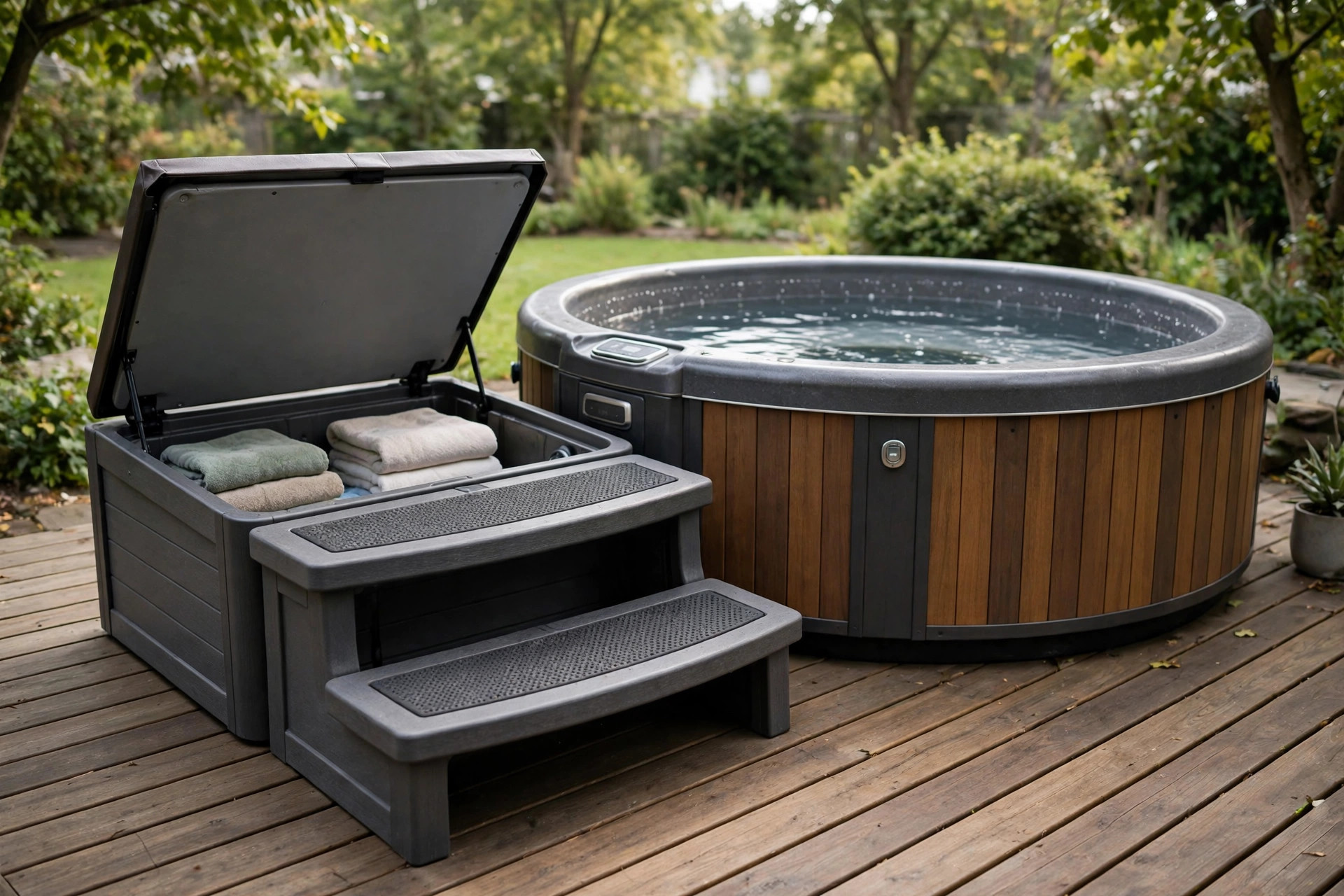
A hot tub is a place of rest. Warm water eases sore muscles. Steam rises into the cool night air. But before the rest begins, there is the climb. Most spas sit two to three feet off the ground. Getting in can be hard on knees, hips, and backs. That is where steps help. The best hot tub steps with storage do two jobs at once. They give you a safe way in and out. They also give you a dry, close place to keep towels, robes, chemicals, and covers.
Many owners learn this the hard way. They set a towel on the ground. It gets wet. They leave test strips on the deck rail. They blow away. They stack chemical bottles behind the tub. They forget which is which. Storage steps fix these small problems. The top step lifts open like a chest. Inside there is room for the things you use every time. Nothing walks away. Nothing sits in a puddle.
This guide walks through the best hot tub steps with storage in plain terms. It covers why they matter, what to look for, the main types, what they cost, and how to care for them. It also answers common questions. By the end you will know how to pick steps that fit your tub, your yard, and your budget.
Why Steps With Storage Are Worth It
Safety comes first. A wet deck is slick. Climbing straight over a spa shell asks a lot of balance. Steps cut the climb into short, sure parts. Each step should be wide and deep enough for a full foot. The best hot tub steps with storage add weight where it counts. Filled with supplies, they stay put when you push off them. That steadiness matters on a rainy night.
Convenience comes next. A hot tub routine has moving parts. You test the water. You add chemicals. You set out towels. You lay back the cover. If each item lives in the storage step, the routine is smooth. Open the lid. Take what you need. Close the lid. There is no trip inside the house. There is no pile of damp towels on a chair.
Space is the third reason. Hot tubs often sit in small yards or tight corners. If you already own a best hot tub for small spaces, you know every square foot counts. A storage step doubles as a small deck box. It holds two folded towels, a robe, a bottle of sanitizer, and a pack of test strips. One piece of gear replaces a step and a storage box.
Looks matter too. A plain plastic step can look cheap next to a fine spa. Storage steps come in finishes that match many tubs. Wood tones, dark gray, and slate are common. A tidy set of steps frames the tub. It makes the whole corner of the yard look finished.
What to Look For When You Choose: Best Hot Tub Steps with Storage
Start with height. Measure from your deck or patio up to the top edge of the spa shell. Most home spas are 30 to 38 inches tall. A two-step unit suits tubs up to about 34 inches. A three-step unit suits taller tubs. The top step should sit six to ten inches below the rim of the tub. That last step onto the seat should feel easy, not a high reach.
Check the width and depth of each tread. A good tread is at least 20 inches wide and 10 inches deep. Shallow treads force you to place only part of your foot down. That is risky with wet feet. Deep treads feel like real stairs.
Look at the storage space itself. Ask three questions. Does the lid open wide enough to reach inside? Is the bin deep enough for a folded bath towel? Does it stay dry in rain? The lid should have a tight lip or gasket. Some models add a small drain in the bin floor. That is a nice touch. Any splash that gets in can run out.
Material choice matters. Most steps are made from heavy molded plastic, recycled wood-plastic boards, or real cedar. Molded plastic costs less and needs no stain. It can fade in strong sun. Recycled wood-plastic looks like wood and lasts for years. Cedar looks warm and natural but needs a sealer coat now and then. Pick the material that fits your weather and your care habits.
Weight rating is a number worth checking. Each step should hold at least 300 pounds. That covers almost every user. A rating of 500 pounds per step is even better for the bottom step, which takes the most force.
Non-slip tread is not a luxury. Look for raised texture, grooved lines, or rubber pads on each step. Your feet will be wet. Bare skin slides on smooth plastic. Texture bites back. If a model lacks grip, you can add stick-on tread strips, but it is better to buy it built in.
Finally, think about how the steps meet the tub. Some units press flat against a curved shell. Some need a gap for straight walls. Measure the shape of your tub side. Round tubs and square tubs meet steps in different ways. A small gap of an inch or two is fine. A wide gap is a toe trap.
Main Types of Hot Tub Steps
Two-step storage units are the most common. They stand about 16 to 20 inches tall. Inside the top step is the storage bin. Some also give a small bin in the lower step. These suit standard portable spas. They are light enough to move but heavy enough to stay put.
Three-step storage units serve tall tubs. Some luxury spas and swim spas reach 40 inches or more. A three-step unit breaks the climb into gentle rises. Three-step units take more floor space. Make sure your pad or deck has room.
Curved steps wrap partway around the tub. They follow the round shell of many spas. The curve gives a wider top platform. It feels safer when you turn to sit down. Curved units often have a larger bin because the top is wider.
Straight steps are simple boxes. They work best against flat-sided tubs. They are easy to build from kits. They cost less. Some owners place two straight units side by side for a wide entry.
Storage benches are a cousin of storage steps. They are taller boxes with a flat lid you can sit on. You climb up, sit, then swing your legs over. They hold a great deal inside. They are tall, so they suit only taller tubs.
When you shop, you will see brand names tied to spa makers. Retail sites such as Leslie’s and Pool Warehouse list steps by tub size. General home stores like Home Depot carry several brands in store and online. Reading The Spruce can help you compare materials and care tips before you buy.
Cost and Price
The best hot tub steps with storage are not cheap, but they are not dear either. Prices in 2026 run in rough bands.
Simple molded plastic two-step units with a small bin cost 80 to 150 dollars. They do the job. The storage space is modest. The finish is plain.
Mid-range units in recycled wood-plastic or composite cost 150 to 300 dollars. The bins are larger. The finish looks like real wood. The lids fit tighter. This is where most buyers land.
Premium cedar or brand-matched units cost 300 to 500 dollars. They match the cabinet of the spa. The bins are deep and dry. They look like part of the tub, not an add-on.
Three-step units cost more across the board. Add 50 to 100 dollars to each band.
Set a budget, then weigh the bin size against the price. A cheap unit with a tiny bin may leave you buying a deck box anyway. If you want the full picture of spa ownership, read our guide to hot tub maintenance cost per year. Steps are a small part of that total, but every piece counts.
Watch for extras that raise the price. A locking lid is worth it if children visit. A drain plug in the bin is worth it in wet climates. Built-in handrails add safety and cost. Decide what you truly need before you pay for frills.
Care and Upkeep
Storage steps need little care, but not zero. A quick routine each season keeps them sound.
Wash the steps with mild soap and water twice a year. Use a soft brush on the tread texture. Dirt packs into grooves and makes them slick. Rinse well. Do not use harsh solvents. They can craze plastic and strip finish.
Check the lid fit each spring. Sun and heat can warp lids over time. If the lid rocks, water will get in. Keep the hinge screws snug.
Empty the bin once a month. Pull everything out. Wipe the bin dry. Check chemical bottles for leaks. Damp test strips give false readings, so toss any that feel soft. Air the bin out for an hour before you reload it. This habit stops mold and keeps supplies fresh.
In winter, steps face ice and freeze-thaw cycles. If your tub runs all winter, brush snow off the steps. Do not chip ice with a metal tool. It will gouge plastic and cedar alike. Rock salt can pit some plastics, so use sand for grip or calcium-based melt made for decks. Check Swim University for seasonal spa care advice that pairs well with step care.
Cedar steps need a sealer coat every one to two years. Use a sealer rated for ground contact and wet use. Let the wood dry fully before you coat it. Composite boards need no sealer, but they still need washing.
Store nothing you cannot afford to lose in the bin. Locking lids slow a thief, but a determined one will force them. Keep pricey items inside the house.
Safety First
Steps are safety gear. Treat them that way.
Place the steps on flat, firm ground. A wobbling step is worse than no step. Use a level pad, a concrete slab, or a flat deck. Shim only with stable material. Never stack loose boards under a leg.
Keep the top of the steps clear. Do not set drinks or phones on the treads. A foot that lands on a can will roll. Teach children that steps are for climbing, not for play. The CPSC offers broad home safety guidance that applies to backyard gear as well.
Add a handrail if anyone in the house has weak balance. Many step brands sell a matching rail. A rail gives you three points of contact on the climb. That is the gold standard for wet stairs.
Check weight limits and obey them. Do not let two people crowd one small step. Stand in the center of each tread, not on the edge.
Light the area at night. A small solar lamp near the steps costs little. It shows the tread edges in the dark. Most slips happen after sunset when edges are hard to see.
Inspect the steps each year. Look for cracks, soft spots, and loose screws. Plastic can grow brittle after years of sun. Cedar can rot where it meets the ground. Replace worn steps before they fail, not after.
Frequently Asked Questions
How tall should hot tub steps be? Measure your tub from the ground to the top of the shell. Pick steps whose top tread sits six to ten inches below that point. For most home spas, a two-step unit works. Taller spas need three steps.
Will the storage bin stay dry? A good bin stays mostly dry. Tight lids with a lip keep rain out. Splashes from the tub can still get in. Wipe the bin dry each month and avoid storing paper test logs inside.
What can I store in hot tub steps? Towels, robes, and slippers fit well. Sealed chemical bottles, test strips, and a skimmer net fit too. If you clean the spa often, you may also keep our picks from best pool skimmer for inground pools nearby for pool days. Do not store food, drinks, or anything that melts in heat.
Do storage steps work with round tubs? Yes, if you pick the right shape. Curved steps hug a round shell. Straight steps can work if the tub side is flat enough. Measure the curve of your tub before you order.
Are hot tub steps hard to build? Most ship flat or in a few parts. Assembly takes 30 to 60 minutes with a screwdriver. Follow the maker guide. Do not overtighten screws in plastic, or the holes will strip.
Can the steps hold a heavy person? Good steps are rated for 300 pounds or more per tread. Check the label. The bottom step takes the most force, so make sure its rating is solid.
A Final Word
The best hot tub steps with storage are simple tools that earn their place. They make the climb safe. They keep your supplies dry and close. They tidy up the corner of the yard. Measure your tub, pick a sturdy build, and keep the bin clean. Your spa nights will be smoother from the first step. For more on the spas themselves, see the guides from Hot Spring and Bullfrog Spas, which show how steps fit into full spa setups.
References
Bullfrog Spas. (n.d.). Hot tubs and spas. https://www.bullfrogspas.com Hot Spring Spas. (n.d.). Hot tubs and spas. https://www.hotspring.com Leslie’s Pool Supplies. (n.d.). Pool supplies and equipment. https://www.lesliespool.com Pool Warehouse. (n.d.). Pool equipment and supplies. https://www.poolwarehouse.com Swim University. (n.d.). Pool and hot tub care guides. https://www.swimuniversity.com The Home Depot. (n.d.). Home improvement products. https://www.homedepot.com The Spruce. (n.d.). Home and garden advice. https://www.thespruce.com U.S. Consumer Product Safety Commission. (n.d.). Product safety information. https://www.cpsc.gov
Was this guide helpful?

About David Wilson
The My Garden US editorial team writes practical, in-depth home and garden guides for American homeowners — tested advice, no fluff.