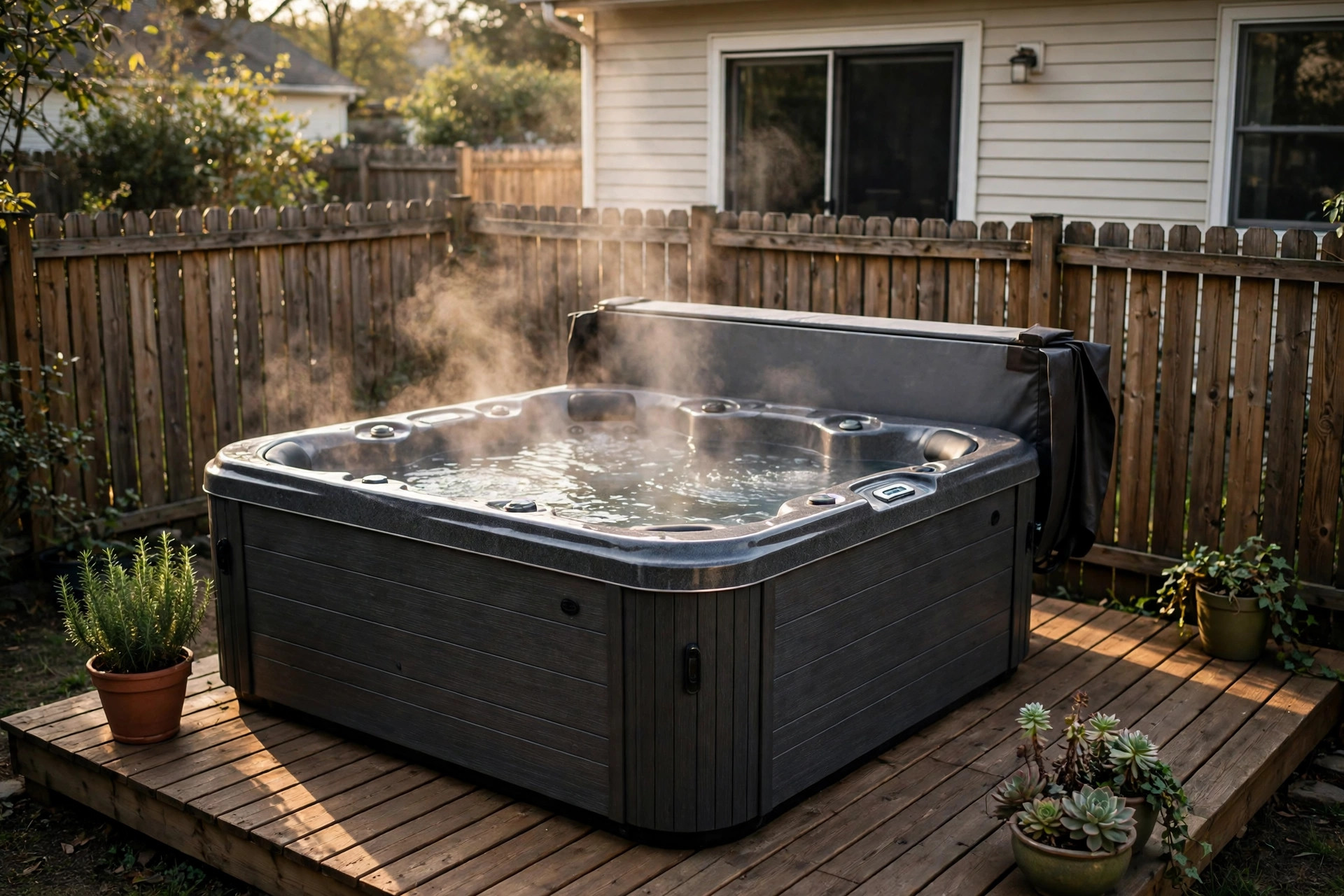

Many people dream of owning a hot tub. They picture warm water, steam in the evening air, and a quiet place to rest. Then they look at their small patio, balcony, or deck. The dream fades. A full size spa seems too big. The good news is that the best hot tub for small spaces is real. It is not a watered down version of the real thing. It is a tub built for tight areas from the start. This guide shows how to pick one. It covers sizes, types, costs, care, and safety. It also answers the questions buyers ask most.
Why a Hot Tub Still Makes Sense in a Small Space
A small yard does not mean a small reward. A compact hot tub gives the same warm soak as a large one. You sit in hot water. Your muscles relax. Stress drops. Many owners use their tub daily in the evening. Even twenty minutes can help after a long day at work.
Small tubs also heat faster. Less water means less wait time. They cost less to run each month. They use fewer chemicals. For a couple or a single person, a two person tub is often the perfect fit. You do not pay for seats you never use.
A compact tub can also fit places a big spa never could. It can sit on a balcony, a small deck, or in a corner of the yard. Some models roll through a standard door. That means no crane, no fence removal, and no damage to the lawn. Delivery day becomes simple.
What to Look for in the Best Hot Tub for Small Spaces
Choosing the right model takes some care. These are the points that matter most.
Size and Footprint
Measure first. Always measure before you shop. A compact tub may measure five to six feet across. Write down the length, width, and height of your space. Then add at least six inches of clear space on each side. You need room for the cover lifter and for service panels.
Think about the shape too. Round tubs fit well in corners. Square tubs line up with walls and fences. Oval tubs can sit along a narrow deck. Sketch your space on paper. Mark the door, the steps, and any posts. Bring the sketch when you shop. It will save you from a bad surprise on delivery day.
Seating and Comfort
A small tub does not mean cramped seats. Two to four seat models give each person a full molded seat. Look for deep seats with good leg room. Sit in the tub dry if a dealer lets you. Check the headrest height. Check that your knees do not hit the other seats.
Some small tubs add a lounger seat. A lounger is nice for one person. But it takes space from others. If two people will use the tub often, pick a model with two full upright seats instead.
Jets and Massage
Jets move the water. They give the massage feel. Small tubs can still hold a strong pump and many jets. But jet count is not the whole story. Look for jets placed at the back, neck, and feet. Ask for a wet test if you can. A wet test lets you feel the jets with water in the tub.
Adjustable jets let you change the strength. This matters when two people want a different feel. A strong pump matters more than a high jet count. A weak pump with many jets will feel soft.
Insulation and Energy Use
A well insulated tub holds heat. It costs less to run. Full foam insulation fills the shell walls. It keeps heat in and noise out. Look for a good cover too. A thick tapered cover stops heat loss at the top. The Energy Star site gives general advice on how much energy home equipment uses. A small well built tub can cost about the same as a few light bulbs each month.
Water Care System
Small tubs hold less water. That means water chemistry changes faster. A good filter and a simple care routine keep the water clean. Many models now come with salt water systems or ozone units. These cut down on chemical use. The experts at Swim University publish clear guides on basic water care. Learn the routine before the tub arrives.
Types of Compact Hot Tubs
Not every small tub is built the same. These are the main types you will see.
Plug and Play Models
Plug and play tubs run on a standard 120 volt outlet. You fill the tub, plug it in, and it heats. They are the simplest option for a small space. There is no need to hire an electrician for a 220 volt line. The trade off is slower heating. The jets may also run softer when the heater is on. For mild climates and light use, they work well. Major makers such as Hot Spring offer compact lines worth a look.
Hard Shell 220 Volt Models
A 220 volt tub heats fast and runs strong jets at the same time. It needs a dedicated circuit and a licensed electrician. The install cost is higher. But the soak is stronger. If you live in a cold area, this type is worth the extra cost. Read our guide to the best hot tub for cold climates to learn how insulation and heater size matter in winter.
Inflatable Hot Tubs
Inflatable tubs are the most flexible option. They blow up in minutes and fold away when not in use. They fit on balconies and in rented homes. They cost far less than hard shell models. The heat loss is higher and the jets are gentle. But for a first tub or a tight budget, they are hard to beat. See our review of the best inflatable hot tub for couples for top picks.
Soak Tubs and Japanese Style Tubs
Deep round soak tubs take up very little floor space. They are tall and narrow. You sit upright in deep water. They give a great soak with few jets. Some people love the simple style. They work best for one or two people who want heat more than massage.
Cost and Price
A small hot tub costs less than a large one. But prices still vary a lot. Here is what to expect in the United States.
Inflatable models run from about 400 to 1,200 dollars. Plug and play hard shell models run from about 3,000 to 7,000 dollars. Premium compact 220 volt models run from about 7,000 to 12,000 dollars. Prices move with features, brand, and local dealer costs.
Plan for extra costs too. Delivery may cost 200 to 500 dollars if a crane is needed. Electrical work for a 220 volt tub can cost 500 to 1,500 dollars. A solid pad or reinforced deck may cost a few hundred dollars. Chemicals cost about 20 to 40 dollars a month. A cover lasts three to five years and costs 300 to 600 dollars to replace.
Monthly electric cost for a small tub is often 20 to 50 dollars. A well insulated model in a mild climate sits at the low end. Retailers like The Home Depot list current prices for many compact models. Check a few stores to get a feel for the market.
Care and Upkeep
A small tub is easy to care for. The routine is short. But you must keep it up. Small water volume means problems show fast.
Test the water two or three times a week. Keep chlorine or bromine at the right level. Check pH and alkalinity. Adjust as needed. Our article on the best hot tub chemicals starter kit lists what a new owner should buy first. Leslie’s Pool Supplies also carries test strips and start up kits in most cities.
Clean the filter every two to four weeks. Rinse it with a garden hose. Deep clean it with filter cleaner every few months. Replace it once a year. Wipe the shell above the water line weekly. This stops scum lines from forming.
Drain and refill the tub every two to three months. Small tubs are quick to drain. Use a sump pump to speed the job. Clean the shell with a non abrasive cleaner while it is empty. Then refill and rebalance the water.
Keep the cover clean. Rinse it monthly. Treat vinyl covers with a protectant twice a year. A clean cover lasts longer and seals better.
Safety in a Small Space
Hot tubs need care around heat and water. Small spaces add their own risks. Plan for them.
Keep the water at or below 104 degrees Fahrenheit. That is the safe upper limit. Pregnant women, small children, and people with heart conditions should talk to a doctor first. Limit soaks to fifteen or twenty minutes. Drink water before and after.
Place the tub where the cover can open fully. A cover lifter needs clearance behind the tub. Never block a door or a walkway with the tub. Keep electrical outlets and cords away from the water. The Consumer Product Safety Commission warns that water and electricity are a deadly mix. Use a ground fault protected circuit. Never use an extension cord.
Lock the cover when the tub is not in use. A locking cover keeps children and pets out. It also keeps heat in. On a balcony, check the weight limit first. A filled two person tub can weigh over 2,000 pounds. Have a contractor confirm the structure can hold it. Lowe’s and other home stores sell deck load guides, but a local contractor knows your building best.
Frequently Asked Questions
What is the smallest hot tub you can buy?
The smallest hard shell tubs seat two people and measure about five feet across. Inflatable models can be even smaller. Some hold just 120 gallons of water. Measure your space and add room for the cover and service access.
Can I put a hot tub on a balcony?
Sometimes. It depends on the building and the weight limit. A filled small tub is very heavy. You need written approval from the building owner or manager. You also need a structural engineer or contractor to confirm the balcony can carry the load. Inflatable tubs are lighter but still heavy when full.
How much does it cost to run a small hot tub each month?
Most owners spend 20 to 50 dollars a month on electricity. Chemicals add 20 to 40 dollars more. A well insulated tub with a good cover stays near the low end. Cold climates and heavy use push costs up.
Do small hot tubs need the same chemicals as big ones?
Yes. The same sanitizer, pH, and alkalinity rules apply. The doses are smaller because there is less water. Test often. Small water volume changes chemistry fast. Start with a starter kit made for spas.
How long do compact hot tubs last?
A quality hard shell tub lasts ten to fifteen years or more. The cover needs replacement every three to five years. Pumps and heaters may need service after five to ten years. Inflatable tubs last two to five years with good care.
Is a plug and play hot tub worth it?
For many small spaces, yes. You avoid the cost of an electrician. Setup takes an hour. The heat is slower and the jets are softer. If you want a stronger massage or you live where winters are harsh, a 220 volt model is the better pick.
A Short Final Word
The best hot tub for small spaces is the one that fits your space, your budget, and your daily life. Measure first. Pick the right type. Plan for care and safety. A compact tub can give you years of warm quiet evenings. Start small, soak often, and enjoy every minute. For more shopping ideas, browse the spa section at Pool Warehouse and the buying guides at Bullfrog Spas. The review team at The Spruce also keeps updated lists of top rated compact models.
References
Bullfrog Spas. (n.d.). Hot tubs and spas. https://www.bullfrogspas.com ENERGY STAR. (n.d.). Energy efficient products. https://www.energystar.gov Hot Spring Spas. (n.d.). Hot tubs and spas. https://www.hotspring.com Leslie’s Pool Supplies. (n.d.). Pool supplies and equipment. https://www.lesliespool.com Lowe’s. (n.d.). Home improvement products. https://www.lowes.com Pool Warehouse. (n.d.). Pool equipment and supplies. https://www.poolwarehouse.com Swim University. (n.d.). Pool and hot tub care guides. https://www.swimuniversity.com The Home Depot. (n.d.). Home improvement products. https://www.homedepot.com The Spruce. (n.d.). Home and garden advice. https://www.thespruce.com U.S. Consumer Product Safety Commission. (n.d.). Product safety information. https://www.cpsc.gov
Was this guide helpful?

About Michael Thompson
The My Garden US editorial team writes practical, in-depth home and garden guides for American homeowners — tested advice, no fluff.
You May Also Like

Best Pool Alarm With Remote Receiver: A Complete Buyer’s Guide
August 27, 2026 0 views
Best Pool Heater for Small Pools
October 5, 2026 0 views
Best Pool Filter for Saltwater Systems: A Practical Homeowner Guide
August 26, 2026 0 views