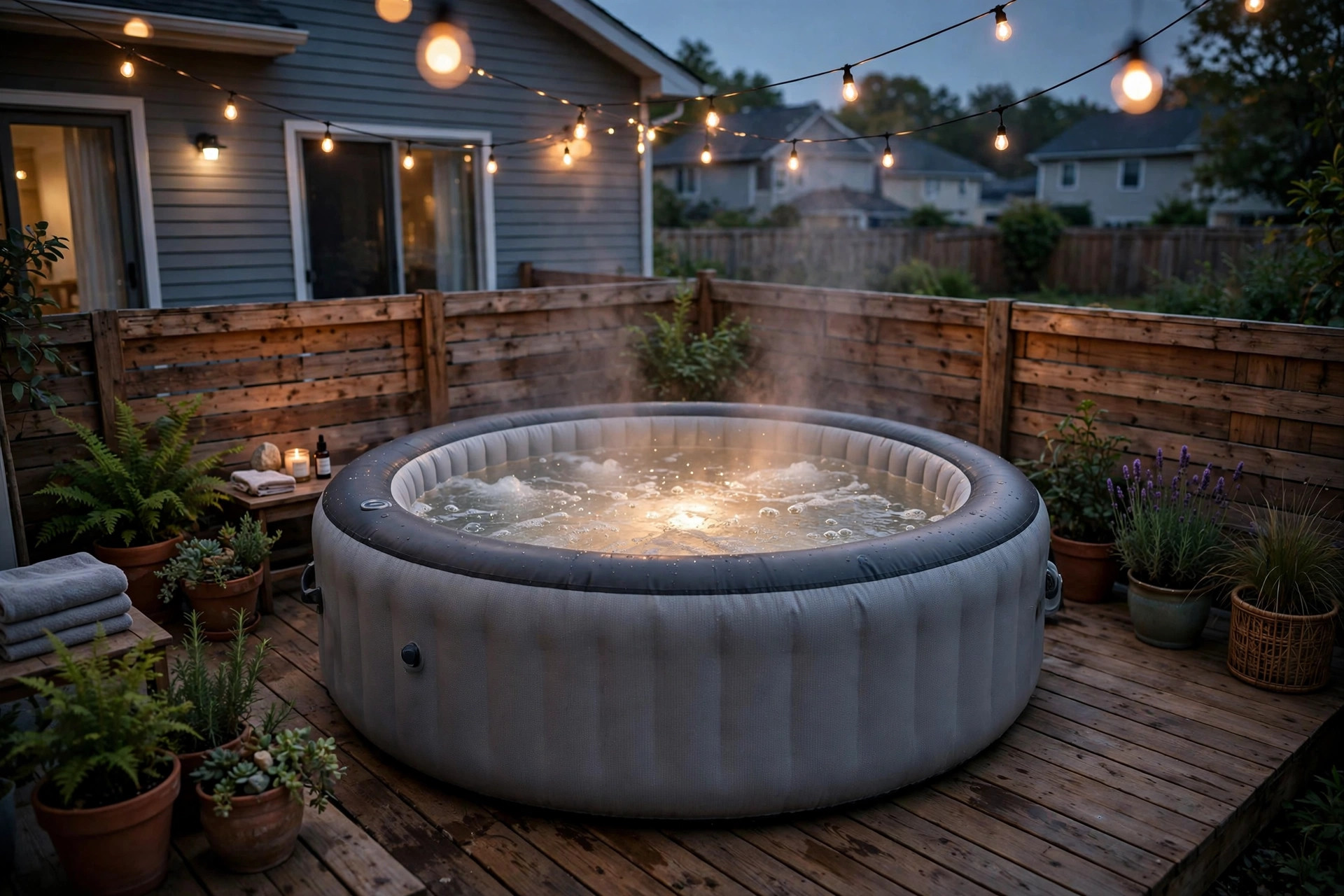
A quiet soak at the end of the day is one of the simplest pleasures a couple can share. The best inflatable hot tub for couples brings that pleasure home without the cost, wiring, or building work of a permanent spa. These portable tubs blow up in under an hour, heat to a full 104 degrees, and pack away when the season ends. Yet not every model suits two people, and the gap between a good buy and a poor one is wider than the prices suggest. This guide walks through what matters, what to avoid, and how to keep the water clean and warm all season.
Why an Inflatable Tub Suits a Couple
A permanent hot tub is a major project. It needs a concrete pad, a dedicated electrical line, and delivery by crane in some yards. An inflatable model needs none of that. Two adults can carry it, and most set up on a flat patio, deck, or even a level patch of lawn. The purchase price is a fraction of a hard-shell spa, and if you move house, the tub moves with you.
For couples, size is the main advantage. Many inflatable tubs seat four or six, but a two-person tub heats faster, holds heat better, and costs less to run. Less water means less electricity to heat it and fewer chemicals to keep it clean. A four-person tub used by two people is mostly wasted water. Choosing a tub sized for two is the first step toward the best inflatable hot tub for couples, and it pays off every month on the power bill.
There is also the question of where to put it. A couple-sized tub fits on small decks and balconies that could never hold a full spa. It can tuck into a corner of the yard and feel like a private retreat rather than a piece of equipment.
What to Look for When You Shop: Best Inflatable Hot Tub for Couples
Size and Shape
Two-person tubs are usually round or square, roughly five feet across. Round tubs are common and simple, while square tubs use space a little better on decks. What matters more than the shape is the interior room. Two adults of average size need legroom, and a tub rated for two can feel tight if the walls lean inward. Check the water capacity in gallons. For two people, 150 to 200 gallons is a comfortable range. Larger than that, and you are paying to heat water you will not enjoy.
Seat height matters too. Inflatable walls are soft, so taller bathers may feel they are sitting low in the water. Some models add a small raised floor pad or bench insert that makes seating more comfortable for long soaks.
Heating Power and Heat-Up Time
Every inflatable tub heats with the same basic system: an electric heater built into the pump unit, usually around 1,350 watts on a standard household plug. From a cold fill, expect 12 to 24 hours to reach full temperature, depending on air temperature and tub size. A smaller couples tub heats at the faster end of that range.
Look at the maximum temperature. Most reach 104 degrees Fahrenheit, which is the standard limit for home spas. Also check whether the heater can run at the same time as the jets. In some units, turning on the bubble jets pauses the heater, so the water slowly cools during a long soak. Models that heat and bubble at once hold their temperature much better.
Jets and Massage
Inflatable tubs do not have the deep-tissue water jets of hard-shell spas. Instead, they use air jets that push streams of bubbles up through the floor. Air jets feel pleasant and relaxing, but they are gentler than water jets. When you compare models, count the air jets and note where they sit. A ring of jets around the edge gives even coverage for two people sitting across from each other.
Some premium models add a massage seat or a stronger bubble output. Do not expect miracles, but a well-placed jet ring makes a clear difference in comfort.
Build Quality and Materials
The outer wall is usually laminated PVC, sometimes with a woven outer skin for looks. Triple-layer walls hold air and heat better than single-layer walls. I-beam construction, where the walls have internal supports, helps the tub hold its shape when you lean against it. A reinforced lid is worth looking for, because much of the heat loss happens through an uncovered surface. Retailers such as Home Depot list wall materials in the product details, and it is worth reading those lines before you buy.
Ease of Setup
Setup should take one person less than an hour. The pump unit inflates the tub, and you fill it with a garden hose. Look for a tub with clear instructions and a filter housing that is easy to reach. A digital control panel that locks its settings is a small but real plus, since it stops accidental changes.
Types and Options Worth Knowing
Standard two-person round tubs. The most common and the least expensive. Simple controls, air jets, and a basic insulated cover. Ideal for first-time buyers.
Square couples tubs. Slightly more interior room and a tidier fit in corners. Often cost a little more but use deck space well.
Tubs with built-in seating. Some models mold two seats into the interior or include foam inserts. These raise comfort but reduce flexibility, so try to see one in person if you can.
High-output models. A few makers sell inflatable tubs with stronger heaters or extra insulation. They cost more up front but lose less heat in cold weather, which matters if you plan to soak through autumn.
Saltwater-compatible models. Some tubs work with a small saltwater sanitizer system, which can make the water feel softer and reduce chemical handling. Guides from Leslie’s Pool Supplies explain how salt systems differ from chlorine.
Cost and Price: What to Expect
A good two-person inflatable hot tub usually costs between $400 and $900. Basic round models sit at the lower end, while square models with better insulation and covers sit at the higher end. Prices climb in spring when demand is highest, and deals often appear in late summer and autumn.
The purchase price is only part of the story. Running costs matter more over time. Heating a 200-gallon tub can add $20 to $50 a month to the electric bill, depending on your rates, the weather, and how often you heat it. Chemicals and replacement filters add another $10 to $20 a month. A tight-fitting insulated cover is the single best way to hold these costs down, because an uncovered tub can lose several degrees overnight.
Compare that with a hard-shell spa, where installation alone can cost several thousand dollars. The inflatable tub wins on price by a wide margin. Writers at The Spruce often point out that the real cost of a spa is in daily operation, not the box it came in.
Care and Upkeep
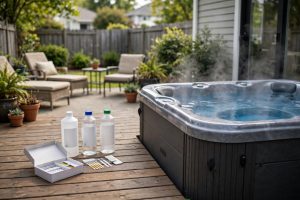
An inflatable tub is small, so water care is simple but not optional. Test the water two or three times a week with test strips. Keep chlorine or bromine at the level the product label directs, and keep the pH between 7.2 and 7.8. If you are new to water testing, a beginner guide such as our walkthrough of a salt water pool for beginners guide covers the same basic chemistry in plain terms.
Change the water every one to three months, depending on use. When the water starts to smell or look cloudy even after treatment, drain and refill. Draining is easy, since most tubs have a hose adapter at the base.
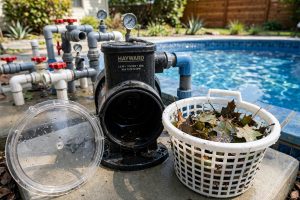
Rinse the filter cartridge once a week and replace it every few weeks. A dirty filter makes the pump work harder and the water heat slower. Wipe down the tub walls with a soft cloth when you drain it, and check the air chambers for slow leaks once a month. A spray bottle of soapy water will show bubbles at any small leak, which most makers let you patch with the included repair kit.
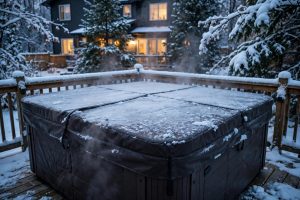
In winter, you have two choices. Keep the tub running and heated, which protects it from freezing, or drain it fully, dry it, and store it indoors. Never let water freeze inside the pump or pipes, since ice can crack the fittings. Our notes on how to lower pool ph levels safely are written for pools, but the same careful approach to chemicals applies to a small spa.
Safety Comes First
Hot water and electricity demand respect. Plug the tub directly into a grounded outdoor outlet, never into an extension cord. Most makers require a GFCI-protected circuit, which cuts power if a fault occurs. If your outlet is not GFCI-protected, have an electrician fit one before you fill the tub.
Keep the water at or below 104 degrees Fahrenheit. Limit soaks to 15 to 20 minutes at full heat, and step out if you feel dizzy or overheated. Pregnant women, people with heart conditions, and anyone on medication should talk to a doctor before using a hot tub. The U.S. Consumer Product Safety Commission publishes guidance on spa and pool safety that every owner should read.
Never leave the tub uncovered and full when children are nearby. Use the locking cover, and consider a fence or barrier if local rules require one. Do not drink alcohol in the tub, since alcohol and hot water together can lower blood pressure and cause fainting. Rinse off before entering to keep lotions and oils out of the water, which also helps the chemicals last longer.
Store chemicals in a cool, dry place away from children and pets, and never mix different chemicals in the same container. Specialist retailers like Pool Warehouse sell test kits and sanitizers sized for small spas, which saves you from measuring out doses meant for full pools.
FAQ
How long does a two-person inflatable hot tub last?
With normal care, expect three to five years. The pump and heater usually fail before the tub walls do. Keeping the water chemistry balanced protects the pump seals and the liner, which is the main way owners extend the life of the tub.
Can I use it in winter?
Yes, if the model is rated for cold weather and you keep it heated and covered. In very cold regions, heat loss rises sharply, so an insulated cover and a wind shelter help a great deal. If you plan to close it for the season, drain and dry it fully before storage.
How much does it cost to run each month?
Most couples report $20 to $50 a month for electricity, plus $10 to $20 for chemicals and filters. Keeping the tub covered when not in use and lowering the temperature a few degrees between soaks cuts the bill noticeably.
Is an inflatable tub as comfortable as a hard-shell spa?
It is comfortable in a different way. Air jets give a gentle bubbling massage rather than strong water jets, and the soft walls are kind on elbows and backs. Hard-shell spas offer deeper jets and longer life, but at many times the price. For most couples, the inflatable tub is more than comfortable enough.
Do I need special wiring?
No. Almost all inflatable tubs plug into a standard 120-volt household outlet. The one hard rule is that the outlet must be GFCI-protected and the cord must reach without an extension cord.
How often should I change the water?
Every one to three months for a couples tub, depending on how often you soak. Heavy use, cloudy water, or a strong chemical smell all mean it is time for a fresh fill. Learning basic dosing, like how to add cyanuric acid to pool water for outdoor setups, helps you keep small spas stable too.
A Short Final Word
The best inflatable hot tub for couples is not the one with the longest feature list. It is the one that fits your space, heats quickly, holds its heat, and is simple enough that you will actually use it week after week. Buy for your real needs: a two-person size, a good cover, easy water care, and solid safety habits. Do that, and a quiet soak under the stars becomes part of your normal week, not a rare treat. For a broader view of the spa world, makers like Hot Spring and Bullfrog Spas show what permanent spas offer, which makes the value of a good inflatable tub even clearer. And if you ever want to learn the science of clean water in depth, Swim University is a fine place to continue.
References
Bullfrog Spas. (n.d.). Hot tubs and spas. https://www.bullfrogspas.com Hot Spring Spas. (n.d.). Hot tubs and spas. https://www.hotspring.com Leslie’s Pool Supplies. (n.d.). Pool supplies and equipment. https://www.lesliespool.com Pool Warehouse. (n.d.). Pool equipment and supplies. https://www.poolwarehouse.com Swim University. (n.d.). Pool and hot tub care guides. https://www.swimuniversity.com The Home Depot. (n.d.). Home improvement products. https://www.homedepot.com The Spruce. (n.d.). Home and garden advice. https://www.thespruce.com U.S. Consumer Product Safety Commission. (n.d.). Product safety information. https://www.cpsc.gov
Was this guide helpful?

About James Carter
The My Garden US editorial team writes practical, in-depth home and garden guides for American homeowners — tested advice, no fluff.