Perennial salvia is the border plant that keeps its promises: violet-blue spikes from early summer on, genuine drought tolerance, bees all over it, and a return every year bigger than the last. Do not confuse it with annual salvia or culinary sage - this is the hardy border perennial (Salvia x sylvestris and its kin) that anchors sunny plantings across the country. Learning how to grow perennial salvia comes down to sun, drainage, and one midsummer haircut.
Table of Contents
Table of Contents

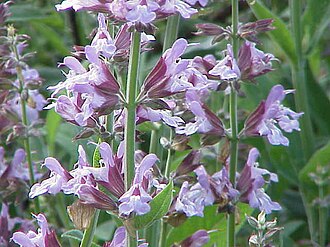
Photo: Wikimedia Commons
Perennial salvia suits zones 4 through 9 and needs full sun with average, well-drained soil. It is not reliably hardy below zone 4 without protection, and in the warmest zones it grows but blooms poorly without a cool winter rest. Check the USDA zone planting dates on our planting calendar to time spring planting.
Choosing Varieties
When it comes to how to grow perennial salvia, getting the details right makes all the difference.

Many homeowners find that how to grow perennial salvia is easier than they expected once they know the basics.
'May Night' (also sold as 'Mainacht') is the classic - deep violet-blue spikes, compact habit, and the standard by which others are judged. 'Caradonna' offers dark purple stems with violet flowers for striking contrast. 'Blue Hill' (also 'Blauhügel') is a softer sky-blue on tidy mounds. 'East Friesland' ('Ostfriesland') blooms a touch later, extending the season when planted with earlier types.
Buy potted plants in spring - salvia establishes fast and blooms the first year. When you are learning how to grow perennial salvia, 'May Night' is the safest bet: widely available, long-blooming, and tough. Plant in groups of three or five for impact; a single plant looks lonely, while a drift reads as a river of blue. It pairs beautifully with Russian sage for a blue-on-blue combination, or with blanket flower for classic contrast.
When and How to Plant
Many homeowners find that how to grow perennial salvia is easier than they expected once they know the basics.
The key to how to grow perennial salvia is choosing the right approach for your space and budget.
Plant transplants in spring, about a week after your last spring frost, spacing them 12 to 18 inches apart - they bush out quickly and need air circulation to stay healthy. Set the crown at soil level, water in well, and mulch lightly. You can also plant in early fall in mild climates, giving roots time to establish before winter.
Start seeds indoors eight weeks before the last frost for named-strain seed, or direct sow after the frost date - though seed-grown plants vary in color and bloom later than nursery transplants, so buy plants when exact variety matters. For most gardeners, transplants are the better buy: instant impact, exact variety, first-year flowers. The Old Farmer's Almanac lists perennial salvia among the most reliable perennials for sunny borders, and nurseries stock it everywhere for good reason. Gardenia.net compares salvia cultivars with photos.
Planting Cheat Sheet
- Transplant 1 week after last frost, 12–18 inches apart.
- Full sun and well-drained soil; crown at soil level.
- Start seeds indoors 8 weeks early or direct sow after frost.
- Plant in drifts of 3–5 for the best effect.
Soil and Sun
The key to how to grow perennial salvia is choosing the right approach for your space and budget.
With a little planning, how to grow perennial salvia can fit even a busy schedule.
Full sun - six to eight hours minimum - for the densest growth and heaviest bloom. Average, well-drained soil is perfect; salvia tolerates poor soil and heat admirably, and it is one of the best perennials for hot, dry banks where fussier plants fry. Good drainage matters more than fertility - crowns rot in soggy winter soil.
A neutral to slightly alkaline pH suits it. Do not enrich the bed heavily; lean to average soil grows sturdier plants with more flowers. Space generously - good airflow keeps the foliage healthy and the flower spikes standing tall, the same principle that keeps bee balm mildew-free. Clemson Cooperative Extension recommends generous spacing for air circulation. In humid regions, air circulation is the difference between clean foliage and a mildewed mess.
Watering and Feeding
With a little planning, how to grow perennial salvia can fit even a busy schedule.
Before you start, it helps to understand how how to grow perennial salvia works in real homes.
Water until established, then relax - salvia is genuinely drought tolerant once its roots are down. In a normal summer, rainfall suffices; water deeply only in extended drought. Overwatering produces soft, floppy growth and invites crown rot - the plant's two enemies are wet feet and kindness.
Do not fertilize, or do it only very lightly in truly poor soil. Feeding pushes leafy growth at the expense of flowers and weakens the plant's drought toughness. A yearly top-dressing of compost is the maximum, and many gardeners skip even that. Plants in lean soil live longer, bloom more, and stand up straighter - the trifecta that makes salvia so carefree.
Care Through the Season
Before you start, it helps to understand how how to grow perennial salvia works in real homes.
A good plan for how to grow perennial salvia saves time, money, and frustration.
Shear the whole plant back by half after the first bloom flush - this one haircut is the secret to a season-long show. It looks drastic, but within weeks fresh foliage pushes up and a strong second round of flowers follows. Without shearing, the plant grows leggy, flops, and blooms sporadically; with it, you get two full flushes and tidy mounds all season.
Deadheading individual spent spikes also works but takes longer; the shearing method handles the whole plant at once and gives a more uniform second flush. Either way, preventing seed set keeps energy in flowers rather than seeds and stops the self-seeding that some varieties do enthusiastically - seedlings of named varieties rarely come true, so self-sown plants are a mixed blessing. Divide every three to four years in spring or fall if the center thins or flowering declines - salvia divisions establish quickly and can be shared with neighbors, who will think you a generous gardener.
Watch for powdery mildew in humid shade (give it sun and air) and spider mites in hot, dry spells (blast with water). Few other pests bother it - the aromatic foliage repels most insects, and deer and rabbits generally leave it alone, which makes salvia valuable in gardens where coneflowers and other tender perennials get eaten.
The Midsummer Shearing
If you remember one technique from this guide on how to grow perennial salvia, make it the post-bloom shearing. When the first flush fades - usually by midsummer - cut the entire plant back by half with shears or hedge trimmers. Water if the weather is dry, and wait. The regrowth is compact, the second bloom is often heavier than the first, and the plant looks fresh into fall. Gardeners who shear get twice the flowers of gardeners who do not; it is that simple.
Harvest and Enjoyment
A good plan for how to grow perennial salvia saves time, money, and frustration.
For most people, how to grow perennial salvia comes down to a few smart choices.
Cut the violet-blue spikes for fresh or dried arrangements when the lower florets open - they hold color well dried, hanging upside down in a dark, airy spot. For drying, cut stems at peak bloom, strip the lower leaves, and hang in small bunches; the violet-blue holds better than most flower colors, fading only slightly. In the vase, expect about a week; dried, they last for months in winter arrangements. The more you cut, the more the plant produces, so a cutting patch doubles as deadheading.
Bees adore the flowers - on a sunny day the planting hums with bumblebees working spike after spike - so leave some spikes standing for the pollinators even as you cut for the house. Hummingbirds visit too, though less exclusively than they visit penstemon. A salvia drift in full bloom is one of the garden's great pollinator shows, and it asks nothing extra for the performance. In the border, salvia's vertical spikes contrast beautifully with mounded plants, and the blue tones cool down hot-colored plantings.
It is the classic companion for roses - the blue spikes make rose blooms glow by contrast - and for daylilies and ornamental grasses, where its tidy mounds anchor looser, wilder neighbors. The USDA PLANTS Database lists salvia relatives for pollinator plantings. A drift of 'May Night' in front of pale roses is one of the most reliable color combinations in gardening.
Troubleshooting
For most people, how to grow perennial salvia comes down to a few smart choices.
Plant flopped open. Too much shade, water, or fertilizer - or skipped the shearing. Cut back hard, give full sun, and grow lean.
No second bloom. You skipped the midsummer shearing. Cut back by half after the first flush and the rebloom follows within weeks.
Powdery mildew. Humid, crowded, or shady conditions. Space 12–18 inches apart, give full sun, water at the base in the morning.
Crown rot. Soggy winter soil. Replant in spring in sharply drained soil; keep winter mulch pulled back from the crown.
Few flowers, lots of leaves. Too much nitrogen or too little sun. Stop feeding and ensure six-plus hours of direct sun.
Winter-killed in zone 4. Marginal hardiness - mulch lightly after the ground freezes and plant in a sheltered spot with good snow cover; or treat as a long-lived annual and replant each spring, which many northern gardeners do without regret.
For gardeners in zones 4 through 9 with a sunny border, learning how to grow perennial salvia delivers months of violet-blue bloom from one of the toughest, most drought-proof, most bee-beloved perennials you can plant. Give it full sun, keep it lean, shear it once in summer for the rebloom - and do not ever confuse it with its tender annual cousins or with culinary sage in the herb bed, which is a very different plant entirely, truly.
References
If you are new to how to grow perennial salvia, start with the simplest option and build from there.
Missouri Botanical Garden. (n.d.). Salvia x sylvestris. https://www.missouribotanicalgarden.org/
University of Minnesota Extension. (n.d.). Growing perennials in home gardens. University of Minnesota. https://extension.umn.edu/
Gardenia.net. (n.d.). Salvia x sylvestris (Wood Sage). https://www.gardenia.net/
Old Farmer's Almanac. (n.d.). Growing perennials. Yankee Publishing. https://www.almanac.com/
Clemson Cooperative Extension. (n.d.). Salvia. Clemson University. https://hgic.clemson.edu/
When it comes to how to grow perennial salvia, getting the details right makes all the difference.
Was this guide helpful?

About My Garden US
The My Garden US editorial team writes practical, in-depth home and garden guides for American homeowners — tested advice, no fluff.
You May Also Like
Snake Plants Indoor: A Practical Guide for American Homes
March 11, 2026 16 views
Native Milkweed Species for Monarch Butterfly Gardens
November 4, 2026 17 views
A Native Grass Seed American Homes Guide: How to Choose, Plant, and Keep a Native Lawn
August 19, 2026 20 views