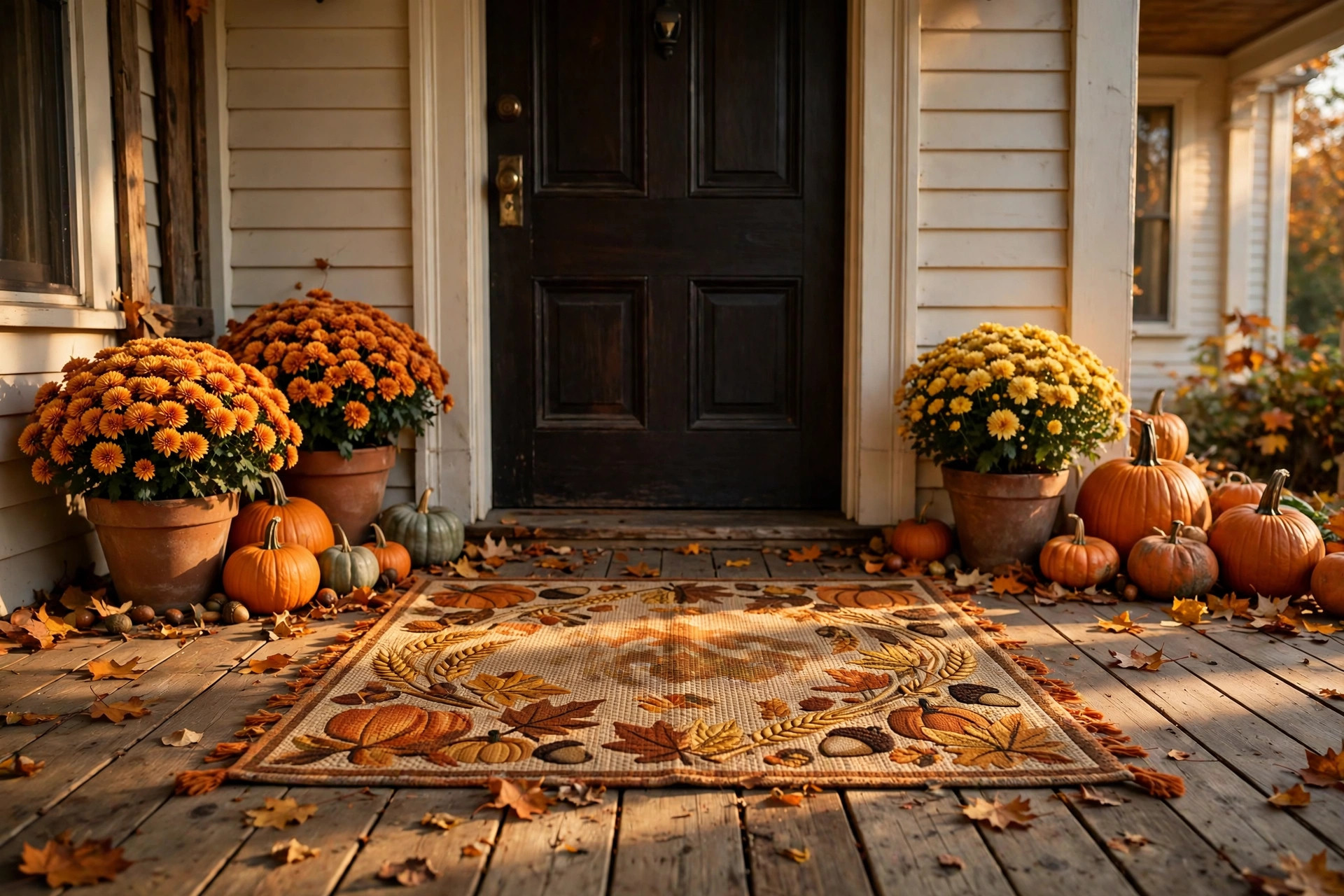

The best fall outdoor rug for porch harvest season does more than cover bare wood or concrete. It turns a plain porch into a warm place that says welcome. Each October, when the air grows cool and the leaves turn, the porch becomes the face of the home. A rug with harvest colors pulls the whole scene together.
Many shoppers buy the first rug they see at the store. Then the rug fades in three weeks, holds water after rain, or slides underfoot. A little care before buying saves money and trouble. This guide walks through the main choices in plain terms. It covers why the rug matters, what to look for, the common types, what you may pay, how to keep the rug clean, and how to stay safe. It ends with answers to common questions.
Why a Fall Rug Matters on the Porch
The porch is the first thing guests see and the last thing they pass on the way out. In harvest season the porch carries extra weight. Neighbors walk by. Children come for trick or treat. Family gathers for long weekends. A bare porch can look cold even when the rest of the yard is dressed in color.
A good outdoor rug adds warmth at once. The eye lands on deep red, burnt orange, or golden brown and reads the scene as autumn. The rug also marks the door area. It tells guests where to step and where to wipe their shoes. On chilly nights it softens the hard floor for rocking chairs and porch swings.
There is a practical side too. Fall brings wet leaves, mud, and grit. A rug catches much of this before it reaches the front door. It cuts down on sweeping and mopping inside. A rug that dries fast also keeps the porch floor from staying damp, which helps the boards or concrete last longer.
For people who love harvest decor, the rug is the base layer. Pumpkins, mums, and lanterns all look better when they sit on or beside a rug that matches them. Think of the rug as the frame of the picture. Without it, the pumpkins are just items on a floor. With it, they are part of a scene.
What to Look For When You Choose: Best Fall Outdoor Rug for Porch Harvest Season
Buying the best fall outdoor rug for porch harvest season starts with a short list of features. Keep these in mind and the choice gets easy.
Weather strength. The rug must stand up to rain, morning dew, and bright sun. Look for fibers made for outdoor use. Polypropylene is the most common and the most trusted. It resists water and sun damage. Natural fibers like jute and sisal look lovely but weaken in wet weather. If your porch is covered, a natural rug can still work. On an open porch, stick with synthetics.
Drainage and drying. Water should pass through or off the rug, not sit in it. Rugs with an open weave dry faster. A flat weave also dries faster than a thick pile. Lift the rug after heavy rain so the floor can breathe.
Size. Measure the porch before you shop. A small rug floats in a large space and looks lost. A rug that is too big can block the door swing. For a standard porch, a rug about four feet wide and six feet long works well in front of the door. On a wide porch with chairs, go larger, perhaps six by nine feet. Many decorating guides from The Spruce note that a rug should sit fully under the front legs of chairs to look right.
Color and pattern. Harvest colors run from deep red and rust to gold, brown, and cream. Plaids and stripes suit farmhouse porches. Border patterns suit classic homes. A simple solid rug lets pumpkins and planters be the stars. Pick one main color that repeats something already on your porch, such as the door paint or the pots.
Backing and grip. Outdoor rugs often have no thick backing, which is good for drainage. But a smooth rug on smooth concrete can slide. Use an outdoor rug pad or tape made for porches. It adds grip and keeps the rug flat at the edges, which cuts the risk of tripping.
Fade resistance. Sun is hard on color. Look for words like UV resistant or fade resistant on the label. Dark colors fade faster than light ones, but a well-made rug holds its color for two or three seasons at least.
Types and Options to Consider
Fall porch rugs come in several common forms. Each has its strengths.
Flat-weave polypropylene rugs. These are the workhorses. They are thin, light, and easy to shake out. Water runs through them. They come in many harvest patterns at fair prices. Most buyers start here and many stay here.
Layered looks. A popular trick is to lay a larger neutral rug under a smaller fall mat. The bottom rug might be plain tan or gray. The top one might read “Hello Fall” or show pumpkins. This layered look appears in many fall porch features on HGTV and in the seasonal ideas from Country Living. It adds depth without much cost.
Coir doormats. Coir is coconut fiber. It is rough and great at scraping shoes. A coir mat with a fall saying works well as the top layer over a bigger rug. Coir does not like long soaking, so keep it under a roof if you can.
Indoor-outdoor rugs. These sit between indoor softness and outdoor toughness. They feel better under bare feet than plain polypropylene. They cost more but last through many seasons.
Round rugs. Most porch rugs are rectangles, but a round rug in front of a round table or by a rocking chair can soften the space. Round shapes suit wide porches and break up long straight lines.
Washable rugs. Some new outdoor rugs can go through a garden hose wash or even a gentle machine wash. If you have pets or heavy foot traffic, washable is worth the extra price.
When you shop, check whether the rug is listed for outdoor use. A rug made only for indoor use will mildew and fade fast outside. Craft and home stores such as Michaels and Wayfair label outdoor rugs clearly, and home centers like The Home Depot group them in the patio section.
Cost and Price
Prices for a fall outdoor rug vary with size, fiber, and brand. Here is a rough guide for the American market.
Small mats, about two by three feet, often sell for 15 to 35 dollars. These work as doormats or top layers. A medium rug, about four by six feet, usually runs 40 to 90 dollars in polypropylene. This is the sweet spot for most porches.
Large rugs, six by nine feet or bigger, range from 90 to 200 dollars. Hand-woven or thick indoor-outdoor rugs can pass 200 dollars. Washable brands sit at the high end of each size.
Seasonal rugs go on sale in late October and November as stores clear fall stock. Buying a rug for next year at half price is a smart move if you have a dry place to store it. Quality matters more than price alone. A 30-dollar rug that lasts one season costs more over time than a 70-dollar rug that lasts three.
Set a budget before you browse. Then compare rugs of the same size and fiber. Reviews help, but read them with care. Look for notes about fading, water pooling, and curling edges after a month of use. Reports from testing groups such as Good Housekeeping and Bob Vila often cover how outdoor rugs hold up over time.
Care and Upkeep
An outdoor rug needs little care, but a little care goes far. Follow these steps through the season.
Sweep or shake the rug once a week. Leaves and dirt grind into the weave if left alone. A broom or a firm shake keeps the fibers open so water drains.
Hose the rug down once or twice a season. Plain water is enough for most dirt. For spots, mix a drop of mild dish soap in warm water and scrub with a soft brush. Rinse well. Never use bleach on a colored rug. It will strip the pattern.
Dry the rug fully after washing. Hang it over a rail or lay it in the sun for a few hours. A rug that stays damp grows mildew and starts to smell. If mildew spots appear, scrub with a mix of water and white vinegar and let the rug dry in full sun.
Bring the rug inside for harsh weather. If a big storm is coming, roll the rug and set it in the garage. Strong wind can flip a light rug across the yard. At the end of the season, clean the rug, let it dry fully, and roll it for storage. Store it standing up, not flat under heavy boxes, so it does not crease.
Check the porch floor under the rug now and then. Trapped moisture can stain wood or concrete. Lift the rug after rain so air can reach the floor. An outdoor rug pad helps airflow and adds cushion.
Safety on the Porch
A rug should make the porch safer, not add new risks. Keep these points in mind.
Flat edges matter most. Curled corners catch shoes and cause trips. If a corner curls, set a heavy pot on it for a day or use outdoor rug tape. Tape made for outdoor use holds through rain.
Grip matters on smooth floors. Tile, painted concrete, and sealed wood get slick under a rug. An outdoor rug pad under the rug stops sliding. Pads made for porches also let water pass through.
Keep the walkway clear. The rug should sit to the side of the main path or lie flat enough to walk over with ease. Do not stack two thick rugs where people step down from the door. One low rug is safer than a tall pile.
Light the area. A rug cannot do its job if guests cannot see it. A porch light or a small lantern near the door helps at night. The federal safety agency at CPSC reminds homeowners that falls on steps and porches rise in the darker months, so good light is worth the effort.
Fire safety counts too. Keep rugs away from open flames, fire pits, and outdoor heaters. Polypropylene melts when it meets heat. Check that the rug sits well clear of any heat source. Guides on porch projects from This Old House often stress keeping fabric decor away from grills and heaters.
Frequently Asked Questions
Can I leave a fall outdoor rug out all winter? You can, but the rug will wear faster. Snow, ice, and road salt are hard on fibers and colors. If you love the rug, store it dry for winter and bring it back in spring or next fall. If you leave it out, shake off snow and let meltwater drain so ice does not form under it.
What is the best material for a rainy porch? Polypropylene is the best pick for wet porches. It does not soak up water and it dries fast. Avoid cotton, jute, and wool in spots that get direct rain. If your porch has a deep roof, natural fibers can work, but synthetics still last longer.
How do I stop my rug from blowing away? Weight helps. Set pots or a bench on the corners. Outdoor rug tape or a heavy pad adds grip. In windy spots, choose a heavier rug rather than a thin mat. Rolling the rug up before a storm is the surest fix.
Will an outdoor rug damage my wood porch? It can if water sits under it. Lift the rug after rain and now and then on dry weeks. A breathable pad lets air move. Check for dark spots under the rug through the season. Stain or seal the wood each year to guard against moisture.
Can I use a fall rug with a door mat on top? Yes, and it looks good. This layered style pairs well with a fall door mat for entryway harvest welcome. Keep the total height low so the door still opens over it. Trim the mat or move it aside if the door drags.
What colors go best with harvest decor? Rust, deep red, gold, and warm brown are the classic harvest set. Cream and tan keep the look calm. Green echoes mums and wreaths. Match the rug to one or two items you already own, such as your fall porch decor for harvest season usa or your fall outdoor planters for porch mums display.
A Short Final Word
The best fall outdoor rug for porch harvest season is the one that fits your porch, stands up to your weather, and matches your style. Measure first. Pick a tough outdoor fiber. Choose harvest colors that please your eye. Keep the rug clean and dry, and it will serve you for several autumns.
A porch dressed for harvest is a small gift to yourself and your street. It costs little and gives back every time you come home. Pick your rug with care, set out the pumpkins, and enjoy the season.
References
Bob Vila. (n.d.). Home improvement advice. https://www.bobvila.com Country Living. (n.d.). Country home and lifestyle. https://www.countryliving.com Good Housekeeping. (n.d.). Product reviews and home advice. https://www.goodhousekeeping.com HGTV. (n.d.). Home and garden ideas. https://www.hgtv.com Michaels. (n.d.). Arts and crafts supplies. https://www.michaels.com The Home Depot. (n.d.). Home improvement products. https://www.homedepot.com The Spruce. (n.d.). Home and garden advice. https://www.thespruce.com This Old House. (n.d.). Home renovation guidance. https://www.thisoldhouse.com U.S. Consumer Product Safety Commission. (n.d.). Product safety information. https://www.cpsc.gov Wayfair. (n.d.). Furniture and home goods. https://www.wayfair.com
Was this guide helpful?

About James Carter
The My Garden US editorial team writes practical, in-depth home and garden guides for American homeowners — tested advice, no fluff.
You May Also Like

The Best Christmas Stocking Holder for Heavy Stockings: A Complete Guide
October 2, 2026 0 views
Best Christmas Bows for Outdoor Wreaths Large
January 9, 2026 0 views
The Best Christmas Icicle Lights for Roof Eaves USA: A Homeowner’s Guide
May 8, 2026 0 views