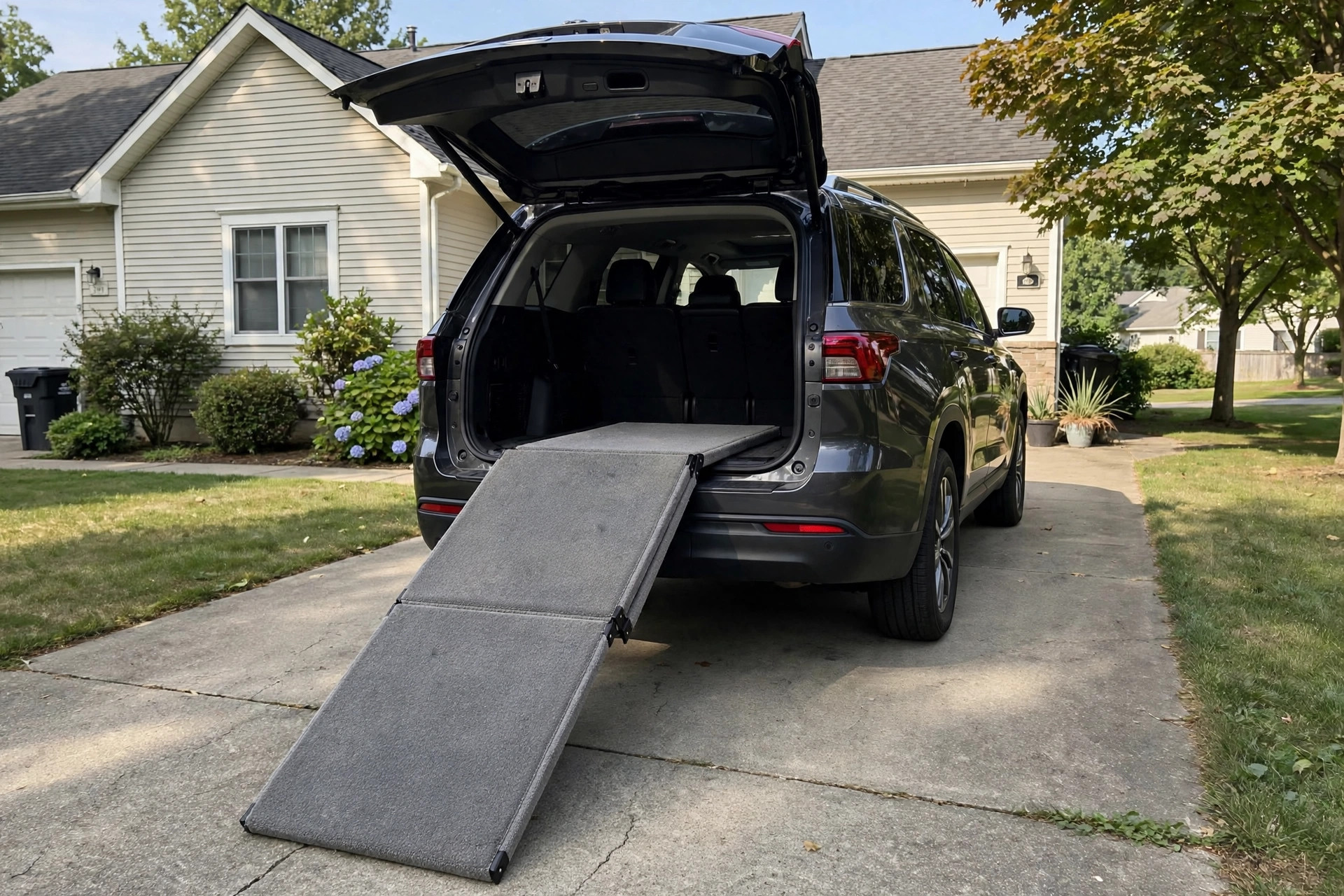

Many dogs love to ride in the car and sleep on the bed. But tall SUVs and high beds can be hard on their bodies. Jumping up and down day after day puts stress on hips, knees, and the spine. A dog ramp for SUV and high bed access solves this problem in a simple way. It gives your dog a smooth slope to walk up instead of a hard jump.
This guide explains why ramps matter, how to pick the right one, what they cost, and how to teach your dog to use one. You will also find care tips, safety notes, and answers to common questions.
Why a Dog Ramp for SUV and High Bed Access Matters
Dogs do not think about the long-term effects of jumping. They just jump. Each leap into the back of a tall SUV sends a shock through the joints. Over months and years, this wear adds up. It is hardest on older dogs, large breeds, small short-legged breeds, and dogs with hip or elbow problems.
Veterinary groups note that repeated hard landings can speed up joint damage in dogs that already have arthritis or hip dysplasia. A dog ramp for SUV and high bed access removes most of that impact. The dog walks up a gentle slope instead of launching its whole body weight into the air. The American Kennel Club and other pet health sources recommend ramps as one of the easiest ways to protect a dog’s joints at home and on the road. You can read general canine health guidance at PetMD and breed health advice at the American Kennel Club.
High beds create the same risk. A tall mattress on a high frame can sit 30 inches or more off the floor. A small dog jumping down from that height lands hard on its front legs and shoulders. A ramp placed against the bed lets the dog stroll up and down with no impact at all. Pairing a ramp with a supportive orthopedic dog bed for senior large dogs gives an older pet a full comfort setup.
A ramp also helps you. Lifting a 70-pound dog into an SUV is hard on your own back. A ramp lets the dog do the work itself. That matters most when the dog is hurt, recovering from surgery, or simply getting old.
How to Choose the Right Dog Ramp: Dog Ramp for Suv and High Bed Access
Not all ramps are the same. The right one depends on your dog’s size, your vehicle’s height, and where you plan to use it. Walk through the points below before you buy.
Measure the Height and the Angle
Start with a tape measure. Measure from the ground to the tailgate of your SUV or to the top of your mattress. Most SUVs have a load height between 28 and 36 inches. High beds often sit between 24 and 32 inches.
The length of the ramp sets the slope angle. A gentler slope is easier for the dog. As a rule, the ramp should be about two to three times as long as the height it must reach. For a 30-inch SUV tailgate, look for a ramp 60 to 90 inches long. Short steep ramps can frighten dogs and do little good. Longer ramps take up more space in storage, so balance slope against storage room. The ASPCA offers general guidance on senior pet mobility that is worth a look while you measure.
Check the Weight Limit
Every ramp has a stated weight limit. Choose one rated well above your dog’s actual weight. If your dog weighs 60 pounds, a ramp rated for 150 to 200 pounds gives a comfortable margin. A ramp that flexes or sags under the dog will scare the animal and may break. Solid build matters more than low price.
Look at the Surface and Grip
The walking surface is one of the most important details. Dogs need traction. Smooth plastic or metal can be slippery, especially for dogs with weak legs or long nails. Look for surfaces covered in carpet, sandpaper-like grip tape, artificial turf, or molded ridges.
Grip matters most in wet weather. Rain on a slick ramp can send a dog sliding. If you live in a wet climate, choose a high-traction surface and dry it off after use. Product comparison sites such as Consumer Reports discuss traction testing methods for pet products.
Check the Width
A narrow ramp feels like a tightrope to a large dog. Most dogs do best on ramps 16 to 20 inches wide. Big breeds may need wider. Small dogs are fine on narrower ramps, but wider is still safer.
Consider Portability
If the ramp is only for the bed, weight and folding do not matter much. If you plan to carry it to the car every day, weight matters a lot. Folding and telescoping ramps are built for travel. Many fold to half their length and weigh under 15 pounds. Some even have carry handles.
Types of Dog Ramps
Folding Ramps
Folding ramps bend in the middle, like a suitcase. They are easy to store in the back of the SUV itself. They suit owners who travel often. The hinge is the weak point, so check reviews for hinge durability before you buy.
Telescoping Ramps
Telescoping ramps slide out to full length and collapse to a short size. They give you adjustable length, which is handy if you own both a tall SUV and a lower car. They tend to be lighter than folding ramps. The sliding sections must lock firmly. Test the locks before trusting the ramp.
Fixed One-Piece Ramps
One-piece ramps do not fold. They are the strongest and simplest option. They work well beside the bed, where the ramp can stay in place all day. The downside is storage. A six-foot rigid ramp is awkward to carry around.
Ramps Versus Steps
Pet steps are another option. They take up less floor space than a long ramp. But steps still require the dog to lift its body with each step. For dogs with bad hips or spinal trouble, a smooth ramp is kinder. Steps can work for young healthy dogs that just need a small boost. For true joint protection, most vets favor ramps. You can compare step and ramp designs at retailers like Chewy and The Home Depot.
Cost and Price
A dog ramp for SUV and high bed access is not a big purchase. Simple plastic folding ramps start around 40 to 60 dollars. Mid-range ramps with carpet surfaces and stronger frames run 70 to 120 dollars. Heavy-duty aluminum ramps for very large dogs can cost 150 to 250 dollars.
Price usually tracks build quality. Cheap ramps may flex under heavy dogs or have thin grip surfaces that wear out fast. You do not need the most expensive model, but avoid the flimsiest. Read user reviews that mention your dog’s size. A ramp that works for a 20-pound dog may fail for an 80-pound one.
Buying a ramp is cheap compared to joint surgery. One avoided injury pays for the ramp many times over.
Training Your Dog to Use the Ramp
Most dogs do not walk up a ramp on the first try. They need time and treats. Rushing the training can make the dog fear the ramp for good. Take it slow over several days.
Start with the ramp flat on the floor. Let the dog sniff it. Place treats along its surface. Let the dog walk across it while it lies flat. Praise every step. Do this for a day or two until the dog walks across without worry.
Next, raise one end slightly. A low couch cushion or a stair step works. Lure the dog up with treats. Keep sessions short, five to ten minutes. End on a good note.
Then move the ramp to the SUV or the bed. Keep a hand on the ramp so it does not shift. Walk beside the dog the first few times. Most dogs learn within a week. Older dogs may take longer. Never push or drag a scared dog up the ramp. Patience now prevents fear later.
Guides at The Spruce Pets and The Spruce include step-by-step training walkthroughs with photos.
Care and Upkeep
A dog ramp lasts longer with basic care. Wipe the surface clean every week or two. Mud and loose fur reduce traction. If the surface is carpet, vacuum it. If it is grip tape, brush it clean and check for worn patches.
Check the hinges, locks, and feet once a month. Tighten any loose screws. Look for cracks in plastic frames. Replace grip tape when it peels or smooths out. Store the ramp dry. A ramp left out in rain will rust at the hardware and rot carpet surfaces.
If you travel with the ramp, pair it with a car seat cover for back seat protection to keep muddy paws off the upholstery. For small dogs that tire on long walks, a pet stroller for small dogs and cats travel can be a useful companion item.
Safety Tips
Safety starts with setup. Always place the ramp on firm, level ground. Set the top end flat against the SUV bumper or the bed frame so there is no gap. A gap at the top is a trap for paws.
Keep one hand on the ramp during the first uses. Some ramps have safety straps that hook to the car. Use them if they are included. They stop the ramp from sliding away mid-climb.
Watch the weight limit. Never let children ride or stand on the dog ramp. Keep the ramp away from pool edges and stairs where a slip could cause a fall.
Supervise young puppies on ramps. Puppies have soft growing joints. A ramp is good for them, but they should still be guided and never allowed to run down the slope at speed.
For general home safety around pets, Lowe’s and Bob Vila publish checklists covering stairs, ramps, and floor surfaces.
Frequently Asked Questions
Will my dog actually use a ramp?
Most dogs will, with patient training. Food-motivated dogs learn fastest. A few stubborn dogs take two weeks or more. Keep sessions short and positive. Almost every dog comes around once it sees that the ramp is safe.
What length ramp do I need for my SUV?
Measure the height from the ground to the tailgate. Multiply by two for a workable slope and by three for a gentle one. For a typical 30-inch SUV, a 60 to 72-inch ramp works well. Taller vehicles need longer ramps.
Can one ramp work for both the SUV and the bed?
Yes, if the heights are close. A portable folding or telescoping ramp can move between the car and the bedroom. If the heights differ a lot, you may need two ramps or an adjustable telescoping model.
Are ramps safe for puppies?
Yes, with supervision. Ramps reduce the joint stress that hard jumps cause in growing puppies. Guide the puppy slowly and do not let it sprint up or down. Large-breed puppies benefit the most.
How much weight can a dog ramp hold?
It varies by model. Light ramps hold 50 to 100 pounds. Standard ramps hold 150 to 200 pounds. Heavy-duty models hold 300 pounds or more. Always pick a rating well above your dog’s weight.
Should I choose a ramp or pet steps for bed access?
For dogs with arthritis, hip problems, or spinal issues, a ramp is the kinder choice. Steps still require lifting the body with each step. For young healthy dogs, steps are fine and take up less space.
A Short Final Word
A dog ramp for SUV and high bed access is one of the simplest tools a dog owner can buy. It costs little, needs no tools, and protects the joints every single day. Measure your vehicle and bed, pick a sturdy ramp with a grippy surface, and train with patience. Your dog will thank you with easier climbs and fewer vet visits down the road.
References
American Kennel Club. (n.d.). Dog care and training resources. https://www.akc.org ASPCA. (n.d.). Pet care and animal welfare resources. https://www.aspca.org Bob Vila. (n.d.). Home improvement advice. https://www.bobvila.com Chewy. (n.d.). Pet supplies. https://www.chewy.com Consumer Reports. (n.d.). Product reviews and ratings. https://www.consumerreports.org Lowe’s. (n.d.). Home improvement products. https://www.lowes.com PetMD. (n.d.). Pet health information. https://www.petmd.com The Home Depot. (n.d.). Home improvement products. https://www.homedepot.com The Spruce. (n.d.). Home and garden advice. https://www.thespruce.com The Spruce Pets. (n.d.). Pet care guides and product reviews. https://www.thesprucepets.com
Was this guide helpful?

About James Carter
The My Garden US editorial team writes practical, in-depth home and garden guides for American homeowners — tested advice, no fluff.
You May Also Like

Best Pet Hair Vacuum for Hardwood Floors: A Simple Buying Guide
June 15, 2026 0 views
The Best Cat Litter for Odor Control in Multi Cat Homes
May 5, 2026 0 views
Best Litter Scoop with Holder for Easy Cleaning
February 6, 2026 0 views