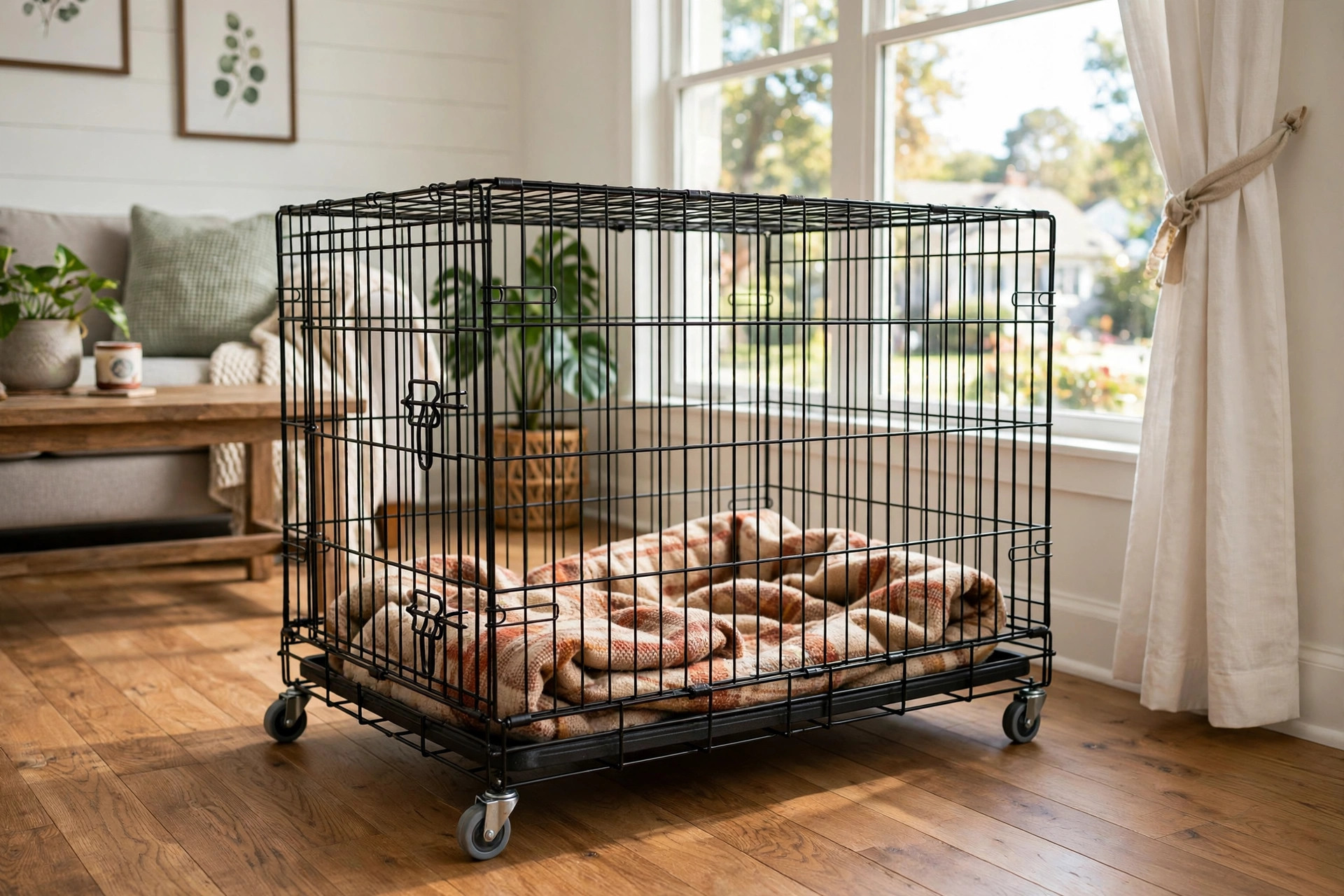

A dog crate with wheels for easy transport gives your pet a safe den that you can roll wherever it is needed. Many dog owners lift heavy crates through doorways, down hallways, and across parking lots. A wheeled dog crate removes that strain. It rolls over smooth floors, slides into a car, and moves between rooms in seconds. This guide explains why these crates matter, what to look for, the types you can buy, what they cost, how to keep them clean, and how to use them safely.
Why a Dog Crate With Wheels for Easy Transport Matters
A crate is a dog’s own room. It gives shelter, rest, and a place that smells like home. When that room has wheels, it becomes far more useful. Older owners, people with back trouble, and anyone who moves a crate daily gain the most from a rolling design.
Travel is the main reason. A portable dog crate for car trips lets you wheel your dog’s den from the kitchen straight to the trunk. No lifting. No awkward turns in a narrow hallway. At the vet, a dog crate on wheels for home use rolls from the parking lot to the waiting room with ease. At dog shows, trainers roll crates across long exhibit halls without tiring their arms.
A rolling crate also helps at home. You can move the crate near the family during the day and back to a quiet corner at night. The American Kennel Club notes that a crate should be a calm, safe place for a dog. A wheeled crate makes that calm place easy to put exactly where it belongs. The ASPCA recommends proper sizing so the dog can stand, turn, and lie down with ease. Wheels do not change that rule. They only change how the crate travels through your life.
How to Choose the Right Rolling Dog Crate: Dog Crate with Wheels for Easy Transport
Choosing a good dog crate with wheels for easy transport takes some thought. Not all wheels are equal. Not all crates fit every dog. The sections below cover the points that matter most.
Size and Weight Capacity
Size comes first. Measure your dog from nose to tail while it stands. Add four to six inches. That gives the right crate length. The crate must also support the combined weight of the dog and the crate itself. Check the weight limit on the product page before you buy.
A large dog needs large casters. Small plastic wheels under a heavy crate will crack or bend. Look for wheel sets rated for at least fifty pounds above your dog’s weight. A wheeled dog crate for travel should list both the crate size and the maximum dog weight it can hold.
Caster and Wheel Quality
The wheels make or break the crate. Four points matter here.
First, the wheel material. Rubber wheels roll quiet and grip hard floors. Plastic wheels roll fast but can scratch wood floors. Metal casters are strong but heavy.
Second, the wheel size. Wheels of three to four inches roll over door thresholds with ease. Small one-inch wheels catch on every bump.
Third, the swivel. Full swivel casters let the crate turn in tight halls. Fixed wheels roll straight only. Most good crates use two swivel wheels at the front and two fixed wheels at the back.
Fourth, the lock. Each wheel needs its own brake. A rolling dog kennel with locking casters stays put when you stop. Without locks, the crate can drift across a tile floor or a sloped driveway.
Locking and Latching Features
The door latch must be strong. A dog that learns to paw a weak latch will open it in minutes. Look for double latches or slide bolts. Metal wire crates often have one or two doors. More doors give more access but add weak points. A crate made for anxious dogs needs extra strong latches, so some owners pair a rolling crate with the guidance in our guide to the best dog crate for anxious dogs escape proof.
Types of Dog Crates With Wheels for Easy Transport
Three main types fill the market. Each has strengths and weak points.
Metal Wire Crates With Casters
Metal wire crates are the most common choice. They fold flat for storage. Air flows through the wire walls. The dog can see out from all sides. Most models accept caster sets that snap into the corner legs. These crates suit home use and short trips. They are not airline approved in most cases. Wire crates can rattle, so some owners add rubber feet or pads under the tray. A removable tray makes cleaning fast. Look for trays with raised edges so spills stay inside. The Spruce Pets reviews many wire crate models and compares their build quality side by side.
Hard-Sided Plastic Crates With Wheel Kits
Hard plastic crates have solid walls with vent slots. They feel more den-like. Dogs that like dark, quiet spaces often settle faster in them. Many brands sell wheel kits made for their crate models. These crates handle travel well and often meet airline rules for in-cabin or cargo use. Check the airline rules before you fly. Plastic crates are heavier than wire ones, so good wheels matter even more. PetMD offers care tips for crate training that work well with this type.
Soft-Sided Rolling Carriers
Soft-sided carriers use fabric walls on a light frame. They weigh the least of the three types. Built-in wheels and a pull handle turn them into rolling luggage for small dogs. They fold down to almost nothing. They suit cars, trains, and hotel stays. They do not suit strong chewers. A determined dog can tear fabric walls. These carriers work best for small, calm dogs under twenty-five pounds. Petco and PetSmart both stock soft-sided rolling carriers in many sizes.
Cost and Price Guide
Prices vary by type and size. Small wire crates with caster sets start around thirty dollars. Large wire crates with heavy casters run fifty to one hundred twenty dollars. Hard-sided plastic crates with wheel kits cost sixty to two hundred dollars, with airline-grade models at the top of the range. Soft-sided rolling carriers cost forty to one hundred fifty dollars.
Extra features raise the price. All-metal casters, double doors, divider panels, and airline certification each add cost. A divider panel is worth the money if you buy for a puppy. It lets you shrink the living space while the puppy grows, then remove the panel later. Buy the crate for the dog you have today and the dog it will grow into if it is a puppy. A crate that is too small will need replacement in months. Budget crates work fine for calm, small dogs. Heavy chewers and strong dogs justify a higher price for thicker bars and tougher latches. Home Depot lists many crate models with user ratings that help you compare price and quality. Consumer Reports publishes independent product tests that can guide a careful buyer.
Care and Upkeep
A clean crate is a healthy crate. Pull the tray out each week and wash it with warm soapy water. Rinse it well. Let it dry before you slide it back. Wipe wire bars with a damp cloth to remove dust and hair. Wash fabric liners and pads in the machine on a gentle cycle.
Check the wheels once a month. Hair and dirt wrap around caster axles. Pull the hair free with your fingers or tweezers. A drop of light oil on each axle keeps the wheels turning smooth. Tighten any loose caster bolts with a wrench. Check the door latches for wear. A loose latch is a safety risk.
Store a folding crate flat in a dry place. Keep fabric carriers away from damp basements to stop mold. With basic care, a good rolling crate lasts many years. PetSmart carries replacement trays, pads, and caster sets for most major brands.
Safety Tips
Safety comes first with any crate. Lock all four wheels before you leave the crate standing. An unlocked crate can roll down a slope or across a slick floor. Never tie a leash to the crate frame. A frightened dog can pull the crate over or choke on a tangled lead.
Keep the crate out of direct sun in a parked car. Cars heat up fast, and a closed crate traps heat. Crack the windows and park in shade. Offer water on long trips. Stop every two hours on road trips so the dog can stretch and drink.
Do not leave a dog crated all day. Four hours is a common limit for adult dogs. Puppies need more frequent breaks. A crate is a rest place, not a jail. For trips in cold weather, some owners add a heated dog house for winter cold climates as a second shelter option at home. A dog ramp for SUV access also helps large dogs climb into the car beside a rolling crate.
Frequently Asked Questions
Are dog crates with wheels safe for car travel?
Yes, if used with care. Lock the wheels and secure the crate so it cannot slide. Place it flat in the cargo area or back seat. Never let the crate roll free in a moving car. A seatbelt strap or cargo net adds extra hold.
What size rolling crate does my dog need?
The dog should stand, turn around, and lie flat with ease. Measure nose to tail and add four to six inches for length. Measure shoulder height and add a few inches for height. When in doubt, choose the larger size within reason.
Can I use a rolling crate on rough ground?
Most casters suit smooth floors. Small wheels struggle on gravel, grass, and cracked pavement. For rough ground, choose large rubber wheels of four inches or more. Even then, lift the crate over stairs and curbs. Wheels are for rolling, not for bumps.
Do airlines accept dog crates with wheels?
Some do, some do not. Hard-sided plastic crates often meet airline rules, but the wheels may need to come off. Check your airline’s pet policy before you book. Call the airline to confirm the exact model you own is allowed.
How do I train my dog to like the crate?
Start slow. Leave the door open and place treats inside. Feed meals in the crate. Keep early sessions short and calm. Never use the crate as punishment. Most dogs accept the crate within a week or two of patient work.
How do I keep the wheels from scratching my floors?
Choose rubber casters for hardwood and laminate floors. Rubber grips well and marks less. Add small felt pads under the caster housings for extra care. Sweep the floor before rolling so grit does not grind under the wheels.
How often should I replace the wheels?
Check them each month. Replace a caster that wobbles, cracks, or will not lock. Most replacement casters cost a few dollars and screw in by hand. Good care keeps the original wheels working for years.
A Final Word
A dog crate with wheels for easy transport is a simple upgrade that pays off daily. It saves your back, speeds up travel, and gives your dog a familiar den anywhere you go. Pick the right size, check the wheel quality, lock the casters, and keep the crate clean. Do that, and the crate will serve your dog well for years to come.
References
American Kennel Club. (n.d.). Dog care and training resources. https://www.akc.org ASPCA. (n.d.). Pet care and animal welfare resources. https://www.aspca.org Chewy. (n.d.). Pet supplies. https://www.chewy.com Consumer Reports. (n.d.). Product reviews and ratings. https://www.consumerreports.org Petco. (n.d.). Pet supplies and services. https://www.petco.com PetMD. (n.d.). Pet health information. https://www.petmd.com PetSmart. (n.d.). Pet supplies and services. https://www.petsmart.com The Home Depot. (n.d.). Home improvement products. https://www.homedepot.com The Spruce Pets. (n.d.). Pet care guides and product reviews. https://www.thesprucepets.com
Was this guide helpful?

About David Wilson
The My Garden US editorial team writes practical, in-depth home and garden guides for American homeowners — tested advice, no fluff.
You May Also Like
Best Pet Stairs for SUV Trunk Access Dogs
April 17, 2026 1 views
Dog Cooling Vest for Summer Walks Heat: Keep Your Dog Safe on Hot Days
May 5, 2026 0 views
How to Choose the Best Dog Carrier for Airline Travel Approved for the Cabin
June 21, 2026 0 views