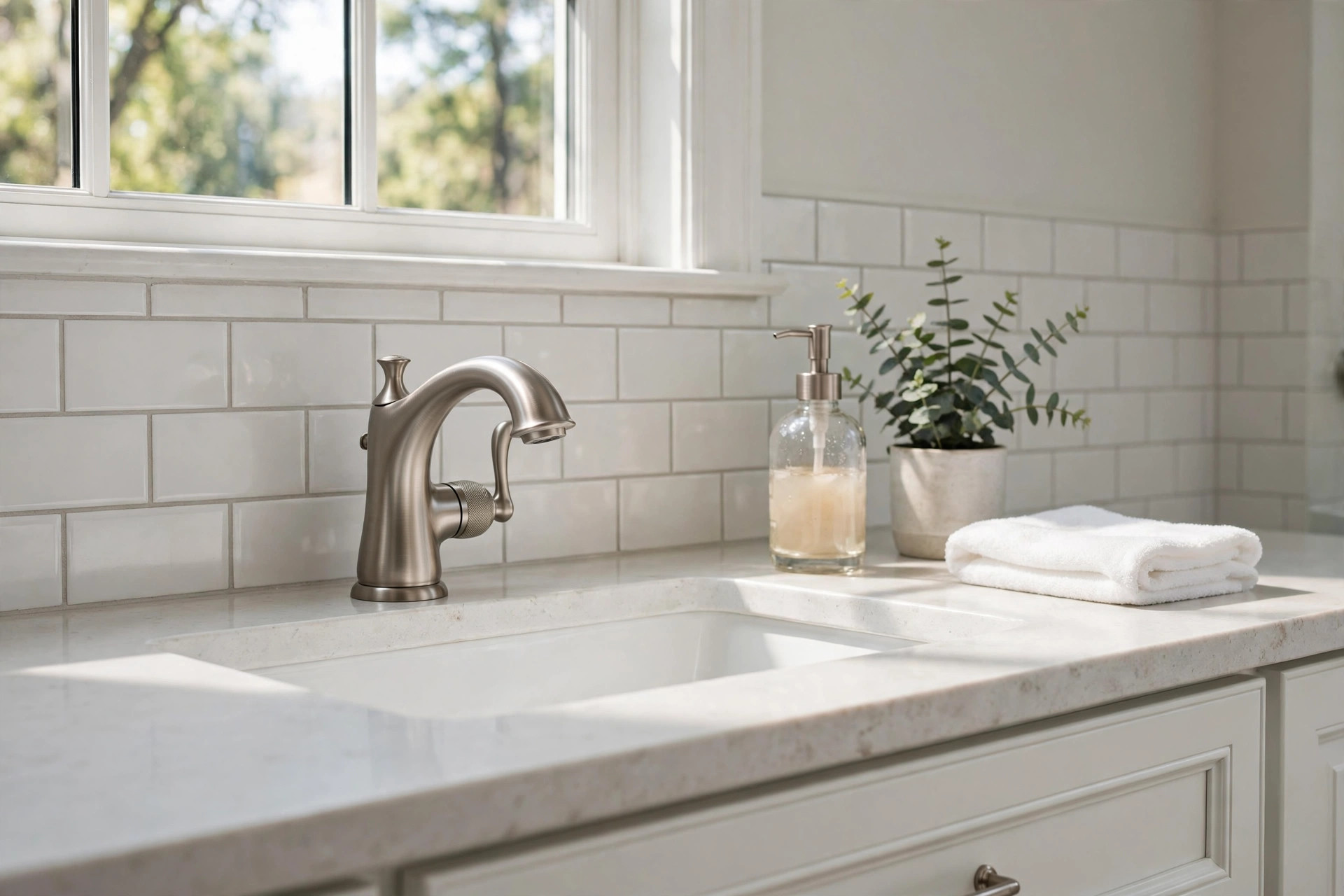

Brushed nickel has become one of the most trusted finishes in American bathrooms. This brushed nickel faucets reviews buying guide USA edition explains what the finish is, why so many homeowners choose it, and how to pick a faucet that will serve your home well for years. Every bathroom faucet guide should begin with a clear look at the finish itself, and that is where we begin here.
A brushed nickel finish is a layer of nickel applied over brass, then brushed with fine lines to give it a soft, matte look. The brushing hides fingerprints and small water spots. That is the main reason it gained favor in busy family bathrooms. Where polished chrome shows every smear, brushed nickel keeps a calm and even tone through the week.
The finish suits many styles. It works with white tile, with stone, and with painted vanities in gray, navy, or white. It does not shine like a mirror, so it rests easy in both plain and fine bathrooms.
Why the Finish Matters
A faucet is a tool you touch many times each day. The finish decides how it looks after five or ten years of use. Brushed nickel earns good marks for holding its tone. The brushed texture keeps small scratches from showing, and it resists the hard-water stains that mark many bath fixtures.
There is a practical side as well. A busy bathroom sees toothpaste, soap, and cleaners. A polished finish will show each splash. Brushed nickel asks less of you. A quick wipe keeps it neat. Reviews from American households often praise this low-effort upkeep. It is a finish for people who want the room to look cared for without daily polishing.
One note of caution: not all brushed nickel is the same. Some makers use physical vapor deposition, a factory process that bonds the finish to the brass body. These finishes last longer. Cheaper faucets may use a thin coat that wears at the handle first. A sound buying guide points this out, and so do we. Ask how the finish is applied before you buy.
What to Look for When You Choose: Brushed Nickel Faucets Reviews Buying Guide Usa
The Body and the Valve
A faucet’s working heart is the valve. Most modern faucets use a ceramic disc cartridge. Ceramic discs turn smoothly and seal well. They last far longer than old rubber washers. When you read faucet reviews, look for the words “ceramic disc cartridge.” It is a strong sign of a well-made product.
The body should be brass or stainless steel under the finish. Brass resists rust and gives the faucet solid weight. Zinc or plastic bodies feel light and may fail sooner. A heavier faucet in the hand usually means a better faucet on the sink.
Number of Holes
Sinks and vanity tops have one, three, or four holes drilled for the faucet. Know your sink before you shop. A centerset faucet fits a three-hole sink with four-inch spacing. A widespread faucet spreads the handles wide and fits eight-inch spacing. A single-hole faucet needs only one hole, and many come with a deck plate to cover extra holes. Measure the spacing between holes with a ruler. Write the number down and take it to the store or keep it handy online.
Spout Height and Reach
The spout must clear your sink and deliver water where you need it. Standard bathroom faucets rise about four to six inches above the deck. Vessel sinks sit high, so they need tall faucets. Check the reach too. The spout should end near the center of the bowl, not at its edge. Water that falls too close to the rim splashes.
Water Flow
The federal standard caps bathroom faucets at 1.2 gallons per minute. Many good faucets run at that rate or a bit below. Look for the WaterSense label from the Environmental Protection Agency, which marks faucets that use water wisely without weak flow. A good WaterSense faucet fills the basin and rinses soap with ease. You save water and cut your bill.
Handles
Single-handle faucets suit small baths and fast use. Two-handle widespread sets give a classic look and fine control of hot and cold. Touch or touchless models add ease but cost more and need batteries or power. Pick the handle style that fits your sink, your hands, and your budget.
Types of Brushed Nickel Faucets
Centerset Faucets
Centerset faucets join spout and handles on one base plate. They fit standard three-hole sinks and are the most common choice in American baths. Most brushed nickel faucet reviews for first-time buyers start with this type.
Widespread Faucets
Widespread faucets place the spout and handles as separate pieces. They suit larger vanities and give a tailored look. Installers route flexible lines under the deck. They cost more than centersets, but many owners feel the look justifies the price.
Wall-Mount Faucets
Wall-mount faucets fix to the wall above the sink. They free the deck for soap and trays and make wiping the counter simple. They require plumbing inside the wall, so they suit remodels more than quick swaps. In brushed nickel, a wall-mount set looks calm and modern.
Tall Vessel Faucets
Vessel sinks rest on top of the counter like bowls. Their faucets stand tall to clear the rim. If you own a vessel sink, you must buy a vessel-height faucet or the water will fall short. Measure the bowl’s height and add clearance before you shop.
Roman Tub Fillers
Roman tub fillers sit on the tub deck with a wide spout and hand shower. Brushed nickel suits them well because the finish hides water marks between tubs. Check that the filler’s flow rate matches your water heater’s pace, so the tub fills in a fair time.
Cost and Price Ranges
Price tells part of the story. Here is what American buyers can expect.
Budget faucets run from about forty to ninety dollars. They suit rental units and quick fixes. At this price, check the valve type and the body material with care. Some budget models are sound, but finish wear is more common here.
Mid-range faucets run from about ninety to two hundred fifty dollars. This is where most reviews point family buyers. You find ceramic disc valves, brass bodies, and bonded finishes. Many well-known brands sit in this range. It is the sweet spot for a remodel that must last.
Premium faucets run from two hundred fifty dollars up. They add designer styling, heavy brass, and long warranties. Some carry lifetime finish warranties. For a master bath you plan to keep for decades, the extra cost can pay off in peace of mind.
Do not forget the cost of parts you may need: supply lines, a drain assembly, and plumber’s putty or silicone. A do-it-yourself install may need only twenty to forty dollars in extras. A plumber’s visit may cost one hundred fifty to three hundred dollars depending on your town.
Reviews: What Buyers Praise and What They Warn Against
Across many American reviews, brushed nickel faucets earn praise for three things. First, the finish hides fingerprints and water spots, so the bath looks tidy with little effort. Second, the soft tone pairs with many tile and paint colors, which suits remodels in stages. Third, ceramic disc models run drip-free for years.
Buyers also note a few cautions. Some warn that low-cost models show wear on the handle within a year. Others note that matching shades vary between brands, so a faucet from one maker and a brushed towel holder from another may not match exactly. Buy the full set from one line when you can.
A common warning concerns harsh cleaners. Bleach and strong acids can dull the finish. Reviews agree that mild soap and water are enough. One more tip from seasoned buyers: keep the box and the model number. If a part fails under warranty, the number speeds the claim.
When you want a wider view of bath fixtures, our guide to brushed nickel faucets buying basics covers single types in more depth. And if you plan a full bath update, our notes on rain shower heads help you match the finish across the shower too.
Care and Upkeep
Brushed nickel asks little, but a few habits keep it handsome.
Wipe the faucet with a soft cloth after heavy use. Use mild dish soap and warm water for weekly cleaning. Rinse well and dry with a clean towel. Dry the finish after each cleaning to stop water spots from setting.
Avoid abrasive pads, steel wool, and powdered cleansers. They scratch the brushed lines. Avoid cleaners with bleach, ammonia, or strong acids. They can eat the finish. If hard water leaves white crust, soak a cloth in plain white vinegar, press it on the spot for a few minutes, then rinse and dry. Test this on a hidden area first.
Check the aerator now and then. The aerator is the small screen at the spout tip. Unscrew it, rinse out grit, and screw it back. A clean aerator keeps flow smooth. If the handle feels stiff, a drop of plumber’s silicone grease on the cartridge can help, but turn off the water first.
Installation Notes
Many handy homeowners install a bath faucet in an hour or two. Turn off the water at the shut-off valves under the sink. Open the faucet to release pressure. Take a photo of the old lines before you remove them.
Set the new faucet with a ring of plumber’s putty or a bead of silicone under the base, as the maker directs. Tighten the mounting nuts from below, but do not force them. Connect the supply lines, hand tight plus a quarter turn with a wrench. Connect the drain assembly and test.
Turn the water on slowly and watch every joint for drips. Let it run a minute, then check again. If you see a leak at a supply line, tighten it a touch more. If you are unsure at any step, call a plumber. A small service fee costs far less than water damage.
For step-by-step remodel ideas from seasoned pros, the project guides at This Old House are worth a look. Their bathroom articles cover shut-off valves, supply lines, and drain work in plain terms.
Safety
A bathroom is a wet room, so safety matters. Keep the water heater at or below one hundred twenty degrees Fahrenheit to prevent scalds. Anti-scald valves in the faucet help, and many modern models include them or accept them.
Work with the water off when you swap parts. Keep a bucket and towels under the sink while you work. If you use a wall-mount faucet, make sure the wall blocking is solid before you mount it. Loose mounts invite leaks inside the wall.
Check local code before a remodel. Some towns require permits for moving supply lines. The product safety notes at the CPSC offer general guidance on household fixtures, though faucets themselves are a low-risk item. For drinking-water questions, the federal EPA site explains lead-free standards under the Safe Drinking Water Act. Since 2014, wetted faucet parts sold in the United States must meet low-lead limits, so buy from reputable brands.
Matching Brushed Nickel Across the Bath
One of the charms of brushed nickel is how well it unifies a room. Buyers often pair the faucet with matching towel bars, robe hooks, and shower trim. To keep the match true, buy within one brand’s finish line. Names like “brushed nickel” can differ slightly from maker to maker.
The makers themselves are useful sources. Delta Faucet publishes care guides and finish notes for its nickel lines. Moen offers a wide range of bath collections with matched accessories. Kohler provides detailed spec sheets that list valve type and flow rate. American Standard posts installation videos that help first-time installers.
For independent reviews and buying advice, Bob Vila covers bath fixtures with hands-on tests. The Spruce keeps updated guides on bath finishes and how to clean them without damage.
Frequently Asked Questions
Does brushed nickel rust?
Solid brushed nickel over brass does not rust the way iron does. It can spot or dull if it meets harsh chemicals or long-standing water. Keep it clean and dry, and the finish should hold for many years.
Is brushed nickel going out of style?
No sign of it. Brushed nickel has held its place for more than two decades in American baths. It sits between the flash of chrome and the warmth of bronze. Designers still call it a safe long-term choice.
Can I mix brushed nickel with chrome in one bathroom?
You can, but plan it. Many designers mix metals on purpose: nickel faucets with chrome towel bars, for example. Keep one finish dominant and let the other play a small role. A room with four mixed finishes looks unsettled.
How do I know if a faucet is lead-free?
Look for markings or packaging that cite the federal low-lead rule. Reputable American brands state compliance clearly. Avoid no-name imports that make no such claim. The EPA notes at the EPA water page explain the standard.
What is the best way to clean brushed nickel?
Mild dish soap, warm water, and a soft cloth. Rinse and dry. That is all most weeks. Skip bleach, ammonia, and scrub pads. For hard-water crust, a brief white-vinegar soak on a cloth works, but rinse it off fast.
Do brushed nickel faucets need special supply lines?
No. Standard braided stainless supply lines fit them like any faucet. Replace old lines when you install a new faucet. New lines are cheap insurance against leaks.
A Short Final Word
Brushed nickel faucets earn their place through steady looks and light upkeep. Choose a brass body, a ceramic disc valve, and a finish applied by a trusted maker. Match your sink’s holes, measure the spout, and buy within one finish line for the whole bath. Clean it with mild soap and it will serve you well for a decade or more.
References
American Standard. (n.d.). Bathroom and kitchen products. https://www.americanstandard.com Bob Vila. (n.d.). Home improvement advice. https://www.bobvila.com Delta Faucet. (n.d.). Kitchen and bathroom faucets. https://www.deltafaucet.com Kohler. (n.d.). Bathroom and kitchen fixtures. https://www.kohler.com Moen. (n.d.). Faucets and plumbing fixtures. https://www.moen.com The Spruce. (n.d.). Home and garden advice. https://www.thespruce.com This Old House. (n.d.). Home renovation guidance. https://www.thisoldhouse.com U.S. Consumer Product Safety Commission. (n.d.). Product safety information. https://www.cpsc.gov U.S. Environmental Protection Agency. (n.d.). Protecting human health and the environment. https://www.epa.gov
Was this guide helpful?

About Sarah Mitchell
The My Garden US editorial team writes practical, in-depth home and garden guides for American homeowners — tested advice, no fluff.
You May Also Like

LED Bathroom Mirrors for Sale in the USA: A Complete Buyer’s Guide
May 22, 2026 0 views
Bathroom Linen Cabinets Deals Near Me: How to Save on Bathroom Storage
September 10, 2026 0 views
Brushed Towel Holders: Where to Buy Them in the USA
April 24, 2026 0 views