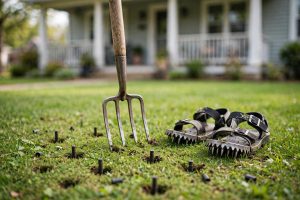

Many home owners face the same question each spring or fall: lawn aeration vs dethatching, which first? Both jobs help a tired lawn, but they do very different work. Aeration opens small holes in the soil so air, water, and food can reach the roots. Dethatching removes the thick layer of dead stems and roots, called thatch, that sits on top of the soil. If your lawn is thin, brown, or slow to grow, you may need one of these jobs, or both. The order matters. Done in the wrong order, you can waste time and money. This guide explains what each job does and which one to do first.
Why This Question Matters
A lawn is a living system. Grass roots grow in soil, and they need air, water, and nutrients from it. When soil gets hard and packed down, water runs off instead of sinking in. When a mat of dead thatch builds up, air and water cannot reach the roots at all. The grass thins out, weeds move in, and bare spots grow larger each year.
Aeration and dethatching both fix soil problems, but each fixes a different one. If you aerate when the real problem is thatch, the plugs of soil may not even reach past the mat. If you dethatch when the real problem is hard soil, the lawn may still not grow well. That is why the question of lawn aeration vs dethatching which first comes up so often. Most lawn guides give the same answer: do the job your lawn needs most, and when it needs both, dethatch first, then aerate.
What Aeration Does: Lawn Aeration vs Dethatching Which First
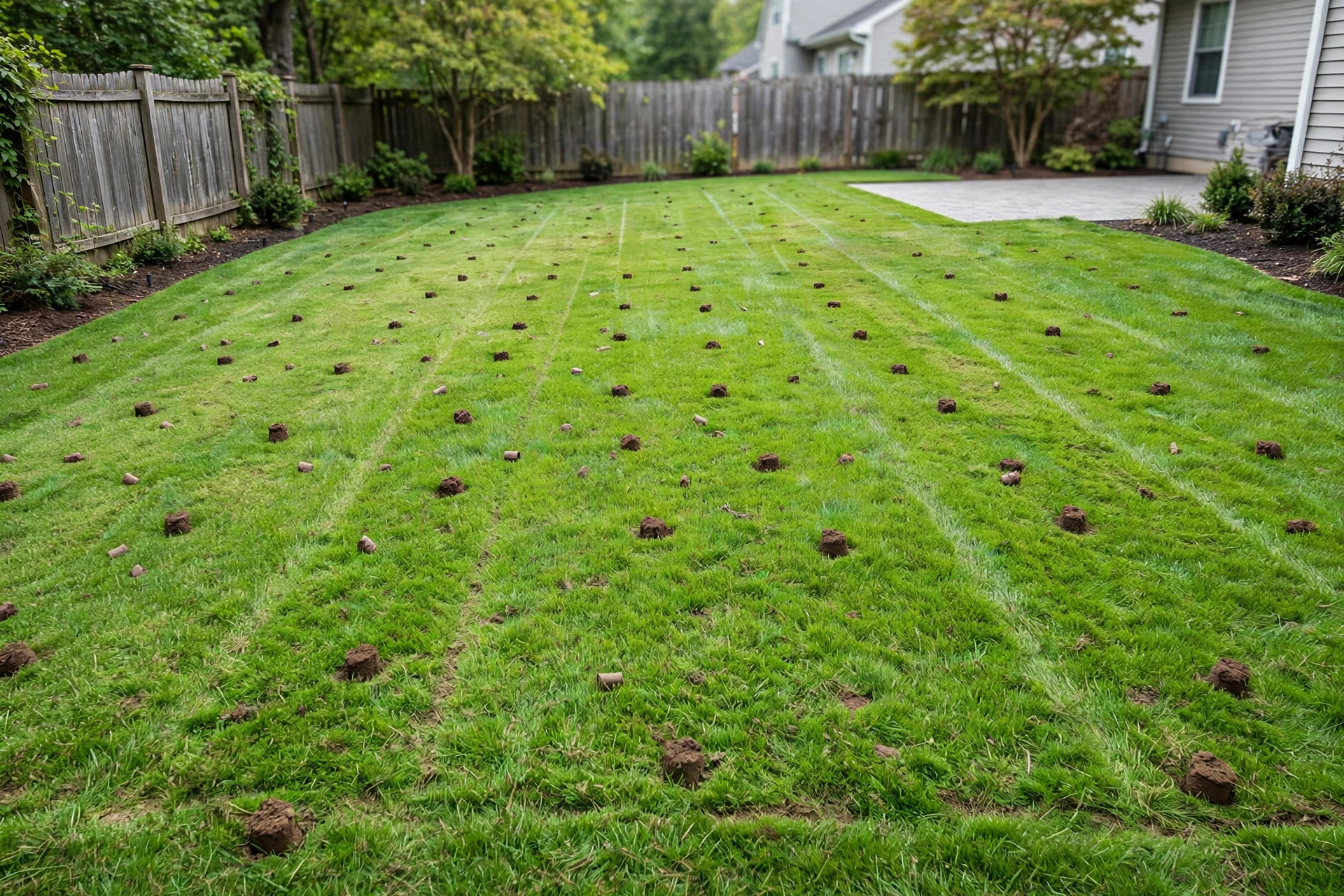
Aeration, often called core aeration, pulls small plugs of soil out of the ground. A machine called a core aerator has hollow tines, like small tubes, that punch into the soil and lift out plugs about the width of a finger and two or three inches deep. These plugs are left on the lawn to break down and fall back into the holes.
The holes do the real work. They let air reach the roots, let rain sink in instead of running off, and give grass roots room to grow deeper. Deep roots make a lawn that stands up to heat and dry spells. Most lawns get hard soil over time, from foot traffic, mowing, and rain pounding the surface.
Aeration is best done when grass is growing fast, so the lawn can heal quickly. For cool-season grass, such as fescue, bluegrass, and rye, that means early fall or early spring. For warm-season grass, such as Bermuda and zoysia, that means late spring or early summer. If you want local timing help, a guide on the best time to aerate lawn in Midwest states can help you pick the right weeks.
What Dethatching Does
Thatch is a layer of dead and living stems, roots, and crowns that builds up between the green grass blades and the soil surface. A thin layer, less than half an inch, is normal and even useful. It holds water and protects the soil. But when thatch grows thicker than half an inch, it starts to block water and air. Fertilizer sits on top of the mat instead of reaching the soil. Roots may start to grow up into the thatch instead of down into the soil, which makes the lawn weak and thirsty.
A dethatching rake works for small spots. A power dethatcher uses spinning blades or spring tines to lift the thatch out of the lawn, and you then rake up the loose debris and haul it away. Some types of grass build thatch faster than others. Kentucky bluegrass is a heavy thatch builder. Tall fescue and perennial rye build very little thatch and rarely need dethatching.
Like aeration, dethatching is stressful to the lawn. It should be done when grass is growing strong, so it can fill back in. For cool-season lawns, early fall is the best time. For warm-season lawns, late spring to early summer is best.
The Answer: Which One Comes First
When a lawn needs both jobs, dethatch first, then aerate. Here is the plain logic. Dethatching removes the thick mat on top of the soil. Aeration then pulls soil plugs through clean ground, and the plugs mix with the soil instead of mixing with dead thatch. If you aerate first, the tines have to push through the thatch mat. The mat can stop the tines from going deep enough. Then, when you dethatch afterward, the power rake can tear up the fresh aeration holes and make the lawn look rough.
There is one common exception. If your thatch layer is thin and fine but your soil is badly packed, aeration alone may be enough. Do the simple test first: cut a small wedge of turf and look at the brown spongy layer between the green blades and the soil. If it is less than half an inch thick, skip dethatching and just aerate.
Another point on timing: do both jobs in the same season when possible, a few days to a week apart. Dethatch, clean up the debris, then run the aerator. After both are done, the lawn is open and ready for seed and fertilizer. This is one reason many guides pair these jobs with overseeding lawn in fall step by step plans, since seed falls into the aeration holes and grows well in the loose soil.
How to Tell What Your Lawn Needs
The Screwdriver Test for Hard Soil
Push a long screwdriver into moist soil. If it slides in easily to the handle, your soil is loose enough. If it stops after an inch or two, the soil is packed and aeration will help. Test a few spots, since soil can be hard in high-traffic areas and fine in the corners of the yard.
The Wedge Test for Thatch
Use a flat spade to cut a small wedge of turf, a few inches deep, and lift it out. Look at the layer between the green blades and the dark soil. That brown, spongy layer is thatch. Measure it with a ruler. Less than half an inch is fine. More than half an inch means dethatching is due.
Signs You Can See
A lawn that needs aeration often has water puddles after rain, thin grass in paths where people walk, and soil that feels hard under your feet. A lawn that needs dethatching often feels spongy and bouncy to walk on, dries out fast after watering, and shows a thick brown mat when you part the blades with your fingers. Some lawns show both sets of signs. Those are the lawns where the question of lawn aeration vs dethatching which first really matters, and the answer is dethatch first.
Types of Tools and Options
Aerators
The best choice for most home lawns is a walk-behind core aerator, which pulls real plugs of soil. Spike aerators, which just poke holes with solid spikes, can make packed soil worse by pressing the sides of each hole tighter. Tow-behind core aerators hook to a riding mower and suit large lawns of an acre or more. Equipment makers such as Toro and John Deere publish sizing guides that help you match the machine to your lawn size, so check their advice before you rent or buy. For a small patch, a manual core aerator tool works, but it is slow going for a whole yard.
Dethatchers
A convex dethatching rake is cheap and fine for small areas. A power dethatcher rents by the day and covers a full lawn in a few hours. Vertical mowers, used by pros, cut deep grooves and pull out heavy thatch fast, but they are rough on the lawn and best left to experienced hands. Rental shops carry both aerators and power rakes, and checking lawn dethatcher rental prices near me before you go can save you a wasted trip. Before you start a rented machine, read its engine and safety manual; engine makers like Briggs & Stratton offer plain guides on safe start-up and care for small yard engines.
Do It Yourself or Hire It Out
Doing it yourself costs less but takes real effort. A core aerator is heavy, often over two hundred pounds, and you will walk every inch of the lawn for good coverage. A power dethatcher is easier to handle but kicks up a lot of dust and debris. Hiring a lawn service costs more but gets the job done in an hour or two with pro-grade machines. Many services bundle dethatching, aeration, and overseeding into one fall visit, which is worth pricing out.
Cost and Price
Renting a walk-behind core aerator usually costs between seventy and one hundred dollars for a half day. Renting a power dethatcher usually costs between sixty and ninety dollars for a half day. Plan on a full day if your lawn is large, which may double the rental fee.
Hiring a pro to aerate a typical quarter-acre lawn usually runs between one hundred and two hundred dollars. Dethatching service for the same size lawn usually runs between one hundred fifty and two hundred fifty dollars, since the crew must also rake up and haul away the debris. A bundle of dethatching plus aeration plus overseeding often runs between three hundred and five hundred dollars.
Remember the extra costs too. After dethatching, you may need seed and a starter fertilizer. After aeration, the lawn will look rough for a week or two, which is normal. Water use can rise for a few weeks while the lawn heals.
Care After the Work
Aftercare decides whether the work pays off. Leave the soil plugs on the lawn after aeration. They look messy, but they break down in a week or two and fill the holes with good soil. You can mow over them lightly to help them break apart, or just wait for rain to do the job.
Water the lawn well after both jobs. The open soil dries faster than you expect. Give the lawn about an inch of water per week, from rain or sprinklers, until the grass has filled back in. This is also the best window to overseed. Seed that falls into aeration holes gets good contact with the soil and grows faster than seed scattered on hard ground.
Hold off on strong weed killer for a few weeks. New seed and healing grass do not mix well with harsh chemicals. A starter fertilizer helps new roots grow. Mow a little higher than usual for the first few cuts so the grass keeps more leaf to feed its roots. Most lawns look rough for two to three weeks, then come back thicker and greener than before.
Safety
Both machines demand respect. A core aerator is heavy and can roll on slopes. Keep it on level ground, wear sturdy boots, and keep children and pets away while you work. A power dethatcher throws dust, small stones, and bits of thatch. Wear safety glasses, gloves, and a dust mask.
Before you start, mark sprinkler heads, shallow buried lines, and invisible fence wires with small flags. Aerator tines punch a few inches deep and can break a sprinkler head or cut a wire. Take breaks and drink water. Walking a heavy machine across a full lawn in the heat is hard work, and heat illness creeps up fast.
Questions People Ask
Can I aerate and dethatch on the same day?
You can, but it is better to give the lawn a few days between the two jobs. Dethatch first, rake up and remove all the debris, then aerate a few days later. If you hire a service, they may do both in one visit, which is fine since their machines are built for it.
How often should I aerate my lawn?
Most lawns need aeration once a year or once every two years. Lawns with heavy foot traffic or clay soil may need it every year. The screwdriver test each fall will tell you when it is time.
How often should I dethatch?
Only when the thatch is too thick. For most grass types, that means every few years at most. Some grasses, like tall fescue, may never need it. Check the thatch layer each year with the wedge test and dethatch only when it measures more than half an inch. Dethatching on a fixed schedule, whether the lawn needs it or not, does more harm than good.
Will dethatching kill my grass?
It will thin the lawn and make it look rough for a few weeks. That is normal. The risk comes from dethatching at the wrong time, such as the heat of summer for cool-season grass, or cutting too deep and tearing out the crowns.
Is liquid aeration as good as core aeration?
Liquid aeration products claim to loosen soil with sprays, but they do not remove soil or make real holes. If your soil is truly packed, rent a core aerator. The plugs it pulls are proof the job was done.
Should I aerate before or after overseeding?
Aerate first, then spread the seed. The holes give the seed a place to settle with good soil contact. If you seed first and aerate after, the machine can bury the seed too deep or tear up the young sprouts. Many fall lawn plans run in this order: dethatch, aerate, overseed, fertilize, water.
A Short Final Word
The question of lawn aeration vs dethatching which first has a clear answer for most lawns: check the thatch, dethatch first if it is too thick, then aerate, then seed and feed. Test before you work, so you only do the job your lawn truly needs. Pick the right season for your grass type and give the lawn good aftercare with water and seed. The work is hard for a weekend, but the payoff lasts for seasons.
References
Briggs & Stratton. (n.d.). Outdoor power equipment and engines. https://www.briggsandstratton.com Deere & Company. (n.d.). Lawn care and grounds equipment. https://www.deere.com Toro. (n.d.). Lawn mowers and yard care equipment. https://www.toro.com
Was this guide helpful?

About Jennifer Lee
The My Garden US editorial team writes practical, in-depth home and garden guides for American homeowners — tested advice, no fluff.
You May Also Like
How to Get an Affordable Lawn Sprinkler Installation Cost Estimate
July 1, 2026 3 views
Self Propelled Mower Deals for USA Homeowners: A Plain Guide to Buying Right
June 19, 2026 1 views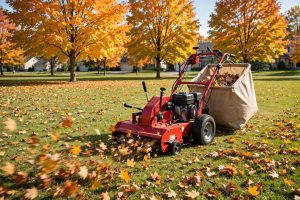
Leaf Vacuum for Large Yards Buying Guide
July 22, 2026 0 views