
Introduction
Every homeowner in the heartland knows a thick green lawn does not happen by luck. It takes work, and much of that work depends on timing. The best time to aerate lawn in midwest yards is early fall, when cool-season grasses are at their strongest and the soil is soft enough to take deep cores. September into early October is the sweet spot across most Midwestern states, from Ohio and Indiana to Iowa, Illinois, Wisconsin, Minnesota, and Missouri.
Why does timing matter so much? Aeration punches small holes into the soil. Those holes let air, water, and food reach the roots. But the same holes also let weed seeds land in bare soil. Do it at the wrong time, and you feed the weeds instead of the grass. Do it at the right time, and the grass closes ranks fast.
This guide explains when to aerate a Midwest lawn, how to tell when your lawn needs it, which machine to use, what it costs, and how to care for the grass after. Everything here is written in plain terms for the average homeowner.
Why Timing Matters More Than Anything Else: Best Time to Aerate Lawn in Midwest
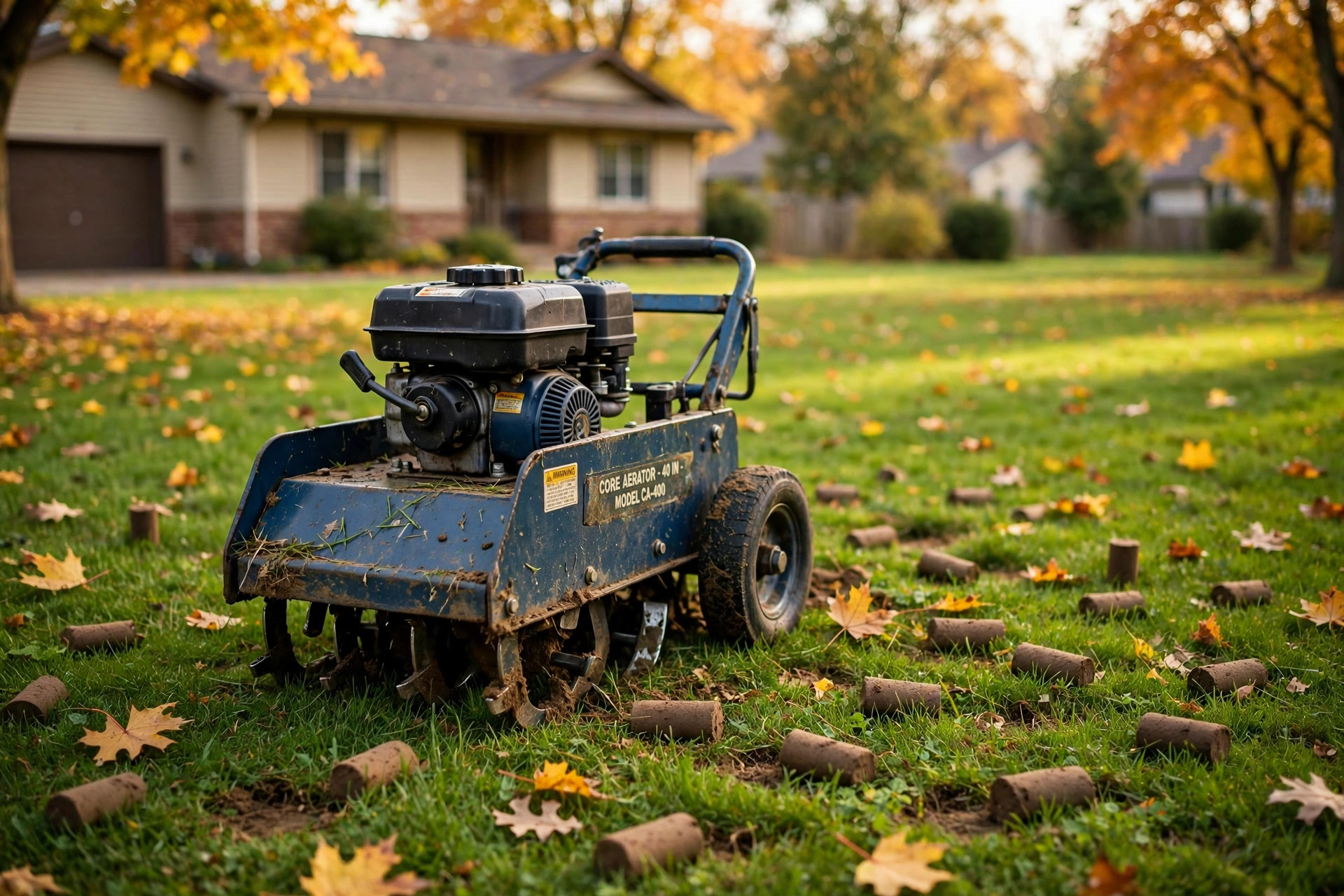
Aeration is simple. A machine pulls small plugs of soil from the lawn. Each plug is about the size of a finger. The holes that remain open up packed earth.
But timing decides whether those holes help or harm. In spring, soil is cold and weeds are eager. Crabgrass and dandelions are waiting for open ground. Aerate in spring and you may get a lawn full of weeds by June. Aerate in the heat of summer and you stress grass that is already struggling.
Fall is different. Cool-season grasses, the kinds that grow across the Midwest, do their best growing in fall. Kentucky bluegrass, fescue, and perennial ryegrass all grow roots hard in September and October. The air is cool. The weeds are dying back. Water is usually more plentiful. When you aerate then, the grass fills the holes with new roots before winter.
Think of it this way. In spring you fight the lawn’s enemies. In fall you feed the lawn’s friends. Homeowners who want a clear plan for the whole season often pair aeration with overseeding in fall, which is why many lawn service guides treat the two jobs as one.
How to Tell When Your Lawn Needs Aeration
Not every lawn needs aeration every year. How do you know? Look for the signs.
First, watch the water. If rain puddles on the lawn instead of soaking in, the soil is packed tight. If your sprinklers run off onto the sidewalk, that is another clue.
Second, watch the grass. Thin spots, bare patches, and pale color can mean the roots cannot breathe. If you have tried fertilizer and nothing changed, the soil itself may be the problem.
Third, feel the soil. Push a screwdriver into the ground. If it goes in hard, only an inch or two, the soil is compacted. In a healthy lawn, it should slide in with little effort.
Lawns that take heavy use need aeration most. Children playing, dogs running, and cars parking on the edge all pack the soil down. New homes built on heavy clay fill are also strong candidates. In many Midwestern neighborhoods, the soil under new construction is almost rock hard.
A simple rule works well. If your lawn was established within the last three years on a new lot, aerate every fall. If your lawn is older and healthy, every two or three years is enough.
The Best Seasons for Midwest Lawns
Early Fall: The Clear Winner
The best time to aerate lawn in midwest regions is from late August through early October. Aim for the weeks when daytime highs sit between 60 and 75 degrees. In the southern Midwest, around St. Louis and Indianapolis, you can wait until early October. In the northern tier, near Minneapolis and Milwaukee, get it done by mid-September.
Soil moisture matters too. Aerate when the ground is slightly damp, like a day or two after a good rain. Dry soil fights the machine. Wet mud tears instead of coring. If the ground is baked dry, water the lawn deeply the evening before.
Spring: Only If You Must
Sometimes spring aeration makes sense. If your lawn was damaged over winter, or if you missed the fall window entirely, a light spring aeration in April can help. But pair it with pre-emergent crabgrass control a few weeks after, so weeds do not take over the holes. Keep in mind that spring is a second choice, not the plan.
Summer: Never
Do not aerate in summer. The heat already stresses cool-season grass. Pulling plugs in July or August opens the soil to drought and weeds at the worst possible time. If summer is your only free season, wait. The lawn will still be there in September.
Types of Aerators and How to Choose
There are three common ways to aerate.
Core aerators are the gold standard. They pull actual plugs of soil from the ground. These are the machines you rent from a hardware store or that a lawn service tows behind a tractor. For most homeowners, this is the right choice. Rental models from major equipment makers are built for exactly this job, and dealers such as Home Depot rental centers stock them every fall.
Spike aerators simply poke holes with solid tines. They are cheaper and lighter, but they can make compaction worse by pushing soil sideways. Skip them if you can.
Liquid aeration products are newer. They are sprays that claim to loosen soil with chemistry. They are easy to apply, but they do not replace the real thing on heavy clay.
For a typical suburban lot of a quarter to a half acre, a walk-behind core aerator is ideal. Plan for two to four hours of work, depending on the size of the yard. Overlapping passes in two directions give the best coverage.
Many homeowners now keep a battery tool line in the garage for small yard jobs. But for core aeration, the rented walk-behind machine is still king. The tines need real weight and force.
What Aeration Costs
You have two choices: hire it out or do it yourself.
Hiring a lawn service to aerate costs about $75 to $200 for a typical suburban lot, depending on size and location. Many companies offer fall packages that bundle aeration with overseeding and fertilizing. That bundle is often the best value.
Doing it yourself costs less. A one-day aerator rental runs about $60 to $90. Add the cost of seed and starter fertilizer if you overseed, maybe $40 to $80 more. Many homeowners split a rental with a neighbor to cut the cost in half.
Either way, fall aeration is one of the cheapest high-impact jobs in lawn care. A hundred dollars spent in September can save far more in reseeding and weed control the next year. Product testing groups such as Consumer Reports note that machine quality varies, so if you buy your own equipment, read reviews first.
A Simple Step-by-Step Guide
Step One: Check the Calendar
Wait for early fall. Mark the job for September in most of the Midwest. Watch the forecast. Pick a week with mild days and a good rain either just before or just after.
Step Two: Mow and Water
Mow the lawn a bit shorter than usual, about two and a half inches. This lets the machine reach the soil. Water deeply the day before so the tines sink in easily.
Step Three: Mark Obstacles
Flag sprinkler heads, shallow utility lines, and the invisible dog fence. A core aerator tine can crack a sprinkler head or nick a wire. Walk the yard first.
Step Four: Run the Machine
Make two passes over the whole lawn, the second at a right angle to the first. Go a bit slower than you think you need to. Leave the plugs where they fall.
Step Five: Overseed and Fertilize
Right after aeration is the ideal time to overseed. Spread seed over the holes. Follow with a starter fertilizer. Seed from a trusted brand gives even results, and garden suppliers like Scotts publish clear seeding calendars by region.
Step Six: Water
Water the lawn lightly every day for two weeks. Keep the seed bed damp, not soaked. Once the new grass is up and growing, return to a normal schedule.
Care and Upkeep After Aeration
The soil plugs will look messy for a week or two. Do not rake them up. They break down on their own and return valuable soil to the surface. A light rain or a pass with the mower chops them apart.
Hold off on mowing for a few days, then mow at a normal height. Do not use weed killer for at least a month after overseeding. New seedlings are tender and herbicides can kill them.
Fall is also the season for other lawn tasks. Clean up leaves so they do not smother new grass. If you need to spray for weeds, read up on safe application practices before using a backpack sprayer for weed killer.
One more note: aeration pairs well with dethatching, but do not do both the same year unless the thatch layer is truly thick. More than one heavy job at a time can stress the grass.
Safety Notes
A core aerator is a heavy, powerful machine. Read the instructions before you start. Wear closed shoes with good grip, and keep children and pets off the lawn while you work.
Call your local utility marking service before you aerate, the same as you would before digging. In most states, dialing 811 brings free marking of buried lines within a few days. It is a free call that prevents expensive mistakes.
Store any leftover seed and fertilizer in a dry place away from children and pets. Wash your hands after handling products.
Frequently Asked Questions
How often should I aerate my Midwest lawn?
Most Midwest lawns do well with aeration every one to two years. Heavy clay soil and high-traffic yards need it every year. Sandy soil needs it less often.
Can I aerate in spring instead of fall?
You can, but fall is better. If you must aerate in spring, do it early, in April, and apply a pre-emergent weed control a few weeks later so weeds do not fill the holes.
Should I pick up the soil plugs?
No. Leave them. They crumble back into the lawn within a week or two and put good soil right where it belongs. Mowing over them speeds the process.
Will aeration fix my brown lawn?
It helps if the cause is compacted soil. Brown spots can also come from grubs, disease, or lack of water. Aeration is one tool, not a cure for every problem. If brown patches persist in shady corners, growing grass in shade may be the real answer.
Can I aerate a new lawn?
Wait until a new lawn has been mowed at least two or three times before aerating. The young grass needs time to root firmly. For most new seedings, the first aeration comes the following fall.
Is fall aeration worth paying for?
For most homeowners, yes. A professional job in September, often bundled with overseeding, is one of the best investments you can make in a lawn. The results show the following spring.
A Final Word
The best time to aerate lawn in midwest yards is early fall, plain and simple. Late August through early October, when the air cools and the grass wakes up, is when those small holes do the most good. Mark it on the calendar now. Rent the machine, or call a service. Water the plugs, seed the bare spots, and let the lawn rest into winter. Come spring, the green will come back thicker than the year before.
Garden centers and equipment makers publish seasonal calendars worth checking. The Spruce keeps a running set of lawn care timelines, and engine builders like Briggs and Stratton offer maintenance tips that keep rental-grade machines running. Hand tool brands such as ECHO and RYOBI cover the edges and cleanup, while tractor makers like John Deere serve larger properties. And if your planting beds need attention too, a look at gravel vs mulch for landscaping beds can help you plan the whole yard.
References
LawnStarter. (n.d.). Lawn care services and guides. https://www.lawnstarter.com The Home Depot. (n.d.). Home improvement products. https://www.homedepot.com Greenworks. (n.d.). Battery-powered outdoor tools. https://www.greenworkstools.com Consumer Reports. (n.d.). Product reviews and ratings. https://www.consumerreports.org Scotts. (n.d.). Lawn care products and advice. https://www.scotts.com The Spruce. (n.d.). Home and garden guides. https://www.thespruce.com Briggs & Stratton. (n.d.). Engines and power equipment. https://www.briggsandstratton.com ECHO. (n.d.). Outdoor power equipment. https://www.echo-usa.com RYOBI. (n.d.). Power and yard tools. https://www.ryobitools.com John Deere. (n.d.). Lawn and garden equipment. https://www.deere.com
Was this guide helpful?

About Emily Rodriguez
The My Garden US editorial team writes practical, in-depth home and garden guides for American homeowners — tested advice, no fluff.
You May Also Like

Outdoor Power Equipment Repair Near Me: A Practical Guide for Homeowners
August 3, 2026 0 views
Riding Mower Deck Belt Replacement Guide for Homeowners
August 28, 2026 0 views
Lawn Pest Control Service Near Me: What Every Homeowner Should Know
March 13, 2026 0 views