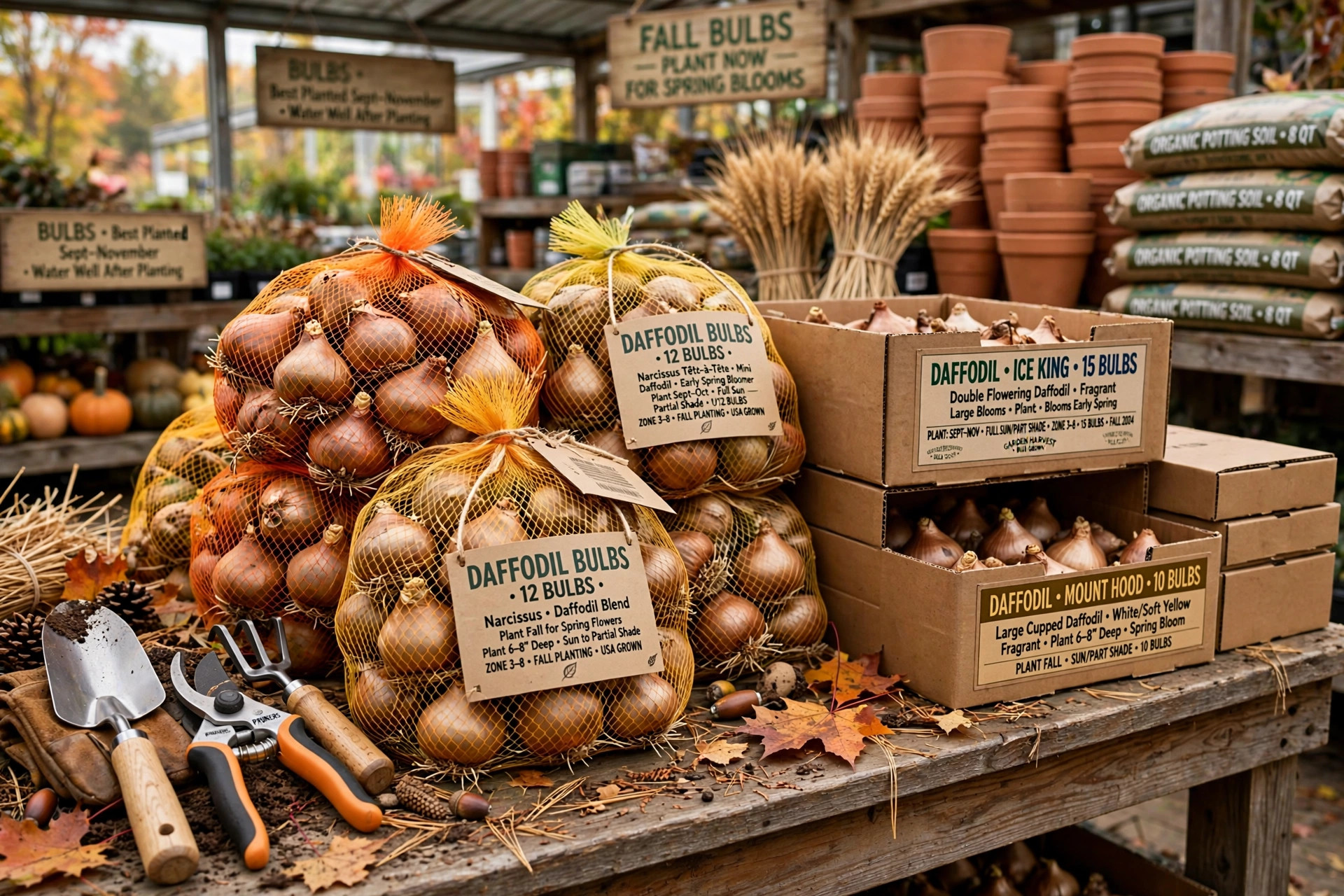
Many home owners look for daffodil bulb packs deals near me when fall arrives. They want bright spring flowers without spending too much money. A daffodil is one of the most trusted flowers in an American garden. It blooms early, it asks for little care, and it returns year after year. But not every pack of bulbs is a good deal. Some packs hold large, healthy bulbs. Others hold small, weak bulbs that may never bloom. This guide explains how to judge a deal, where to look, what to pay, and how to plant and care for the bulbs once you bring them home.
Why It Matters
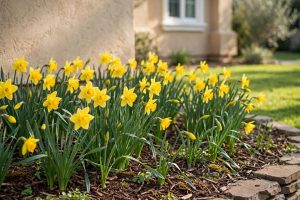
A daffodil is a spring bulb that sleeps underground all winter. When the soil warms, it sends up green leaves and then a flower. The flower lasts one to two weeks. After that, the leaves make food for next year. This simple cycle has made the daffodil a favorite since colonial times.
Buying bulbs in packs saves money. A single bulb may cost two dollars or more. A pack of fifty may cost less than one dollar per bulb. For a home owner who wants a full border or a lawn dotted with yellow, pack prices matter.
A good deal is not only about the lowest price. A cheap pack of soft, rotting bulbs is no deal at all. You pay with your time and with an empty bed in spring. A fair pack of firm, heavy bulbs is worth more than a large pack of poor ones. Learning to read a bag or box takes only a few minutes, and it saves you from poor blooms.
There is also the matter of timing. Daffodil bulbs must go into the ground in fall, before the ground freezes. The best selection of daffodil bulb packs deals near me often shows up in early September. By late October, the choice is smaller. By November, many stores clear out stock at lower prices, but the best varieties may be gone. Planning ahead gives you both choice and value.
What to Look For When You Choose a Pack: Daffodil Bulb Packs Deals near Me
Bulb Size and Firmness
Large bulbs make large flowers. On most packs you will see a size number or a label such as “top size” or “jumbo.” These are the bulbs you want. They hold more stored food, so they make a stronger plant.
If the store lets you look through the bag, pick up a few bulbs. They should feel firm and heavy, like a small onion. Do not buy packs where most bulbs feel soft, light, or spongy. Soft spots are a sign of rot. A little mold on the outer skin is common and harmless, but any bulb that gives under your thumb should stay in the bag.
Bulb Count and Variety Name
A good pack lists two facts on the front: how many bulbs are in the pack, and the name of the variety. “Mixed daffodils” is fine for a natural look. But packs that name a variety, such as Dutch Master or Ice Follies, let you know what you are planting. Named varieties have been tested for years. They bloom at a known time and stand at a known height.
Beware of packs that hide the count. “One pound of bulbs” tells you little. Count matters more than weight. A pound of small bulbs may hold sixty flowers. A pound of large bulbs may hold twenty-five. Compare price per bulb, not price per pound.
Dates and Freshness
Daffodil bulbs are harvested in summer and sold in fall. A fresh pack should look plump. Bulbs that sat in a warm warehouse since June may be dry and weak. Shop at stores that keep bulbs in a cool, dry place. The Old Farmer’s Almanac planting guides remind gardeners that fresh, well-stored bulbs give the strongest spring show.
Where the Bulbs Were Grown
Most daffodil bulbs sold in the United States come from Holland or from farms in the Pacific Northwest. Both are fine. What matters is that the seller is known. A Burpee bag or a Park Seed box carries a name you can check. A plain bag with no farm name and no address is a risk.
Types and Options
Standard Trumpet Daffodils
These are the classic yellow flowers with a long cup in the center. They stand about fourteen to eighteen inches tall. They are the strongest growers and the best choice for a first bed. A pack of fifty trumpet daffodils covers about ten square feet when planted six inches apart.
Large-Cupped and Small-Cupped Types
In these types the center cup is shorter than the outer petals. They come in yellow, white, cream, and two-color blends. They bloom at about the same time as trumpets and mix well with them in one bed.
Miniature Daffodils
Miniatures stand six to eight inches tall. They suit rock gardens, pots, and the fronts of borders. They cost less per pack because the bulbs are small, but they need less space too. Plant them four inches apart.
Mixed Packs
Mixed packs hold several varieties in one bag. They cost less than named packs and give a natural, varied look. The trade is that you cannot plan bloom time or height. For a lawn edge or a wild corner, mixed packs are a fine choice. For a formal border, named varieties serve you better.
Specialty and Fragrant Types
Some daffodils carry a sweet scent, such as the jonquil types. Others are white with a pink cup. These packs cost more, often two or three dollars per bulb. They are worth it for a spot near a door or a path, where the scent and color show their best.
Gardeners who want ideas for mixing daffodils with other spring bulbs can find planting plans at Gardening Know How, which covers beds, borders, and naturalized lawns in plain language.
Cost and Price
Prices for daffodil bulb packs vary by count, size, and variety. The numbers below show what American shoppers usually see in fall.
– Small packs of ten to twenty-five bulbs: three to ten dollars. – Medium packs of fifty bulbs: twelve to twenty-five dollars. – Large packs of one hundred bulbs: twenty to forty-five dollars. – Named specialty varieties: one to three dollars per bulb.
The price per bulb drops as the pack grows. That is where the best daffodil bulb packs deals near me come from. A fifty pack at twenty dollars costs forty cents a bulb. A ten pack at eight dollars costs eighty cents a bulb. If you have space for fifty, the larger pack is the better deal.
Deals near you often appear in these places:
1. Local garden centers. They carry fresh stock and staff who can answer questions. End-of-season sales in late October bring the deepest cuts. 2. Home improvement stores. They buy in huge lots and sell at low prices. The variety names are honest, and the packs are fresh. 3. Warehouse clubs. A bag of one hundred fifty bulbs may cost less than twenty-five dollars. The variety is often a single mixed blend. 4. Mail-order bulb farms. White Flower Farm and Gurney’s ship in fall. Their prices run higher, but their quality control is strong. 5. Farm stores and co-ops. Rural farm supply stores often carry good bulbs at fair prices, and the stock moves fast.
A “deal” that cuts the price by half but sells you dried-out bulbs is no bargain. Compare the price per firm, fresh bulb, not the price per pack.
Shoppers who compare mail-order prices can also check Proven Winners and Monrovia for plant quality standards, which give a sense of what top-grade stock should look like.
How to Plant
Plant daffodil bulbs in fall, six to eight weeks before the ground freezes hard. In most of the United States, that means September through November.
1. Pick a spot with sun or light shade. Daffodils bloom before trees leaf out, so a spot under a tree works well in spring. 2. Loosen the soil eight inches deep. Mix in a little compost if the soil is poor. 3. Dig holes three times as deep as the bulb is tall. A two-inch bulb goes about six inches deep. 4. Set each bulb with the point up and the flat base down. 5. Space large bulbs five to six inches apart. Space miniatures three to four inches apart. 6. Water well after planting. One good soak is enough. Nature does the rest.
Do not cut the leaves after bloom. The leaves must stay for six weeks to feed the bulb for next year. You may tie them loosely if they look untidy, but do not braid them tight. When the leaves turn yellow and pull away with a light tug, you may clear them.
For more on fall planting dates by region, the National Institute of Food and Agriculture offers gardening research, and The Spruce has clear how-to guides for beginners.
Care and Upkeep
Daffodils ask for little. After planting, they need almost nothing until spring.
– Water. Fall rain is usually enough. In a dry fall, water once a week until frost. – Fertilizer. A handful of balanced garden fertilizer at planting time is plenty. Do not feed again until the leaves show in spring. – Mulch. A two-inch layer of shredded leaves or bark keeps the soil cool and moist. Keep mulch a few inches away from the bulb tops. – Pests. Deer and squirrels leave daffodils alone. The bulbs hold compounds that taste bitter. This is one reason daffodils suit open lawns. – Division. After four or five years, a clump may grow crowded and bloom less. Dig it up in early summer after the leaves die back, pull the bulbs apart gently, and replant at once.
Daffodils return on their own for many years. A bed planted well may bloom for a decade or more with almost no work.
If you plant other fall bulbs alongside daffodils, such as dahlia bulbs bulk florida homes usa for warm-climate beds or garlic bulbs planting for sale usa for the kitchen garden, the same firmness and freshness rules apply.
Safety
Daffodil bulbs are poisonous if eaten. They hold a compound called lycorine, which can cause nausea and vomiting. Keep bulb packs away from small children and pets. Wash your hands after handling bulbs, and never store bulbs near onions or food. This is a simple rule, but it matters in a home with toddlers or dogs.
In the garden, daffodils are safe to touch. The danger comes only from eating the bulbs. When you divide old clumps, wear gloves if your skin is sensitive, since the sap can irritate some people.
The ASPCA notes that daffodils are toxic to dogs and cats if chewed, so plant them where pets do not dig. This matters less for pots on a porch, but it matters for open beds where a dog runs.
Frequently Asked Questions
When is the best time to buy daffodil bulb packs? Buy in September or early October for the best choice of varieties. Late October and November bring lower prices, but the stock may be picked over. Never buy bulbs in spring for fall flowers; the bulbs dry out by then.
How many bulbs do I need for a flower bed? For a full look, plant large daffodils five to six inches apart. That means about four bulbs per square foot. A ten-square-foot bed needs about forty bulbs, so one fifty pack covers it well.
Can I plant daffodils in pots? Yes. Use a pot at least twelve inches deep with holes in the bottom. Plant bulbs four inches deep and three inches apart. Keep the pot in a cold garage or a sheltered spot over winter so the bulbs get their needed chill.
Do daffodils come back every year? Yes. A healthy bulb blooms for many years. Leave the leaves alone after bloom so the bulb can store food. Divide crowded clumps every four or five years to keep blooms strong.
Are cheap mixed packs worth buying? They are fine for casual spots, such as along a fence or in a meadow corner. They cost less and give a cheerful mix. For a planned border where height and color matter, named varieties are worth the extra cost.
What if I missed fall planting? If the ground is still workable, plant late. Bulbs planted in December often bloom, though a little later. If the ground is frozen, store the bulbs in a cold, dry place and plant them in pots indoors, or wait and buy fresh stock next fall.
A Short Final Word
The search for daffodil bulb packs deals near me ends well when you know what a good bulb looks like. Firm, heavy, fresh, and honestly labeled: that is the whole test. Buy in fall, plant with the point up, and leave the leaves to do their work. Come spring, your yard will pay you back with weeks of bright flowers, year after year.
Gardeners who want to grow more than flowers can look at houseplant options like fiddle leaf figs for sale usa for indoor green, or browse the full range of fall planting guides linked above. Start with one pack this fall, and you will likely buy more next year.
References
ASPCA. (n.d.). Pet care and animal welfare resources. https://www.aspca.org Burpee. (n.d.). Seeds, plants, and gardening supplies. https://www.burpee.com Gardening Know How. (n.d.). Gardening guides and plant care. https://www.gardeningknowhow.com Gurney’s Seed & Nursery Co. (n.d.). Seeds, plants, and garden supplies. https://www.gurneys.com Monrovia. (n.d.). Plants for home gardens. https://www.monrovia.com National Institute of Food and Agriculture. (n.d.). Agricultural research and extension. https://www.nifa.usda.gov Park Seed. (n.d.). Seeds, plants, and gardening supplies. https://www.parkseed.com Proven Winners. (n.d.). Plants and gardening inspiration. https://www.provenwinners.com The Old Farmer’s Almanac. (n.d.). Gardening calendars and advice. https://www.almanac.com The Spruce. (n.d.). Home and garden advice. https://www.thespruce.com White Flower Farm. (n.d.). Plants, bulbs, and garden supplies. https://www.whiteflowerfarm.com
Was this guide helpful?

About Jennifer Lee
The My Garden US editorial team writes practical, in-depth home and garden guides for American homeowners — tested advice, no fluff.