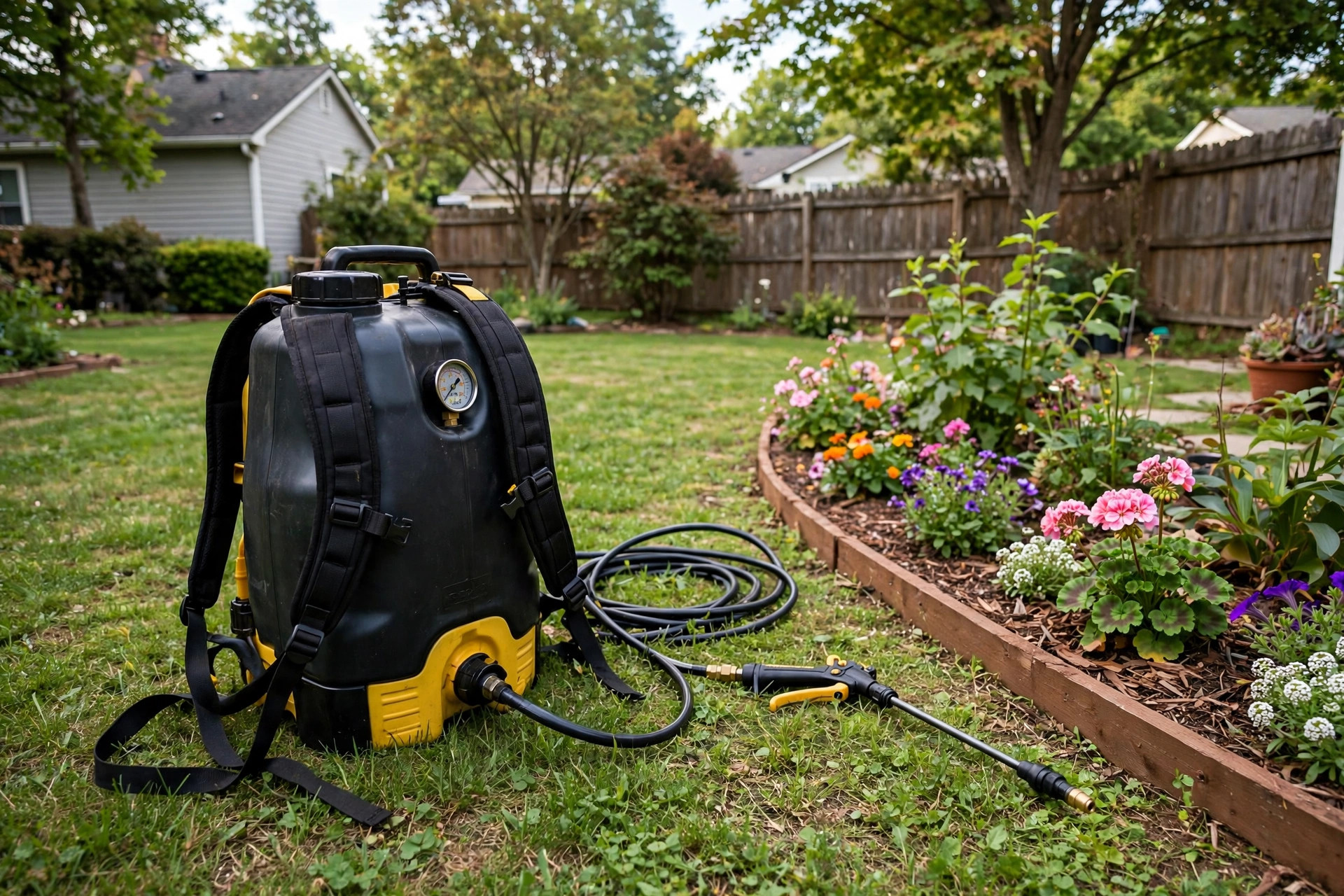

Weeds grow faster than most lawns. A hand-pump bottle works on a few dandelions, but it will not do for a whole yard. That is where the best backpack sprayer for weed killer earns its place. It straps to your back, holds gallons of mixed spray, and lets you walk the lawn with steady pressure and an even pattern. You cover more ground, you waste less chemical, and your arm does not give out halfway through the job.
This guide explains what to look for, how much to spend, and how to use and care for your sprayer. The advice here is simple and practical. It comes from how these tools work, how makers build them, and how gardeners and lawn pros use them every day.
Why a Backpack Sprayer Matters
A trigger bottle sprays a few ounces at a time. A hose-end sprayer needs a garden hose and gives you little control. A backpack sprayer sits between the two. It is the right tool for yards from a quarter acre up to several acres.
The big advantage is steady pressure. When you pump a backpack sprayer, air builds up inside the tank. That pressure pushes the liquid out in a fine, even mist. The mist coats weed leaves the same way across the whole lawn. An even coat matters because weed killer works by contact or by being absorbed into the leaf. Miss a patch, and the weeds come back.
The second advantage is comfort. The tank rides on your back with padded straps. A wand and hose reach out to your side, so you can spray without bending or stretching. For older gardeners, or for anyone with a large yard, this makes the job possible in one morning instead of three days.
The third advantage is reach. A good wand is two feet long or more. You can aim under bushes, along fence lines, and into the cracks of a walkway. If you need the best weed killer for gravel driveways, the backpack sprayer is the natural partner, because gravel beds are hard to treat with a spreader and too large for a small bottle.
What to Look for When You Choose One: Best Backpack Sprayer for Weed Killer
Not all backpack sprayers are alike. Prices run from twenty dollars to well over one hundred. The differences are in the pump, the tank, the nozzles, and the small parts that wear out first. Here is what to check before you buy.
Tank Size and Shape
Most backpack sprayers hold three to five gallons. Four gallons is the common middle ground. It is heavy enough to mean fewer refills, and light enough to carry. A full four-gallon tank weighs about thirty-five pounds. That is a real load on your back, so the straps and frame matter as much as the size.
Look for a tank with a wide mouth. A wide opening makes mixing easy and lets you rinse the inside with a hose. Some tanks have a built-in strainer at the mouth. The strainer keeps bits of leaf and grit out of the pump. That is a small feature, but it saves many clogs.
Pump Type: Manual or Battery
The classic backpack sprayer uses a hand pump. You work a lever with one hand while the wand stays in the other. It is simple, cheap, and there is nothing to charge or break. Most home owners do fine with a manual pump.
Battery sprayers are now common too. A small battery runs the pump for you, so pressure stays constant with no pumping at all. They cost more, and you must keep the battery charged. If you spray often, or if pumping hurts your hands or shoulders, a battery model is worth the extra money.
Nozzles and Wand
The nozzle shapes the spray. Most sprayers come with two or three nozzles in the box. A fan nozzle lays down a wide flat pattern, which is what you want for lawns and large beds. A cone nozzle makes a round mist, which suits single weeds and spot treatment. An adjustable nozzle can do both.
Check that the nozzles unscrew and can be cleaned or replaced. They will clog sooner or later. Being able to take one off and rinse it is better than throwing away the whole wand.
A brass wand lasts longer than a plastic one. Brass does not crack in the sun and it resists most chemicals. The hose should be flexible but tough. A hose that kinks will drive you mad, because the spray dies every time you turn around.
Seals, Gaskets, and Chemical Resistance
Weed killers are hard on rubber and plastic. Cheap sprayers use seals that swell and crack after a season of use. Better ones use Viton or EPDM seals, which stand up to common herbicides. Check the product specs for the seal material. If the maker does not say, that tells you something too.
Comfort and Fit
Try the straps before you commit if you can. Padded shoulder straps, a waist belt, and a chest strap spread the weight. Some tanks have a curved back that sits closer to the body. A sprayer that fits well is a sprayer you will actually use.
Types of Backpack Sprayers
There are three main kinds on the market today.
Manual piston pump sprayers. These are the most common. A piston inside the tank builds pressure with each stroke of the lever. They are cheap and tough. The weak point is that pressure falls as the tank empties, so you must pump now and then to keep the spray even.
Manual diaphragm pump sprayers. Instead of a piston, these use a flexible diaphragm. They handle thick or gritty mixtures better, such as wettable powders that can wear a piston out. They cost a little more than piston models.
Battery-powered sprayers. These use a rechargeable battery, often the same kind found in cordless tools. They keep pressure steady from the first minute to the last. Some let you dial the pressure up or down. They are the easiest to use and the most expensive. For a large property, they pay for themselves in saved time.
There are also sprayers built for one special job, but for weed killer work the three kinds above cover what a home owner needs.
What It Costs
A basic manual backpack sprayer sells for twenty to forty dollars. These do the job, but expect plastic parts and a short life with heavy use.
The middle range, forty to eighty dollars, buys a better pump, better seals, and a brass wand. This is where most careful buyers land. A well-kept sprayer in this range lasts five years or more.
Battery sprayers run from eighty to two hundred dollars. The battery is the big cost. If the battery dies in three years, check whether you can buy a replacement before you buy the sprayer.
Do not forget the weed killer itself. A gallon of concentrate can cost fifteen to forty dollars, and it makes many gallons of mixed spray. A pet safe lawn weed killer may cost a bit more, but families with dogs and children often find the peace of mind worth it.
How to Use It Well
Good results come from good habits. Follow these steps and your sprayer will treat the weeds instead of the good grass.
Read the label first. Every weed killer has a mixing rate on the label. It tells you how many ounces per gallon. Do not guess, and do not add extra for good luck. More chemical does not mean better results. It means dead grass and wasted money.
Mix in the tank. Fill the tank halfway with water. Add the measured chemical. Then fill the rest of the way and swirl gently. A wide-mouth tank makes this easy.
Spray on a calm day. Wind carries fine mist onto flower beds, shrubs, and the neighbor’s lawn. Spray in the morning or evening when the air is still. Avoid spraying in the heat of midday, when some chemicals can burn the grass.
Walk at a steady pace. Overlap each pass a little, like mowing. Keep the wand at the same height, about eighteen inches above the weeds. An even pace gives an even coat.
Time it right. Weeds die best when they are young and growing. Spring and early fall are the prime windows. A guide to pre emergent weed killer application timing can help you plan the season, since pre-emergent products must go down before the weeds sprout.
Clean the sprayer after every use. Rinse the tank, hose, and wand with clean water. Spray the rinse water out through the nozzle. Never leave chemical sitting in the tank for days. It settles, it clogs, and it eats the seals.
Care and Upkeep
A backpack sprayer is a simple machine, and simple machines last if you treat them well.
Rinse after each use, as said above. Once or twice a season, take the pump apart and look at the seals. A little silicone grease on the moving parts keeps them smooth. Do not use motor oil, which can harm the seals.
Store the sprayer indoors, out of the sun. Sunlight breaks down plastic tanks and hoses. In cold climates, drain every drop of water before winter. Ice splits tanks and pumps.
Replace worn parts instead of buying a new sprayer. Nozzles, gaskets, and straps are sold as spare parts by the better brands. A ten-dollar seal kit can add years to a sixty-dollar sprayer.
Safety
Weed killers are useful tools, but they are still chemicals. Treat them with respect.
Wear gloves, long sleeves, long pants, and closed shoes every time you spray. Eye protection is wise too, since a gust of wind can blow mist back at you. Keep children and pets off the treated area until it is dry. The label will give a specific waiting time.
Never eat, drink, or smoke while mixing or spraying. Wash your hands and face when you are done. Keep the concentrate locked away from children, in its original container with the label on.
If spray drifts onto a shrub or flower by mistake, rinse it off with water at once. And know where your well or water line runs. Do not spray near wells, ponds, or streams.
The big equipment makers, such as Toro and Briggs & Stratton, publish safety and use guides for outdoor equipment. Consumer Reports tests lawn and garden products and reports on how they perform in real use. These are sound places to check a model before you buy.
Frequently Asked Questions
How many gallons should my backpack sprayer hold? For most home lawns, four gallons is right. Three gallons means more trips back to refill. Five gallons is heavy when full. If your yard is under a quarter acre, a two-gallon model may be enough.
Can I use one sprayer for weed killer and for bug spray? You can, but you must clean it very well between uses. Many gardeners keep two sprayers: one for weed killer, one for everything else. That way there is no chance of leftover herbicide hurting the garden. Label each sprayer with a marker so you do not mix them up.
How long does a backpack sprayer last? A cheap one may last two or three seasons. A well-made one with good seals can last five to ten years. Battery models last as long as their batteries, which is often three to five years. Storage out of the sun and a rinse after each use make the biggest difference.
Why is my sprayer losing pressure? Nine times out of ten, the cause is a worn seal or a clogged nozzle. Check the nozzle first and rinse it. Then look at the pump seals and the tank lid gasket. Spare seal kits are cheap and easy to fit.
Is a battery sprayer worth the extra cost? If you spray more than a few times a year, or if your yard is large, yes. Steady pressure means better coverage with less chemical. If you only spot-treat a small yard, a manual pump does fine and costs much less.
Can I spray weed killer on a windy day? You should not. Wind drift is the most common cause of dead flowers and angry neighbors. Wait for a calm morning. If the leaves are barely moving, the air is still enough.
A Final Word
The best backpack sprayer for weed killer is not the most expensive one. It is the one that fits your yard, fits your back, and gets cleaned after each use. Buy a sound mid-range model, learn to mix and spray with care, and keep it out of the sun. Your lawn will show the difference, and the job will take half the time it used to.
References
Toro. (n.d.). Lawn mowers, yard tools, and outdoor equipment. https://www.toro.com Briggs & Stratton. (n.d.). Engines and outdoor power equipment. https://www.briggsandstratton.com Consumer Reports. (n.d.). Product reviews and ratings. https://www.consumerreports.org
Was this guide helpful?

About David Wilson
The My Garden US editorial team writes practical, in-depth home and garden guides for American homeowners — tested advice, no fluff.
You May Also Like
Lawn Pest Control Service Near Me: What Every Homeowner Should Know
March 13, 2026 0 views
Landscaping Fabric Under Mulch: Pros and Cons
February 20, 2026 0 views
Best Overseed Blend for Cool Season Lawns
May 2, 2026 0 views