Many homeowners who search for flagstone walkway ideas for backyards want the same thing: a path that looks natural, feels solid underfoot, and lasts for years with little care. Flagstone is flat cut stone, laid in pieces to form a walk. Each piece is different in shape, so the path has a hand made look. This guide walks through design ideas, stone types, cost ranges, and simple care, so you can plan a walk that suits your yard and your budget.
Why a Flagstone Walk Matters
A backyard walk does more than join two points. It sets the mood of the whole yard. A plain concrete path does the job, but it looks plain. Flagstone adds warmth. The stone comes from the earth, and each slab has its own color and grain. Laid well, a flagstone path looks as if it grew there.
A stone walk is also practical. It keeps shoes clean on wet days. It guides guests away from soft beds and young plants. It gives the yard a clear line, which makes even a small space feel planned. When guests arrive at night, a clear path also feels safer than dark grass.
Flagstone is tough. It stands up to sun, rain, and frost. Most stone types used for walks will last twenty years or more with basic care. Unlike wood, it does not rot. Unlike brick, it rarely needs re leveling.
What to Look for When You Choose Stone: Flagstone Walkway Ideas for Backyards
Not every flagstone works well for a walk. Some types flake. Some are too soft for foot traffic. Keep these points in mind when you shop.
Thickness. Look for stone at least one to one and a half inches thick. Thin stone breaks under weight. Thick slabs sit firm and feel safe.
Surface texture. The face of the stone should be rough enough to grip a shoe. Very smooth stone turns slick when wet. Run a hand across the slab. If it feels like sandpaper, it will do well.
Size of the pieces. For a walk, each stone should be large enough to hold a full footstep. Pieces of twelve to twenty four inches across work best. Very small pieces make many joints and more upkeep.
Color range. Flagstone runs from gray to tan to rust red. Choose a tone that matches your house. Gray stone suits modern homes. Warm tan and gold tones suit brick and wood homes.
Local stone. Ask the yard what stone is cut near you. Local stone often costs less to ship, and it looks at home in the local landscape.
Types and Design Options
This is the heart of flagstone walkway ideas for backyards. The way you lay the stone decides the look.
The Simple Straight Path
A straight run from the back door to the gate is the classic choice. Lay the stones edge to edge in a narrow line, three feet wide. Keep the joints tight and fill them with sand or fine gravel. The look is neat and orderly. It suits small yards where a curved path would waste space.
The Gentle Curve
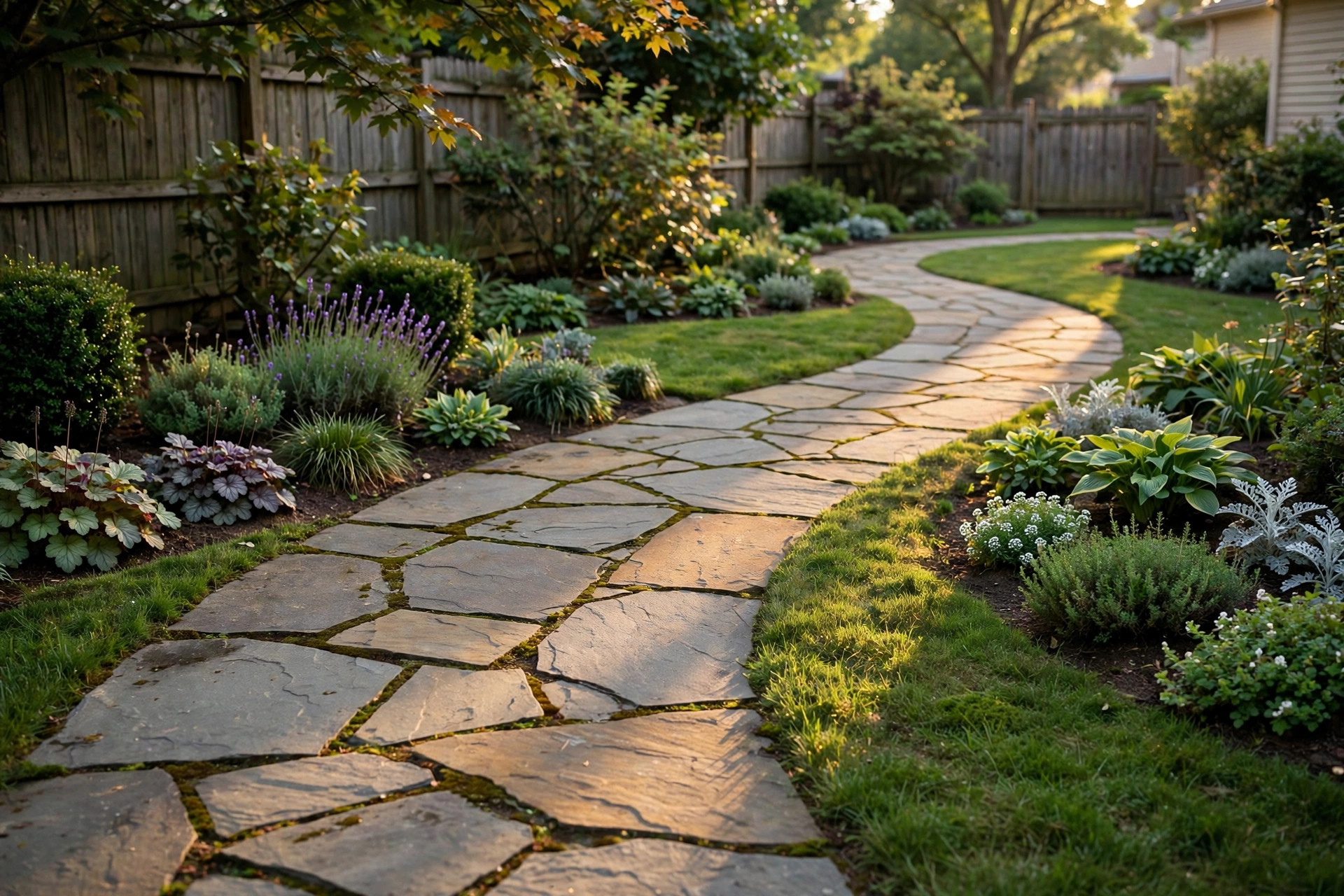
A curving path feels soft and natural. Mark the curve with a garden hose laid on the ground. Step back and look at the line from the house. Adjust until the curve pleases the eye. Curves work well in larger yards and around trees or beds.
Stepping Stones in Grass
For a casual look, set single large slabs as steps across the lawn. Leave two to four inches of grass between stones. This design uses less stone and costs less. It is also easy to lift one stone later if a sprinkler line runs below. Mowing around the stones takes a bit more care, so keep the slabs level with the turf.
Wide Stone Patios with a Walk
Some backyards join the walk to a small flagstone seating area. The path widens into a pad for chairs or a grill. If you plan this, use the same stone for both areas. The match makes the yard feel like one room.
Joints That Fit the Style
The gaps between stones can be filled in three main ways. Sand joints give a crisp, formal line. Crushed stone joints drain water fast and suit rainy regions. Low ground cover, such as creeping thyme, grows between the stones and softens the path. Planted joints need sun and a bit of water, so they fit mild climates best.
Edges and Borders
A clean edge keeps the path from spreading. Steel edging is thin and nearly invisible. Stone edging for flower beds can double as a border for the walk, tying the path to nearby beds. A simple brick border also works and adds a formal touch.
How to Plan the Layout
Start with a sketch on paper. Mark the house, the fence, trees, and beds. Draw the path as a line. Most walks are three feet wide, which lets two people pass in comfort. For a side yard, two and a half feet can do.
Think about how the path is used. The main walk from the door to the patio should be direct. A garden stroll can wander. Avoid paths that cut across the center of the lawn, since they break the open space.
Check the slope of the ground. A path should shed water, not pool it. On a slope, set the stones so the walk steps down gently. A few low steps of stone can handle a steep grade.
Before you dig, call the local utility marking service. Lines for water, gas, and cable often cross backyards. The marking is free and takes a few days.
Cost and Price
Cost is one of the first questions in any set of flagstone walkway ideas for backyards. Prices change by region and by stone type, so treat these as ranges.
Do it yourself. Homeowners who lay the path themselves usually pay for stone, base material, and sand. Stone costs about four to ten dollars per square foot at most yards. A base of crushed stone and coarse sand adds about one to three dollars per square foot. A fifty square foot walk, about three feet wide and sixteen feet long, often runs from three hundred to seven hundred dollars in materials.
Hired labor. A landscaper or mason charges for skill and time. Installed flagstone walks often cost twelve to twenty five dollars per square foot, base work included. That same fifty square foot walk may cost eight hundred to fifteen hundred dollars installed. Complex curves, steps, or poor soil raise the price.
What changes the price. Thick stone costs more than thin. Rare colors cost more than common gray. A deep base, needed where frost heaves the ground, adds labor. Hauling stone far from the yard adds delivery fees.
To save money, buy stone from a local quarry when you can. Keep the design simple. Do the digging and base work yourself, then hire a mason for the stone setting alone. If you compare a flagstone path with a paver walkway installation cost near me search, you will find that pavers often cost less to install but need more joint care over time.
Care and Upkeep
A flagstone walk asks little, but a small routine keeps it sound.
Sweep often. Leaves and soil hold moisture on the stone. A quick sweep each week in fall keeps the surface clean and safe.
Wash once a year. Hose the path down in spring. For moss or algae, scrub with a stiff brush and a mix of water and mild dish soap. Skip harsh acids, which can stain stone.
Check the joints. Sand and fine gravel wash out over time. Top up the joints each year with fresh material. Packed joints stop weeds and keep stones from rocking.
Reset loose stones. If a slab rocks, lift it, add a bit of base sand, and set it back level. This small fix takes minutes and stops a trip hazard.
Seal or not. Most flagstone needs no sealer. In areas with heavy freeze and thaw, a breathable stone sealer can cut flaking. Test the sealer on a spare piece first.
Weed control. Pull weeds by hand from the joints. A layer of landscape fabric under the base helps, but it is not a cure. Planted joints need trimming a few times each season.
Safety
A stone walk must be safe in all weather. Set each slab firm, with no rock or tilt. Keep the surface free of algae, which turns slick. In winter, clear ice with sand rather than rock salt, which can pit some stone types. Edge the path so it is easy to see at night, and add a low solar light or two along dark stretches.
When you lift heavy slabs, bend the knees and keep the back straight. Stone is dense, and a single slab can weigh forty pounds or more. Ask for help with the large pieces.
Frequently Asked Questions
How wide should a backyard flagstone walkway be? Three feet is the standard. It lets two people walk side by side. For a quiet side path, two and a half feet is fine. For a main path to a patio, go four feet wide if space allows.
What goes under flagstone on a walkway? A base of four to six inches of compacted crushed stone, topped with one inch of coarse sand or stone dust. The base spreads weight and drains water. On clay soil, add a sheet of landscape fabric under the base to stop mixing.
Can I lay flagstone directly on grass or soil? You can set stepping stones on soil for a casual path, but the stones will settle and shift. For a lasting walk, dig out the sod and build a proper base. The extra work pays off in a level, stable path.
How do I keep weeds out of the joints? Pack the joints full with polymeric sand or fine gravel. Pull young weeds early. A pre emergent weed control product made for paths can help, used as the label directs.
Does flagstone get slippery when wet? Some smooth stone does. Choose stone with a rough, textured face. Keep algae off the surface with yearly washing. If a slab is polished smooth, set it aside and use it elsewhere.
Can a flagstone walk handle a wheelchair or stroller? Yes, if the stones are set tight and level. Keep joints narrow, under half an inch, and fill them flush. A wide, straight run with firm joints rolls well.
A Short Final Word
A flagstone walk is one of the simplest upgrades a backyard can get. The stone is honest, the work is clear, and the result lasts for years. Start with a sketch, pick stone that suits your home, and build a base that will not move. Take your time with the layout, since a path that feels right on paper usually feels right underfoot. For a fuller planting plan around the new path, native plant landscaping ideas for front yards offer notes on plant choice that adapt well to backyards too. Whether you hire the work or do it yourself, a well laid path will serve the yard every single day.
References
Toro. (n.d.). Lawn and landscape equipment. https://www.toro.com Deere. (n.d.). Lawn care and grounds equipment. https://www.deere.com Consumer Reports. (n.d.). Product reviews and ratings. https://www.consumerreports.org
Was this guide helpful?

About Robert Taylor
The My Garden US editorial team writes practical, in-depth home and garden guides for American homeowners — tested advice, no fluff.