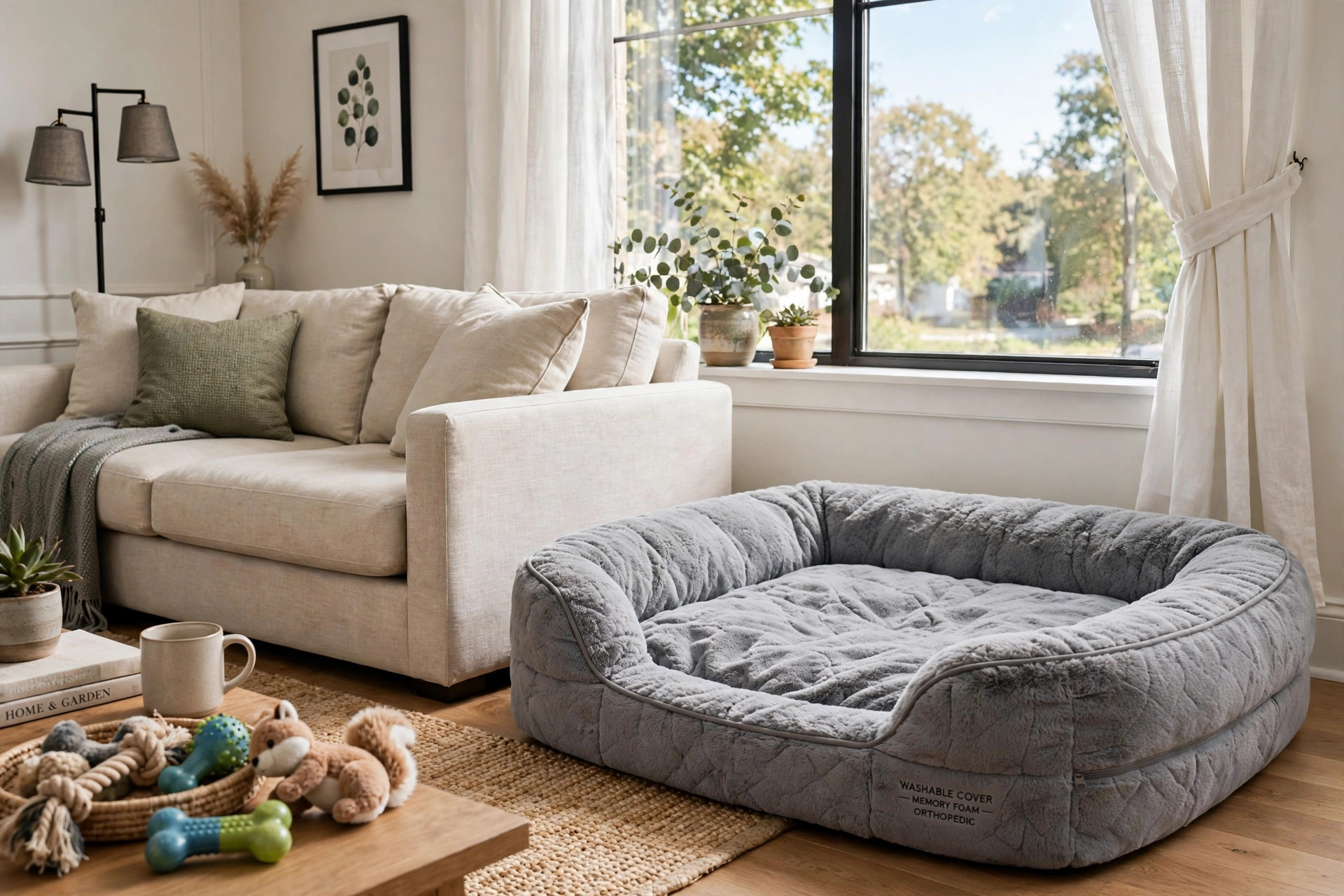

An old dog deserves a soft place to rest. When a large dog reaches his senior years, his joints begin to wear down. Getting up becomes slow. Lying down becomes a careful act. The best orthopedic dog bed for senior large dogs can make these daily acts easier and less painful. This guide explains what orthopedic support means, how to pick the right bed, what it costs, and how to care for it. It is written for owners of aging large breeds who want to give their dog more comfort in his last years.
Why Orthopedic Support Matters for Old Large Dogs
Large dogs age faster than small ones. A dog that weighs 80 pounds or more is often called a senior by age seven. At that point, arthritis is common. Hip dysplasia shows itself. Elbows ache. The spine loses some of its cushion.
A regular pillow bed lets a heavy dog sink to the floor. When the dog sinks through, his joints take his full weight on a hard surface. Pressure builds at the elbows, hips, and shoulders. Sores can form where bone meets floor. An orthopedic bed works the other way. It is built from dense foam that holds the dog up. The foam spreads his weight over a wide area. Pressure drops at the sore points. The dog rests on support instead of on the floor.
Owners notice the difference fast. A dog that sleeps on a good orthopedic bed often rises with less stiffness in the morning. He may sleep longer without shifting. He may choose the bed over the couch or the cold tile. None of this cures arthritis. But comfort counts. For a senior dog, comfort is one of the best gifts an owner can give.
What to Look for When You Choose: Best Orthopedic Dog Bed for Senior Large Dogs
Foam Density and Thickness
The heart of an orthopedic bed is the foam. Look for memory foam or high-density support foam. The foam should be at least four inches thick for a large dog. Five or six inches is better for dogs over 90 pounds. Press your hand into the foam before you buy, if you can. It should push back. It should not flatten to the bottom under your hand. Cheap foam feels soft at first and fails within months. Dense foam keeps its shape for years. The American Kennel Club notes that proper bedding can improve the quality of sleep for senior dogs, which supports their daily health.
Size
Measure your dog from nose to tail while he sleeps on his side. Add six to ten inches. That is the minimum length of the bed. Senior large dogs often sleep stretched out to ease their joints. A bed that is too small will force the dog to curl up, which can stiffen his back. Most makers sell XL and XXL sizes. Check the actual dimensions in inches, not just the size name. One maker’s XL can be another maker’s L.
Shape
Flat mattress pads give the dog room to sprawl. Bolster beds add a raised edge that some dogs like to rest their heads on. A raised edge can also give a weak dog something to lean on when he lies down. But tall bolsters can be hard for a stiff dog to climb over. Low bolsters are the safer choice for very old dogs. For dogs with joint trouble, a ramp can help them reach raised beds; see our guide on the dog ramp for suv and high bed access.
Cover
The cover matters as much as the foam. Look for a removable, machine-washable cover. Old dogs have accidents. A zippered cover that comes off and goes in the washing machine saves the foam underneath. Waterproof liners add a second layer of defense. Some covers are made from plush fabric that stays warm. Others use cooling fabric for warm climates. Choose what suits your home. PetMD reminds owners that clean bedding helps keep skin problems away from dogs that rest for long hours. Breed-specific guides at The Spruce Pets offer extra tips on sizing beds for giant breeds.
Certifications
Some foam carries a CertiPUR-US label. That label means the foam was tested for harmful chemicals and low emissions. It is a good sign. A dog sleeps with his nose inches from the foam for hours each day. Safe materials matter here.
Types of Orthopedic Dog Beds
Memory Foam Mattresses
Memory foam softens with body heat and molds to the dog’s shape. It is the most common orthopedic choice. Good ones use several inches of dense memory foam over a firmer base layer. The base layer keeps the dog from bottoming out. Memory foam beds work well for dogs with arthritis and hip problems.
Egg-Crate Foam Beds
Egg-crate foam has a rippled surface that looks like an egg carton. The bumps let air move under the dog. They also reduce pressure points. These beds cost less than solid memory foam. They give good comfort, but they flatten sooner. They suit owners who want relief on a budget.
Gel-Infused and Cooling Beds
Some memory foam beds add a layer of cooling gel. The gel pulls heat away from the dog’s body. This helps large dogs that run hot and pant at night. If your senior dog seeks out tile floors in summer, a cooling orthopedic bed may suit him. Chewy lists cooling options among its most reviewed large dog beds.
Elevated Cot Beds
An elevated cot holds the dog off the ground on a stretched fabric frame. Air flows underneath. It does not give the deep cushion of memory foam. Some owners pair a cot with a thin orthopedic pad for the best of both. Cots suit outdoor use and warm porches. For patio use, see our guide to the best elevated dog bed for outdoor patio use.
Heated Orthopedic Beds
Low-wattage heated beds give gentle warmth that can soothe stiff joints. They run on small electric pads or on self-warming materials that reflect the dog’s own heat. Owners of dogs with arthritis often report that warmth helps in the morning. Always follow the maker’s safety rules with electric beds. Our article on the heated pet bed for arthritic older dogs covers this topic in more depth.
Cost and Price
Prices vary widely. A basic egg-crate foam bed for a large dog can cost 40 to 70 dollars. A mid-range memory foam bed with a washable cover usually runs 70 to 130 dollars. Premium beds with thick medical-grade foam, waterproof liners, and strong covers can reach 150 to 250 dollars.
Price often follows foam quality. A bed that costs more may last three to five years. A cheap one may flatten in one. Divide the price by the years of use. The expensive bed is often cheaper per year. Also count the cost of extra covers. A second cover lets you wash one while the other is in use.
Watch for sales at large retailers. Prices drop during holiday weekends, and The Home Depot often runs seasonal deals on large dog beds. Reading buyer reviews helps too. Reviews from owners of large senior dogs tell you how a bed holds up under real weight. Consumer guides at Vetstreet often compare long-term value across brands.
Care and Upkeep
Washing the Cover
Remove the cover and wash it in warm water with mild soap. Most covers can go in a home washing machine. Dry on low heat or air dry. Wash the cover every one to two weeks. An old dog sheds more skin cells and oil. Clean fabric keeps his skin healthy.
Protecting the Foam
Keep the foam dry. If urine soaks into memory foam, it is very hard to clean. Use a waterproof liner between the foam and the cover. If the foam gets damp, stand it on edge in open air until it dries fully. Do not put foam in a dryer. Heat can warp it.
Fluffing and Rotating
Rotate the bed every week or two. Dogs often sleep in the same spot. Rotation spreads wear across the foam. If the bed has loose fill in the bolsters, fluff them by hand to keep their shape.
Knowing When to Replace
Press the center of the foam. If it does not spring back, the bed is worn out. If the dog sinks to the floor through the foam, it is done. Most good beds last two to four years under a large dog. Replacing a dead bed matters. A flat bed gives no more support than the bare floor.
Safety Notes
Choose beds with non-slip bottoms. A bed that slides on wood or tile floors can move when a weak dog tries to stand. That slip can cause a fall. A rubberized base keeps the bed in place.
Check for small parts. Some beds have buttons, zippers pulls, or tags that a bored dog can chew off. Remove loose tags. Make sure zippers are hidden or guarded.
Keep electric heated beds away from chewers. A dog that gnaws cords can get a shock. Use cord covers or choose a self-warming bed with no plug instead.
Place the bed in a draft-free spot. Senior dogs feel cold more than young ones. A corner away from doors works well. Keep the bed off damp basement floors. The ASPCA advises that senior pets need warm, dry resting places to stay healthy.
If your dog spends time outside, note that most orthopedic foam beds are indoor products. Foam soaks up rain. For outdoor sleeping areas, an elevated cot or a waterproof outdoor bed is the better tool.
Frequently Asked Questions
How do I know if my dog needs an orthopedic bed?
Watch how he moves. Slow rising, stiff steps in the morning, and care when lying down all point to joint pain. If he seeks out soft furniture and avoids hard floors, he wants more cushion. Most vets suggest an orthopedic bed for any large dog over age seven. The American Veterinary Medical Association notes that aging pets benefit from supportive bedding as part of senior care.
What size orthopedic bed does a large senior dog need?
Most large breeds need an XL bed, often 44 by 34 inches or bigger. Giant breeds may need XXL. Measure your dog lying on his side from nose to tail. Add six to ten inches for the bed length. When in doubt, buy the larger size. A dog will use extra space. He cannot use space he does not have.
Is memory foam or egg-crate foam better?
Memory foam gives firmer, longer-lasting support. It molds to the dog and holds him up for years. Egg-crate foam costs less and sleeps cooler, but it flattens sooner. For a heavy senior dog with arthritis, memory foam is usually the better buy. For a lighter dog or a tight budget, egg-crate foam is a fair choice.
Can an orthopedic bed help a dog with hip dysplasia?
It can ease the pain, but it cannot fix the joint. A firm, even surface reduces pressure on the hips. Many owners of dysplastic dogs report easier mornings after switching beds. Pair the bed with vet care, proper weight, and gentle exercise. Those steps matter as much as the bed. Petco and PetSmart both carry beds marketed for hip support, and buyer reviews there describe real results.
How often should I wash the bed?
Wash the cover every one to two weeks. Spot clean stains right away. If the foam has a waterproof liner, wipe the liner monthly. A clean bed smells better and keeps the dog’s skin clear. Keep a spare cover so the bed never sits uncovered.
Will my dog actually use the new bed?
Most dogs do, but some need time. Put the bed where the dog already likes to rest. Add a worn shirt that smells like you. Praise and treat the dog when he steps onto it. Never force him. Give it a week. If he still avoids it after two weeks, check the size and firmness. The bed may be too small or too soft for his taste.
A Final Word
The best orthopedic dog bed for senior large dogs is not the most expensive one on the shelf. It is the one that fits your dog, holds his weight, and keeps its shape. Thick dense foam, the right size, and a washable cover cover most of what matters. Take time to measure your dog and read reviews from owners of large breeds. The right bed will not give you more years with your dog. But it can make the years you have more comfortable for him. That is worth the effort.
References
American Kennel Club. (n.d.). Dog care and training resources. https://www.akc.org American Veterinary Medical Association. (n.d.). Pet care resources. https://www.avma.org ASPCA. (n.d.). Pet care and animal welfare resources. https://www.aspca.org Chewy. (n.d.). Pet supplies. https://www.chewy.com Petco. (n.d.). Pet supplies and services. https://www.petco.com PetMD. (n.d.). Pet health information. https://www.petmd.com PetSmart. (n.d.). Pet supplies and services. https://www.petsmart.com The Home Depot. (n.d.). Home improvement products. https://www.homedepot.com The Spruce Pets. (n.d.). Pet care guides and product reviews. https://www.thesprucepets.com Vetstreet. (n.d.). Veterinary advice for pet owners. https://www.vetstreet.com
Was this guide helpful?

About James Carter
The My Garden US editorial team writes practical, in-depth home and garden guides for American homeowners — tested advice, no fluff.
You May Also Like
Best Dog Bed for Joint Pain Large Seniors
April 18, 2026 0 views
Best Heated Cat Bed for Window Sill: A Plain Guide for Cat Owners
February 17, 2026 0 views
Outdoor Cat Shelter for Stray Cats Winter USA: A Complete Guide
August 31, 2026 0 views